Cardiovascular · CARDIOVASCULAR

3. Anti-edema and blood pressure agents

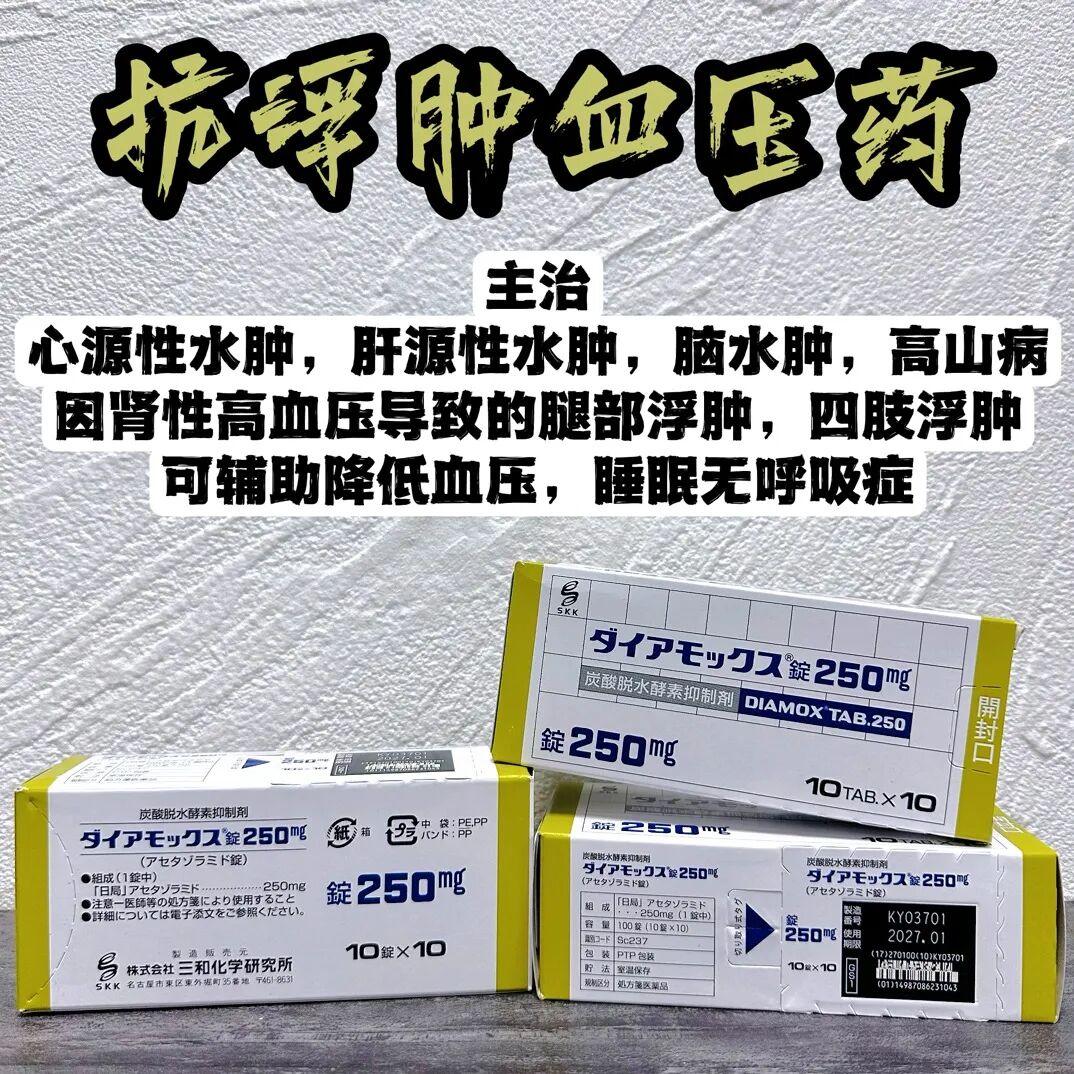
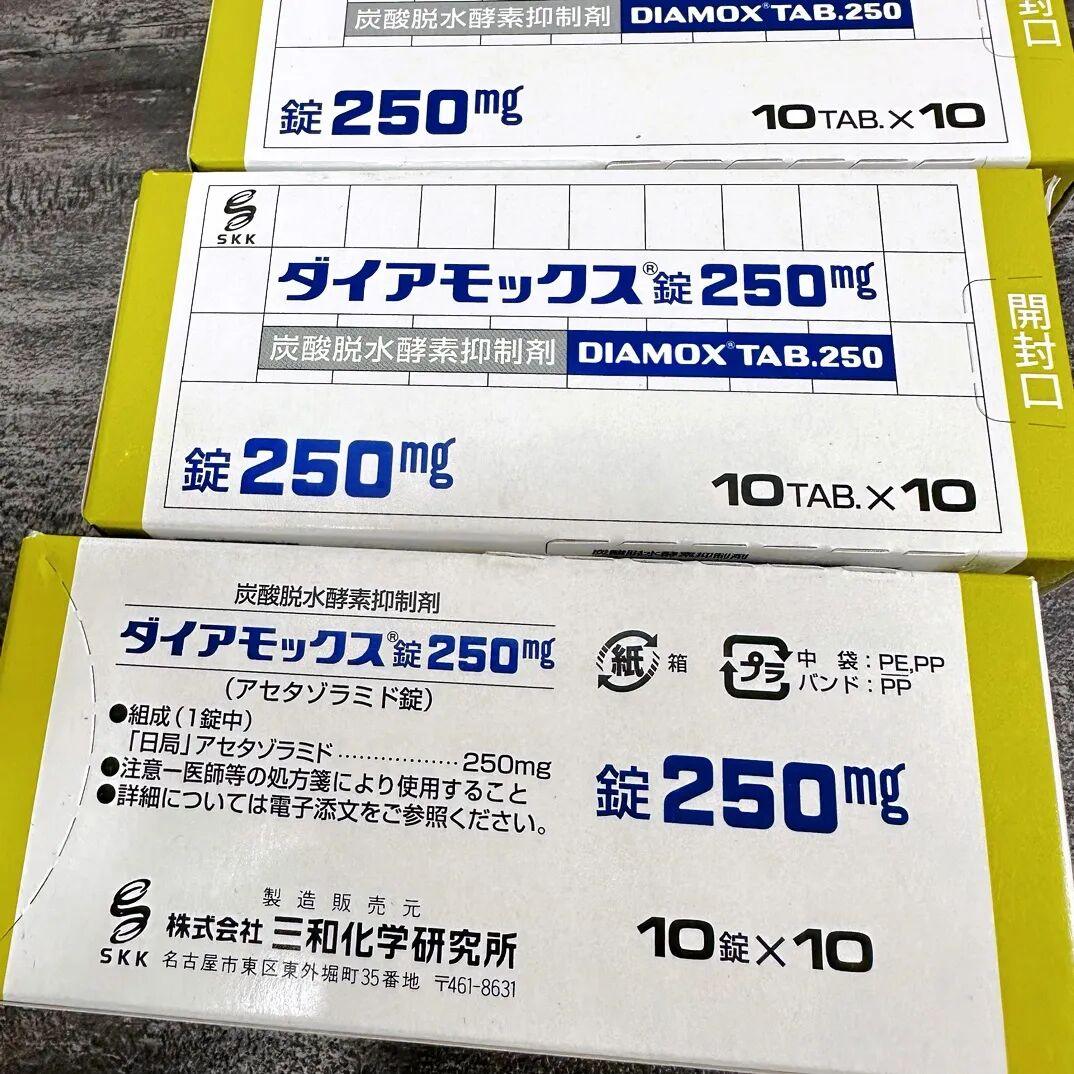
日本語原題:ダイアモックス錠250mg

Published2025-03-13 07:38 FormTablet Content9 sections / 2 images Japanese nameダイアモックス錠250mg
Ingredients / strength:
Active ingredient: 250mg of 'Nichikoku' acetazolamide per tablet. Additives: Hydrogen phosphate calcium hydrate, corn starch, gelatin, alginic acid, magnesium stearate.
English translation of the Japanese package insert is the main text; the Japanese original is shown alongside for verification. Use the language menu (top right) to read the page in another language. This site is for reference only — consult a doctor or pharmacist before use.
Section 1 · Feature description
English translation
Carbonic anhydrase is found in the renal epithelium, red blood cells, brain, and ciliary epithelium, and is an enzyme involved in reversible reactions within the body (CO2+H2O⇄H2CO3) that produce carbonic acid from carbon dioxide gas and water. Acetazolamide specifically inhibits this enzyme and exerts the following effects. 1. Decreased intraocular pressure Acetazolamide is said to reduce aqueous humor production and lower intraocular pressure by inhibiting the action of carbonic anhydrase present in the ciliary epithelium. 2. Suppression of epileptic seizures Acetazolamide is thought to suppress abnormal brain excitation and alleviate various symptoms of the nervous system by inhibiting carbonic anhydrase present in central nervous system tissues and locally increasing CO2 concentration in the brain. 3. Improvement of respiratory acidosis and sleep apnea Acetazolamide inhibits carbonic anhydrase by increasing urinary excretion of HCO3- in alveoli, while also causing metabolic acidosis and increasing H+. Increased H+ stimulates the respiratory center, boosting ventilation volume and improving hypoxic and carbon dioxide ventilation responses. This increase in ventilation raises blood O2 and CO2 decreases, improving hypoxemia during sleep caused by respiratory acidosis and apnea. Additionally, improved ventilation response maintains respiratory sensitivity during sleep and reduces the number of apneas. 4. Diuretic Acetazolamide exhibits a diuretic effect by inhibiting the action of carbonic anhydrase in the renal epithelium, thereby suppressing the reabsorption of Na+ and HCO3- in the renal tubules. Its effects last 6~12 hours after administration. 5. Relief of premenstrual tonics It is said that acetazolamide's ability to excrete stored water from the body and inhibit the nervous system can alleviate the symptoms of this condition. 6. Improvement of Meniere's syndrome The effects of acetazolamide on Meniere's syndrome are said to include local lymphatic secretion suppression in the inner ear, diuretic relief of inner ear edema, and depression of the central nervous system.
Section 2 · Specifications
English translation
100 tablets (PTP 10 tablets ×10).
Section 3 · Characteristics
English translation
White tablets.
Section 4 · Ingredient Description
English translation
Active ingredient: 250mg of 'Nichikoku' acetazolamide per tablet. Additives: Hydrogen phosphate calcium hydrate, corn starch, gelatin, alginic acid, magnesium stearate.
Section 5 · Functions and indications
English translation
〈Diamox End〉 Improvement of respiratory acidosis in glaucoma, epilepsy (when other antiepileptic drugs are insufficiently effective), pulmonary emphysema, cardiac edema, hepatic edema, premenstrual tontonia, Ménière's disease, and Ménière's syndrome. 〈Diamox Tablets 250mg〉 Improvement of respiratory acidosis in glaucoma, epilepsy (when other antiepileptic drugs are insufficiently effective), pulmonary emphysema, cardiac edema, hepatic edema, premenstrual tonosis, Ménière's disease and Ménière's syndrome, sleep apnea syndrome.
Section 6 · Usage and dosage
English translation
〈Glaucoma〉 Typically, adults receive 250~1,000 mg of acetazolamide orally divided into doses per day. 〈Epilepsy (added when other antiepileptic drugs are insufficient)〉 Typically, adults are given 250~750 mg of acetazolamide orally in divided doses per day. 〈Improvement of respiratory acidosis in emphysema, cardiac edema, hepatic edema〉 Typically, adults receive oral administration of 250~500 mg once daily as acetazolamide. 〈Premenstrual Tension〉 Typically, adults are given acetazolamide orally once daily at 125~375 mg for 5~10 days before menstruation or from the onset of symptoms. 〈Ménière's Disease and Ménière's Syndrome〉 Typically, adults are given 250~750 mg orally once daily as acetazolamide. 〈Sleep Apnea Syndrome (only Diamox Tablets 250mg)〉 Typically, adults receive 250~500 mg of acetazolamide orally divided into doses per day. In all cases, the amount is adjusted appropriately according to age and symptoms.
Section 7 · Important notes
English translation
1. When using continuously, electrolyte imbalances may occur, so regular check-ups are recommended. 2. Severe blood disorders such as aplastic anemia, hemolytic anemia, agranulocytosis, as well as bone marrow dysfunction, white blood cell reduction, thrombocytopenia, thrombocytopenia, and thrombocytopenic purpura, require regular examinations. 3. Dizziness and unsteadiness caused by blood pressure-lowering may occur, so exercise caution when operating dangerous machinery such as working at heights or driving automobiles. 4. For patients who require nighttime rest, it is preferable to administer in the morning to avoid nighttime urination.
Section 8 · Side effects
English translation
1. Metabolic acidosis, electrolyte abnormalities (both frequency unknown) Electrolyte abnormalities such as metabolic acidosis, hypokalemia, and hyponatremia may occur. 2. Shock, anaphylaxis (both unknown frequency) If discomfort, abnormal sensations in the mouth, wheezing, dizziness, urge to defecate, tinnitus, sweating, low blood pressure, difficulty breathing, urticaria, or other abnormalities are observed, discontinue administration and take appropriate measures. 3. Acute respiratory distress syndrome and pulmonary edema (both of unknown frequency) If rapidly progressing dyspnea, hypoxemia, bilateral diffuse pulmonary infiltrate or other chest X-ray abnormalities are observed, discontinue administration and take appropriate measures. 4. Aplastic anemia, hemolytic anemia, agranulocytosis, bone marrow dysfunction, leukopenia, thrombocytopenia, thrombocytopenia, thrombocytopenic purpura (all frequency unknown) Severe blood disorders such as aplastic anemia, hemolytic anemia, agranulocytosis (prodromal symptoms such as fever, sore throat, and flu-like symptoms may appear), as well as bone marrow dysfunction, leukopenia, thrombocytopenia, and thrombocytopenic purpura. 5. Toxic Epidermal Necrolysis (TEN), Stevens-Johnson syndrome (both frequency unknown) If fever, erythema, itching, eye redness, or stomatitis appear, discontinue administration and take appropriate treatment. 6. Acute kidney injury, kidney and urinary tract stones (all unknown frequency) If hematuria, crystalluria, oliguria, or similar symptoms occur, discontinue administration and take appropriate measures. 7. Mental confusion, convulsions (frequency unknown) Central nervous system symptoms such as confusion and convulsions may appear. 8. Liver dysfunction, jaundice (both frequency unknown) Liver dysfunction or jaundice accompanied by elevated levels of AST, ALT, Al-P, and others may occur.
Section 9 · Taboo
English translation
1. Patients with a history of hypersensitivity to any component of this drug or sulfonamide drugs. 2. Patients with anuria [Delayed excretion of this drug may cause strong side effects. ]。 3. Patients with acute renal failure. 4. Patients with advanced liver disease such as cirrhosis or severe liver dysfunction. 5. Hyperchloremic acidosis, patients with significantly decreased sodium and potassium in body fluids, adrenal insufficiency, or Addison's disease [there is a risk of worsening electrolyte imbalances. ]。 6. Do not administer long-term to patients with chronic angle-closure glaucoma [there is a risk that glaucoma worsening may become subtle.

Source images

2 images

Need help sourcing Japanese medicines or OEM production?

💬