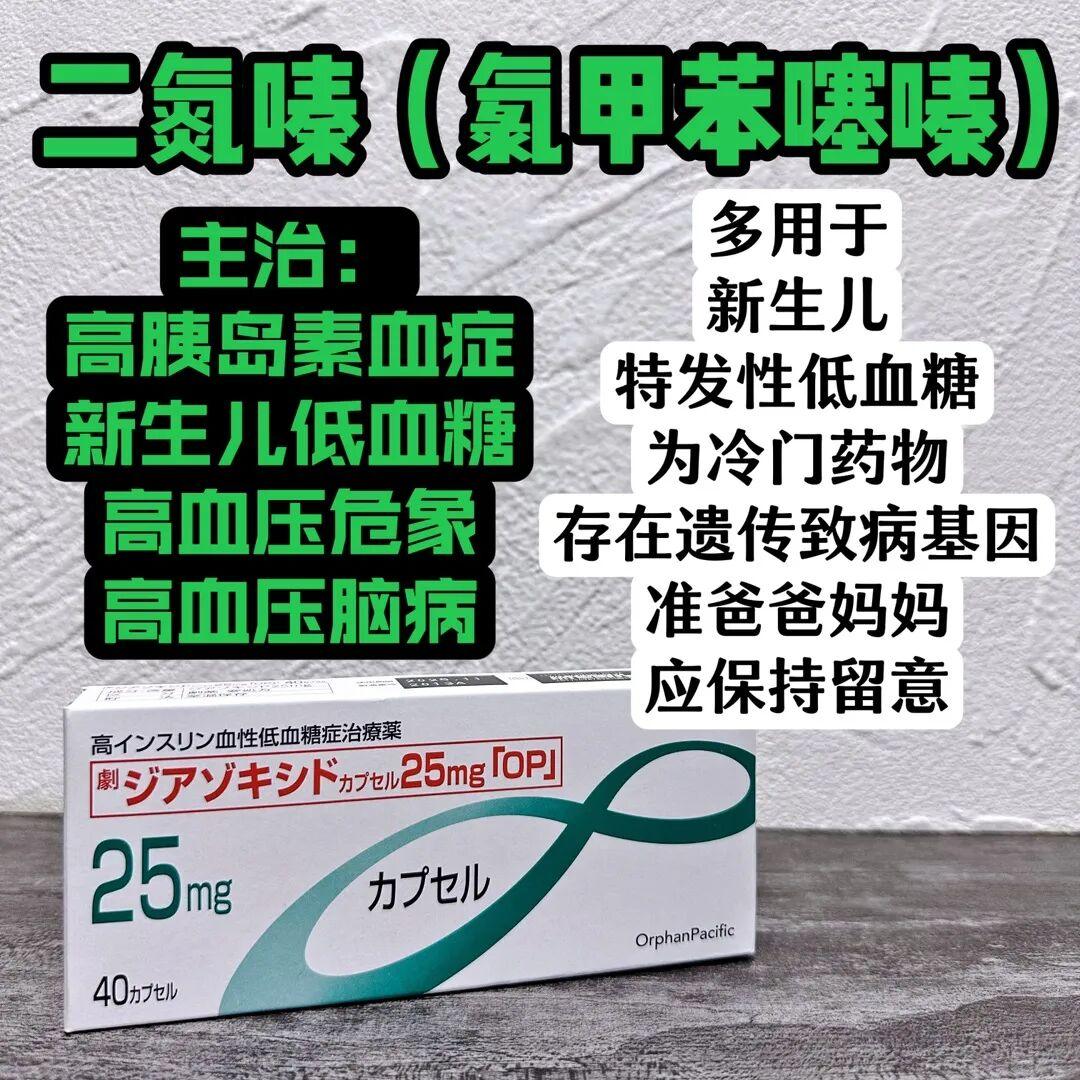
40 tablets of diazazine
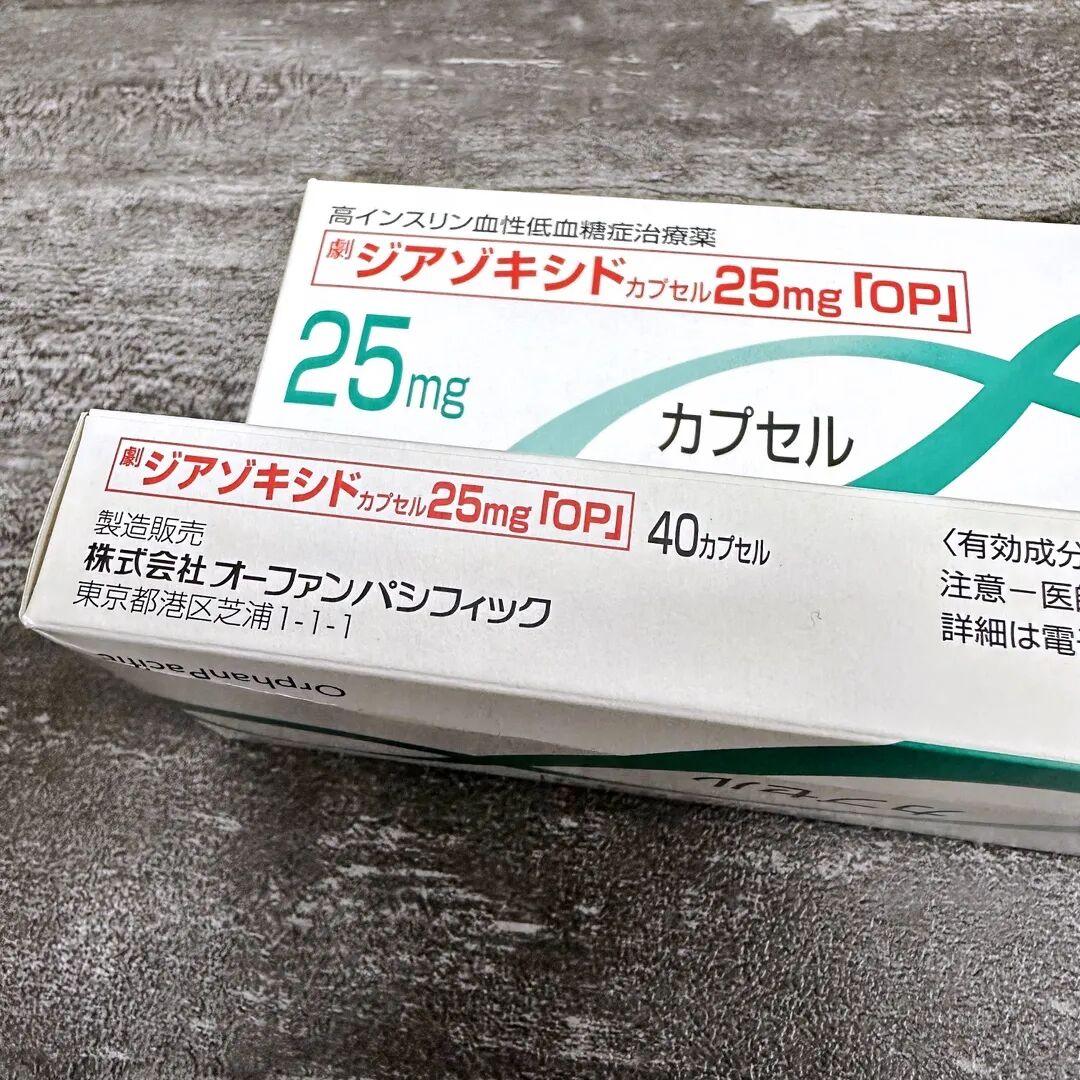
日本語原題:ジアゾキシドカプセル25mg「OP」
Active ingredient: 25mg of diazoxide per capsule. Additives: lactose hydrate, magnesium stearate.
Source images
4 imagesThe artwork keeps its original Japanese/Chinese lettering. Open “Text in this image” under a picture to read what it says in your language (machine-read, may contain errors).
Text in this image machine-read · may contain errors
Diazazine (Chlorotobenthione) Indications: hyperinsulinemia Neonatal hypoglycemia Hypertensive encephalopathy Medications for Hyperinsulinemic Hypoglycemia Capsules 40 capsules Mostly used for Idiopathic hypoglycemia It is a niche medicine. Presence of genetic pathogenic genes Stay alert OrphanPacific
二氮嗪(氯甲苯噻) 主治: 高胰岛素血症 新生儿低血糖 高血压脑病 高インスリン血性低血糖症治療薬 カプセル 40 カプセル 多用于 特发性低血糖 为冷门药物 存在遗传致病基因 应保持留意 OrphanPacific
Diazazine (Chlorotobenthione) Indications: hyperinsulinemia Neonatal hypoglycemia Hypertensive encephalopathy Medications for Hyperinsulinemic Hypoglycemia Capsules 40 capsules Mostly used f…
Text in this image machine-read · may contain errors
Recipes for treating hyper-Liu blood hypoglycemia Capsules 'There is a Component of Impeachment Pay attention to the first doctor Pookoan Co., Ltd. / ヾしつ
高刘血性低血糖症治疗菜 カプセル 《有劾成分 注意一医 株式会社プーコアン / ヾシつイツつ
Recipes for treating hyper-Liu blood hypoglycemia Capsules 'There is a Component of Impeachment Pay attention to the first doctor Pookoan Co., Ltd. / ヾしつ…
Text in this image machine-read · may contain errors
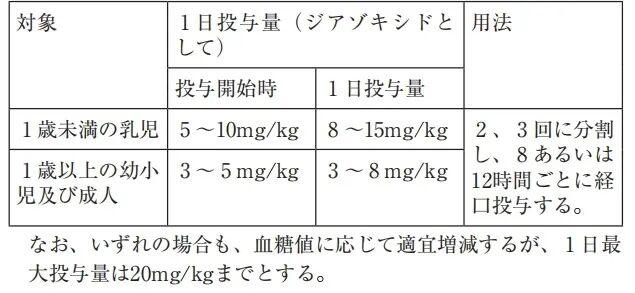
5~10mg/kg 8~15mg/kg 23 Installments 3~8mg/kg 3~5mg/kg Elementary school with 1 sheng or more At a desk, adjust blood sugar levels as needed, and daily The high dose is limited to 20 mg/kg.
5~10mg/kg 8~15mg/kg 23回分割 3~8mg/kg 3~5mg/kg 1晟以上の幼小 、机の场合、血糖值応適宜增减支、1日最 大投与量は 20mg / kg までとする。
5~10mg/kg 8~15mg/kg 23 Installments 3~8mg/kg 3~5mg/kg Elementary school with 1 sheng or more At a desk, adjust blood sugar levels as needed, and daily The high dose is limited to 20 mg/kg.…
Text in this image machine-read · may contain errors
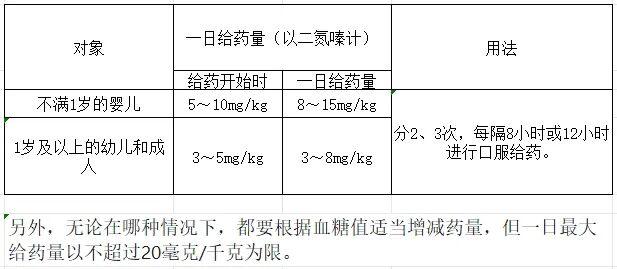
Daily dose (calculated as diazazine). Medication administered daily Infants under 1 year old 5~10mg/kg 8~15mg/kg Perform 2 or 3 sessions every 8 or 12 hours Toddlers aged 1 year and above and adults Oral administration is performed. 3~5mg/kg 3~8mg/kg Additionally, in any case, adjust the dosage appropriately according to blood sugar levels, but the maximum per day is allowed Dosage should not exceed 20 mg/g.
一日给药量(以二氮嗪计 一日给药量 不满1岁的婴儿 5~10mg/kg 8~15mg/kg 分2、3次,每隔8小时或12小时 1岁及以上的幼儿和成 进行口服给药。 3~5mg/kg 3~8mg/kg 另外,无论在哪种情况下,都要根据血糖值适当增减药量,但一日最大 给药量以不超过20毫克/于克为限。
Daily dose (calculated as diazazine). Medication administered daily Infants under 1 year old 5~10mg/kg 8~15mg/kg Perform 2 or 3 sessions every 8 or 12 hours Toddlers aged 1 year and above an…