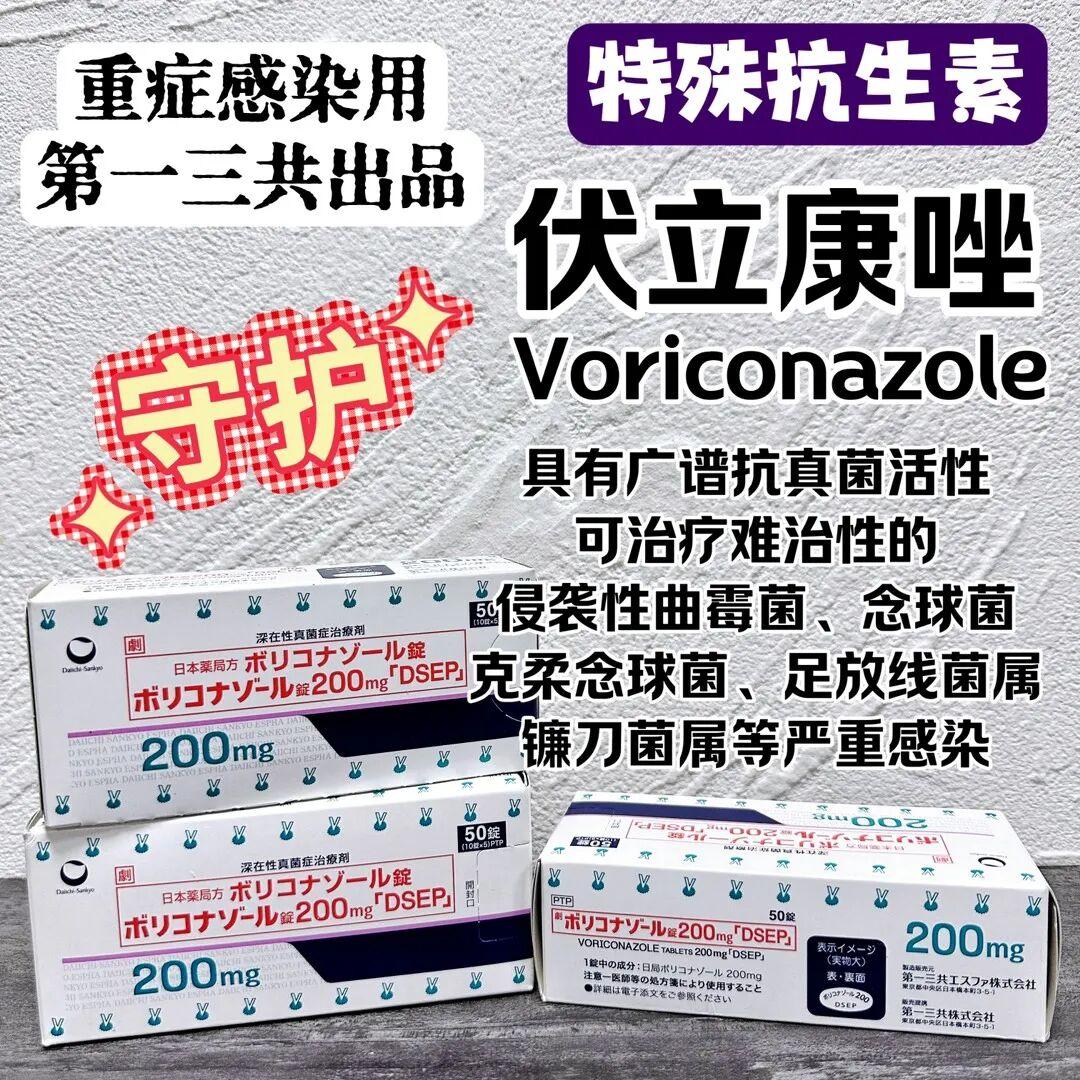
Anti-infective · ANTI-INFECTIVE

Voriconazole

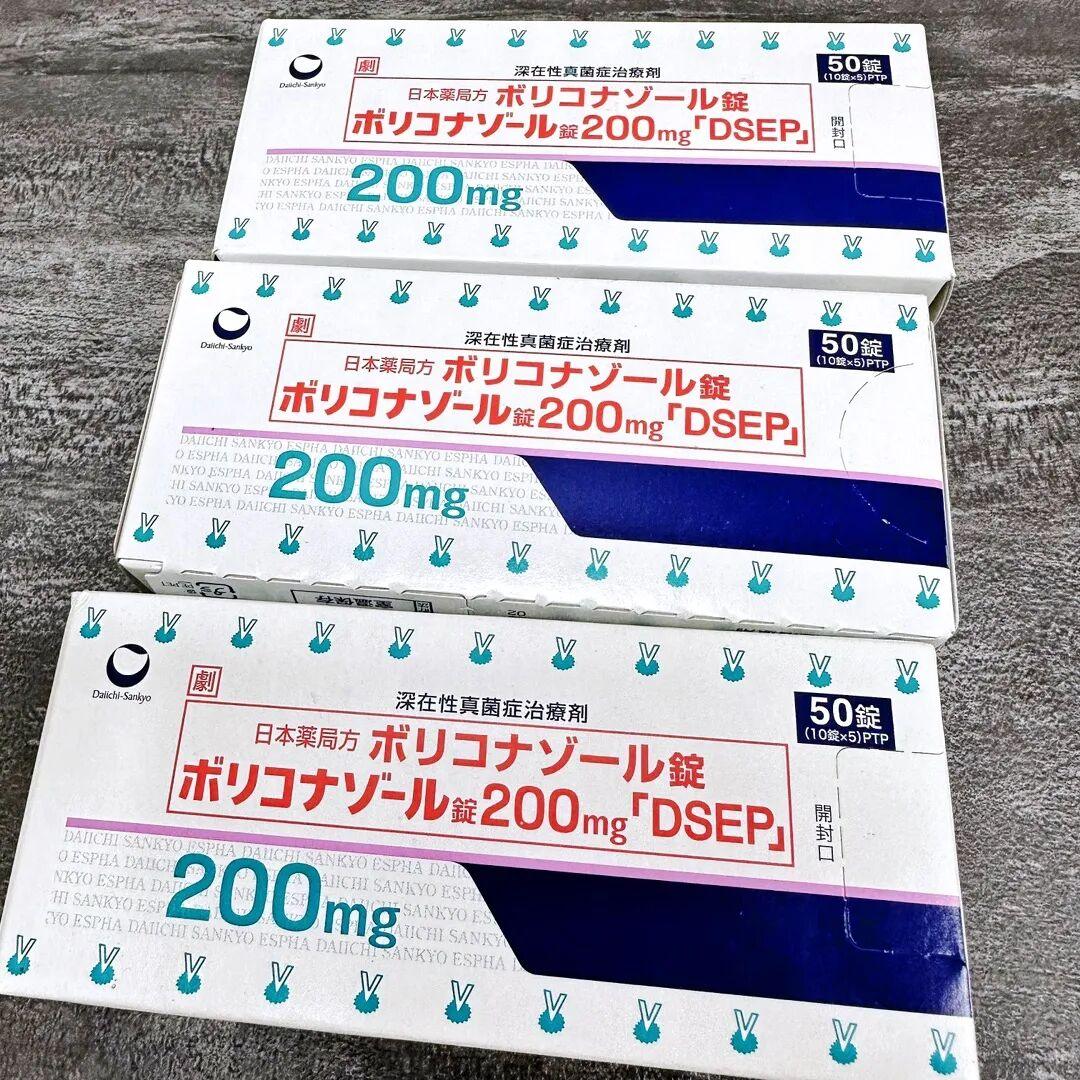
日本語原題:ボリコナゾール錠200mg「DSEP」

Published2025-03-26 18:52 FormTablet Content10 sections / 2 images Japanese nameボリコナゾール錠200mg「DSEP」
Ingredients / strength:
Active ingredient: Voriconazole (Japanese Bureau) 200mg. Additives: lactose hydrate, crystalline cellulose, povidone, croscarmellose sodium, magnesium stearate, hypromellose, titanium dioxide.
English translation of the Japanese package insert is the main text; the Japanese original is shown alongside for verification. Use the language menu (top right) to read the page in another language. This site is for reference only — consult a doctor or pharmacist before use.
Section 1 · Feature description
English translation
Voriconazole exhibits antifungal effects in fungal cells by inhibiting the biosynthesis of the membrane component ergosterol. Additionally, the ergosterol biosynthesis inhibitory effect of voriconazole is selective for fungi and has minimal effect on sterol biosynthesis in rat hepatocytes.
Section 2 · Specifications
English translation
(PTP) 50 tablets (10 tablets×5)
Section 3 · Characteristics
English translation
White, film-coated tablets.
Section 4 · Ingredient Description
English translation
Active ingredient: Voriconazole (Japanese Bureau) 200mg. Additives: lactose hydrate, crystalline cellulose, povidone, croscarmellose sodium, magnesium stearate, hypromellose, titanium dioxide.
Section 5 · Functions and indications
English translation
1. The following severe or refractory fungal infections (1) Invasive Aspergillosis, Pulmonary Aspergyloma, Chronic Necrotizing Pulmonary Aspergillosis (2) Candidemia, esophageal candidiasis, candidal peritonitis, bronchial and pulmonary candidiasis (3) Cryptococcal meningitis, pulmonary cryptococcosis (4) Fusarium Disease (5) Skedosporiasis 2. Prevention of Deep Fungal Infections in Patients with Hematopoietic Stem Cell Transplantation
Section 6 · Usage and dosage
English translation
1. Adults (body weight 40 kg or more): Usually, voriconazole is administered orally at 300 mg twice daily on the first day, and from the second day onward, 150 mg or 200 mg twice daily between meals. Depending on the patient's condition or if efficacy is insufficient, the dose may be increased, but the upper limit for the first day is 400 mg twice daily, and from the second day onward, the maximum dose is up to 300 mg twice daily. 2. Adults (under 40 kg): Usually, 150 mg of voriconazole is administered orally twice daily on the first day, and from the second day onward, 100 mg twice daily between meals. Depending on the patient's condition or if efficacy is insufficient, the dose from day 2 onward can be increased to 150 mg per dose, up to twice daily. 3. Children (2 years to under 12 years and 12 years and over weighing less than 50 kg): After administration with voriconazole injection, usually 9 mg/kg orally twice daily between meals as voriconazole. Depending on the patient's condition or if efficacy is insufficient, the dose is increased by 1 mg/kg in increments, and if tolerability is insufficient, the dose is reduced by 1 mg/kg (if the maximum dose is 350 mg, reduce by 50 mg in gradual doses). However, the maximum is 350mg twice a day. 4. Children (12 years and older, weighing 50 kg or more): After administration with voriconazole injection, 200 mg per dose as voriconazole is usually administered orally twice daily between meals. Depending on the patient's condition or if efficacy is insufficient, the dose can be increased to 300 mg twice daily.
Section 7 · Important notes
English translation
1. Severe blood disorders, severe kidney impairment, or hyperkalemia may occur; therefore, regular blood tests, renal function tests, and blood electrolyte tests should be performed during administration of this drug, with thorough observation. 2. Severe liver damage may occur, so when administering this drug, closely monitor and perform liver function tests regularly (1~2 times a month) if necessary. 3. Symptoms such as QT prolongation on ECG, ventricular tachycardia (including torsade de pointes), ventricular fibrillation, arrhythmia, complete atrioventricular block, ventricular bistage pulse, ventricular extrasystole, tachycardia, and other symptoms may appear, so regular ECG examinations and thorough monitoring are necessary. 4. When administering this drug, conduct a thorough medical interview regarding any history of allergies, drug sensitivity, etc. 5. Ocular disorders such as optic neuritis or optic papilledema may occur, and symptoms like photophobia, fog, and visual impairment may persist even after discontinuation. Therefore, until these symptoms have improved during or after discontinuation, take great care not to engage in operating dangerous machinery such as driving a car. Also, explain this to patients receiving this drug in advance and instruct them to consult an ophthalmologist if necessary. 6. Since photosensitivity reactions may occur, avoid sunlight exposure by wearing long-sleeved clothing, hats, etc. during administration, and use sunscreens with high sun protection effects to avoid ultraviolet exposure. If photosensitivity reactions occur during administration of this drug, discontinue administration of this drug. If treatment must be continued, instruct regular consultations with a dermatologist and pay attention to early detection of precancerous lesions such as actinic keratosis. 7. It is advisable to monitor blood levels during the administration period. 8. When starting this drug, confirm prior indication of warfarin use, and when using warfarin in combination, proceed with caution by measuring prothrombin time and increasing the number of thrombo tests. 9. Because this drug has a strong inhibitory effect on CYP3A, patients should exercise caution with concomitant drugs, and those that are prone to pharmacokinetic interactions due to CYP3A should be included with the drug (including drugs not listed in section "10.2 Precautions for Concomitant Use"). If it contains ), administer with caution, including considering dose reduction of concomitant drugs as needed.
Section 8 · Side effects
English translation
1. Shock (frequency unknown), anaphylaxis (frequency unknown) 2. Toxic Epidermal Necrolysis (TEN) (frequency unknown), Stevens-Johnson syndrome (frequency unknown), erythema multiforme (frequency unknown) If symptoms such as rash appear, discontinue administration and take appropriate measures. 3. Liver damage (5.0%) Severe liver damage (hepatitis, jaundice, liver failure, hepatic coma, etc.) can occur, and fatal cases have been reported. 4. ECG QT prolongation (frequency unknown), ventricular tachycardia (1.0%), ventricular fibrillation (frequency unknown), arrhythmia (frequency unknown), complete atrioventricular block (frequency unknown) ECG QT prolongation, ventricular tachycardia (including torsade de pointes), ventricular fibrillation, arrhythmias, complete atrioventricular block, ventricular bisegmental pulse, ventricular premature contractions, tachycardia, and other symptoms may appear. 5. Heart Failure (3.0%) If abnormalities related to cardiac function are observed, discontinue administration and take appropriate measures. 6. Kidney impairment (1.0%) Severe kidney damage (acute kidney injury, nephritis, renal tubular necrosis, etc.) may occur. 7. Respiratory distress syndrome (frequency unknown) 8. Guillain-Barré syndrome (frequency unknown) 9. Blood disorders (2.0%) Severe blood disorders such as bone marrow suppression, pancytopenia, aplastic anemia, agranulocytosis, and disseminated intravascular coagulation may occur. 10. Pseudomembranous colitis (frequency unknown) Severe colitis such as pseudomembranous colitis may occur, so if abdominal pain or diarrhea occurs, discontinue administration and take appropriate measures. 11. Convulsions (frequency unknown) Neurological disorders such as convulsions may occur. 12. Rhabdomyolysis (frequency unknown) Rhabdomyolysis, characterized by muscle pain, weakness, increased CK, and elevated myoglobin in blood and urine, may appear. 13. Interstitial pneumonia (0.2% note) If cough, difficulty breathing, fever, abnormal lung sounds (twisted sounds) are observed, promptly perform chest X-ray, chest CT, serum markers, and other tests, discontinue administration of this drug, and take appropriate measures such as administering corticosteroids. 14. Hypoglycemia (frequency unknown) Severe hypoglycemia may occur. 15. Impaired consciousness (0.1% note) Disturbances of consciousness such as loss of consciousness and decreased consciousness levels may occur. 16. Hyperkalemia (1.0%)
Section 9 · Taboo
English translation
1. Patients currently receiving the following medications: rifampicin, rifabutin, efavilenz, ritonavir, lopinavir, ritonavir, nirmatrelvir, ritonavir, carbamazepine, barbital, phenobarbital, pimozide, quinidine, ivabrazine, ergot alkaloids (ergotamine, anhydrous caffeine, isopropyl antipyrine, dihydroergotamine, ergomethrin, methylergomethrin), triazolam, ticagrelol, asnaprevir, romitapido, bronanserin, suborexant, rivaloxaban, riociguat, azernidipine, olmesartan medoxomil azernidipine, venetoclax (dose escalation for relapsed or refractory chronic lymphocytic leukemia including microlymphocytic lymphoma), anamorelin, Lurasidone, Isabconazonium, Finerenone. 2. Patients with a history of hypersensitivity to any component of this drug. 3. Pregnant women or patients who may be pregnant.
Section 10 · Warning
English translation
Treatment with this drug should be performed under the guidance of a physician or physician with sufficient knowledge and experience in treating infectious diseases, targeting patients with severe or refractory fungal infections. Since severe liver damage may occur, careful monitoring and regular liver function tests should be performed before administration. If abnormalities are observed, discontinue administration and take appropriate measures. Symptoms such as photophobia, blurred vision, and visual disturbances may appear, and symptoms may persist even after discontinuing this drug. During administration and after discontinuation, until these symptoms have improved, exercise extreme care not to engage the patient in operating dangerous machinery such as driving a motor vehicle.

Source images

2 images

Need help sourcing Japanese medicines or OEM production?

💬