Mebendazole
日本語原題:メベンダゾール錠100
Active ingredient: (per tablet) 100mg mebendazole. Additives: crystalline cellulose, sodium starch glycolate, talc, corn starch, sodium saccharin, magnesium stearate, hydrogenated vegetable oil, orange oil, light anhydrous silica, sodium lauryl sulfate, yellow No. 5.
Source images
2 imagesThe artwork keeps its original Japanese/Chinese lettering. Open “Text in this image” under a picture to read what it says in your language (machine-read, may contain errors).
Text in this image machine-read · may contain errors
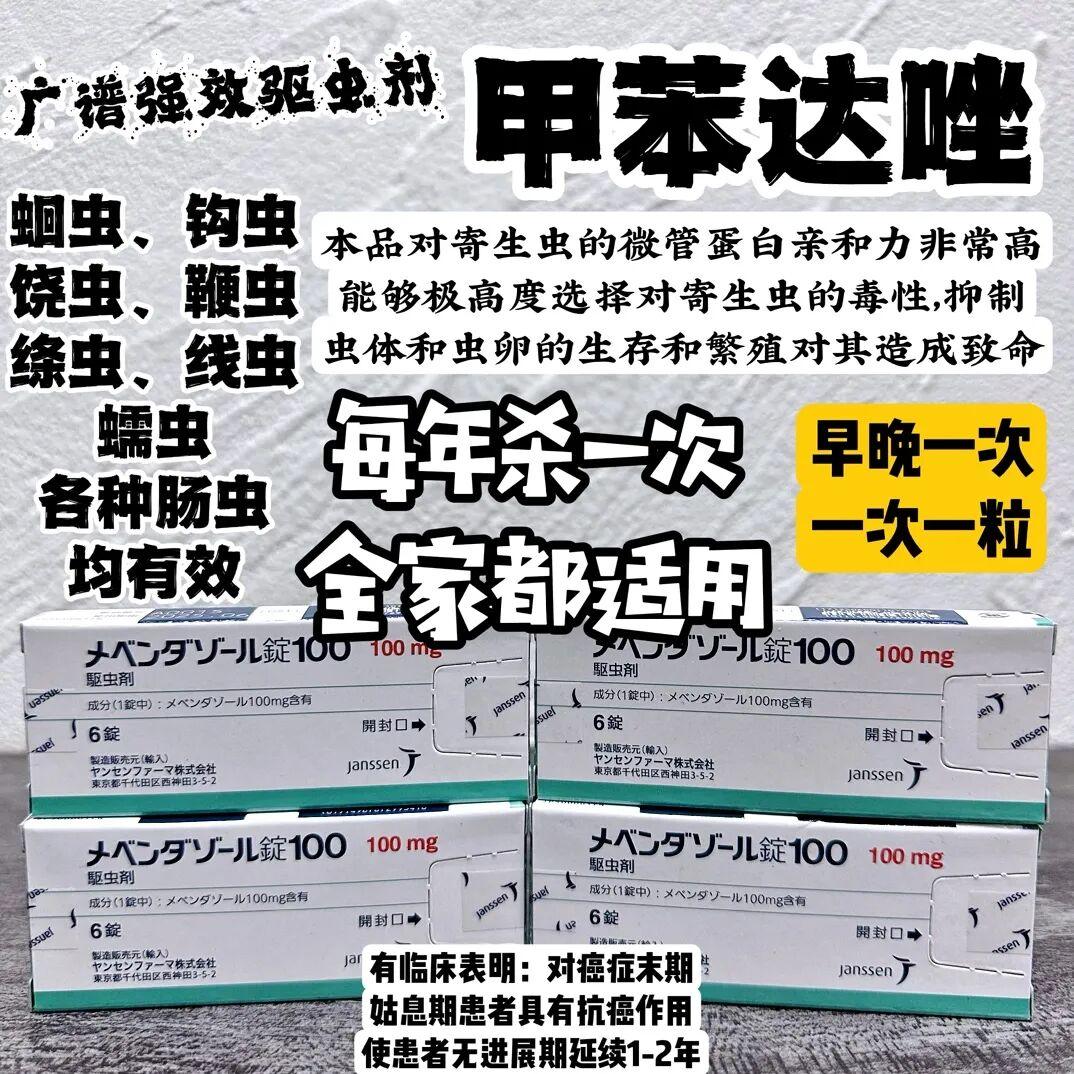
Mebendazole Broad-spectrum powerful insect repellent Insects, hookworms This product has very high affinity for microtubulin proteins in parasites There are abundant insects and whipworms It can highly selectively select and inhibit parasite toxicity The survival and reproduction of the insect bodies and eggs can be fatal Worms, nematodes Kill once a year Once in the morning or evening Various intestinal worms One at a time Suitable for the whole family - Erding 100 9-Er Ding 100 100mg Ingredient (1 in the middle): contains 100mg Ingredients (per tablet): 100mg per tablet Janssen Jansen Pharma Co., Ltd 3-5-2 Nishikanda, Chiyoda-ku, Tokyo + 829-Er Tablet 100100mg Ingredients (per tablet): 100mg contained Ingredients (per tablet) — 100mg contained There are clinical indications: for late-stage cancer 35-2 Nishikanda, Chiyoda-ku, Tokyo Palliative care patients have anti-cancer effects This allows patients to maintain a progression-free period for 1-2 years
甲苯达唑 广谱强效驱虫剂 蚂虫、钩虫 本品对寄生虫的微管蛋白亲和力非常高 饶虫、鞭虫 能够极高度选择对寄生虫的毒性,抑制 虫体和虫卵的生存和繁殖对其造成致命 虫、线虫 每年杀一次 早晚一次 各种肠虫 一次一粒 全家都适用 -儿锭100 9-儿锭100 100mg 成分(1中):一100mg含有 成分(1锭中):个一儿100mg有 Janssen ャンセンファーマ株式会社 东京都千代田区西神田3-5-2 +八二9-儿锭100100mg 成分(1锭中):一100mg含有 成分(1锭中))一100mg含有 有临床表明:对癌症末期 東京都千代田区西神田35-2 姑息期患者具有抗癌作用 使患者无进展期延续1-2年
Mebendazole Broad-spectrum powerful insect repellent Insects, hookworms This product has very high affinity for microtubulin proteins in parasites There are abundant insects and whipworms It…
Text in this image machine-read · may contain errors
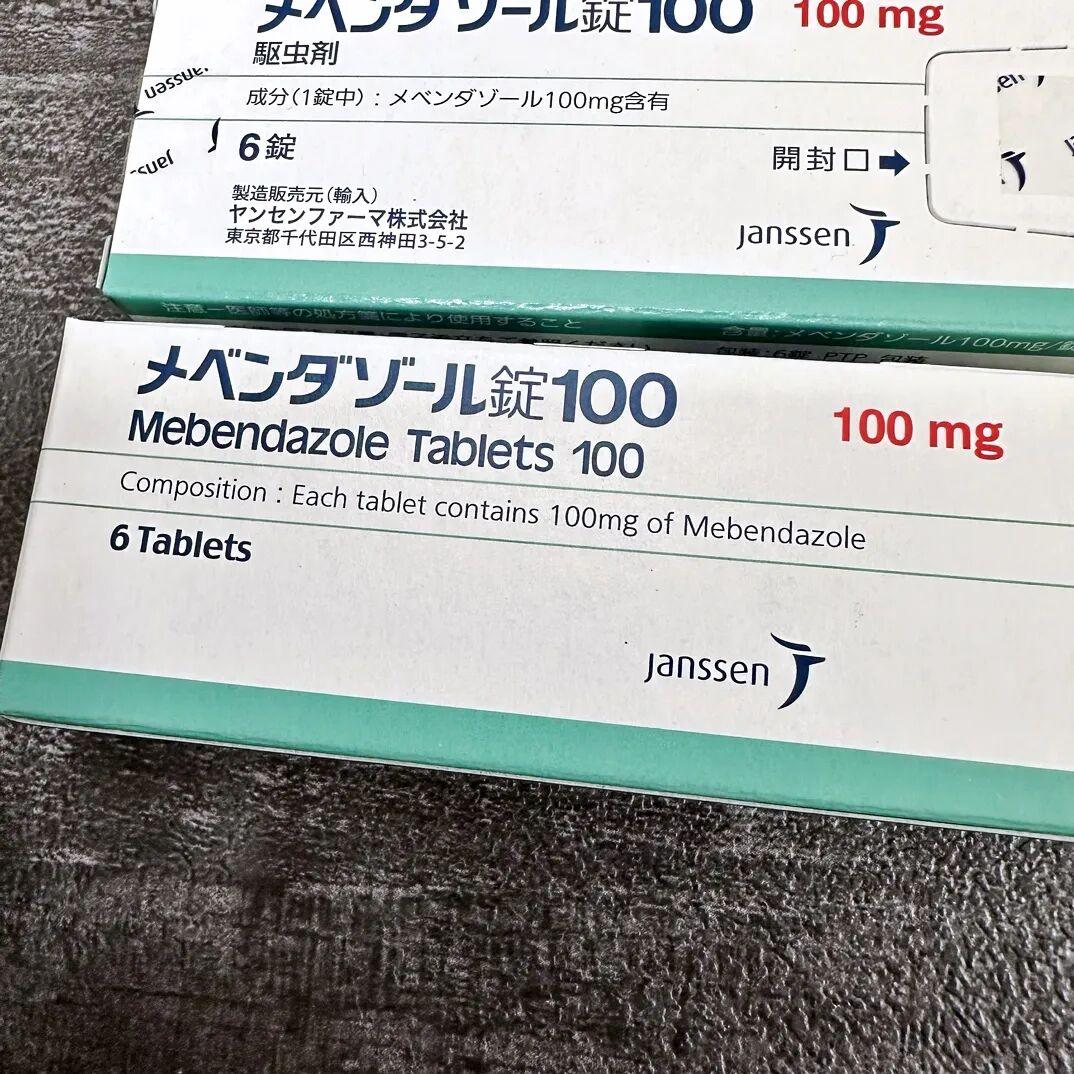
Ingredients (per tablet): ^100mg contains Manufacturer shell (input) Corporation Jansen Pharma Co., Ltd. - Erding 100 Mebendazole Tablets 100 Composition : Each tablet contains 100mg of Mebendazole 6Tablets 100 mg Janssen janssen
成分(1锭中):^一100mg含有 造販壳元(输入) 株式会社 ャンセンファーマ株式会社 -儿锭100 Mebendazole Tablets 100 Composition : Each tablet contains 100mg of Mebendazole 6Tablets 100 mg Janssen janssen
Ingredients (per tablet): ^100mg contains Manufacturer shell (input) Corporation Jansen Pharma Co., Ltd. - Erding 100 Mebendazole Tablets 100 Composition : Each tablet contains 100mg of Mebe…