Cardiovascular · CARDIOVASCULAR

Mikafi

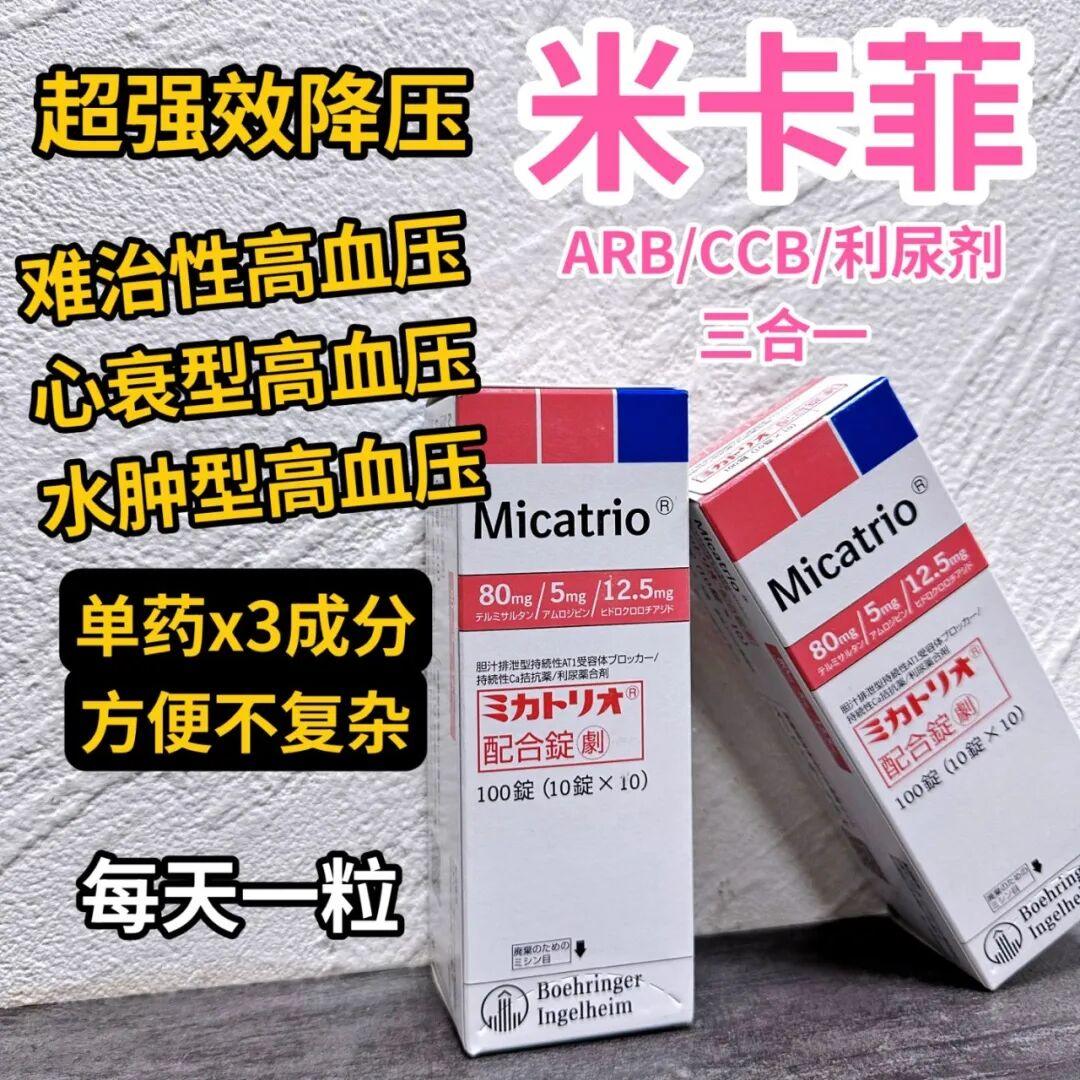
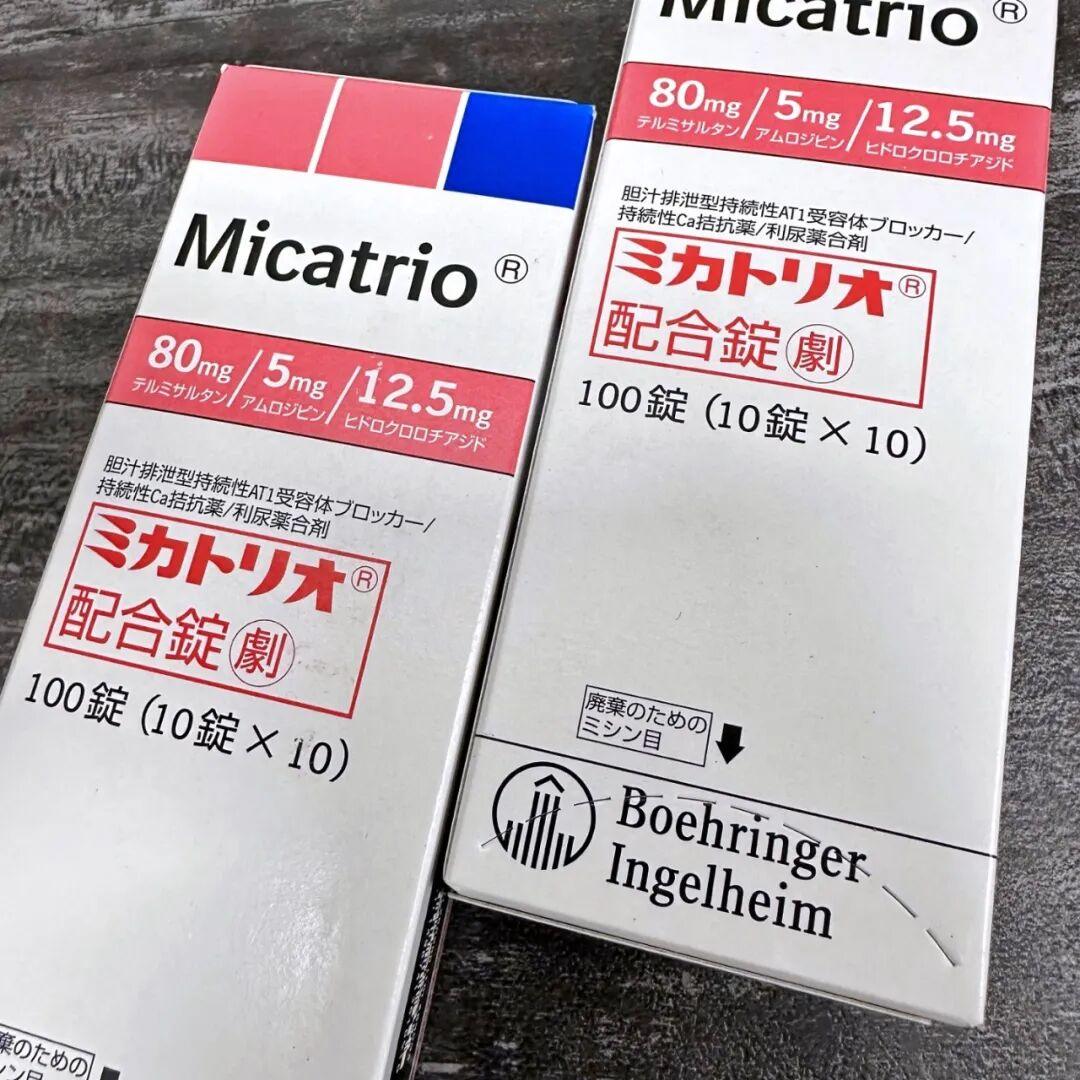
日本語原題:ミカトリオ配合錠

Published2025-04-07 08:59 FormTablet Content9 sections / 2 images Japanese nameミカトリオ配合錠
Ingredients / strength:
Active ingredients: 80mg of telmisartan per tablet, 6.93mg amlodipine besylate (5mg as amlodipine), 12.5mg hydrochlorothiazide. Additives: Meglumine, polyoxyethylene [160]polyoxypropylene [30]glycol, D-mannitol, crystalline cellulose, corn starch, hydroxypropyl cellulose, light anhydrous silica, magnesium stearate, hypromellose, macrogol 6000, titanium oxide, talc, ferric trioxide, yellow ferric trioxide.
English translation of the Japanese package insert is the main text; the Japanese original is shown alongside for verification. Use the language menu (top right) to read the page in another language. This site is for reference only — consult a doctor or pharmacist before use.
Section 1 · Feature description
English translation
The following reports have been made as Thermisartan. Mainly at angiotensin II (A-II) type 1 (AT1) receptors in vascular smooth muscle, it specifically antagonizes A-II, a physiological vasopressor, and inhibits its vasoconstrictive effect to exert a blood pressure-lowering effect. It has high affinity for AT1 receptors (Ki=3.7 nM) and does not dissociate easily from AT1 receptors. Within a concentration range of 10~1000 nM, the vasoconstriction response curve of A-II extracted rabbit aortic specimens is shifted to the right in a concentration-dependent manner, suppressing maximum constriction by 40~50%. Furthermore, significant vasoconstriction was observed even 120 minutes after specimen washing, with sustained effects. It also does not directly affect ACE (kininase II), a bradykinin-degrading enzyme. The following reports exist as amlodipine besylate. It specifically binds to membrane voltage-dependent calcium channels in the cell membrane, reducing the influx of Ca2+ into the cell, thereby relaxing the smooth muscle of coronary and peripheral blood vessels. The onset of calcium channel action is gradual and persistent. Additionally, it has weak cardiac depressive effects and has been recognized as vasoselective. The following reports exist as hydrochlorothiazide. It inhibits the reabsorption of Na+ and Cl- in the renal distal renal tubules, promoting water excretion. It also has carbonic anhydrase inhibitory effects. The antihypertensive effect is thought to be due to decreased circulating blood flow in the early stages and dilation of peripheral blood vessels in the long term.
Section 2 · Specifications
English translation
100 tablets [10 tablets (PTP)× 10 with desiccant]
Section 3 · Characteristics
English translation
Pale orange film-coated locks.
Section 4 · Ingredient Description
English translation
Active ingredients: 80mg of telmisartan per tablet, 6.93mg amlodipine besylate (5mg as amlodipine), 12.5mg hydrochlorothiazide. Additives: Meglumine, polyoxyethylene [160]polyoxypropylene [30]glycol, D-mannitol, crystalline cellulose, corn starch, hydroxypropyl cellulose, light anhydrous silica, magnesium stearate, hypromellose, macrogol 6000, titanium oxide, talc, ferric trioxide, yellow ferric trioxide.
Section 5 · Functions and indications
English translation
Hypertension.
Section 6 · Usage and dosage
English translation
For adults, one tablet is administered orally once daily (as telmisartan/amlodipine/hydrochlorothiazide 80mg/5mg/12.5mg). This drug is not used as the first-line drug for hypertension treatment.
Section 7 · Important notes
English translation
1. This drug is a combination of telmisartan 80 mg, amlodipine 5 mg, and hydrochlorothiazide 12.5 mg, and since side effects may occur with telmisartan, amlodipine, and hydrochlorothiazide, appropriate use should be considered. 2. There is a risk of elevated serum creatinine and serum uric acid levels; therefore, regularly monitor serum creatinine and serum uric acid levels and ensure thorough observation. 3. Since hydrochlorothiazide, an ingredient of this drug, is known to cause hypokalemia, regular monitoring of serum potassium levels should be conducted and thorough observation be performed. 4. The hydrochlorothiazide component of this drug may cause hyperuricemia; therefore, serum uric acid levels should be regularly monitored and thoroughly observed during administration. If elevated serum uric acid levels are observed, appropriate measures such as discontinuation of medication should be taken according to its severity. 5. Fainting, dizziness, or unsteadiness caused by blood pressure-lowering effects may occur, so caution is advised when operating dangerous machinery such as working at heights or driving cars. 6. It is desirable not to administer for 24 hours before surgery. Patients receiving angiotensin II receptor antagonists may experience severe hypotension due to the inhibitory effect of the renin-angiotensin system during anesthesia and surgery. 7. There have been reports of severe liver damage such as hepatitis occurring during administration of angiotensin II receptor antagonists containing Thermisartan, so perform liver function tests and conduct thorough observation. 8. Amlodipine, the active ingredient of this drug, has a long blood concentration half-life and a gradual antihypertensive effect even after discontinuation. Therefore, when using other antihypertensive agents after discontinuation, administer with caution, paying attention to dosage and intervals. 9. The diuretic effect of this drug may appear suddenly, so be especially cautious of electrolyte imbalance and dehydration. 10. If you use it repeatedly, electrolyte imbalances may occur, so regular tests are recommended. 11. Severe blood disorders may occur, so regular examinations and thorough observation are essential. 12. For patients who particularly need nighttime rest, it is preferable to administer in the morning to avoid nighttime urination.
Section 8 · Side effects
English translation
1. Angioedema (frequency unknown) Angioedema characterized by swelling of the face, lips, pharynx, larynx, and tongue has appeared, and cases of difficulty breathing caused by laryngeal edema and other factors have been reported. 2. Hyperkalemia (frequency unknown) 3. Hyponatremia (frequency unknown) Hyponatremia accompanied by fatigue, loss of appetite, nausea, vomiting, and impaired consciousness may occur. It is often elderly and tends to show up. 4. Renal dysfunction (frequency unknown) Cases of acute kidney injury have been reported. 5. Shock, fainting (frequency unknown), loss of consciousness (less than 0.5%) If symptoms such as coldness, vomiting, or loss of consciousness appear, take appropriate treatment immediately. 6. Fulminant hepatitis, liver dysfunction, jaundice (all of unknown frequency) Hepatic fulminant hepatitis, liver dysfunction accompanied by elevated levels of AST, ALT, AL-P, LDH, and γ-GTP may occur. 7. Hypoglycemia (frequency unknown) If weakness, hunger, cold sweats, hand tremors, decreased concentration, convulsions, or impaired consciousness appear, discontinue administration and provide appropriate treatment. It is more likely to appear in patients undergoing diabetes treatment. 8. Anaphylaxis (frequency unknown) Symptoms such as difficulty breathing, low blood pressure, and laryngeal edema may appear. 9. Aplastic anemia, hemolytic anemia (both frequency unknown) [see 8.11] 10. Interstitial pneumonia, pulmonary edema, acute respiratory distress syndrome (all frequency unknown) Interstitial pneumonia and pulmonary edema accompanied by fever, cough, difficulty breathing, abnormal chest X-rays, and other symptoms may occur; in such cases, discontinue administration and take appropriate measures such as administering corticosteroids. There have also been reports of acute respiratory distress syndrome appearing within minutes to hours after taking hydrochlorothiazide. 11. Rhabdomyolysis (frequency unknown) Rhabdomyolysis, characterized by muscle pain, weakness, increased CK (high respiratory cancer score), and elevated myoglobin in blood and urine, may occur; in such cases, administration should be discontinued immediately and appropriate treatment taken. Also, be cautious of the onset of acute kidney damage caused by rhabdomyolysis. 12. Agranulocytosis, leukopenia, thrombocytopenia (all unknown frequency) 13. Atrioventricular block (frequency unknown) Early symptoms such as bradycardia and dizziness may appear. 14. Acute myopia, angle-closure glaucoma (both frequency unknown) Acute myopia (including fog, vision loss, etc.) and angle-closure glaucoma may occur; if sudden vision loss or eye pain occurs, discontinue administration and promptly consult an ophthalmologist. 15. Necrotizing vasculitis (frequency unknown) 16. Worsening of systemic lupus erythematosus (frequency unknown)
Section 9 · Taboo
English translation
1. Patients with a history of hypersensitivity to the ingredients of this drug, dihydropyridine compounds, thiazide drugs, or their analogues (e.g., sulfonamide derivatives such as chlortharidone) 2. Pregnant women or women who may be pregnant 3. Patients with liver impairment 4. Patients with anuria or those undergoing hemodialysis [No expected efficacy of this drug. ] 5. Patients with acute renal failure 6. Patients with a clear decrease in sodium and potassium in body fluids [may worsen electrolyte imbalances such as hyponatremia or hypokalemia]. ]] 7. Diabetic patients receiving aliskilene fumarate (except for patients whose blood pressure control remains severely poor despite other antihypertensive treatments) 8. Patients receiving desmopressin acetate hydrate (nocturia causing frequent urination in men)

Source images

2 images

Need help sourcing Japanese medicines or OEM production?

💬