Omeisartan oral parsitis tablets
日本語原題:オルメサルタンOD錠40mg「DSEP」
Active ingredient: Ormesaltan Medoxomil (Japanese formula) 40mg per tablet. Additives: crystalline cellulose, β-cyclodextrin, carmerose, sucralose, potassium acesulfame, magnesium stearate, fragrance.
Source images
2 imagesThe artwork keeps its original Japanese/Chinese lettering. Open “Text in this image” under a picture to read what it says in your language (machine-read, may contain errors).
Text in this image machine-read · may contain errors
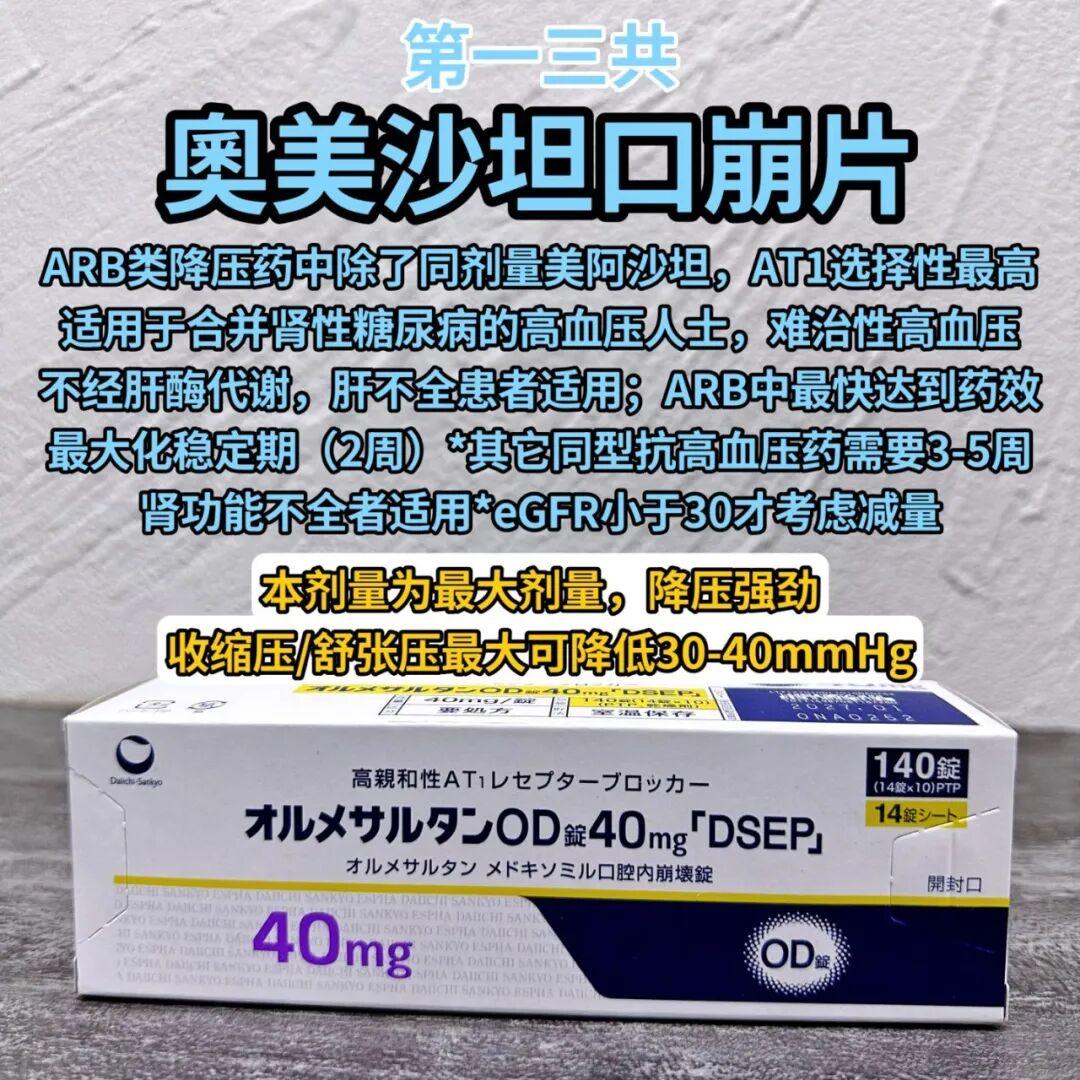
Daiichi Sankyo Omeisartan Oral Decay Tablets Among ARB antihypertensive drugs, except for measartan at the same dose, AT1 has the highest selectivity Suitable for patients with hypertension complicated by renal diabetes, refractory hypertension Not metabolized by liver enzymes, suitable for patients with liver failure; Fastest to achieve drug efficacy among ARBs (2 weeks) *Other homotophemo antihypertensive drugs require 3-5 weeks Maximizing the Stability Period Suitable for patients with renal insufficiency* Dose reduction should only be considered if eGFR is below 30 This dose is the maximum dose, Strong blood pressure reduction Systolic/diastolic pressure can be reduced by up to 30-40 mmHg 140 ingots High Affinity ATI Receptor Blocker (14 Diamonds× 10 PTP Ormesartan OD Tablets 40mg "DSE" Ormesultan Medoxomirolo Intracavitary Disintegration Tablets open the seal
第一三共 奥美沙坦口崩片 ARB类降压药中除了同剂量美阿沙坦,AT1选择性最高 适用于合并肾性糖尿病的高血压人士,难治性高血压 不经肝酶代谢,肝不全患者适用;ARB中最快达到药效 (2周)*其它同型抗高血压药需要3-5周 最大化稳定期 肾功能不全者适用*eGFR小于30才考虑减量 本剂量为最大剂量, 降压强劲 收缩压/舒张压最大可降低30-40mmHg 140锭 高親和性 ATI レセプタープロッカー (14菱×10PTP オルメサルタン OD 錠 40mg 「 DSE オルメサルタンメドキソミルロ腔内崩壊錠 開封口
Daiichi Sankyo Omeisartan Oral Decay Tablets Among ARB antihypertensive drugs, except for measartan at the same dose, AT1 has the highest selectivity Suitable for patients with hypertension …
Text in this image machine-read · may contain errors
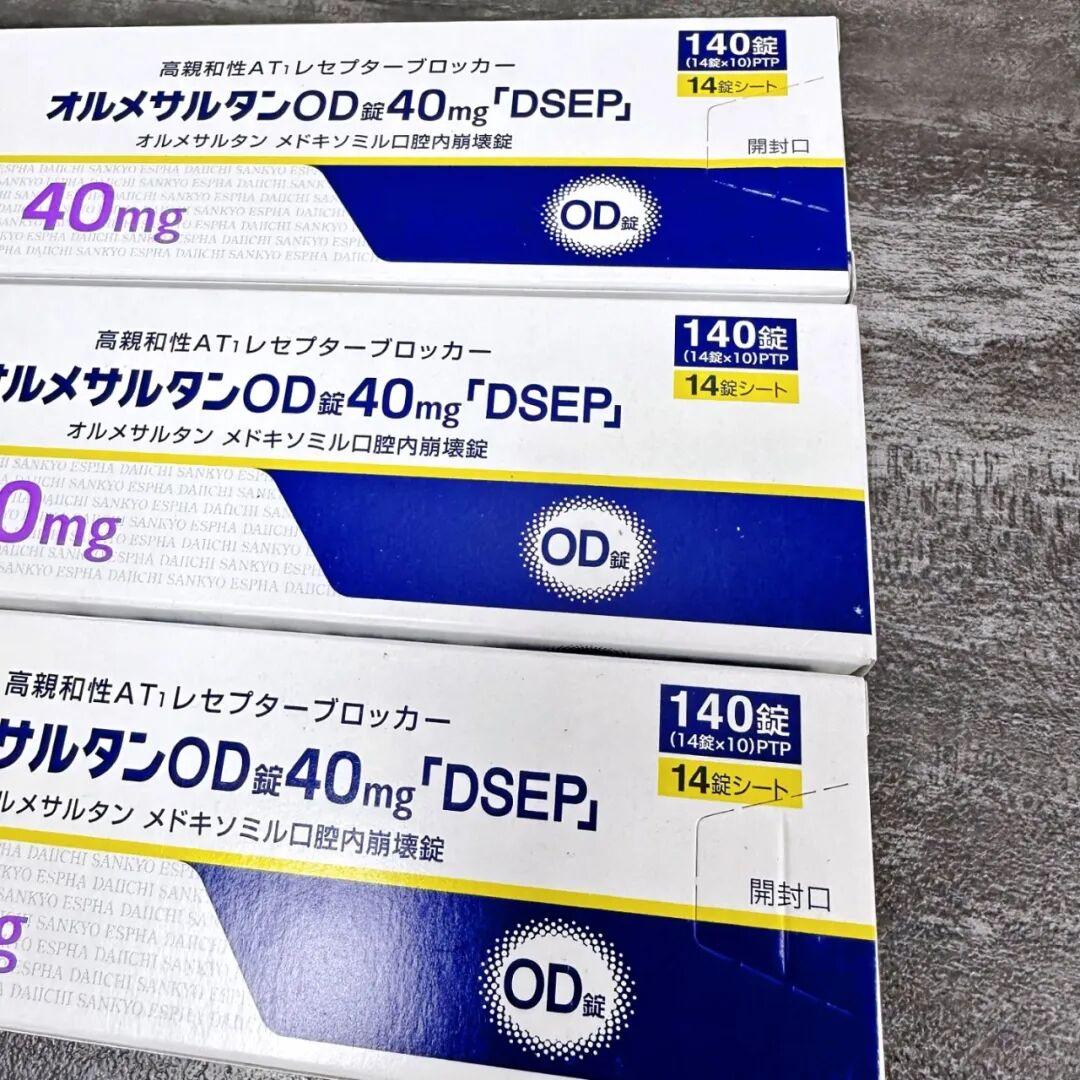
140 ingots (14 rotations× 10) PTP High Affinity AT Nanasun Yu One-Bite Force- Ormesultan Medoxomirolo Intracavitary Disintegration Tablets JSANNTOESHADAHCHSAN NCHISANOESOHADAOCHISA SANKYOESPHADAJIC PSPHADAHICHISANY PHADAICHTSANRYPESP HADAICHSANRYOTSPHADAHISANRYO ESPHADAH High Affinity ATJ Receptor Blocker (14 rotations× 10) PTP Lumesartan OD Tablets 40mg "DSE" 14 ingots for one divination DSEP Only three tablets had broken into his mouth, HISANKYOESPHADAIICHISAN ICHISANKYOESPHADANCIH SA SANNYO ESPHADAICH BSPHADACHISANRYO SPHA DAJCHISANKYOESI SANKFOPSPHADAHCHI SANKYOESPHADABC High Affinity ATI Receptor Blocker (14 ingots×10) PTP D40mgDSEP Mesartan Medoxomyllo Intracavitary Disintegration Tablets KYOESPHA DALICHI SAN SANKYOESPHADAICHLSY SANKYOESPHA DAHCT ESPHA DAIICHISANY ESPHA DAICHI SANKYO EIU DAIICHI SANRYOESPIEONN
140锭 (14旋×10)PTP 高親和性AT七寸夕一口力- オルメサルタンメドキソミルロ腔内崩壊錠 JSANNTOESHADAHCHSAN NCHISANOESOHADAOCHISA SANKYOESPHADAJIC PSPHADAHICHISANY PHADAICHTSANRYPESP HADAICHSANRYOTSPHADAHISANRYO ESPHADAH 高親和性 ATJ レセプタープロッカー (14旋×10)PTP ルメサルタン OD 錠 40mg 「 DSE 14锭一卜 DSEP 才三口腔内崩锭 HISANKYOESPHADAIICHISAN ICHISANKYOESPHADANCIH SA SANNYO ESPHADAICH BSPHADACHISANRYO SPHA DAJCHISANKYOESI SANKFOPSPHADAHCHI SANKYOESPHADABC 高親和性 ATI レセプタープロッカー (14锭×10)PTP D40mgDSEP しメサルタンメドキソミルロ腔内崩壊錠 KYOESPHA DALICHI SAN SANKYOESPHADAICHLSY SANKYOESPHA DAHCT ESPHA DAIICHISANY ESPHA DAICHI SANKYO EIU DAIICHI SANRYOESPIEONN
140 ingots (14 rotations× 10) PTP High Affinity AT Nanasun Yu One-Bite Force- Ormesultan Medoxomirolo Intracavitary Disintegration Tablets JSANNTOESHADAHCHSAN NCHISANOESOHADAOCHISA SANKYOESP…