Jieci Rui 20mg
日本語原題:ロンゲス錠20mg
Active ingredient: Each tablet contains 21.8mg of Japan-Formula Ricinopril Hydrate (20mg as anhydrous). Additives: D-mannitol, calcium hydrogen phosphate hydrate, corn denpu, aphharized starch, magnesium stearate, yellow ferric oxide.
Source images
2 imagesThe artwork keeps its original Japanese/Chinese lettering. Open “Text in this image” under a picture to read what it says in your language (machine-read, may contain errors).
Text in this image machine-read · may contain errors
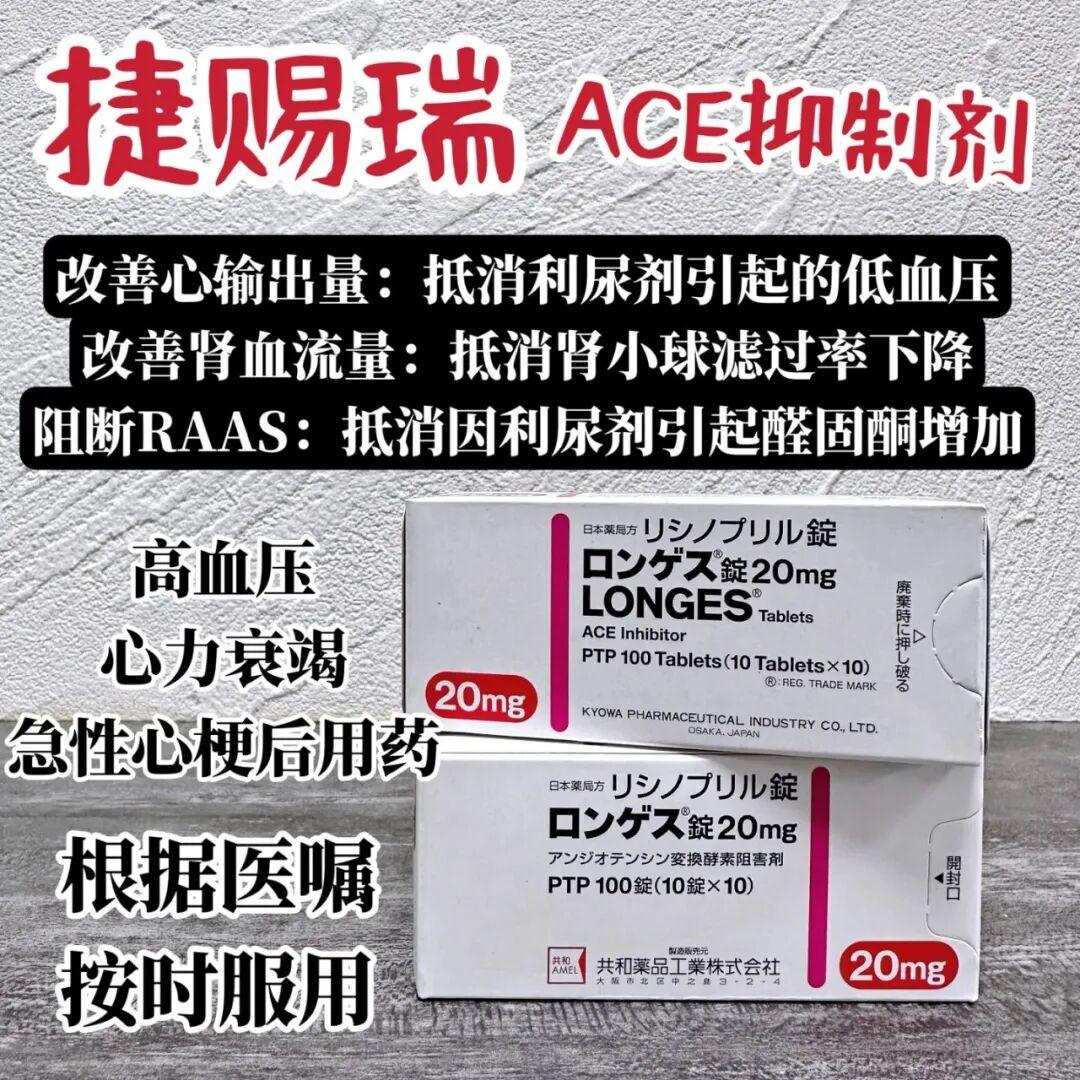
Jie Cirui ACE inhibitors Improving cardiac output: counteracting hypotension caused by diuretics Improving renal blood flow: offsetting the decline in glomerular filtration rate Blocking RAAS: Counteracting the increase in aldosterone caused by diuretics - Prescription Lisinobril Tablets Hypertension Lonkes Tablets 20mg LONGES Tablets ACE Inhibitor heart failure PTP100Tablets(10Tablets×10) ? REG,TRADEMARK 20mg KYOWAPHARMACEUTICALINDUSTRYCO,LTD. Post-Acute Myocardial Infarction Medication OSAKA. JAPAN Nippon Yakuho Lisinobril Tablets Longes Tablets 20mg According to medical advice Angiotensin-converting enzyme inhibitor PTP 100 tablets (10 tablets × 10) Take on time Kyowa Pharmaceutical Industry Co., Ltd.
捷赐瑞 ACE抑制剂 改善心输出量:抵消利尿剂引起的低血压 改善肾血流量:抵消肾小球滤过率下降 阻断RAAS: 抵消因利尿剂引起醛固酮增加 ー局方リシノブリル錠 高血压 ロンケス錠 20mg LONGES Tablets ACE Inhibitor 心力衰竭 PTP100Tablets(10Tablets×10) ?REG,TRADEMARK 20mg KYOWAPHARMACEUTICALINDUSTRYCO,LTD. 急性心梗后用药 OSAKA.JAPAN 日本薬舫リシノブリル錠 ロンゲス錠 20mg 根据医嘱 アンジオテンシン変換酵素阻書剤 PTP100锭(10锭×10) 按时服用 共和藥品工业株式会社
Jie Cirui ACE inhibitors Improving cardiac output: counteracting hypotension caused by diuretics Improving renal blood flow: offsetting the decline in glomerular filtration rate Blocking RAA…
Text in this image machine-read · may contain errors
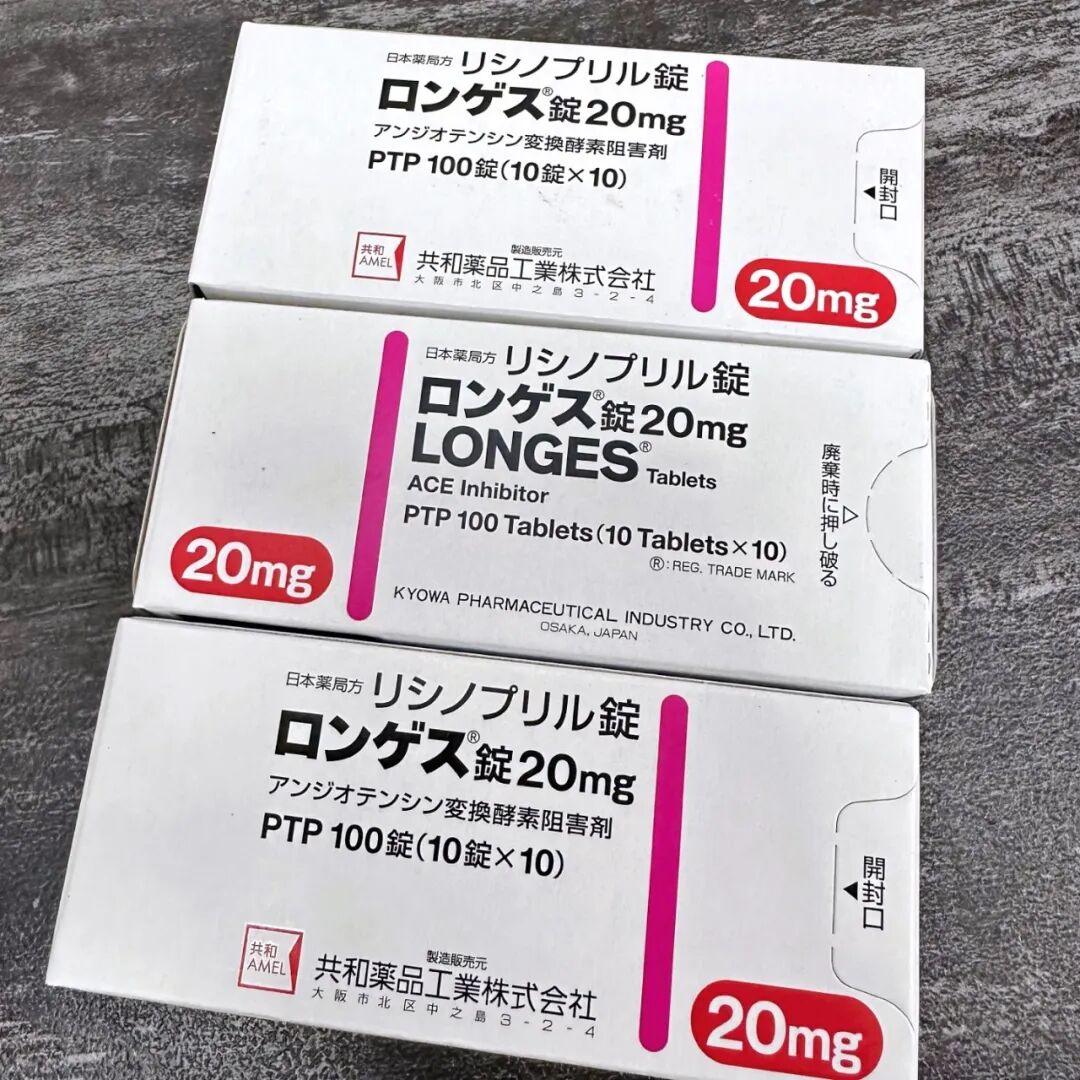
Lonkes Tablets 20mg Only then can enzymes be transformed to block the damage Angiotensin-converting enzyme inhibitors Kyowa Pharmaceutical Industry Co., Ltd. AMEL 20mg Banshi Kita District Nakanoshima 3 Lisinobril Tablets Longes Tablets 20mg LONGES Tablets ACE Inhibitor PTP100Tablets(10Tablets×10) ?:REG. TRADEMARK KYOWAPHARMACEUTICALINDUSTRY CO.,LTD. OSAKAJAPAN Japanese Leaf Bureaus Japanese Pharmacopoeia Lisinobril Tablets Kyowa Pharmaceutical Industry Co., Ltd. 324 Nakanoshima, North District, Daban City
ロンケス錠 20mg 才变换酵素阻害 アンジオテンシン変換酵素阻害剤 共和藥品工業株式会社 AMEL 20mg 版市北区中之岛3 リシノブリル錠 ロンゲス錠 20mg LONGES Tablets ACE Inhibitor PTP100Tablets(10Tablets×10) ?:REG.TRADEMARK KYOWAPHARMACEUTICALINDUSTRY CO.,LTD. OSAKAJAPAN 日本葉局方 日本薬局方リシノブリル錠 共和藥品工业株式会社 大版市北区中之岛324
Lonkes Tablets 20mg Only then can enzymes be transformed to block the damage Angiotensin-converting enzyme inhibitors Kyowa Pharmaceutical Industry Co., Ltd. AMEL 20mg Banshi Kita District N…