Tigrello
日本語原題:ブリリンタ錠90mg
Active ingredient: 90mg of ticagrelol per tablet. Additives: D-mannitol, calcium hydrogen phosphate hydrate, sodium starch glycolate, hydroxypropyl cellulose, magnesium stearate, hypromellose, titanium oxide, talc, macrogol 400, yellow ferric oxide.
Source images
4 imagesThe artwork keeps its original Japanese/Chinese lettering. Open “Text in this image” under a picture to read what it says in your language (machine-read, may contain errors).
Text in this image machine-read · may contain errors
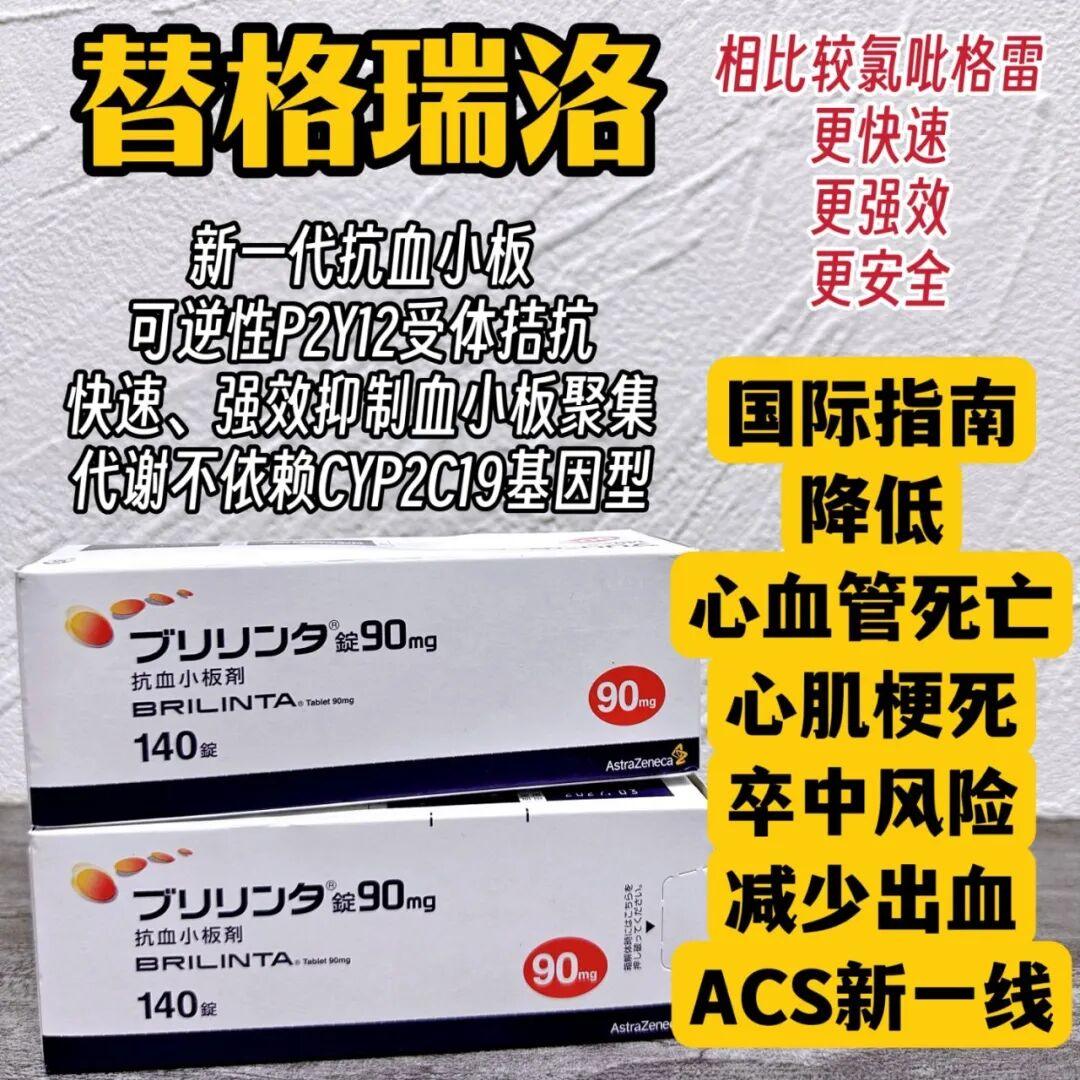
Tigrello Compared to clopidogrel Faster More effective A new generation of antiplatelets Safer Reversible P2Y12 receptor antiresistance Rapid and potent inhibition of platelet aggregation International guide Metabolism does not depend on CYP2C19 genotype Cardiovascular death Friricotta Tablets 9 Wide 9 Antiplatelet agents Myocardial infarction 90m AstraZeneca Stroke risk Reduces bleeding Pririkota tablets 90 ACS New Frontline AstraZene
替格瑞洛 相比较氯吡格雷 更快速 更强效 新一代抗血小板 更安全 可逆性P2Y12受体抗 快速、强效抑制血小板聚集 国际指南 代谢不依赖CYP2C19基因型 心血管死亡 フリリコタ錠 9 広 9 抗血小板劑 心肌梗死 90m AstraZeneca 卒中风险 减少出血 プリリコタ錠 90 ACS新一线 AstraZene
Tigrello Compared to clopidogrel Faster More effective A new generation of antiplatelets Safer Reversible P2Y12 receptor antiresistance Rapid and potent inhibition of platelet aggregation In…
Text in this image machine-read · may contain errors
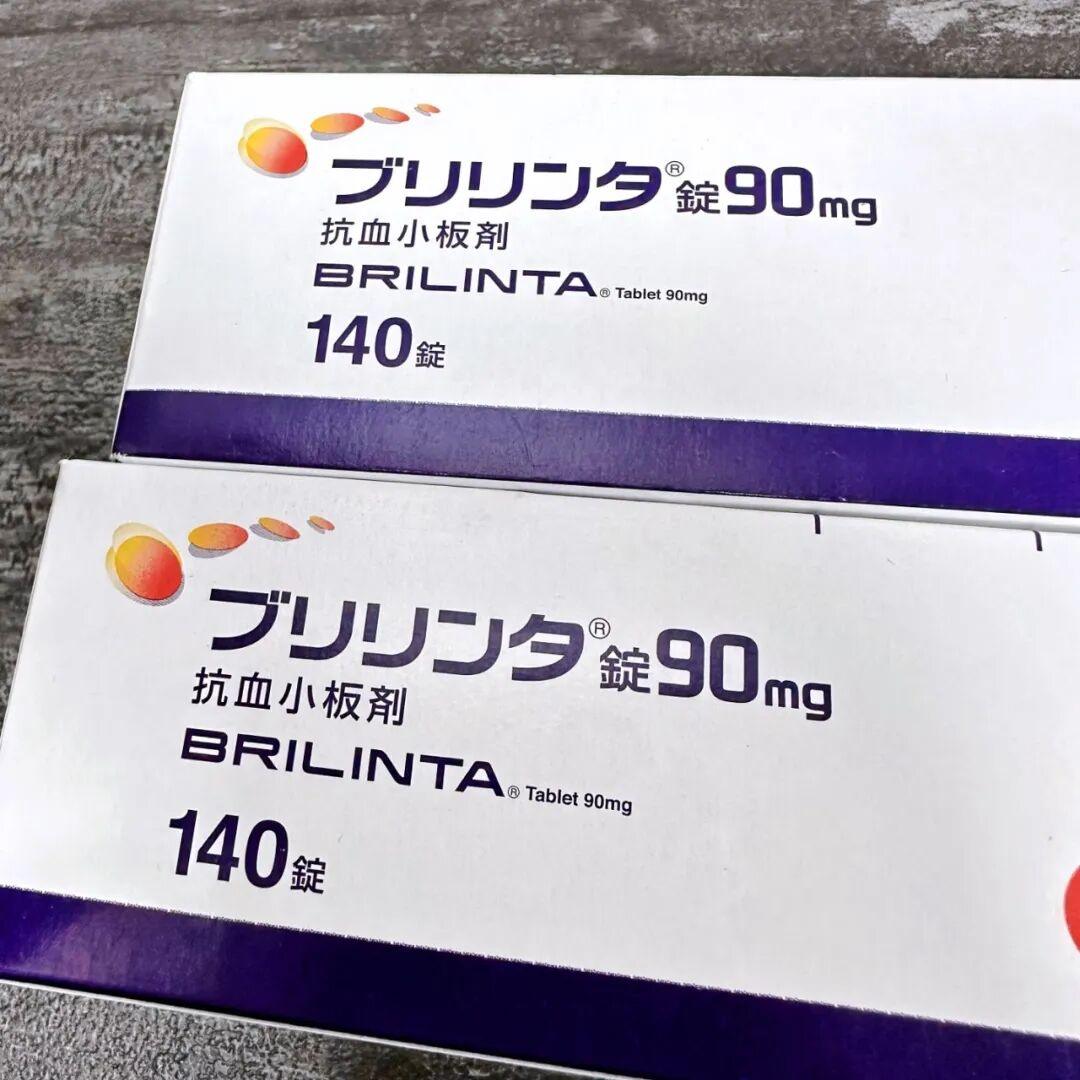
Antiplatelet agents BRILINTA Tablet 90mg 90mg Priricotta Tablets 90 BRILINTA ? Tablet90mg
抗血小板剂 BRILINTA Tablet 90mg 90mg プリリコタ錠 90 BRILINTA ?Tablet90mg
Antiplatelet agents BRILINTA Tablet 90mg 90mg Priricotta Tablets 90 BRILINTA ? Tablet90mg…
Text in this image machine-read · may contain errors
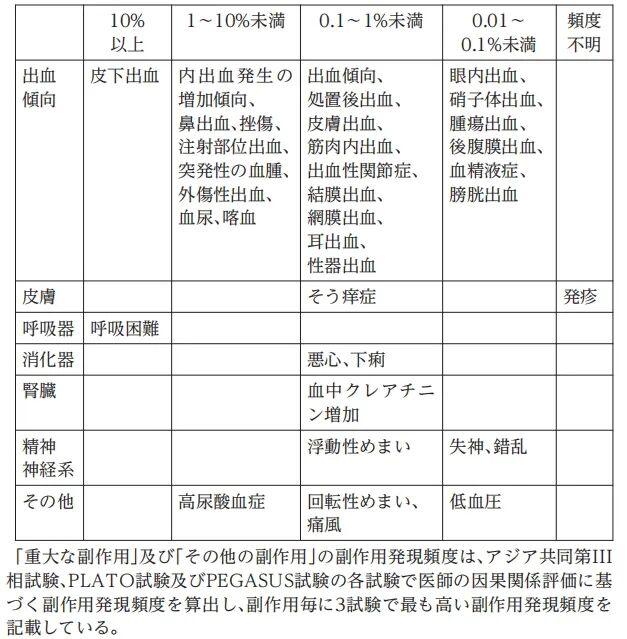
1~10% is less than full 0.1~1% is less than full 0.01~ 0.1% is less than full Subcutaneous bleeding Internal bleeding caused Yao Sheng Bleeding tendency, Intraocular bleeding, Increasing tendencies, Disposal of Xiao Bleeding, Vitreous hemorrhage, Nosebleeds, bruises, Bleeding from the skin and shoulder, Sleep cancer bleeding, Bleeding at the injection site, intramuscular bleeding, Xiao peritoneal hemorrhage, Sudden blood coma, hematospermia, Traumatic bleeding, Rough membrane bleeding, Bladder bleeding Hematuria, hemoptysis Ear bleeding, Genital bleeding Respirator Breathing is difficult Blood Creatini Hyperuricemia [Serious Adverse Effects and Other Adverse Reactions' Side Effect Frequency Test, Joint Session III Evaluation of causal relationships among physicians in phase tests, PLATO tests, and UPEGASUS tests It is described.
1~10%未满 0.1~1%未满 0.01~ 0.1%未满 皮下出血 内出血尧生の 出血倾向、 眼内出血、 增加倾向、 处置筱出血、 硝子体出血、 鼻出血、挫傷、 皮肩出血、 睡癌出血、 注射部位出血、 筋肉内出血、 筱腹膜出血、 突性の血睡、 血精液症、 外傷性出血、 糙膜出血、 膀胱出血 血尿、喀血 耳出血、 性器出血 呼吸器 呼吸困 血中クレアチニ 高尿酸血症 【重大副作用及の他の副作用」の副作用凳现频度试、了了共同第III 相試驗、PLATO試驗及UPEGASUS試驗の各試驗医の因果关係评俩基 記載している。
1~10% is less than full 0.1~1% is less than full 0.01~ 0.1% is less than full Subcutaneous bleeding Internal bleeding caused Yao Sheng Bleeding tendency, Intraocular bleeding, Increasing ten…
Text in this image machine-read · may contain errors
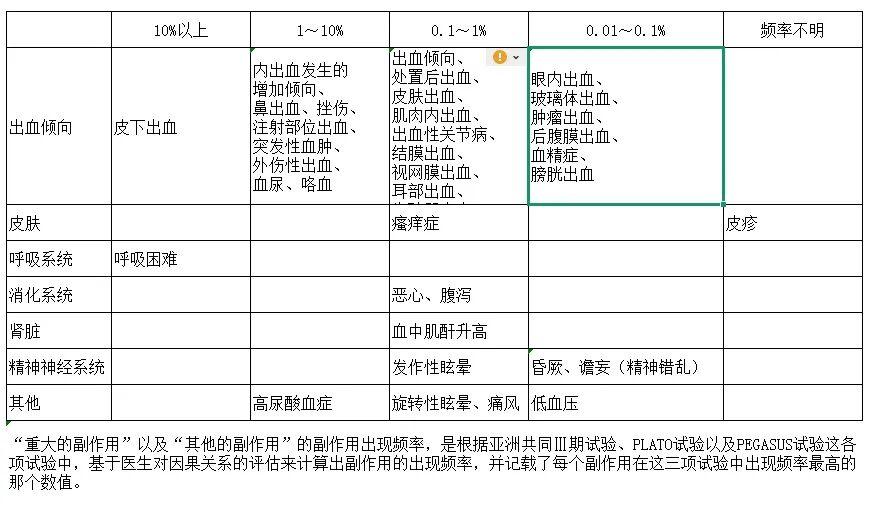
Over 10%. Frequency unknown 0. 1~ 1% 0. 01~~0. 1% Bleeding tendency, Internal bleeding occurs Bleeding after treatment, Intraocular bleeding, Increasing tendencies, Skin bleeding, Vitreous hemorrhage, Nosebleeds, bruises, intramuscular bleeding, Tumor bleeding Bleeding tendency Subcutaneous bleeding Bleeding at the injection site, Hemorrhagic joint disease, retroperitoneal hemorrhage, Sudden hematoma, Conjunctival hemorrhage, hematospermia, Traumatic bleeding, Retinal hemorrhage, Bladder bleeding Ear bleeding, Respiratory system Difficulty breathing Digestive system Nausea and diarrhea Elevated creatinine in the blood Psychiatric nervous system Paroxysmal vertigo Xiangjue, Puwang (mental confusion) Rotational vertigo, gouty hypotension Hyperuricemia The frequency of adverse reactions for "major adverse reactions" and "other adverse reactions" is based on the Asia Phase I trial, PLATO trial, and PEGASUS trial In these trials, the frequency of side effects was calculated based on doctors' assessment of causality, and the frequency of side effects among these three trials was recorded That value.
10%以上 频率不明 0. 1~ 1% 0. 01~~0. 1% 出血倾向、 内出血发生的 处置后出血、 眼内出血、 增加倾向、 皮肤出血、 玻璃体出血、 鼻出血、挫伤、 肌肉内出血、 肿瘤出血 出血倾向 皮下出血 注射部位出血、 出血性关节病、 后腹膜出血、 突发性血肿、 结膜出血、 血精症、 外伤性出血、 视网膜出血、 膀胱出血 耳部出血、 呼吸系统 呼吸困难 消化系统 恶心、腹泻 血中肌酐升高 精神神经系统 发作性眩晕 香厥、谱妄(精神错乱) 旋转性眩晕、痛风低血压 高尿酸血症 “重大的副作用”以及“其他的副作用”的副作用出现频率,是根据亚洲共同I期试验、PLATO试验以及PEGASUS试验这各 项试验中,基于医生对因果关系的评估来计算出副作用的出现频率,并记载了每个副作用在这三项试验中出现频率最高的 那个数值。
Over 10%. Frequency unknown 0. 1~ 1% 0. 01~~0. 1% Bleeding tendency, Internal bleeding occurs Bleeding after treatment, Intraocular bleeding, Increasing tendencies, Skin bleeding, Vitreous h…