Cardiac and asthma treatment medication
日本語原題:ネオフィリン錠100mg
Active ingredient: 1 tablet of China-Japan Domestic Aminophylline Hydrate 100mg. Additives: calcium carmerose, calcium stearate, corn starch, hydroxypropyl cellulose, povidone.
Source images
2 imagesThe artwork keeps its original Japanese/Chinese lettering. Open “Text in this image” under a picture to read what it says in your language (machine-read, may contain errors).
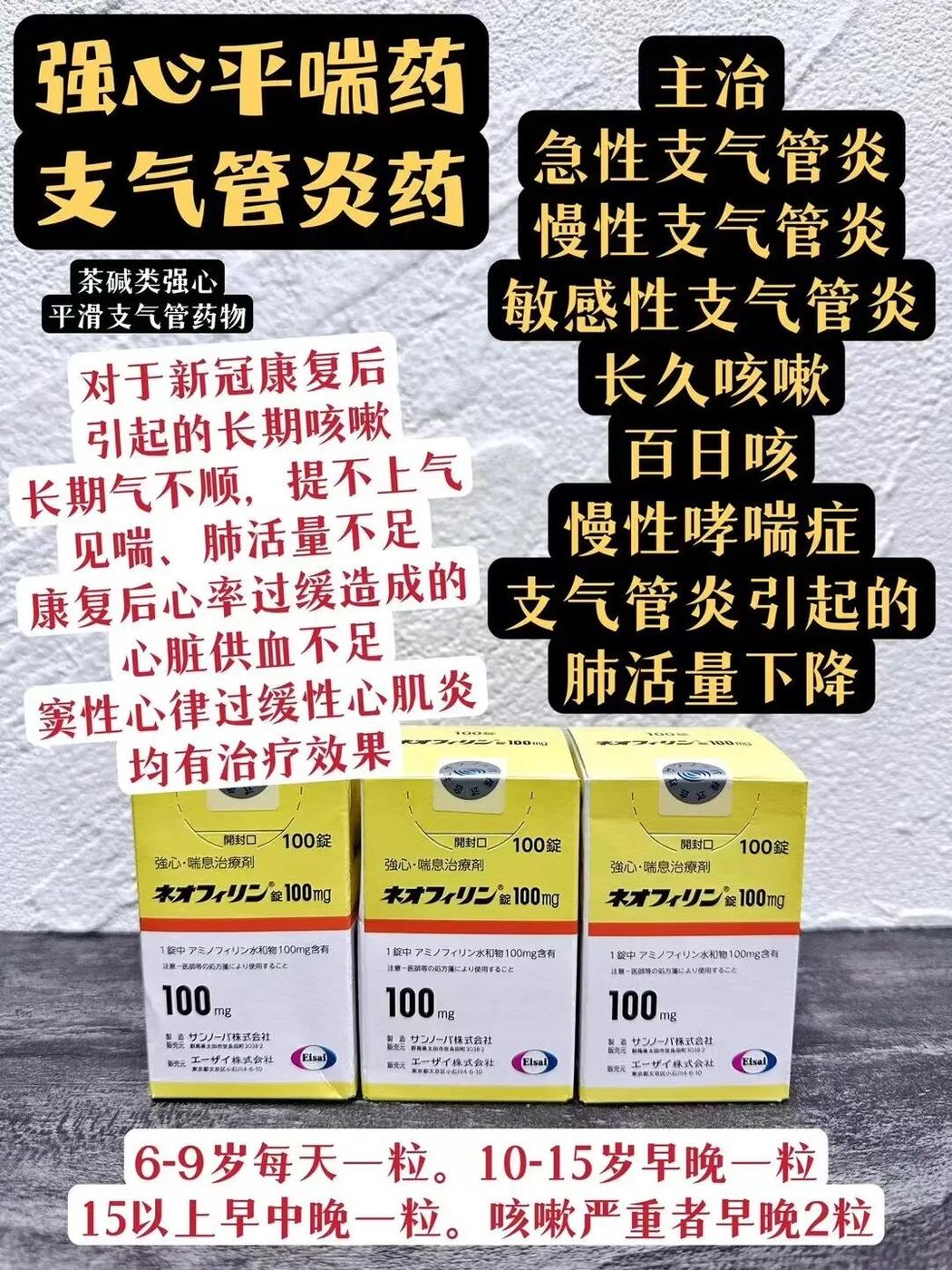
Text in this image machine-read · may contain errors
Heart strengthening and asthma-calming medicine Acute bronchitis Bronchitis medication Chronic bronchitis Theophylline strengthens the heart Sensitive bronchitis Bronchial smoothing drugs For those recovering from COVID Prolonged cough Causes a prolonged cough Pertussis Long-term shortness of breath, difficulty breathing Chronic asthma Asthma and insufficient lung capacity are present Bradycardia after rehabilitation Caused by bronchitis Insufficient blood supply to the heart Decreased lung capacity Sinus bradycarditis myocarditis All have therapeutic effects 100 ingots Heart Strengthening and Asthma Treatment Cardiac and asthma treatment agents Heart strengthening, asthma relief, and stasis treatment agent Qiudi Purin Tablets 100mq Tablets 100mg Suspected 100mg 1 system contains 7 tri / 7 capsules / 100 mg of water and substance - Medium aminophyllin aqueous phase 100n1g present 1 Xuan Zhong 7 people 74> contains 100mg of water and substances 100 m Tsunoha Co., Ltd Daidai Linnova Monoshisha Ages 6-9, one tablet daily. For ages 10-15, take one tablet in the morning and evening 15 or more: one capsule in the morning, noon, and evening. For severe cough, take 2 capsules in the morning and evening
强心平喘药 急性支气管炎 支气管炎药 慢性支气管炎 茶碱类强心 敏感性支气管炎 平滑支气管药物 对于新冠康复后 长久咳嗽 引起的长期咳嗽 百日咳 长期气不顺,提不上气 慢性哮喘症 见喘、肺活量不足 康复后心率过缓造成的 支气管炎引起的 心脏供血不足 肺活量下降 窦性心律过缓性心肌炎 均有治疗效果 100锭 强心·喘息治剂 强心·喘息治療剂 强心·喘息治瘀劑 求第プイリン錠 100mq 锭100mg 疑100mg 1统中7三/7个/水和物100mg含有 ー中アミノフィリン水相を 100n1g き有 1旋中7三人74>水和物100mg含有 100 m 第応ツンノーハ株式第社 第第リンノーバ物式社 6-9岁每天一粒。10-15岁早晚一粒 15以上早中晚一粒。咳嗽严重者早晚2粒
Heart strengthening and asthma-calming medicine Acute bronchitis Bronchitis medication Chronic bronchitis Theophylline strengthens the heart Sensitive bronchitis Bronchial smoothing drugs Fo…
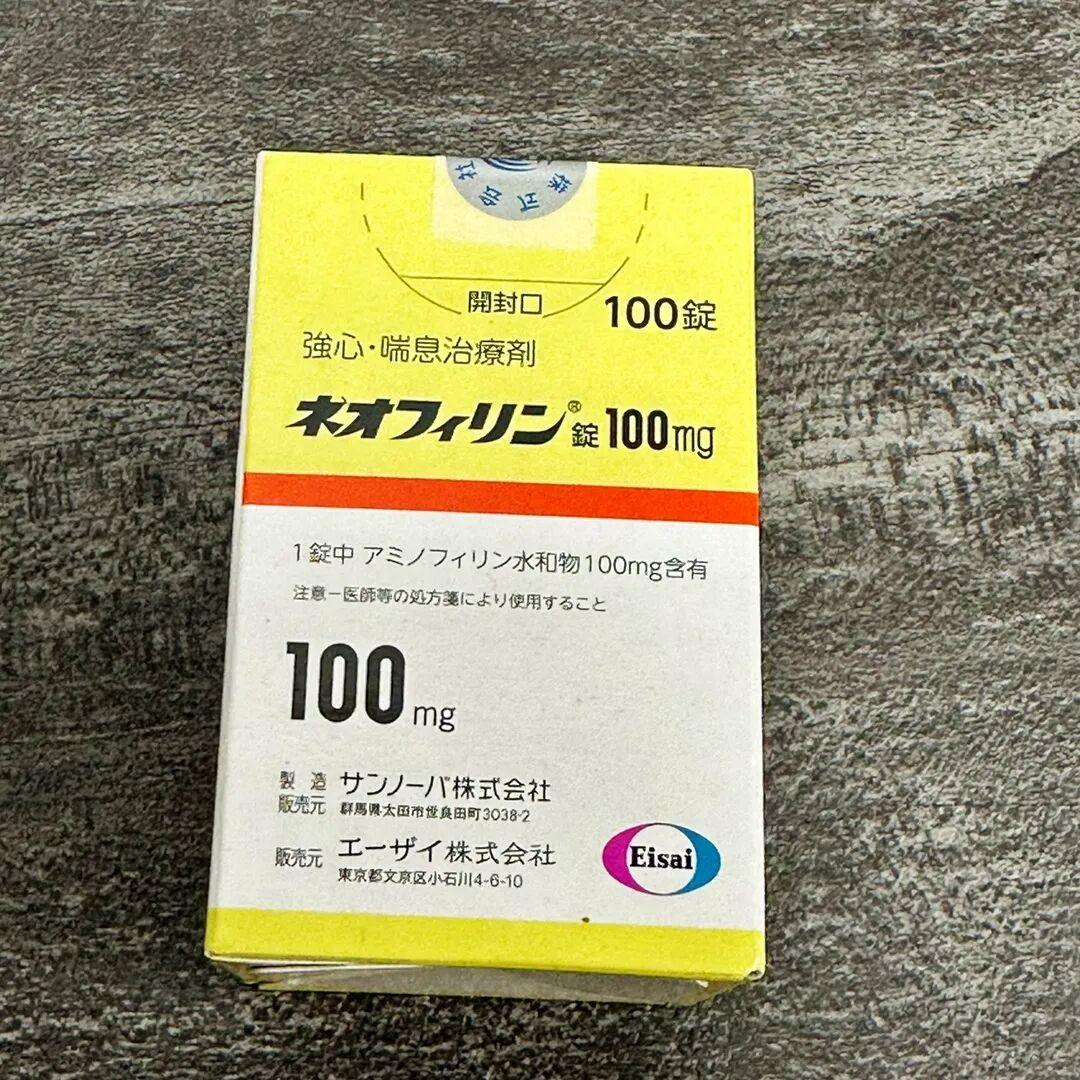
Text in this image machine-read · may contain errors
Opening the seal 100 ingots Cardiac and asthma treatment agents Caicai tablets 100mg Each tablet contains three/7 aqueous substances (100mg). Ichibachi Co., Ltd Gunma limited to Sesanada, Ota City, 3038-2 Koichi Nikan Co., Ltd Eisai 4-6-10 Koishikawa, Chobunkyo-ku, Tokyo
開封口 100锭 强心·喘息治療剂 材才锭100mg 1锭中三/7个水和物100mg含有 一八株式会社 群马限太田市世真田可3038-2 工一廿株式会社 Eisai 东京赵文京区小石川4-6-10
Opening the seal 100 ingots Cardiac and asthma treatment agents Caicai tablets 100mg Each tablet contains three/7 aqueous substances (100mg). Ichibachi Co., Ltd Gunma limited to Sesanada, Ot…