Cardiovascular · CARDIOVASCULAR

Aspirin

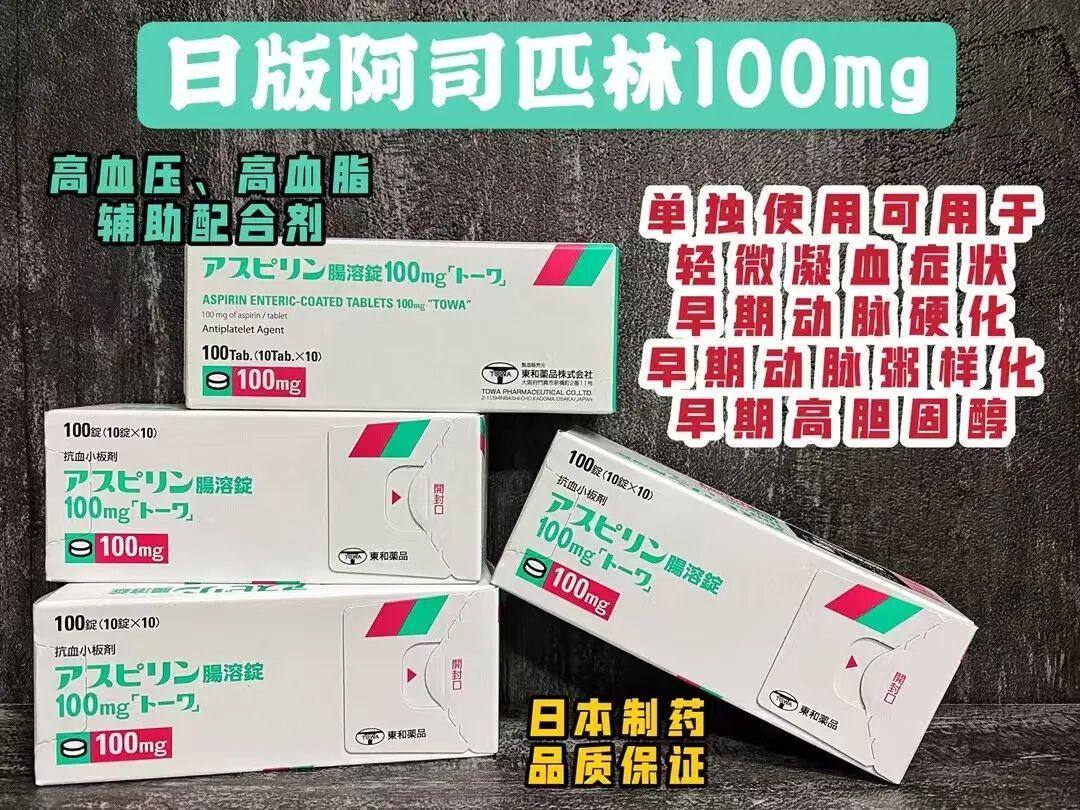
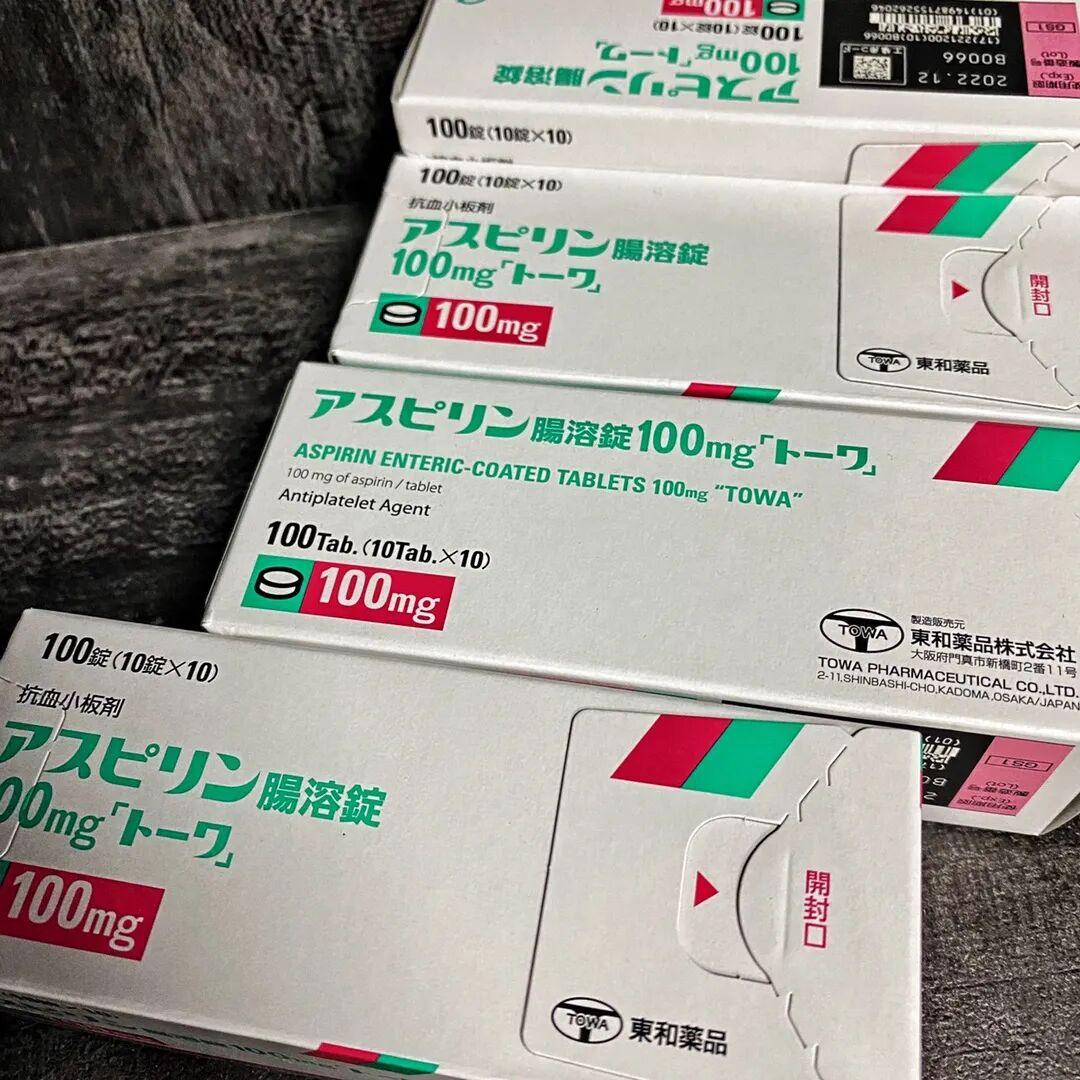
日本語原題:アスピリン腸溶錠100mg「トーワ」

Published2025-05-07 05:52 Makerトーワ FormTablet Content9 sections / 2 images
Ingredients / strength:
Active ingredient per tablet: Nichiku Aspirin 100mg. Additives: crystalline cellulose, corn starch, carmelose sulfate, magnesium aluminosilicate, methacrylate copolymer LD, sodium lauryl sulfate, polysorbate 80, triethyl citrate, talc.
English translation of the Japanese package insert is the main text; the Japanese original is shown alongside for verification. Use the language menu (top right) to read the page in another language. This site is for reference only — consult a doctor or pharmacist before use.
Section 1 · Feature description
English translation
Low-dose aspirin inhibits cyclooxygenase 1 (COX-1) (acetylation of serine residues), thereby inhibiting the synthesis of thromboxan A2 (TXA2) and exhibiting platelet aggregation inhibitory effects. COX-1 inhibition on platelets is irreversible because platelets cannot resynthesize this enzyme. On the other hand, in vascular tissue, COX-1 resynthesis occurs, so the inhibitory effect on prostacycline (PGI2) synthesis is reversible and recovery is relatively rapid. The metabolite salicylic acid does not inhibit COX-1 and does not have platelet aggregation inhibitory effects. For other effects of aspirin (fever reduction, analgesic, anti-inflammatory), please refer to the official text.
Section 2 · Specifications
English translation
100 tablets [10 tablets×10: PTP, with desiccant].
Section 3 · Characteristics
English translation
White film-coated locks.
Section 4 · Ingredient Description
English translation
Active ingredient per tablet: Nichiku Aspirin 100mg. Additives: crystalline cellulose, corn starch, carmelose sulfate, magnesium aluminosilicate, methacrylate copolymer LD, sodium lauryl sulfate, polysorbate 80, triethyl citrate, talc.
Section 5 · Functions and indications
English translation
1. Suppression of thrombosis and embolism formation in the following diseases (1) Angina pectoris (chronic stable angina, unstable angina) (2) Myocardial infarction (3) Ischemic cerebrovascular injury (transient ischemic attack (TIA), cerebral infarction) 2. Suppression of thrombosis and embolism after coronary artery bypass surgery (C A B G) or percutaneous transcatheter coronary angioplasty (PTCA) 3. Kawasaki disease (including cardiovascular sequelae caused by Kawasaki disease)
Section 6 · Usage and dosage
English translation
1. When used to suppress thrombus and embolization in angina (chronic stable angina, unstable angina), myocardial infarction, ischemic cerebrovascular disorders (transient ischemic attack (TIA), cerebral infarction), and to suppress thrombus and embolism after coronary artery bypass graft (CABG) or percutaneous transcatheter coronary angioplasty (PTCA)〉 Typically, adults receive 100 mg of aspirin orally once daily. Depending on symptoms, the dose can be increased up to 300 mg per dose. /2. When used for Kawasaki disease (including cardiovascular sequelae caused by Kawasaki disease)〉 During the acute febrile phase, 30~50 mg per 1 kg of body weight per day is administered orally as aspirin, divided into three doses. From the recovery phase after fever reduction to the chronic phase, aspirin is administered orally once daily at 3~5 mg per 1 kg of body weight. Adjust the amount appropriately according to symptoms.
Section 7 · Important notes
English translation
1. When administering to patients with cerebral infarction, pay attention to interactions with other drugs that suppress platelet aggregation, and use with caution in patients with persistent hypertension. Ensure adequate blood pressure control during administration. 2. When administering to the acute phase of Kawasaki disease, liver function tests should be conducted as needed, and if abnormalities are detected, appropriate measures such as dose reduction or discontinuation should be taken. 3. For long-term administration to Kawasaki disease patients (including cardiovascular sequelae from Kawasaki disease), regular clinical tests (urine tests, blood tests, liver function tests, etc.) should be performed. Also, if abnormalities are observed, appropriate measures such as weight reduction or discontinuation should be taken.
Section 8 · Side effects
English translation
1. Shock, anaphylaxis (both with unknown frequency) Shock and anaphylaxis (difficulty breathing, generalized flushing, angioedema, urticaria, etc.) may occur. 2. Bleeding (frequency unknown) Intracranial hemorrhage such as cerebral hemorrhage (initial symptoms: headache, nausea/vomiting, impaired consciousness, hemiplegia, etc.), pulmonary hemorrhage, gastrointestinal bleeding, nosebleeds, and fundus hemorrhage may occur. 3. Toxic epidermal necrolysis (TEN), Stevens-Johnson syndrome, and exfoliative dermatitis (all frequency unknown) 4. Aplastic anemia, thrombocytopenia, leukopenia (frequency unknown) 5. Asthma attacks (frequency unknown) 6. Liver dysfunction and jaundice (both frequency unknown) Liver dysfunction or jaundice accompanied by significant elevations of AST, ALT, and γ-GTP may occur. 7. Peptic ulcers, small intestine and large intestine ulcers (frequency unknown) Peptic ulcers such as gastric ulcers and duodenal ulcers accompanied by melena may appear. Additionally, gastrointestinal bleeding, intestinal perforation, and small or large intestine ulcers accompanied by stricture or obstruction may also occur. 8. Digestive system Gastrointestinal disorders, vomiting, abdominal pain, heartburn, constipation, diarrhea, esophagitis, lip swelling, vomiting blood, nausea, nausea, loss of appetite, and stomach discomfort. 9. Allergies Urticaria, rash, edema. 10. Blood Anemia, thrombocytopenia (prolonged bleeding time). 11. Skin Itching, rash, swelling, sweating. 12. Psychiatric and Nervous System Dizziness, excitement, headache. 13. Liver AST rises, ALT rises. 14. Kidneys Kidney impairment. 15. Circulator Low blood pressure, vasculitis, and epigastric pain. 16. Respirator Bronchitis, rhinitis. 17. Sensory organs Keratitis, conjunctivitis, tinnitus, and hearing loss. 18. Others Hyperventilation, metabolic acidosis, fatigue, hypoglycemia.
Section 9 · Taboo
English translation
1. Patients with a history of hypersensitivity to any component of this drug or salicylic acid preparations. 2. Patients with peptic ulcers [Due to the inhibitory effect of prostaglandin biosynthesis, gastric blood flow decreases, which may worsen peptic ulcers. ]。 3. Patients with a tendency to bleed [platelet dysfunction may occur, which may promote bleeding tendency. ]。 4. Patients with aspirin-induced asthma (triggered by nonsteroidal anti-inflammatory drugs, etc.) or a history of this [may induce severe aspirin-induced asthma attacks. ]。 5. Pregnant women within 12 weeks of their expected delivery date. 6. Low birth weight infants, newborns, or infants.

Source images

2 images

Need help sourcing Japanese medicines or OEM production?

💬