Calcitriol
日本語原題:カルシトリオールカプセル0.25μg/0.5μg「サワイ」
Source images
4 imagesThe artwork keeps its original Japanese/Chinese lettering. Open “Text in this image” under a picture to read what it says in your language (machine-read, may contain errors).
Text in this image machine-read · may contain errors
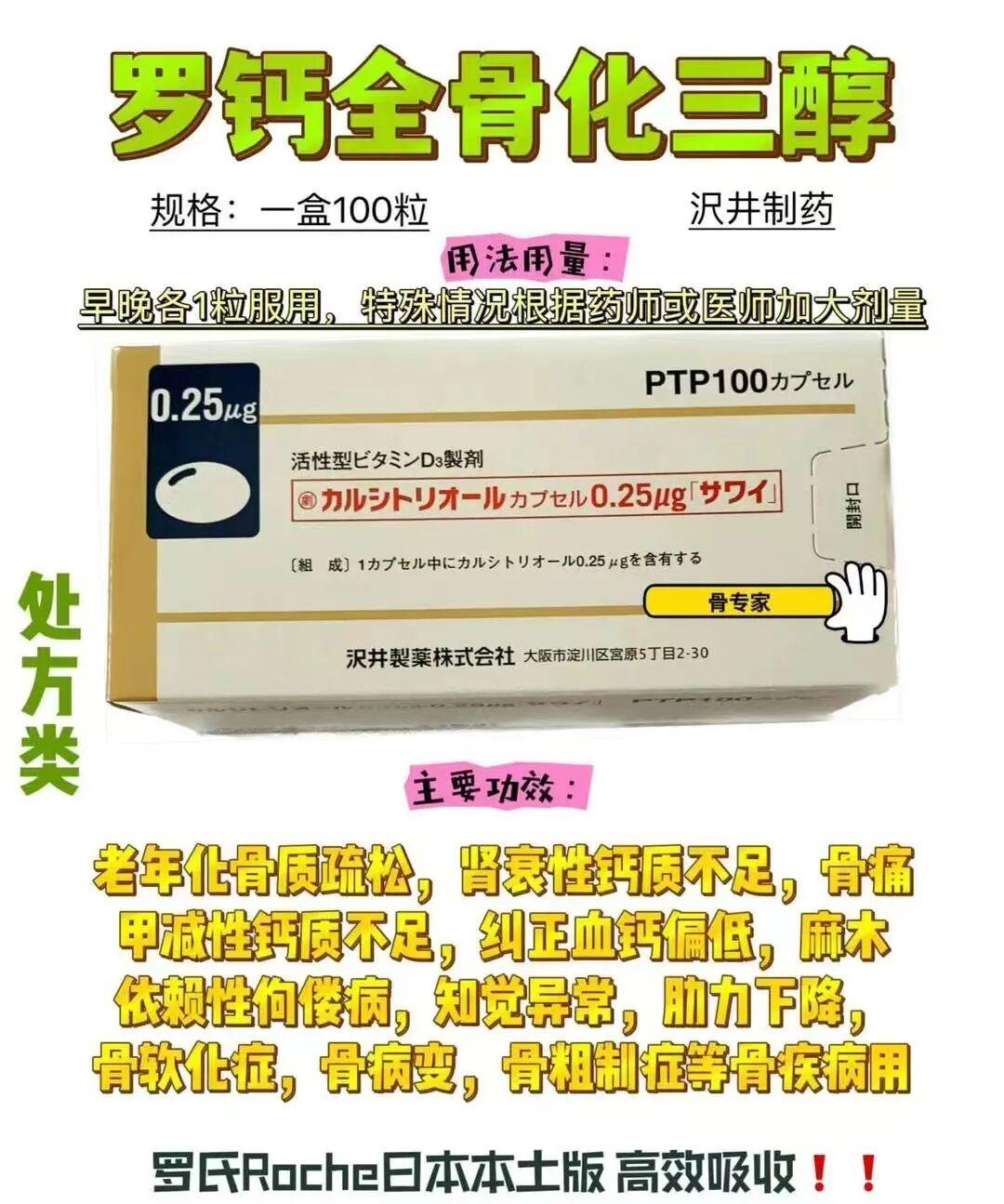
Luo Calcium Total Calcitriol Well Pharmaceuticals Specification: 100 capsules per box Take one capsule each morning and evening; increase the dose according to pharmacist or physician in special cases PTPIOO Capsules 0.25ug Active Vitamin D3 Formulation [Composition] Contains 0.25 g of calcitriol per capsule prescription Iseiha Co., Ltd., 5-2-30 Tomihara, Yodogawa-ku, Osaka City Main benefits: Renal insufficiency with calcium deficiency and bone pain Aging osteoporosis Corrects low blood calcium and numbness Hypothyroidism Calcium Deficiency dependent sexually transmitted diseases, abnormal perception, decreased rib strength, Osteomalacia, Used for bone lesions, bone roughness, and other bone diseases Roche Ruler OCE Japanese Edition Highly Absorbs Energy!!
罗钙全骨化三醇 井制药 规格:一盒100粒 早晚各1粒服用,特殊情况根据药师或医师加大剂量 PTPIOO カプセル 0.25ug 活性型ビタミン D3 製剤 〔組成 ] 1 カプセル中にカルシトリオール 0.25 声 g を含有する 处方类 井製葉株式会社大阪市淀川区富原5丁目2-30 主要功效: 肾衰性钙质不足,骨痛 老年化骨质疏松 纠正血钙偏低,麻木 甲减性钙质不足 依赖性病,知觉异常,肋力下降, 骨软化症, 骨病变,骨粗制症等骨疾病用 罗氏尺oche日本本士版高效吸收!!
Luo Calcium Total Calcitriol Well Pharmaceuticals Specification: 100 capsules per box Take one capsule each morning and evening; increase the dose according to pharmacist or physician in spe…
Text in this image machine-read · may contain errors
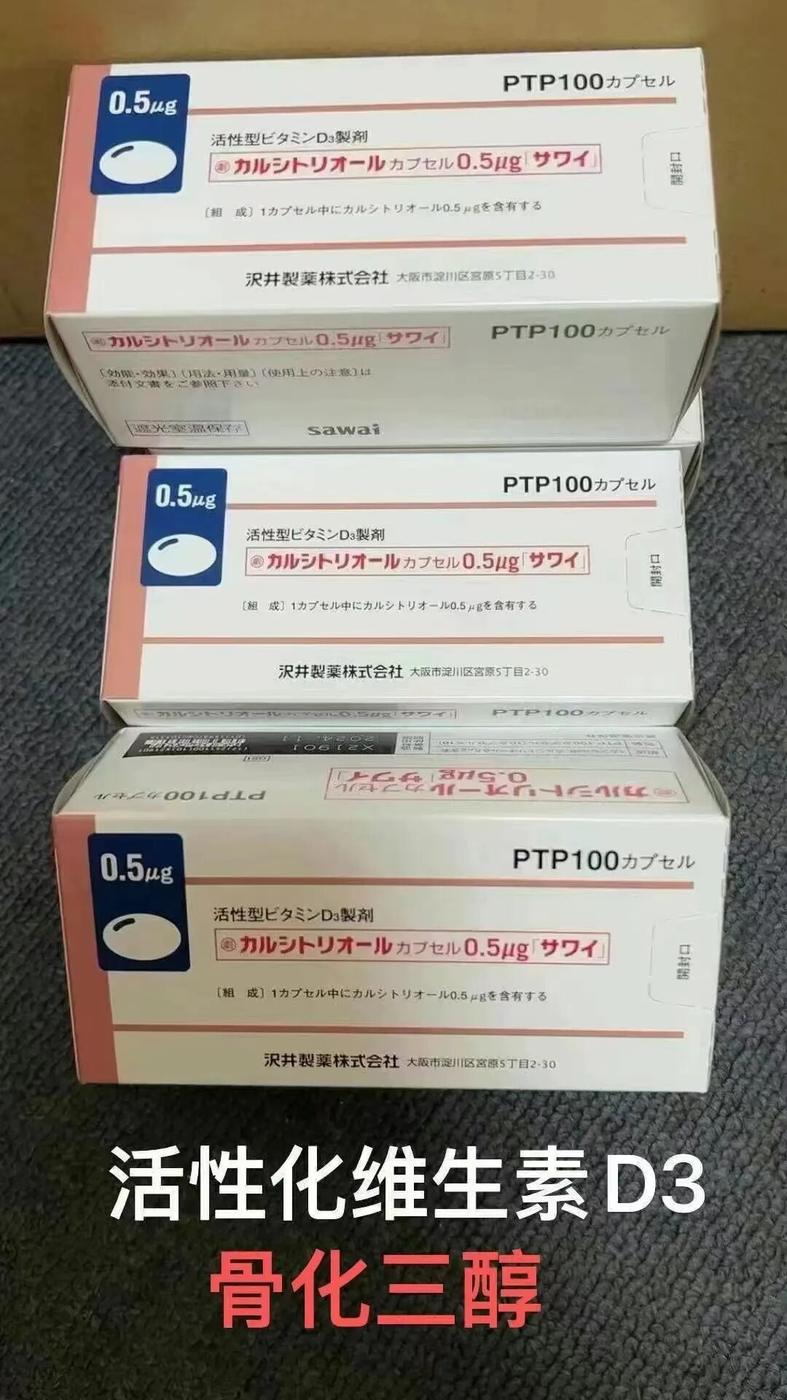
PTPIOO Capsules 0.5ug Active Vitamin 03 Formulation Sawai Active Vitamin D3 Formulation Calcitriol Capsules 0.5 〃 Sawai】 : Contains 0 calcitriol per capsule Ina Co., Ltd. 5-2-30 Miyahara, Yodogawa-ku, Oban-shi Capsules Active Vitamin DA Formulation ◎ Calcitriol Cuffel 0.5 g Sawai Tadai Seisai Co., Ltd. 5-2-30 Mitsuko, Yodogawa-ku, Oban-shi Activating Vitamin D3 calcitriol
PTPIOO カプセル 0.5ug 活性型ビタミン 03 製剤 Sawai 活性型ビタミン D3 製剤 のカルシトリオールカプセル 0.5 〃ーサワイ】 : 成】 1 カプセル中にカルシトリオール 0 当を含有する 井菜株式会社大版市淀川区宫原5丁自2-30 カプセル 活性型ビタミン Da 製剤 ◎ カルシトリオールカフセル 0.5 〃 g サワイ 只井製菜株式会社大版市淀川区密康5丁自2-30 活性化维生素D3 骨化三醇
PTPIOO Capsules 0.5ug Active Vitamin 03 Formulation Sawai Active Vitamin D3 Formulation Calcitriol Capsules 0.5 〃 Sawai】 : Contains 0 calcitriol per capsule Ina Co., Ltd. 5-2-30 Miyahara, Yo…
Text in this image machine-read · may contain errors
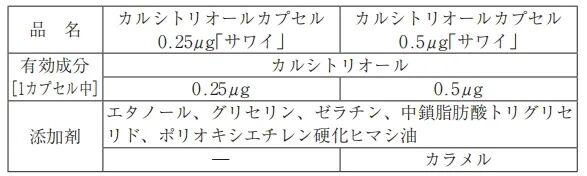
Calcitriol Capsules Calcitriol Capsules 0.25ug7」 There was a certain impeachment involved. Calcitriol 0.25ug 0.5μg Caramel
カルシトリオールカプセルカルシトリオールカプセル 0.25ug7」 有劾成分 カルシトリオール 0.25ug 0.5μg カラメル
Calcitriol Capsules Calcitriol Capsules 0.25ug7」 There was a certain impeachment involved. Calcitriol 0.25ug 0.5μg Caramel…
Text in this image machine-read · may contain errors
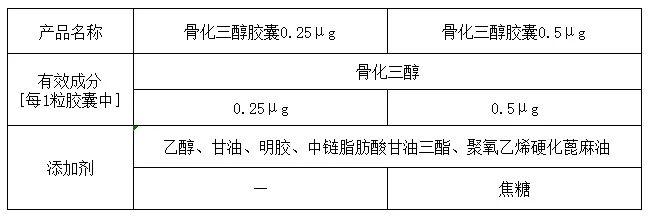
Product name Calcitriol capsules 0.25μg Calcitriol capsules 0.5μg Calcitriol Active ingredients [Per capsule] 0.25μg 0.5μg Ethanol, glycerin, gelatin, medium-chain fatty acid triglycerides, polyethylene oxy-hydrogenated hemp oil Additives
产品名称 骨化三醇胶囊0.25μg 骨化三醇胶囊0.5μg 骨化三醇 有效成分 [每1粒胶囊中] 0.25μg 0.5μg 乙醇、甘油、明胶、中链脂肪酸甘油三酯、聚氧乙烯硬化麻油 添加剂
Product name Calcitriol capsules 0.25μg Calcitriol capsules 0.5μg Calcitriol Active ingredients [Per capsule] 0.25μg 0.5μg Ethanol, glycerin, gelatin, medium-chain fatty acid triglycerides, …