Digestive · DIGESTIVE

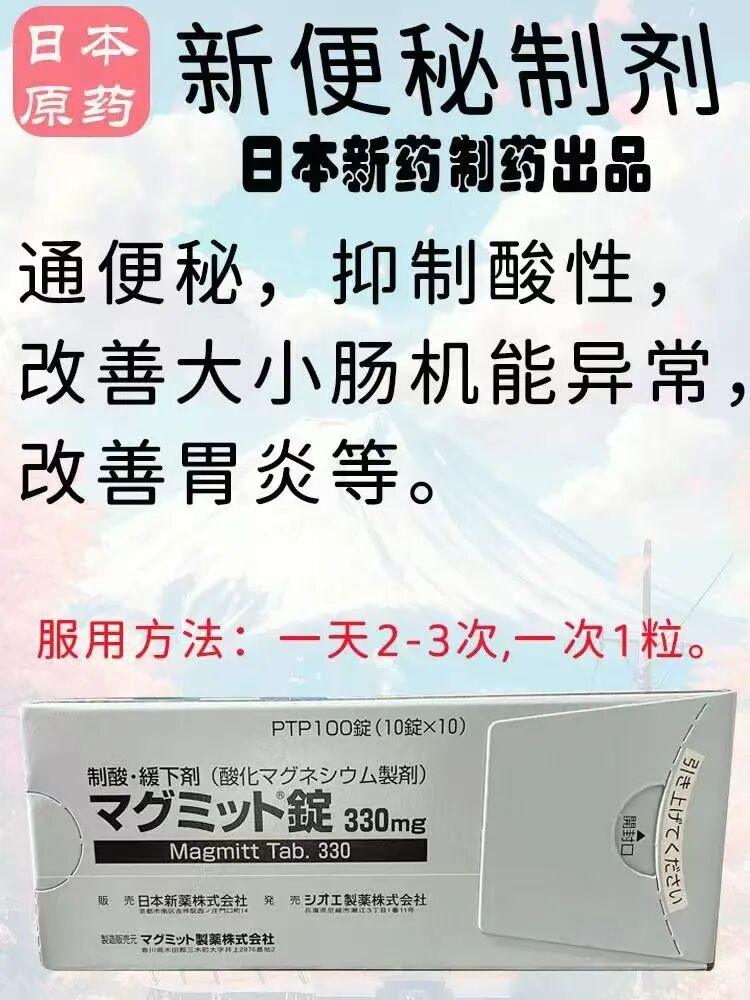
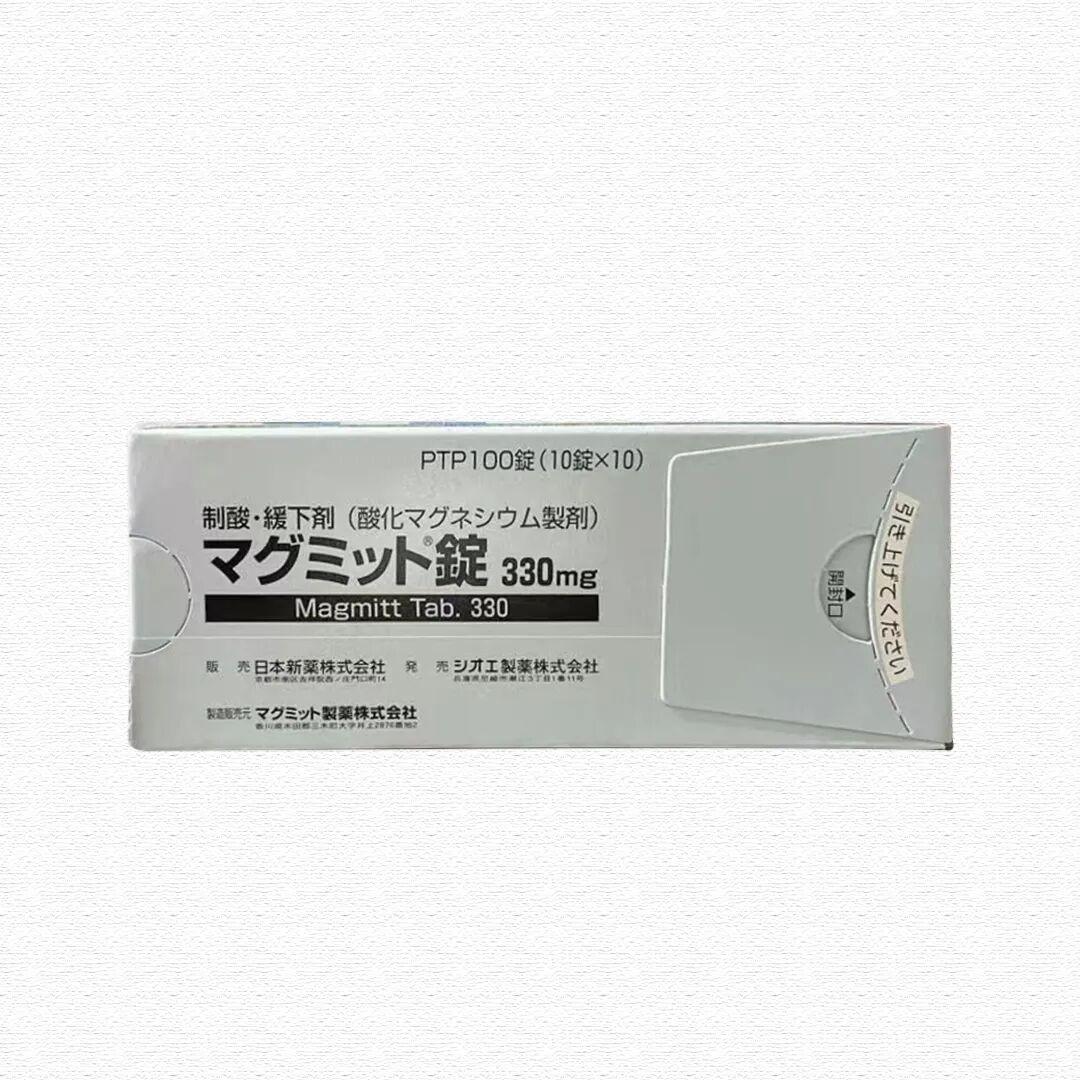
Magnesium Oxide

日本語原題:マグミット錠330mg

Published2025-05-31 13:09 FormTablet Content8 sections / 2 images
English translation of the Japanese package insert is the main text; the Japanese original is shown alongside for verification. Use the language menu (top right) to read the page in another language. This site is for reference only — consult a doctor or pharmacist before use.
Section 1 · 01
English translation
Feature Description This drug has antacid effects in the stomach and a laxative effect in the intestines. The neutralization reaction with stomach acid is performed by the following formula. MgO+2HCl→MgCl2+H2O When antacids are active, they do not emit CO2 and are recommended as non-irritating antacids. 1 g of magnesium oxide can neutralize about 500 mL of 0.1 mol/L HCl. Magnesium oxide is insoluble in water, so compared to NaHCO3, its acidification is slow-acting and its duration of action is longer. MgCl2 produced by neutralization absorbs CO2, so it is often combined with NaHCO3. In the intestines, it becomes poorly absorbed bicarbonate or carbonate, and to maintain osmotic pressure, it removes water from the intestinal wall and softens intestinal contents, thereby providing a laxative effect. Magnesium oxide is non-absorbent and does not cause alkalosis.
Section 2 · 02
English translation
Specifications PTP packaging: 100 tablets (10 tablets × 10).
Section 3 · 03
English translation
Characteristics White, round plain tablets.
Section 4 · 04
English translation
Ingredient Information Active ingredient (per tablet): 330mg of Japanese Regional Magnesium Oxide. Additives: crystalline cellulose, crocarmellose sodium, calcium stearate.
Section 5 · 05
English translation
Indications 1. Antacid effects and symptom improvement in the following diseases Gastric and duodenal ulcers, gastritis (including acute and chronic gastritis and drug-induced gastritis), upper gastrointestinal dysfunction (including anorexia nervosa, so-called gastroptosis, hyperacidity). 2. Constipation. 3. Prevention of urinary calcium oxinate stones.
Section 6 · 06
English translation
Dosage and Administration 1. When used as an antacid As magnesium oxide, adults usually take 0.5~1.0g orally in several divided doses. 2. When used as a laxative As magnesium oxide, adults usually take 2g orally in three divided doses before or after meals, or once before bedtime. 3. When used to prevent the occurrence of urinary calcium oxinate stones. As magnesium oxide, adults typically take 0.2~0.6g orally with a large amount of water per day. In all cases, the amount may be adjusted appropriately according to age and symptoms.
Section 7 · 07
English translation
Notes 1. Hypermagnesemia may occur with administration of this drug. In particular, in patients with constipation, there have been reports of severe outcomes even when renal function is normal or even at doses below standard levels, so the following points should be noted. (1) Limit usage to the minimum necessary. (2) When administering long-term or to elderly patients, take special care by regularly measuring serum magnesium levels. (3) If symptoms such as vomiting, bradycardia, muscle weakness, or drowsiness appear, discontinue use and instruct patients to seek medical attention immediately.
Section 8 · 08
English translation
Side Effects 1. Hypermagnesemia (frequency unknown): It can lead to respiratory depression, impaired consciousness, arrhythmia, and cardiac arrest. Pay attention to symptoms such as nausea, vomiting, dry mouth, hypotension, bradycardia, skin flushing, muscle weakness, and drowsiness, and measure serum magnesium levels. 2. Digestive system: diarrhea, etc. 3. Electrolytes: Increased serum magnesium levels.

Source images

2 images

Need help sourcing Japanese medicines or OEM production?

💬