Lansoprazole
日本語原題:ランソプラゾールOD錠15mg「武田テバ」
Each tablet contains 15mg of lansoprazole.
Source images
8 imagesThe artwork keeps its original Japanese/Chinese lettering. Open “Text in this image” under a picture to read what it says in your language (machine-read, may contain errors).
Text in this image machine-read · may contain errors
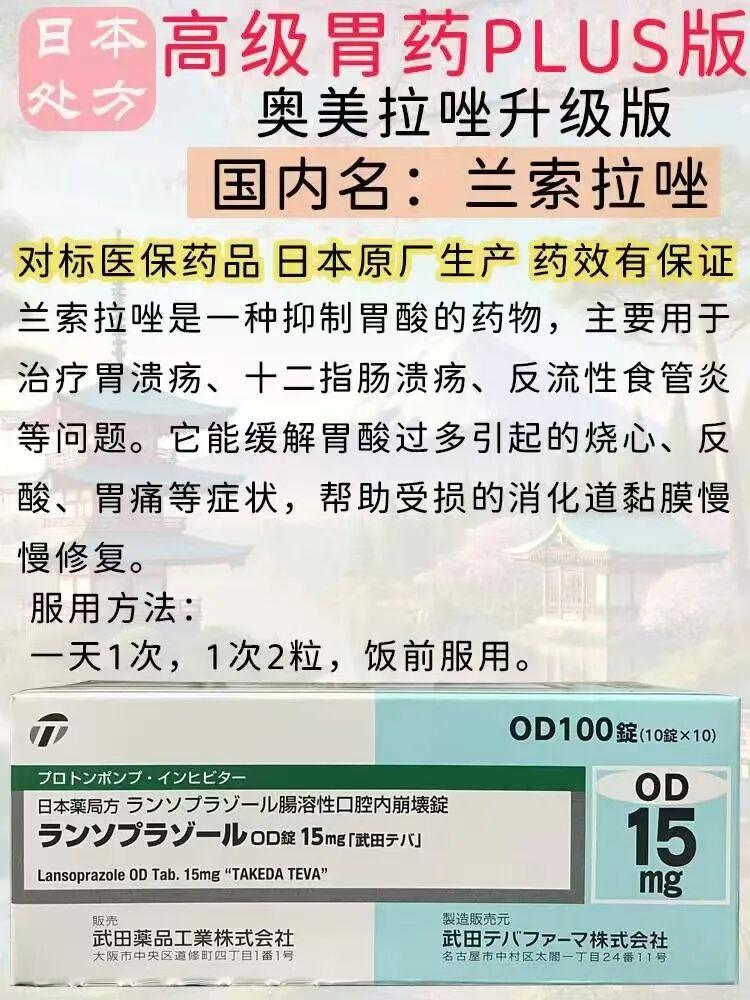
Premium Stomach Medicine PLUS Edition Omeprazole is an upgraded version Domestic name: lansoprazole Efficacy is guaranteed compared to the original Japanese factory production of medical insurance drugs Lansoprazole is a medication that suppresses stomach acid, mainly used for Treats gastric ulcers, duodenal ulcers, and reflux esophagitis and other issues. It can relieve heartburn and reversal caused by excessive stomach acid Symptoms such as sour stomach and stomach pain help the damaged digestive tract mucosa slow down Slow repair. Take once a day, 2 capsules per dose, before meals. OD100 Tablets (10 Tablets ×10) Japanese Pharmacopoeia Lansoprazole Enteric-coated Intracavitary Disintegration Tablets LansoprazoleODTab.15mg“TAKEDATEVA" Takeda Vegetable Products Co., Ltd Takeda Teha Pharma Co., Ltd 24-11 Taiken 1-chome, Nakamura-ku, Nagoya City 1-1 Doshomachi 4-chome, Chuo-ku, Osaka City
高级胃药PLUS版 奥美拉唑升级版 国内名:兰索拉唑 对标医保药品日本原厂生产药效有保证 兰索拉唑是一种抑制胃酸的药物,主要用于 治疗胃溃疡、十二指肠溃疡、反流性食管炎 等问题。它能缓解胃酸过多引起的烧心、反 酸、胃痛等症状,帮助受损的消化道黏膜慢 慢修复。 一天1次,1次2粒,饭前服用。 OD100锭(10锭×10) 日本薬局方ランソプラゾール腸溶性ロ腔内崩壊錠 LansoprazoleODTab.15mg“TAKEDATEVA" 武田菜品工業株式会社 武田テハファーマ株式会社 名古屋市中村区太圈一丁日24番11号 大阪市中央区道修町四丁自1番1号
Premium Stomach Medicine PLUS Edition Omeprazole is an upgraded version Domestic name: lansoprazole Efficacy is guaranteed compared to the original Japanese factory production of medical ins…
Text in this image machine-read · may contain errors
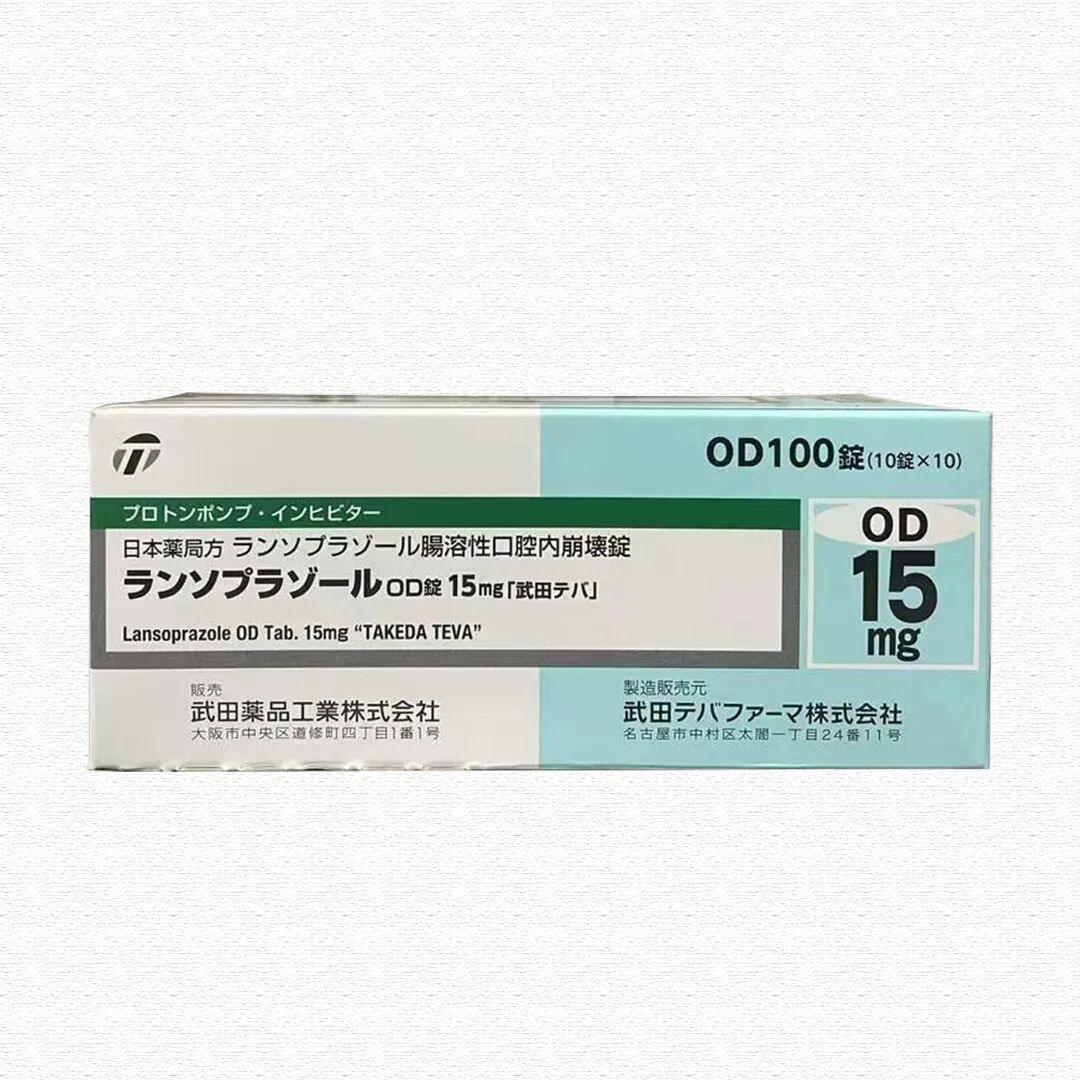
Japanese Pharmacopoeia Lansoprazole Enteric-coated Intracavitary Disintegration Tablets Ransoplasol 0 Tablets 15 "Takeda Tepa" LansoprazoleODTab.15mg“TAKEDATEVA" Takeda Leaf Products Co., Ltd. 1-1 Doshomachi 4-chome, Chuo-ku, Oban City OD100 ingots (10×10) Takeda Tepa Pharma Co., Ltd. 2411 Taiken 1-chome, Nakamura-ku, Nagoya City
日本薬局方ランソプラゾール腸溶性ロ腔内崩壊錠 ランソプラソール 0 ロ錠 15 「武田テパ」 LansoprazoleODTab.15mg“TAKEDATEVA" 武田葉品工業株式会社 大版市中央区道修町四丁自1番1号 OD100锭(10×10) 武田テパファーマ株式会社 名古屋市中村区太圈一丁目2411号
Japanese Pharmacopoeia Lansoprazole Enteric-coated Intracavitary Disintegration Tablets Ransoplasol 0 Tablets 15 "Takeda Tepa" LansoprazoleODTab.15mg“TAKEDATEVA" Takeda Leaf Products Co., Lt…
Text in this image machine-read · may contain errors
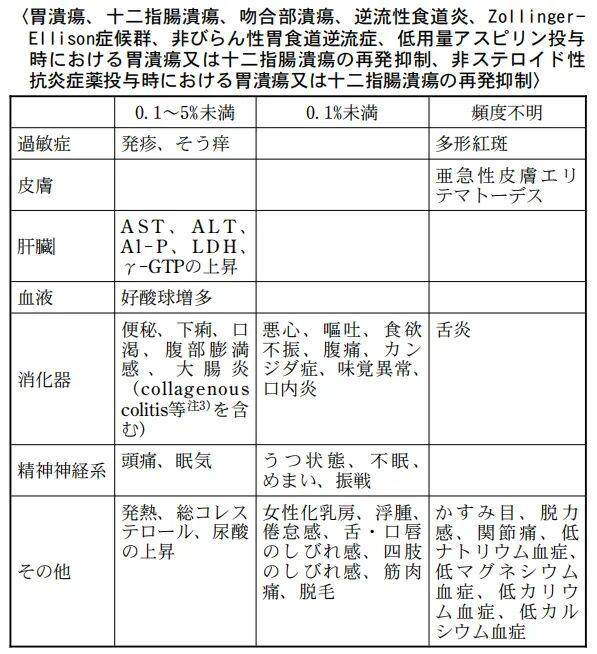
"Gastric ulcer cancer, duodenal ulcer, anastomotic cancer clearance, reflux esophagitis, Zollinger- ElIson syndrome, non-female 5-hour gastroesophageal reflux disease, low-dose Dosal Administration At that time, Renshu had clear stomach and duodenal clearness, and was not repressed, not with lower oral symptoms 0.1% is less than full and the degree is unclear 0.1~5% less than full rash, 5 itching テマトーデス AST、ALT、 AI-P、LDH、 ?- Differences in GTP Increased eosinophils constipation, epilepsy, and oral symptoms Kindness of heart, vomiting, appetite Fatigue, abdominal pain, strength, Thirst, abdominal distension Digestive system Stomatitis (collagenous Colitis et al. Note 3) Left contains Headache, drowsiness 52 Bear, Sleepless, The spirit and spirit are freed from their attachments gynecomastia, floating sleep, Measuring inch and eye, exhausting strength Mouth 1. Uric acid Sensation, muscle pain, and low sensation Fatigue, tongue and lips Muscle low magnesium Blood syndrome, low-impact writing Pain, hair loss Hypoemia, low strength syndrome Hypoemia
《胃溃癌、十二指腸溃疡、吻合部清癌、逆流性食道炎、Zollinger- ElIison症候群、非女5h性胃食道逆流症、低用量了又匕J投与 时仁书胃清又十二指腸清の再抑制、非又亍口个下性 0.1%未满 度不明 0.1~5%未满 疹、5痒 テマトーデス AST、ALT、 AI-P、LDH、 ?-GTPの上异 好酸球增多 便秘、下痫、口 惠心、幅吐、食欲 不振、腹痛、力、 渴、腹部膨满 消化器 口内炎 (collagenous colitis等注3)左含 頭痛、眠気 52状熊、不眠、 精神神释系 女性化乳房、浮睡、 办寸办目、脱力 亍口一、尿酸 感、關筋痛、低 倦意感、舌·口唇 筋肉低マグネシウム 血症、低力文 痛、脱毛 么血症、低力儿 么血症
"Gastric ulcer cancer, duodenal ulcer, anastomotic cancer clearance, reflux esophagitis, Zollinger- ElIson syndrome, non-female 5-hour gastroesophageal reflux disease, low-dose Dosal Adminis…
Text in this image machine-read · may contain errors
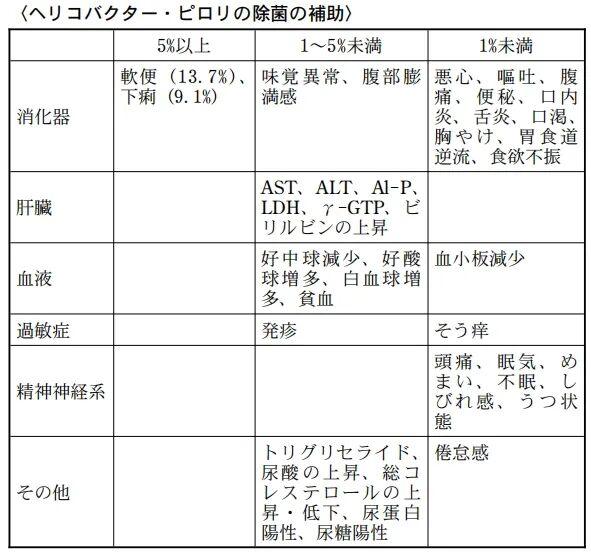
Aid in disinfection" 1% less than 1~5% less than Taste is normal and abdominal distension Nausea, vomiting, and abdominal Soft stools (13.7%), Pain, constipation, oral digestive system inflammation, glossitis, thirst, Thoracic Joint Juice, Gastroesophagus Reflux and loss of appetite AST、ALT、Al-P、 LDH, -GTP, Seven Rise of Lirubin Decreased soreness and acidity thrombocytopenia Cytosis, leukocytosis ), insomnia, Spiritual and Spiritual Interpretation Feelings, Conditions Uric acid upperform, oral On the Sterol Side Heterohypoxia, urine protein Positive, positive urine glucose
の除菌の助》 1%未满 1~5%未满 味觉冕常、腹部膨 恶心、幅吐、腹 软便(13.7%)、 痛、便秘、口内 消化器 炎、舌炎、口渴、 胸节汁、胃食道 逆流、食欲不振 AST、ALT、Al-P、 LDH、-GTP、七 リルビンの上昇 好中球减少、好酸 血小板减少 球增多、白血球增 )、不眠、 精神神释系 感、状 尿酸の上异、口 レステロールの上 异·低下、尿蛋白 阳性、尿糖阳性
Aid in disinfection" 1% less than 1~5% less than Taste is normal and abdominal distension Nausea, vomiting, and abdominal Soft stools (13.7%), Pain, constipation, oral digestive system infla…
Text in this image machine-read · may contain errors
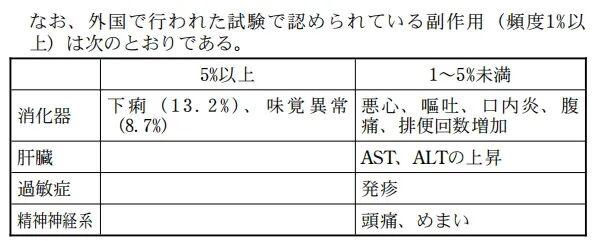
More than 5%. 1~5% is less than that Epilepsy (13.2%) and dysgeus Heart removal, vomiting, stomatitis, abdominal infections (8. 7%) Pain and increased frequency of bowel movements Superior to AST and ALT The spirit and spirit are freed from their attachments
5%以上 1~5%未满 下痫(13.2%)、味觉翼常 惠心、幅吐、口内炎、腹 (8. 7%) 痛、排便回数增加 AST、ALTの上异 精神神释系
More than 5%. 1~5% is less than that Epilepsy (13.2%) and dysgeus Heart removal, vomiting, stomatitis, abdominal infections (8. 7%) Pain and increased frequency of bowel movements Superior t…
Text in this image machine-read · may contain errors
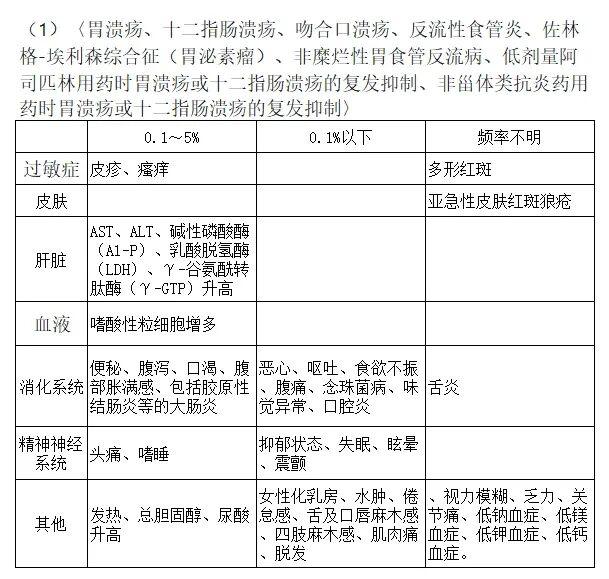
(1) "Gastric ulcer, duodenal ulcer, anastomotic ulcer, reflux esophagitis, Zuolin Ger-Ellison syndrome (gastrinoma), non-erosive gastroesophageal reflux disease, low-dose A When used with spirin, it inhibits recurrence of gastric or duodenal ulcers, and is used as a non-retaining anti-inflammatory drug Suppression of recurrence of gastric or duodenal ulcers during medication) 0.1% or less Frequency unknown 0. 1~ 5% Polymorphic erythema Rash and itching Subacute cutaneous lupus erythematosus AST, ALT, alkaline phosphatase (A1-P), lactate dehydrogenase (LDH), -glutamyl trans Peptidase (-GTP) is elevated Eosinophils Nausea, vomiting, loss of appetite constipation, diarrhea, thirst, abdominal discomfort A feeling of fullness in the digestive system, including collagen issues , abdominal pain, candidiasis, and taste Colitis and other colitis Abnormal sensations, stomatitis Psychiatric nerves Suppression of state, insomnia, dizziness Headache and drowsiness , tremors Feminization of the breasts, edema, fatigue, blurred vision, fatigue, and stiffness Fever, total cholesterol, uric acid uric acid urgency, numbness of tongue and lips, joint pain, hyponatremia, hypomagnesium Blood disorders, hypokalemia, hypocalcemia numbness in the limbs, muscle pain , hair loss Blood disorders.
(1)《胃溃疡、十二指肠溃疡、吻合口溃疡、反流性食管炎、佐林 格-埃利森综合征(胃泌素瘤)非糜烂性胃食管反流病、低剂量阿 司匹林用药时胃溃疡或十二指肠溃疡的复发抑制、非留体类抗炎药用 药时胃溃疡或十二指肠溃疡的复发抑制) 0. 1%以下 频率不明 0. 1~ 5% 多形红斑 皮疹、瘙痒 亚急性皮肤红斑狼疮 AST、ALT、碱性磷酸酶 (A1-P)、乳酸脱氢酶 (LDH)、-谷氨酰转 肽酶(-GTP)升高 嗜酸性粒细胞增多 恶心、呕吐、食欲不振 便秘、腹泻、口渴、腹 消化系统部胀满感、包括胶原性 、腹痛、念珠菌病、味 结肠炎等的大肠炎 觉异常、口腔炎 精神神经 抑状态、失眠、眩晕 头痛、嗜睡 、震颤 女性化乳房、水肿、倦、视力模糊、乏力、关 发热、总胆固醇、尿酸急感、舌及口唇麻木感节痛、低钠血症、低镁 血症、低钾血症、低钙 、四肢麻木感、肌肉痛 、脱发 血症。
(1) "Gastric ulcer, duodenal ulcer, anastomotic ulcer, reflux esophagitis, Zuolin Ger-Ellison syndrome (gastrinoma), non-erosive gastroesophageal reflux disease, low-dose A When used with sp…
Text in this image machine-read · may contain errors
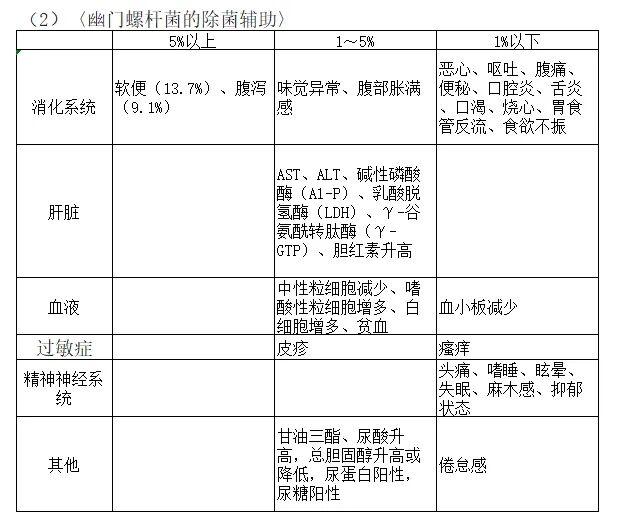
(2) (Assisting in Eradication of Helicobacter pylori) Less than 1%. More than 5%. Nausea, vomiting, abdominal pain, Soft stools (13.7%), diarrhea, abnormal taste, abdominal bloating Constipation, stomatitis, glossitis Digestive system (9. 1%) , thirst, heartburn, and stomach food Pipe reflux and loss of appetite AST, ALT, alkaline phosphoric acid Enzyme (A1-P), lactate degeneration Hydrogenase (LDH), -Valley Aminoacyltransferase (- GTP), elevated bilirubin Neutropenia and affection Thrombocytopenia Acid cell count, pale Cell proliferation, anemia Allergies Headache, drowsiness, dizziness, Psychiatric nervous system Insomnia, numbness, depression Triglycerides and uric acid increase High, elevated total cholesterol or Lower, urine protein is positive, Positive urine glucose
(2)(幽门螺杆菌的除菌辅助) 1%以下 5%以上 恶心、呕吐、腹痛、 软便(13.7%)、腹泻味觉异常、腹部胀满 便秘、口腔炎、舌炎 消化系统 (9. 1%) 、口渴、烧心、胃食 管反流、食欲不振 AST、ALT、碱性磷酸 酶(A1-P)、乳酸脱 氢酶(LDH)、-谷 氨酰转肽酶(- GTP)、胆红素升高 中性粒细胞减少、嗜 血小板减少 酸性粒细胞增多、白 细胞增多、贫血 过敏症 头痛、嗜睡、眩晕、 精神神经系 失眠、麻木感、抑郁 甘油三酯、尿酸升 高,总胆固醇升高或 降低,尿蛋白阳性, 尿糖阳性
(2) (Assisting in Eradication of Helicobacter pylori) Less than 1%. More than 5%. Nausea, vomiting, abdominal pain, Soft stools (13.7%), diarrhea, abnormal taste, abdominal bloating Constipa…
Text in this image machine-read · may contain errors
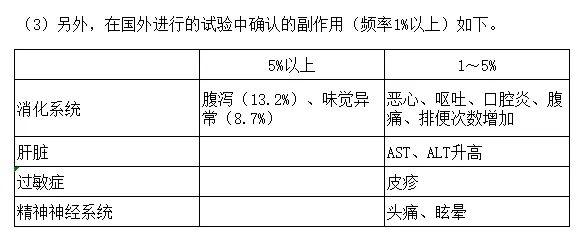
(3) Additionally, side effects confirmed in overseas trials (frequency above 1%) are as follows. More than 5%. 1~5% Diarrhea (13.2%) with loss of taste Nausea, vomiting, stomatitis, abdominal symptoms Digestive system Regular (8.7%) Pain and increased frequency of bowel movements AST and ALT are elevated Allergies Psychiatric nervous system
(3)另外,在国外进行的试验中确认的副作用(频率1%以上)如下。 5%以上 1~5% 腹泻(13.2%)味觉异 恶心、呕吐、口腔炎、腹 消化系统 常 (8.7%) 痛、排便次数增加 AST、ALT升高 过敏症 精神神经系统
(3) Additionally, side effects confirmed in overseas trials (frequency above 1%) are as follows. More than 5%. 1~5% Diarrhea (13.2%) with loss of taste Nausea, vomiting, stomatitis, abdomina…