Pyridostigmine Bromide
日本語原題:メスチノン錠60mg
Each tablet contains 60.0mg of Japanese-formulated pyridosigmine bromide.
Source images
2 imagesThe artwork keeps its original Japanese/Chinese lettering. Open “Text in this image” under a picture to read what it says in your language (machine-read, may contain errors).
Text in this image machine-read · may contain errors
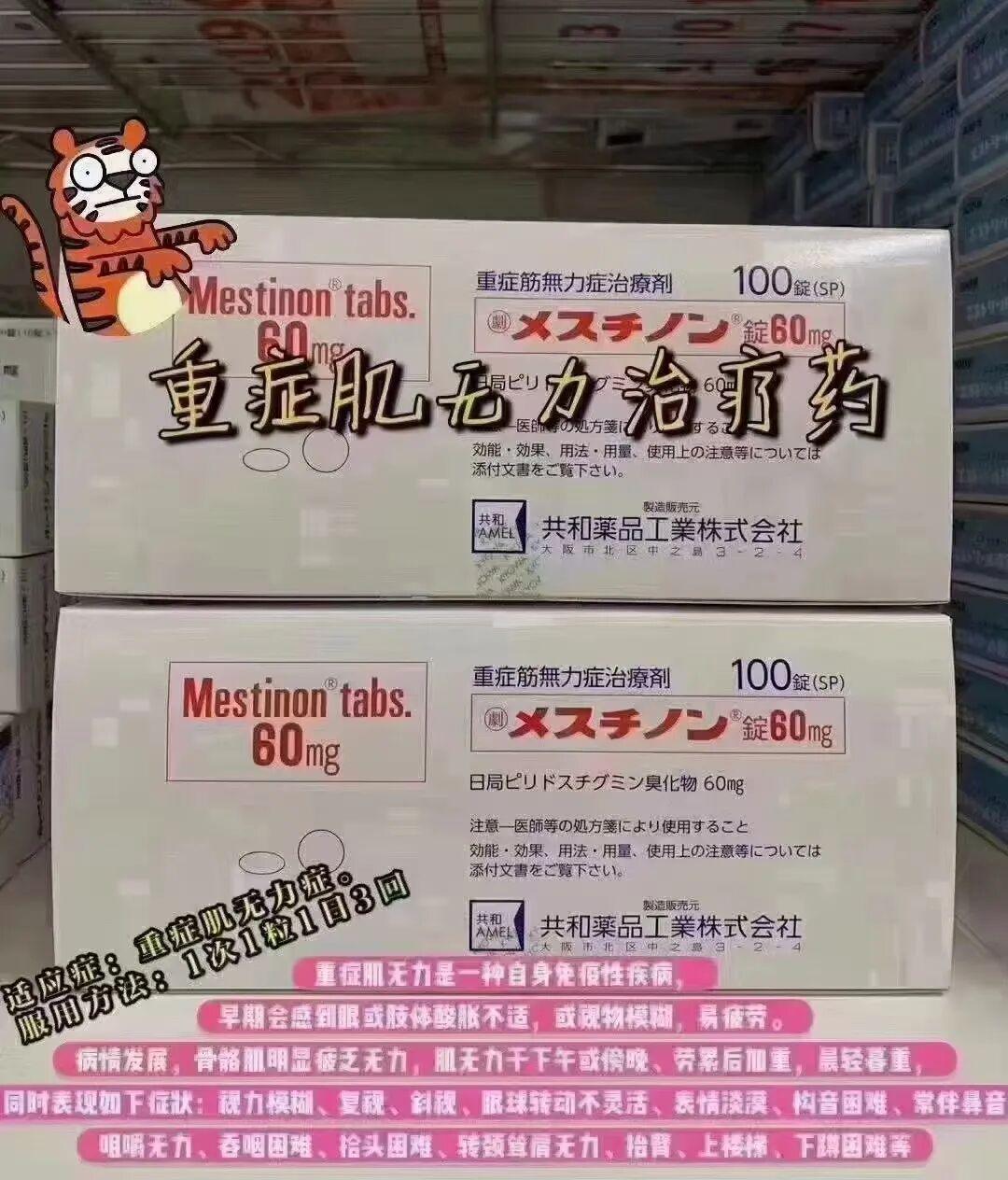
A treatment for myasthenia gravis Mestinon tabs. Tablets 60mg Medication for treating muscle hair gravis Rapid transmission of 'Punishment Ability' · 'Punishment Fruit', Usage · Dosage, Precautions for Use, etc Attached to the text to harm the lower ranks Kyowa Pharmaceutical Industry Co., Ltd AMEL 24 Nakanoshozo, Kita-ku, Osaka City 100 tablets (SP) Treatment for myasthenia gravis 60mg Nippon Pyridosigmine Bromide 60mg Caution – Use only as prescribed by a doctor Methods and dosages, precautions for use, etc Myasthenia gravis. Administration: 1 capsule per dose, 1 side of the table, 3 times a day Kyowa Pharmaceutical Komei Co., Ltd Indication 8 Myasthenia gravis is an autoimmune recovery disease In the early stages, there may be discomfort in the eyes or limbs, blurred vision, and easy fatigue As the condition progresses, skeletal muscle symptoms become obvious and fatigued, with muscle weakness in the afternoon or late at night, worsening after labor. Symptoms worsen in the morning with a preference for heaviness It also presents with the following symptoms: blurred vision, revival, Keshi, somber ball rotation is not flexible, expressions are dull, articulation difficulties, and often accompanied by rising sounds Words like 'Mouth Without Nine Words', 'Difficulty in Swallowing Fragrance', 'Difficulty Picking Up the Head', 'Turning the Neck and Riding the Brow Without Nine Strokes', 'Joyful Arm', 'Ascending the Tower Jar', 'Lowering the Honor of the Nation's Crisis', etc
重症筋無力症治療剂 Mestinon tabs. 锭60mg 重症肌毛力治疗药 劾能·劾果、用法·用量、使用上の注意等飞送 添付文害下 共和藥品工業株式会社 AMEL 大阪市北区中之昌三24 100锭(SP) 重症筋無力症治剂 60mg 日局ピリドスチグミン臭化物 60mg 注意ー医師等の処方箋により使用すること 劾能·劾果、用法·用量、使用上の注意等儿 重症肌无力症。 服用方法:1次1粒1面3回 共和藥品工美株式会社 适应症8 重症肌无力是一种自身免疫性恢病 早期会感到眼或肢体酸账不适,或观物模糊,易疲劳 病情发展、骨骼肌明显症乏无力,肌无九干下午或停晚、劳案后加重晨轻喜重 同时表现如下症状:视力模糊、复靓、科视、眠球转动不灵活、表情淡漠、构音困难、常伴昇音 咀无九、香咽困难、拾头困难、转颈驾眉无九、怡臂、上楼罐、下尊国难等
A treatment for myasthenia gravis Mestinon tabs. Tablets 60mg Medication for treating muscle hair gravis Rapid transmission of 'Punishment Ability' · 'Punishment Fruit', Usage · Dosage, Prec…
Text in this image machine-read · may contain errors
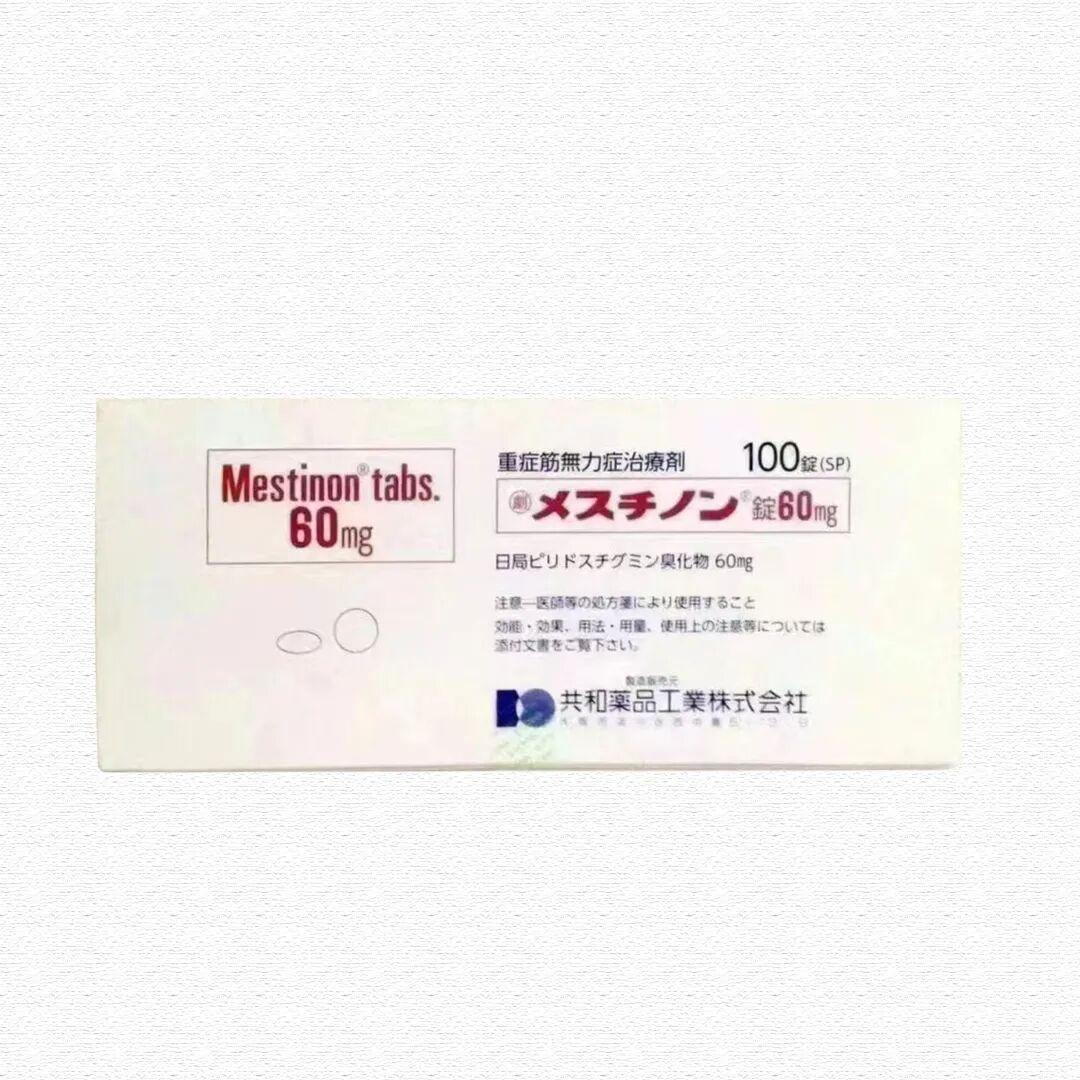
100 Blooms (SP) Myasthenia Gravis Treatment Agent Mestinon'tabs. 60mg tablets Mestinone Tablets 60mg Nippon Bureau Viridostygmide 60 Showa Using Western first grade by the speed of the equivalent Kyowa Pharmaceutical Komei Co., Ltd.
100绽(SP) 重症筋無力症治疗剂 Mestinon'tabs. 锭60mg メスチノン錠 60mg 日局ビリドスチグミン化物 60 昭 洋第一を価等の迅方第により使用すること 共和藥品工美株式会社
100 Blooms (SP) Myasthenia Gravis Treatment Agent Mestinon'tabs. 60mg tablets Mestinone Tablets 60mg Nippon Bureau Viridostygmide 60 Showa Using Western first grade by the speed of the equiv…