Analgesic & Antipyretic · ANALGESIC

Ethinylestradiol

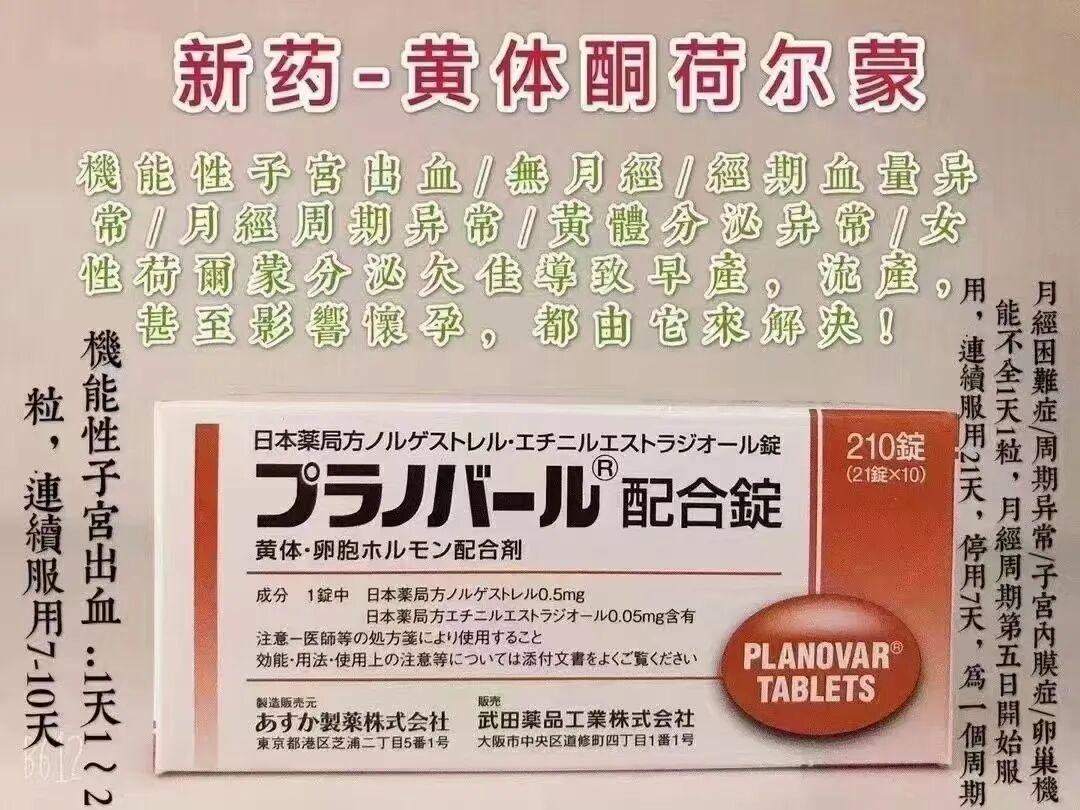
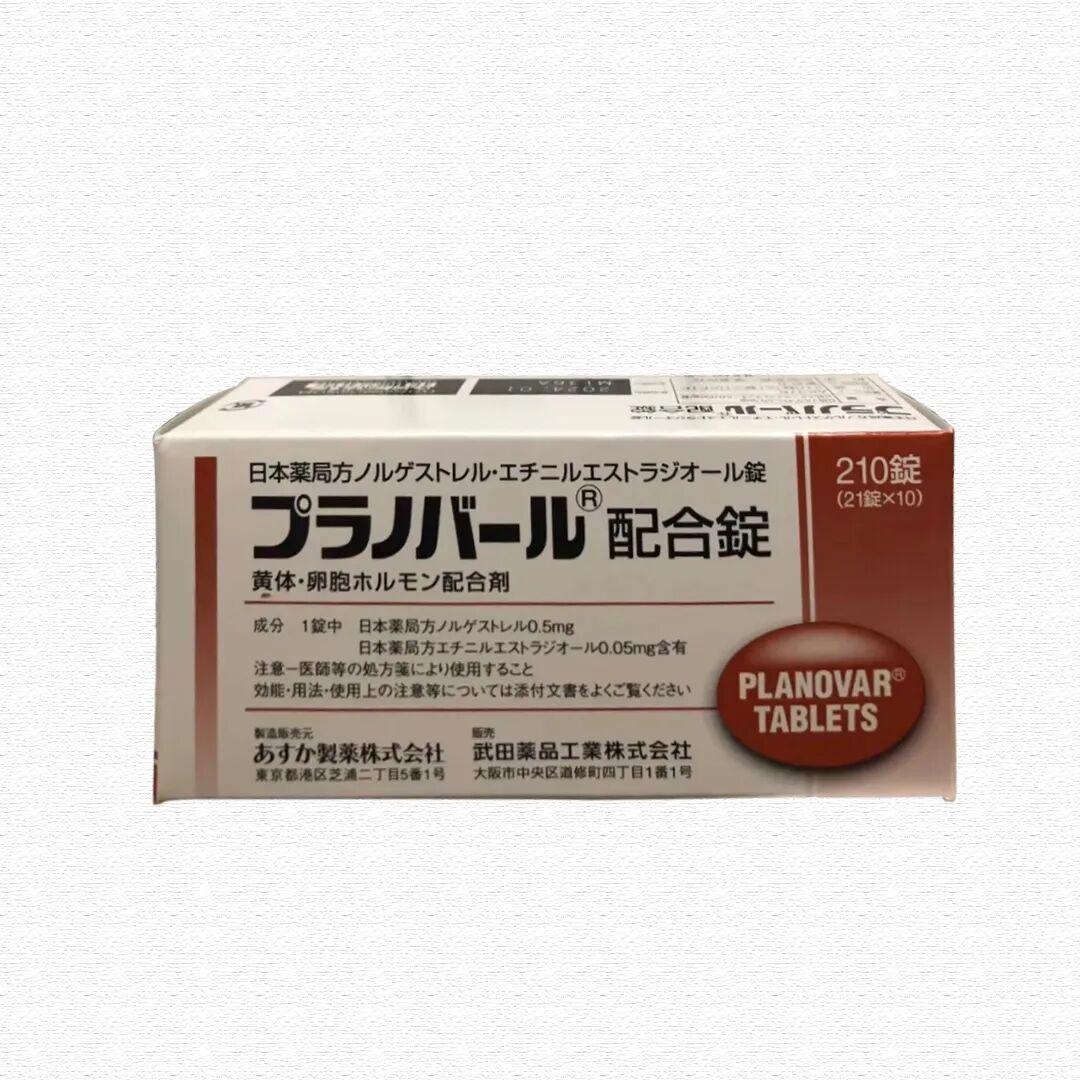
日本語原題:プラノバール配合錠

Published2025-06-19 08:33 Maker武田 FormTablet Content9 sections / 2 images
Ingredients / strength:
Each tablet contains 0.5mg of Norgestrel and 0.05mg of Ethinylestradiol.
English translation of the Japanese package insert is the main text; the Japanese original is shown alongside for verification. Use the language menu (top right) to read the page in another language. This site is for reference only — consult a doctor or pharmacist before use.
Section 1 · 01
English translation
Feature Description It acts on the anterior pituitary gland to suppress the secretion of follicle-stimulating hormone and luteinizing hormone from the anterior pituitary, and also promotes endometrial regeneration and shifts to the secretory phase.
Section 2 · 02
English translation
Specifications 210 tablets [21 tablets (PTP)×10].
Section 3 · 03
English translation
Characteristics White sugar-coated tablets.
Section 4 · 04
English translation
Ingredient Information Active ingredients: per tablet, Japanese Norgesterel 0.5mg, Japanese Ethinylestradiol 0.05mg. Additives: lactose hydrate, corn starch, povidone, talc, magnesium stearate, white sugar, macrogol 6000, precipitated calcium carbonate, salaminous beeswax, carnauba allow.
Section 5 · 05
English translation
Indications 1. Functional uterine bleeding 2. Dysmenorrhea, menstrual cycle irregularities (rare menstruation, frequent menstruation), or adjustment of the timing of onset of ovarian stimulation in assisted reproductive technology, excessive menstruation, endometriosis, ovarian dysfunction.
Section 6 · 06
English translation
Dosage and Administration 1. Functional Uterine Bleeding One tablet per day is administered continuously for 7 to 10 days. 2. Dysmenorrhea, menstrual cycle irregularities (rare menstruation, frequent menstruation), or adjustment of the timing of ovarian stimulation in assisted reproductive technology, heavy menorrhea, endometriosis, ovarian dysfunction One tablet per day is administered continuously for about three weeks starting from the fifth day of the menstrual cycle.
Section 7 · 07
English translation
Notes 1. "Common Efficacy" (1) Thrombosis may occur with this drug regardless of risk factors such as age, smoking, obesity, or family history. If any of the following symptoms appear, immediately discontinue administration and take appropriate measures. Main symptoms of thrombosis requiring urgent attention Sudden pain or swelling in the lower limbs, sudden shortness of breath, chest pain, severe headache, limb weakness or paralysis, speech disorders, acute vision impairment, etc. Patients should also be advised to stop taking the medication immediately and seek medical attention if such symptoms appear. (2) If symptoms suspected of thrombosis appear while taking this drug, take appropriate measures such as discontinuing administration. Symptoms suspected of thrombosis Lower limb pain, swelling, numbness, redness, heat sensation, headache, nausea, vomiting, etc. (3) If a condition increasing the risk of thrombosis (immobility, marked blood pressure rise, dehydration, etc.) is observed, appropriate measures such as discontinuing administration should be taken. (4) Explain the following to the patient at the start and continuation of administration. ・Thrombosis can follow life-threatening courses. ・If symptoms suggestive of thrombosis appear or if the risk of thrombosis increases, even if symptoms or conditions are mild, stop taking the medication immediately and consult a doctor. ・If you suspect thrombosis and visit another medical institution, inform your doctor about the use of this drug so that you can receive an examination with thrombosis caused by this drug in mind. (5) If surgery is deemed necessary while taking this drug, pay close attention to thrombosis prevention. (6) In foreign countries, smoking increases the risk of serious cardiovascular side effects (such as thrombosis) caused by similar drugs (oral contraceptives), and this risk increases with age and smoking amount (15 cigarettes or more per day), with reports showing that this risk is especially pronounced in women aged 35 and older. Therefore, when administering this drug, it is desirable to have the patient quit smoking. 2. Functional uterine bleeding, dysmenorrhea, menstrual cycle irregularities (infrequent and frequent menstruation), heavy menstruation, endometriosis, ovarian dysfunction For long-term administration, gynecological examinations should be conducted approximately every six months. 3. "Adjustment of the Start Timing of Regulated Ovarian Stimulation in Assisted Reproductive Technology" This drug should be used under the guidance of a physician with sufficient knowledge and experience in infertility treatment. Explain in advance to patients the expected risks and symptoms to watch for when administering this drug.
Section 8 · 08
English translation
Side Effects 1. Thrombosis (limbs, lungs, heart, brain, retina, etc.) (less than 0.1–0.2%) If sudden pain or swelling of the lower limbs, sudden shortness of breath, chest pain, severe headache, limb weakness or paralysis, speech disorders, or acute visual impairment occur, immediately discontinue administration and take appropriate measures. 2. Other side effects (1) Liver: abnormal liver function, jaundice, etc. (2) Uterus: irregular bleeding (rupture bleeding, petechiae), changes in menstrual flow, increased leukorrhea, etc. (3) Breasts: Breast tightness, breast pain, etc. (4) Hypersensitivity: rash, etc. (5) Electrolyte metabolism: edema, weight gain. (6) Cardiovascular system: Palpitations, elevated blood pressure, etc. (7) Digestive system: nausea, vomiting, loss of appetite, stomach pain, diarrhea, abdominal pain, constipation, stomatitis, dry mouth, etc. (8) Neuropsychiatric system: headache, drowsiness, fatigue, dizziness, nervousness, etc. (9) Skin: acne, pigmentation, etc. (10) Others: Heat, lower back pain, stiff shoulders, coldness, contact lenses that do not function well or are not adjusted, etc.
Section 9 · 09
English translation
taboo 1. Patients with thrombophlebitis, pulmonary embolism, or a history of these [blood coagulation capacity may be elevated, and these symptoms may worsen or recur. ] 2. Patients with estrogen-dependent malignancies (e.g., breast cancer, endometrial cancer) and suspected of having them [Estrogenic action may promote tumor progression or manifestation). ] 3. Patients with severe liver impairment 4. Patients with a history of jaundice or persistent pruritus during the previous pregnancy [there is a risk of symptom recurrence]. ] 5. Patients with a history of otosclerosis that worsened during the previous pregnancy [there is a risk of symptom recurrence]. ] 6. Patients with a history of pregnancy-induced herpes [there is a risk of symptom recurrence. ] 7. Patients with sickle cell anemia [may cause thrombosis or liver damage]. ] 8. Patients with Dubin-Johnson syndrome or Rotter syndrome [May worsen symptoms. ] 9. Patients with lipid metabolism disorders [may worsen symptoms]. ] 10. Pregnant women or women who may be pregnant 11. Patients with abnormal genital bleeding not yet confirmed [In cases of malignant tumors, symptoms may worsen.] ]

Source images

2 images

Need help sourcing Japanese medicines or OEM production?

💬