Musculoskeletal · MUSCULOSKELETAL

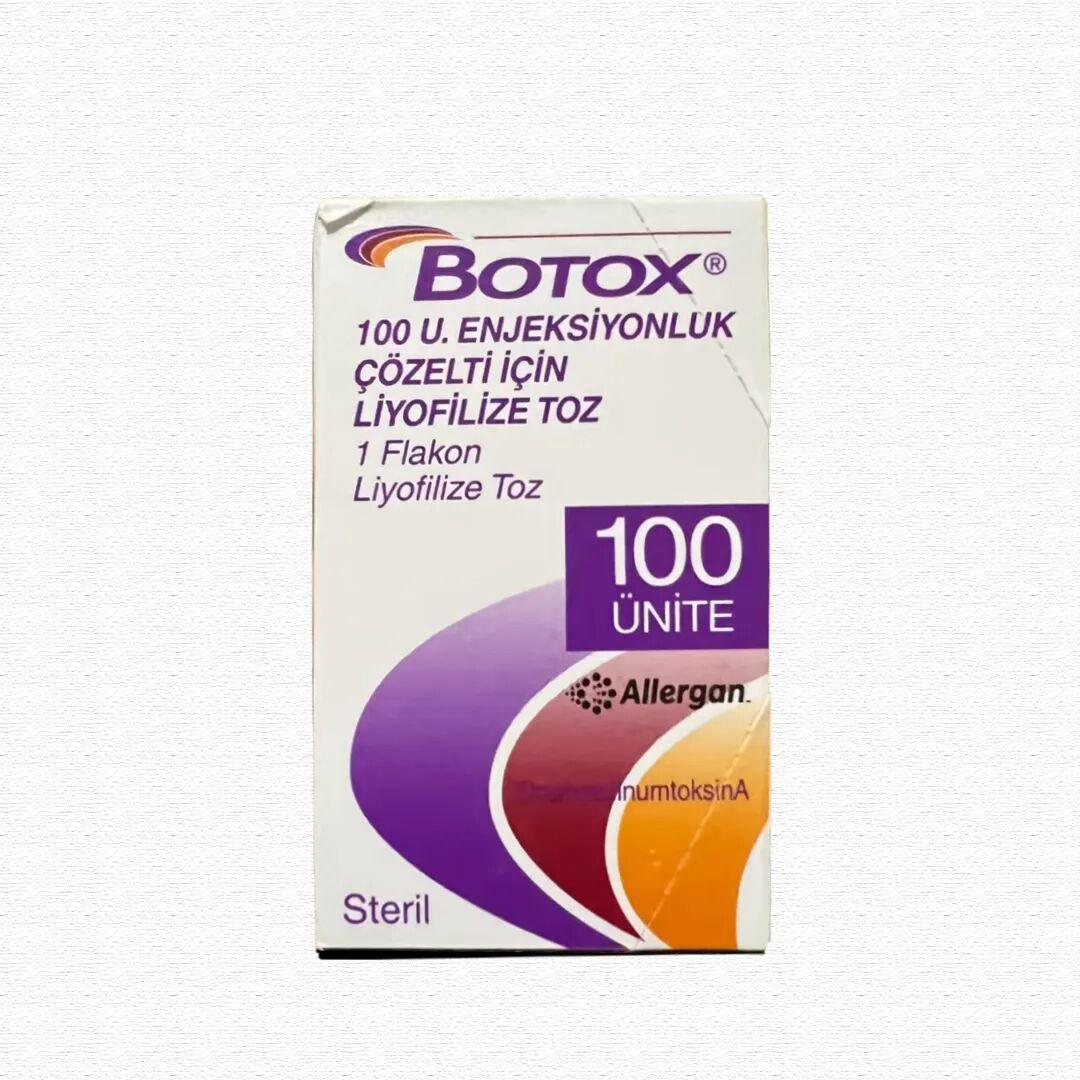
Botulinum Toxin Type A

日本語原題:BOTOX

Published2025-06-29 21:48 FormPowder Content9 sections / 2 images
English translation of the Japanese package insert is the main text; the Japanese original is shown alongside for verification. Use the language menu (top right) to read the page in another language. This site is for reference only — consult a doctor or pharmacist before use.
Section 1 · 01
English translation
Feature description By binding to receptor sites on motor nerve endings, it enters nerve endings and inhibits the release of acetylcholine, thereby blocking neuromuscular conduction, causing muscle relaxation and relieving muscle excitation.
Section 2 · 02
English translation
Specifications 100U/tube.
Section 3 · 03
English translation
Characteristics White lyophilized powder or white powder.
Section 4 · 04
English translation
Ingredient Description Main ingredient: Clostridium botulinum toxin type A Additives: human albumin and sodium chloride.
Section 5 · 05
English translation
Functions and indications 1. Core mechanism of action By binding to receptors at motor nerve endings, it inhibits the release of acetylcholine, blocking signal transmission at the neuromuscular junctions, preventing muscle contraction and thus achieving muscle relaxation. 2. The main role in the medical field (1) Treats muscle spasms and dystonia (1) Facial muscle spasms: relieves involuntary facial muscle spasms (such as orbicularis oculi muscles, perioral muscles, etc.). (2) Blepharospasm: Reduces symptoms of frequent eyelid twitching or tight closure. (3) Focal dystonia: such as neck dystonia (torticollis), writing spasms, etc., which improve posture and function by relaxing abnormally contracted muscles. (2) Improves neurogenic bladder symptoms It can be injected into the bladder wall to relieve urinary incontinence caused by overactivity of the detrusor muscle (such as in patients with neurogenic bladder). (3) Relieves migraines For chronic migraine patients, injections into specific head muscles can reduce the frequency of headache attacks. 3. The main role in the beauty field (1) Facial wrinkle removal (1) Dynamic wrinkles: Targets wrinkles caused by repeated muscle contractions such as frown lines, crow's feet, and forehead lines, which relax muscles to lighten or disappear. (2) Principle: For example, frown lines are caused by contraction of the frown and interglabell muscles. After injection, they can inhibit muscle contraction, thereby smoothing out wrinkles. (2) Contour shaping (1) Face slimming (masseter muscle reduction): Injected into the masseter muscle to relax and atrophy, improving square face or masseter hypertrophy. (2) Slimming legs / shoulders: Injected into the gastrocnemius muscle (calf) or trapezius (shoulder) to reduce muscle volume and sculpt a slender line. (3) Other beauty applications (1) Treatment of axillary odor: Injected into the distribution area of the axillary sweat glands to inhibit acetylcholine release and reduce sweat secretion. (2) Improve gum smile: Relax the levator labial muscle, reducing gum exposure during smiling.
Section 6 · 06
English translation
Usage and dosage When using, it must be dissolved in saline; after dissolution, it becomes a colorless transparent or slightly pale yellow liquid, relatively stable in nature, but must be stored away from light and at low temperatures. 1. Beauty Field (1) Glabellar Lines (Frown Lines): Frown and descending interglabellar muscles, 5~10 units, inhibits contraction of the interglabellar muscles and smooths vertical wrinkles. (2) Crow's feet: lateral orbicularis oculi muscle, 3~5 units per point, total 2~3 points, reduce muscle contraction around the eyes and improve lateral wrinkles. (3) Forehead wrinkles: 2~5 units per point in the center and sides of the frontal muscle, totaling 3~5 points, relax the frontal muscles and reduce horizontal wrinkles when raising the head. (4) Masseter hypertrophy (face slimming): The middle part of the masseter muscle (3~4cm from the corner of the mouth), 25~50 units per side, promotes masseter atrophy and reduces facial contours. 2. Medical field (1) Muscle spasm treatment (such as torticollis) Abnormal contraction muscles should be identified via electromyography, with a single injection dose of 5~50 units, and the total dose adjusted according to the condition (usually no more than 200 units per dose). (2) Migraine prevention Injection is administered to specific muscle groups such as the occipital, frontal, and temporal regions, with a total of 19 injection points, total dose 155~195 units, administered once every 3 months. (3) Neurogenic bladder Using a cystoscope, the drug is injected into the bladder wall (detrusor muscle) in 10~20 doses, with a total dose of 100~200 units to improve detrusor muscle hyperactivity. 3. The total dose per injection should not exceed 400 units (to avoid excessive muscle weakness), with at least 3 months between injections (to prevent antibody reduction).
Section 7 · 07
English translation
Important notes 1. When using, medication should be prescribed and operated by medical personnel. 2. Do not exceed the recommended treatment dose and frequency to avoid resistance. 3. Drugs that affect neuromuscular conduction, such as aminoglycoside antibiotics, can enhance their effects, but caution is needed when using them. 4. If you experience abnormal swallowing, speaking, or breathing after injection, seek medical attention immediately. 5. The effect is time-sensitive, usually lasting 3~6 months, and requires regular injections to maintain the effect.
Section 8 · 08
English translation
Side effects Most side effects of Botox are temporary and related to drug spread or individual reactions, with common side effects including: 1. Local reaction (1) Redness, swelling, pain, and bruising at the injection site, usually disappearing within 1-3 days. (2) Muscle weakness (such as eyelid drooping and asymmetrical eyebrow shape after wrinkle removal, or chewing weakness after facial slimming injections), often due to excessive dosage or injection site deviation, generally relieved within 2-8 weeks. 2. Systemic reactions (1) In very rare cases, headache, fever, fatigue, nausea, etc., may occur, mostly transient. (2) Allergic reactions (rare): Manifest as rash, difficulty breathing, etc., requiring immediate medical attention. 3. Long-term or severe risks (1) Frequent injections may lead to antibody production and reduce drug efficacy (recommended interval between injections ≥ 3 months). (2) If the drug spreads to non-target muscles, it may cause double vision, difficulty swallowing, dyspnea, etc. (urgent treatment required).
Section 9 · 09
English translation
Taboo 1. Contraindicated in patients allergic to any component of this product; 2. Contraindicated in patients with infection at the injection site; 3. Contraindicated in patients with myasthenia gravis or Lambert-Eaton syndrome. 4. Use with caution in pregnant and breastfeeding women, seniors over 65, and children under 12. Please like Please share Please like it

Source images

2 images

Need help sourcing Japanese medicines or OEM production?

💬