Digestive · DIGESTIVE

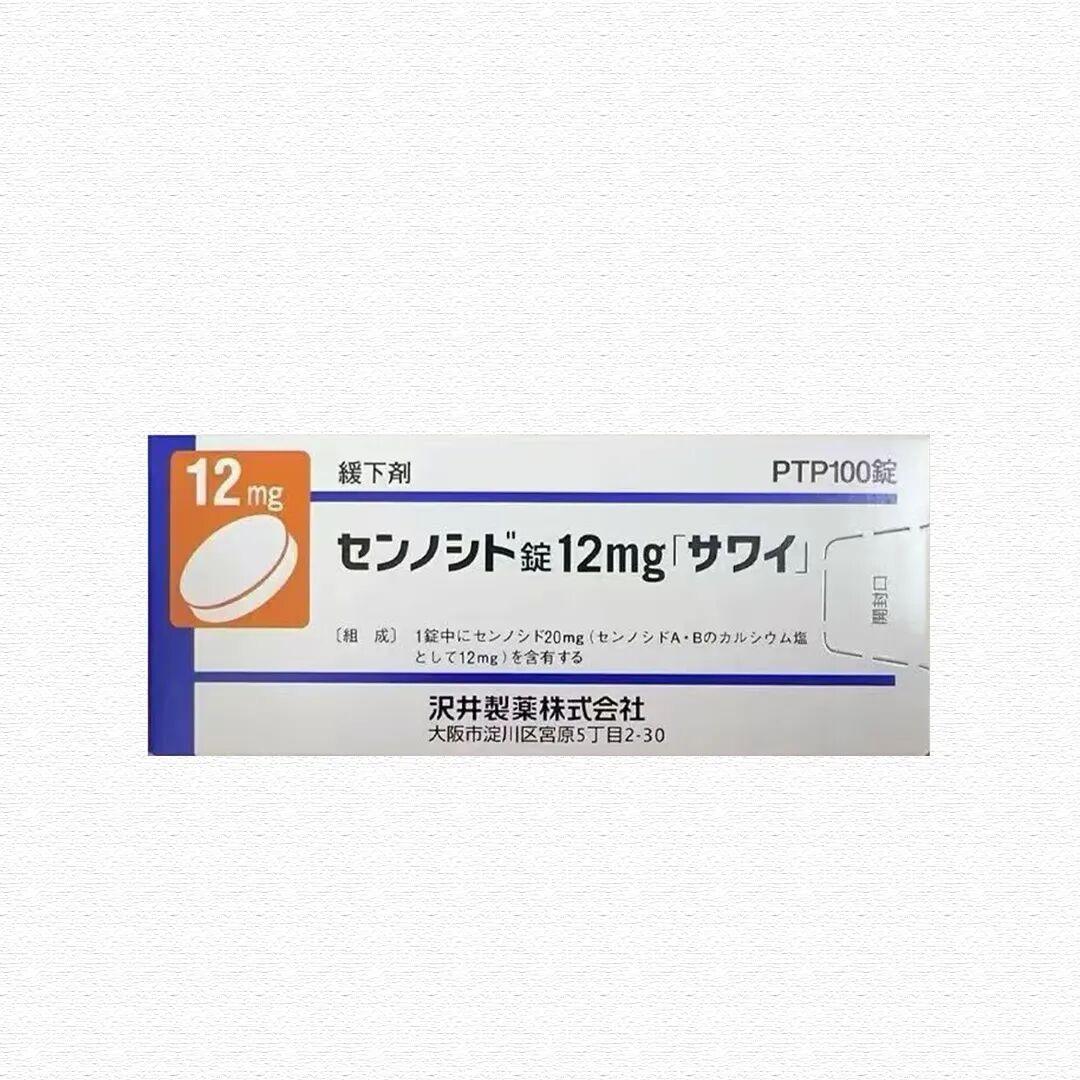
Sawai Banna Glycoside 12mg (Sennoside Tablets 12mg 'Sawai')—

日本語原題:センノシド錠 12mg「サワイ」

Published2025-07-20 08:23 Maker沢井 FormTablet Content9 sections / 2 images
English translation of the Japanese package insert is the main text; the Japanese original is shown alongside for verification. Use the language menu (top right) to read the page in another language. This site is for reference only — consult a doctor or pharmacist before use.
Section 1 · 01
English translation
Feature Description Sennosides reach the large intestine, where intestinal bacteria produce rainanthrons and enhance intestinal peristalsis (in mice, rats). The effects of sennoside typically manifest 8~10 hours after administration (in humans).
Section 2 · 02
English translation
Specifications PTP: 100 tablets (10 tablets × 10).
Section 3 · 03
English translation
Peach-colored sugar-coated pieces.
Section 4 · 04
English translation
Ingredient Information Active ingredient [per tablet]: 20mg of sennoside (12mg as calcium salt of sennoside A and B). Additives: gum arabic, sodium benzoate, carnauba wax, light anhydrous silica, crystalline cellulose, titanium oxide, magnesium stearate, gelatin, talc, calcium carbonate, corn starch, lactose, white sugar, hydroxypropyl cellulose, pullulan, povidone, red No. 3 aluminum lake, yellow No. 5 aluminum lake.
Section 5 · 05
English translation
Functions and indications Constipation.
Section 6 · 06
English translation
Dosage and Administration Adults usually take 12~24 mg orally once daily before bedtime as sennoside A or B (or their calcium salts). For severe constipation, the dose can be increased up to 48 mg per dose. Adjust appropriately according to age and symptoms.
Section 7 · 07
English translation
Notes Avoid long-term use as resistance increases and effectiveness weakens due to increased resistance, making patients more dependent on medications.
Section 8 · 08
English translation
Side Effects 1. Hypersensitivity: rash, etc. 2. Metabolism and nutrition: Hypokalemia, hyponatremia, dehydration. 3. Cardiovascular system: Lowers blood pressure. 4. Gastrointestinal: abdominal pain, diarrhea, nausea and vomiting, stomach rumbling, abdominal discomfort, colon melanosis. 5. Liver: increased ALT, increased AST, increased γ-GTP, increased blood bilirubin. 6. Kidneys and urinary system: kidney disorders, colored urine. 7. Systemic symptoms: fatigue.
Section 9 · 09
English translation
taboo 1. Patients with a history of hypersensitivity to any component of this drug or sennoside formulations 2. Patients suspected of acute abdominal disease or spastic constipation [peristalsis-increasing effects may worsen symptoms such as abdominal pain]. ] 3. Patients with severe hard stools [oral administration of laxatives may not provide sufficient effect and may worsen symptoms such as abdominal pain. ] 4. Patients with electrolyte imbalances (especially hypokalemia) [Avoid large doses. When diarrhea occurs, electrolytes are lost, which can worsen the condition. ]

Source images

2 images

Need help sourcing Japanese medicines or OEM production?

💬