Calcium Polycarbophil
日本語原題:ポリカルボフィルCa細粒83.3%「日医工」
Source images
2 imagesThe artwork keeps its original Japanese/Chinese lettering. Open “Text in this image” under a picture to read what it says in your language (machine-read, may contain errors).
Text in this image machine-read · may contain errors
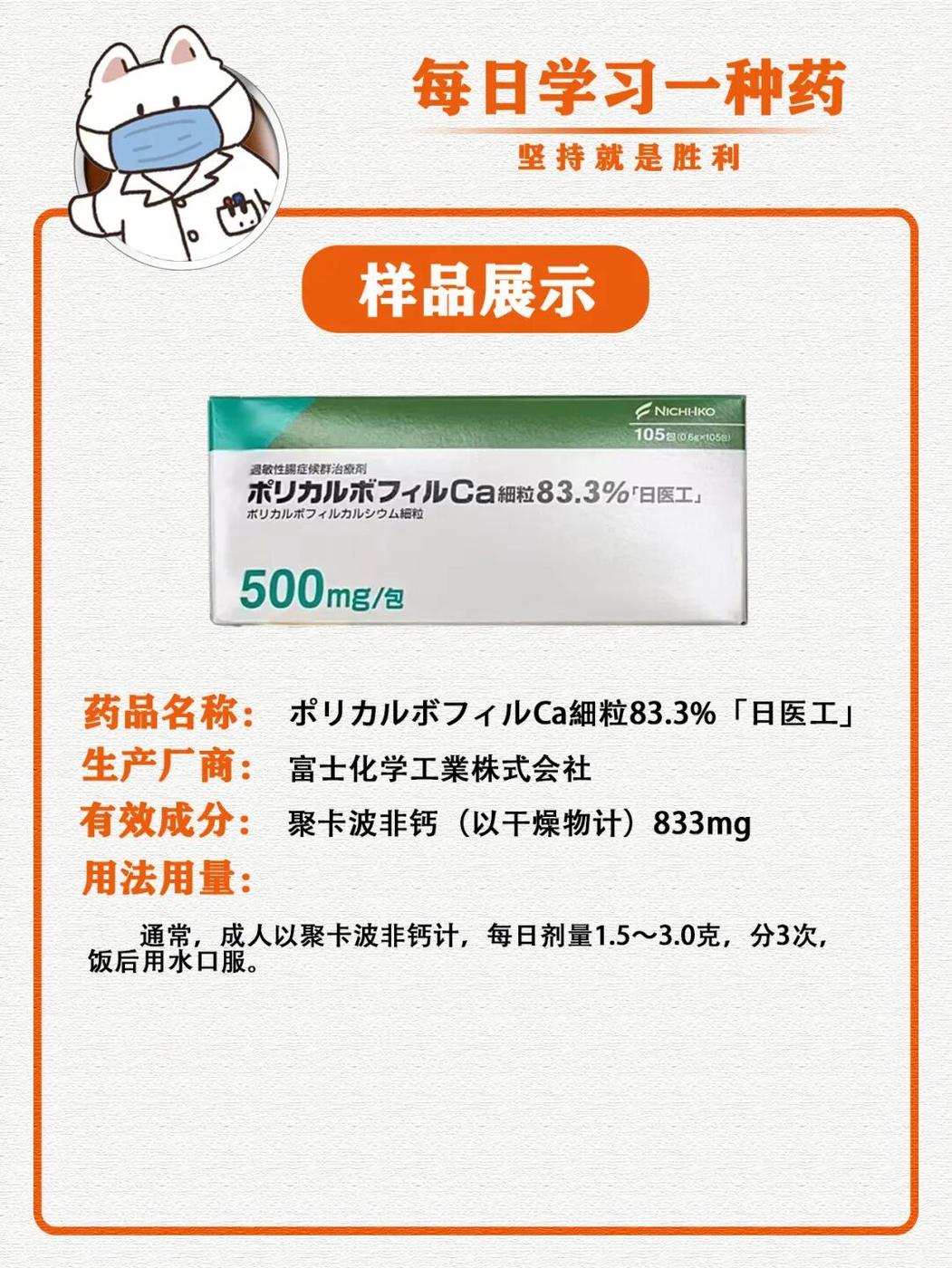
NICHIIKO Voricalhophyll Ca Fine 83.3% Old Doctor Bolycarbophyll Calcium 500mg/packet Drug Name: Ca Fine Granules 83.3% 'Nichi-I' Manufacturer: Fuji Chemical Industry Co., Ltd. Active ingredients: Polycarboxyl Calcium (dry matter) 833mg Dosage and administration: Typically, adults use polycarbophale calcium at a daily dose of 1.53.0 grams, divided into 3 doses, Take orally with water after meals.
NICHIIKO ボリカルホフィル Ca 細 83.3 % 旧医ェ」 ボリカルボフィルカルシウム 500mg/包 药品名称: Ca细粒83.3%「日医』 生产厂商: 富士化学工業株式会社 有效成分: 聚卡波非钙(以干燥物计)833mg 用法用量: 通常,成人以聚卡波非钙计,每日剂量1.53.0克,分3次, 饭后用水口服。
NICHIIKO Voricalhophyll Ca Fine 83.3% Old Doctor Bolycarbophyll Calcium 500mg/packet Drug Name: Ca Fine Granules 83.3% 'Nichi-I' Manufacturer: Fuji Chemical Industry Co., Ltd. Active ingredi…
Text in this image machine-read · may contain errors
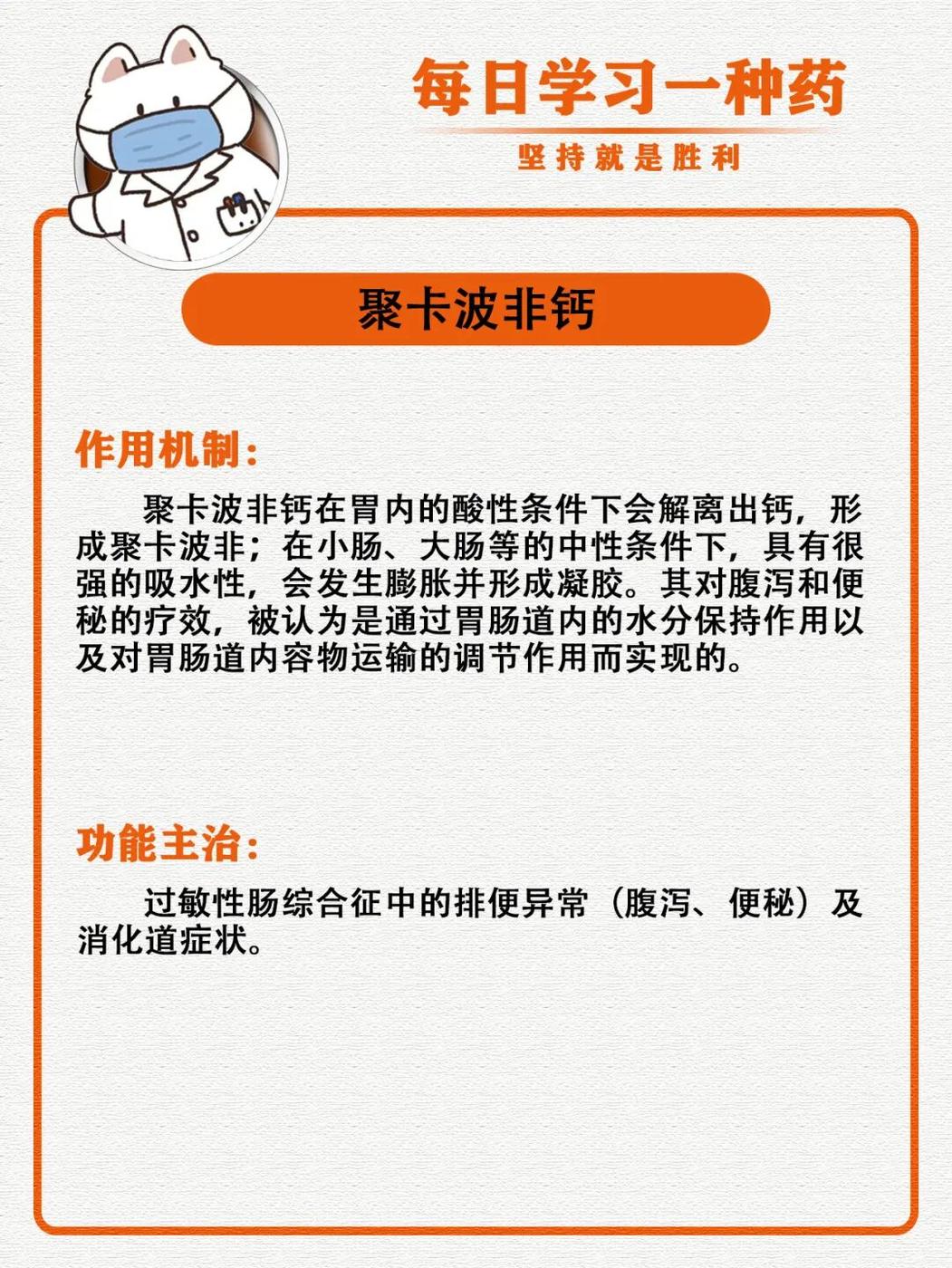
Polycarbophyl calcium Mechanism of action: Polycarbophyl calcium dissociates into calcium under acidic conditions in the stomach Polycarbophil: Under neutral conditions in the small and large intestines, it has very Strong water absorption, causing swelling and gel formation. It is used to relieve diarrhea and relieve constipation The efficacy of the secret is believed to be due to the retention of water in the gastrointestinal tract and regulate the transport of gastrointestinal contents. Functions and indications: Abnormal bowel movements (diarrhea, constipation) in irritable bowel syndrome and Gastrointestinal symptoms.
聚卡波非钙 作用机制: 聚卡波非钙在胃内的酸性条件下会解离出钙,形 成聚卡波非:在小肠、大肠等的中性条件下,具有很 强的吸水性,会发生膨胀并形成凝胶。其对腹泻和便 秘的疗效,被认为是通过胃肠道内的水分保持作用以 及对胃肠道内容物运输的调节作用而实现的。 功能主治: 过敏性肠综合征中的排便异常(腹泻、便秘)及 消化道症状。
Polycarbophyl calcium Mechanism of action: Polycarbophyl calcium dissociates into calcium under acidic conditions in the stomach Polycarbophil: Under neutral conditions in the small and larg…