Mesalazine
日本語原題:アサコール錠400mg
1 Chūnichi Domestique Mesalazine 400mg.
Source images
2 imagesThe artwork keeps its original Japanese/Chinese lettering. Open “Text in this image” under a picture to read what it says in your language (machine-read, may contain errors).
Text in this image machine-read · may contain errors
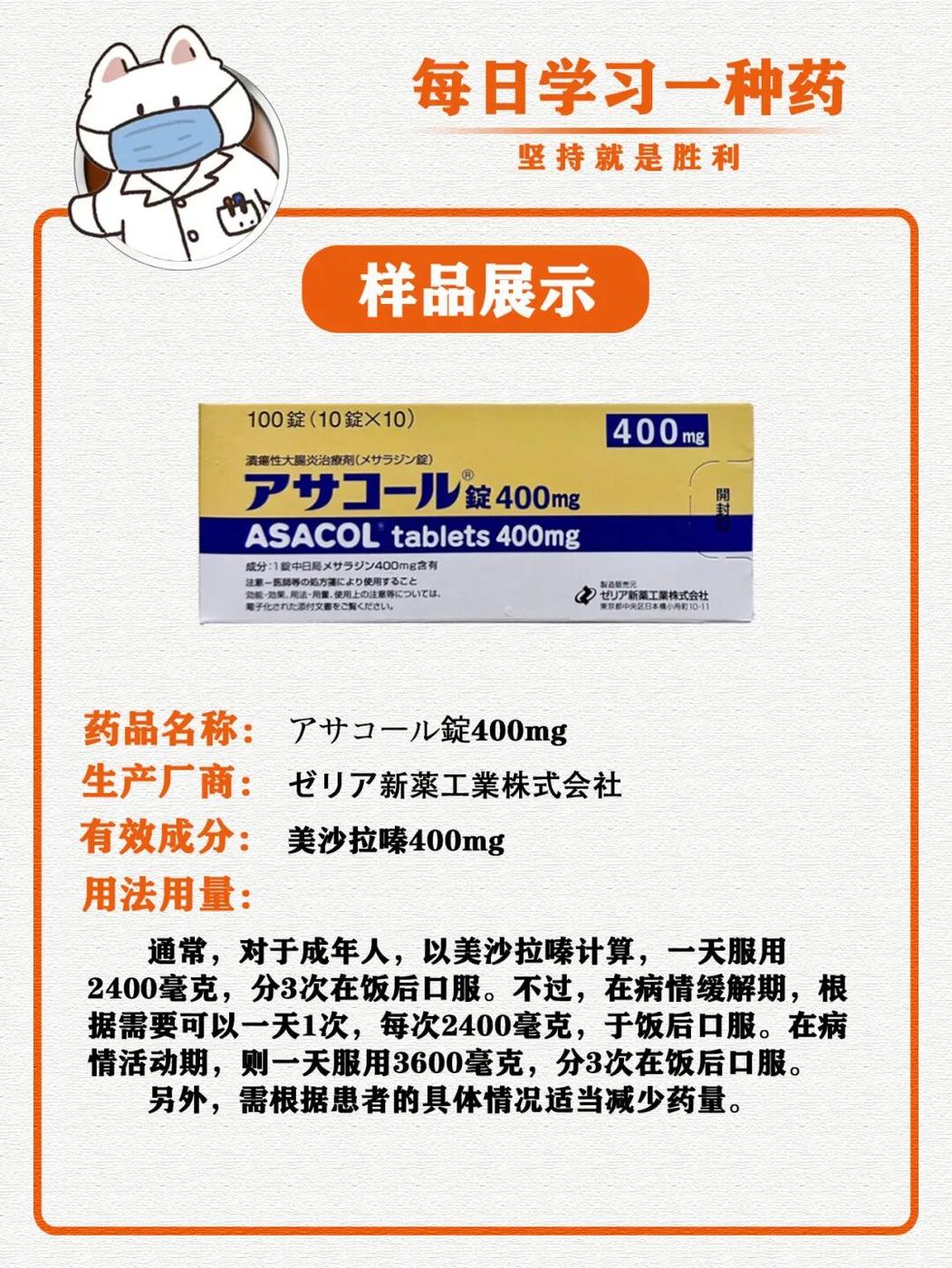
100 ingots (10 ingots ×10) 400mg ASACOLtablets400mg 1 minute Shin Chunichi Daimesarazine 48Eg2 included Drug Name: Liao Nian? Yiba tablets 400mg Manufacturer: Yadiao New Pharmaceutical Industry Co., Ltd Active ingredient: Mesalazine 400mg Dosage and administration: Typically, for adults, the dose is measured as mesalazine per day 2400 mg, taken orally in three doses after meals. However, during the remission phase, the root is the root of the disease As needed, 2400 mg can be taken orally once daily after meals. and was ill During the active phase, take 3600 mg per day, divided into three doses orally after meals. Additionally, the dosage should be appropriately reduced according to the patient's specific condition.
100锭(10锭×10) 400mg ASACOLtablets400mg 分 1 新中日第メサラジン 48Eg2 有 药品名称:了廿?一八锭400mg 生产厂商:也刁新藥工業株式会社 有效成分:美沙拉嗪400mg 用法用量: 通常,对于成年人,以美沙拉嗪计算,一天服用 2400毫克,分3次在饭后口服。不过,在病情缓解期,根 据需要可以一天1次,每次2400毫克,于饭后口服。在病 情活动期,则一天服用3600毫克,分3次在饭后口服。 另外,需根据患者的具体情况适当减少药量。
100 ingots (10 ingots ×10) 400mg ASACOLtablets400mg 1 minute Shin Chunichi Daimesarazine 48Eg2 included Drug Name: Liao Nian? Yiba tablets 400mg Manufacturer: Yadiao New Pharmaceutical Indus…
Text in this image machine-read · may contain errors
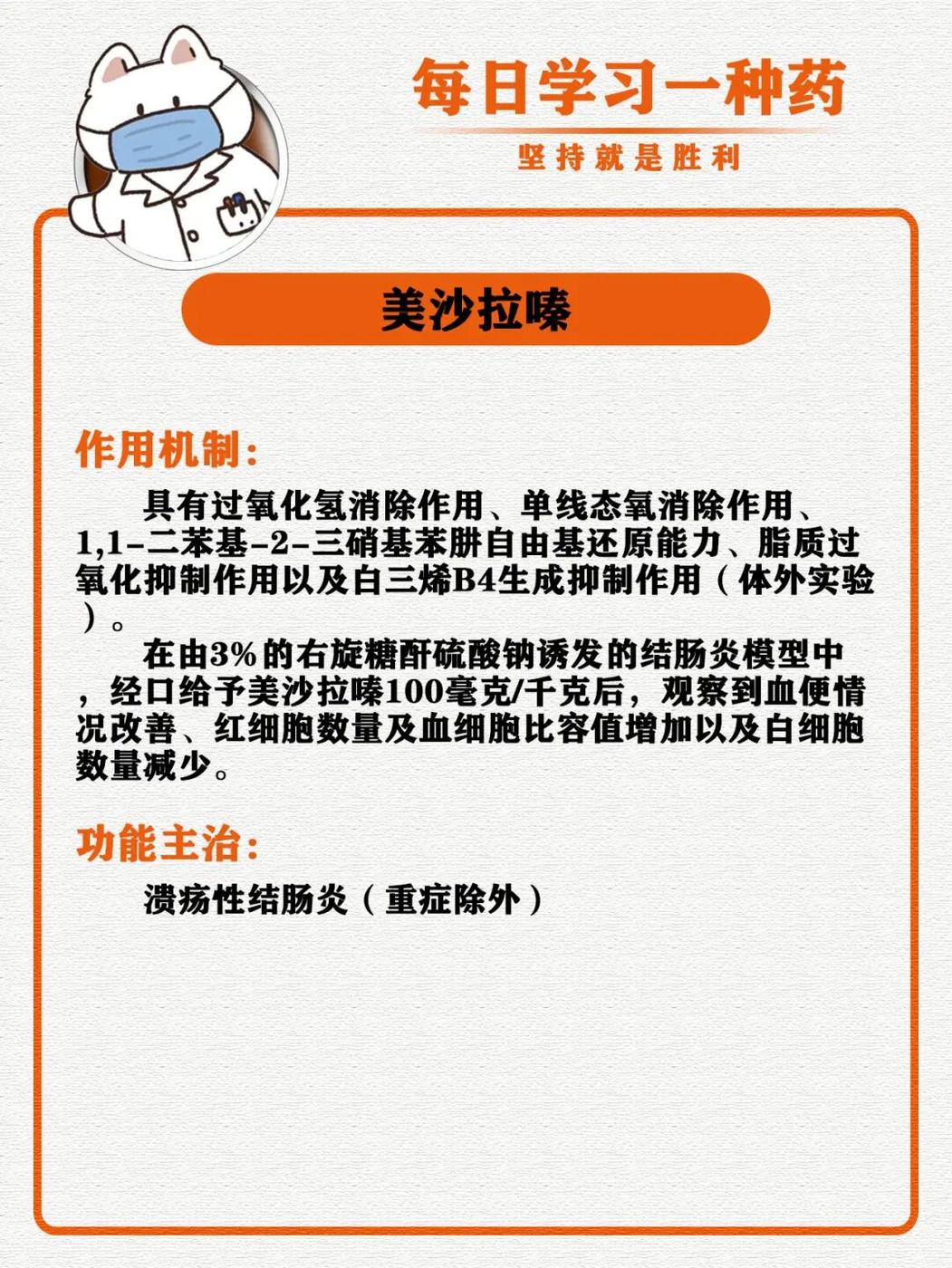
Mechanism of action: It has hydrogen peroxide elimination and singlet oxygen elimination effects 1,1-Diphenyl-2-trinitrophenylhydrazine radical reducing ability, lipid superduction Oxidation inhibition and inhibition of leukotriene B4 formation (in vitro experiments). In a colitis model induced by 3% sodium dextran sulfate After oral administration of mesalazine at 100 mg/kg, blood in stool was observed Improved conditions, increased red blood cell count and hematocrit, and increased white blood cell count Functions and indications: Ulcerative colitis (except severe cases) Mesalazine
作用机制: 具有过氧化氢消除作用、单线态氧消除作用 1,1-二苯基-2-三硝基苯肼自由基还原能力、脂质过 氧化抑制作用以及白三烯B4生成抑制作用(体外实验 在由3%的右旋糖酐硫酸钠诱发的结肠炎模型中 经口给予美沙拉嗪100毫克/千克后,观到血便情 况改善、红细胞数量及血细胞比容值增加以及白细胞 功能主治: 溃疡性结肠炎(重症除外) 美沙拉嗪
Mechanism of action: It has hydrogen peroxide elimination and singlet oxygen elimination effects 1,1-Diphenyl-2-trinitrophenylhydrazine radical reducing ability, lipid superduction Oxidation…