Digestive · DIGESTIVE

icosapent ethyl

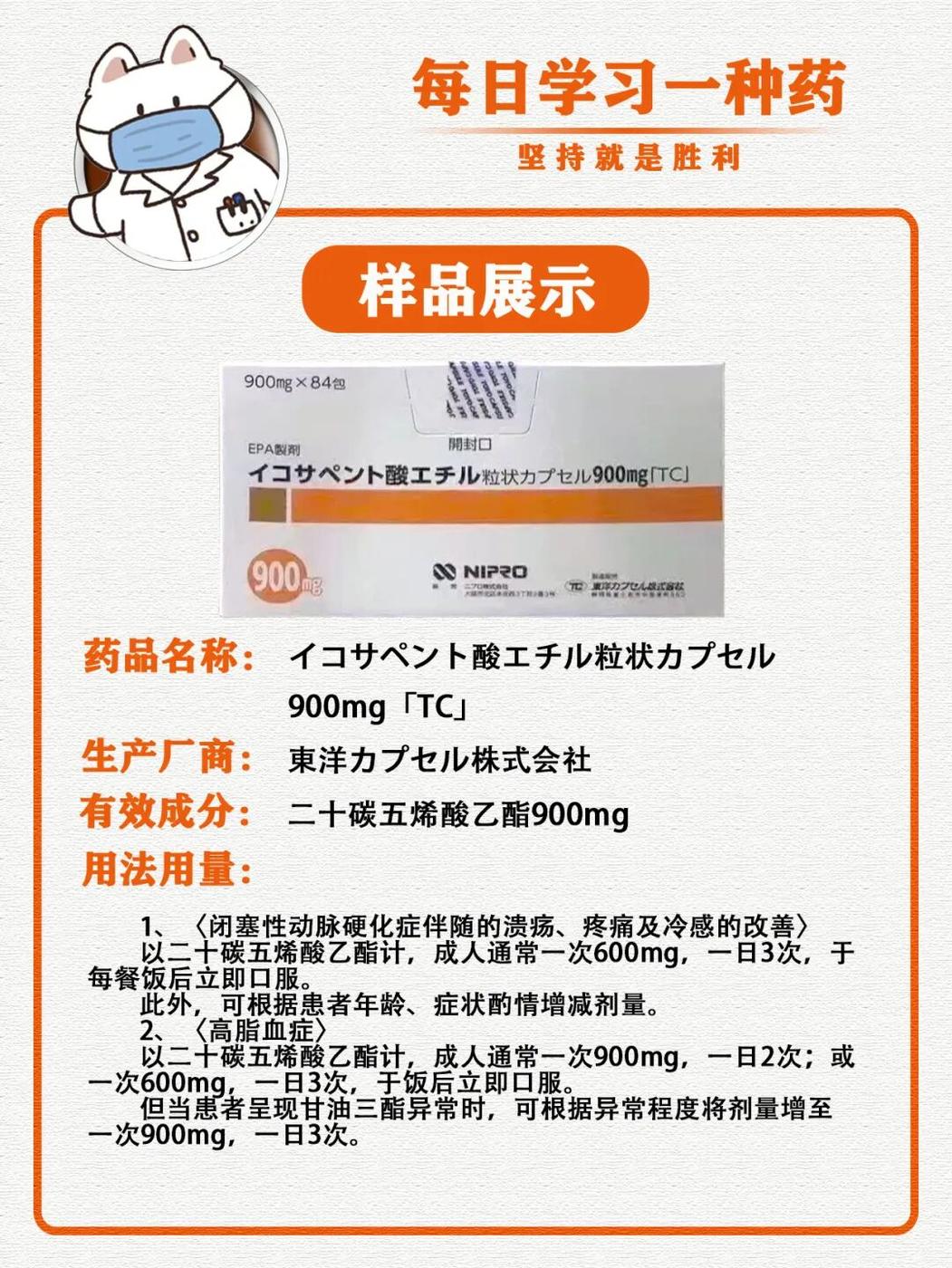
日本語原題:イコサペント酸エチル粒状カプセル900mg「TC」

Published2025-09-01 09:29 FormCapsule Content9 sections / 2 images
Ingredients / strength:
One packet contains 900mg of ethyl icosapentate from the Sino-Japanese Bureau.
English translation of the Japanese package insert is the main text; the Japanese original is shown alongside for verification. Use the language menu (top right) to read the page in another language. This site is for reference only — consult a doctor or pharmacist before use.
Section 1 · 01
English translation
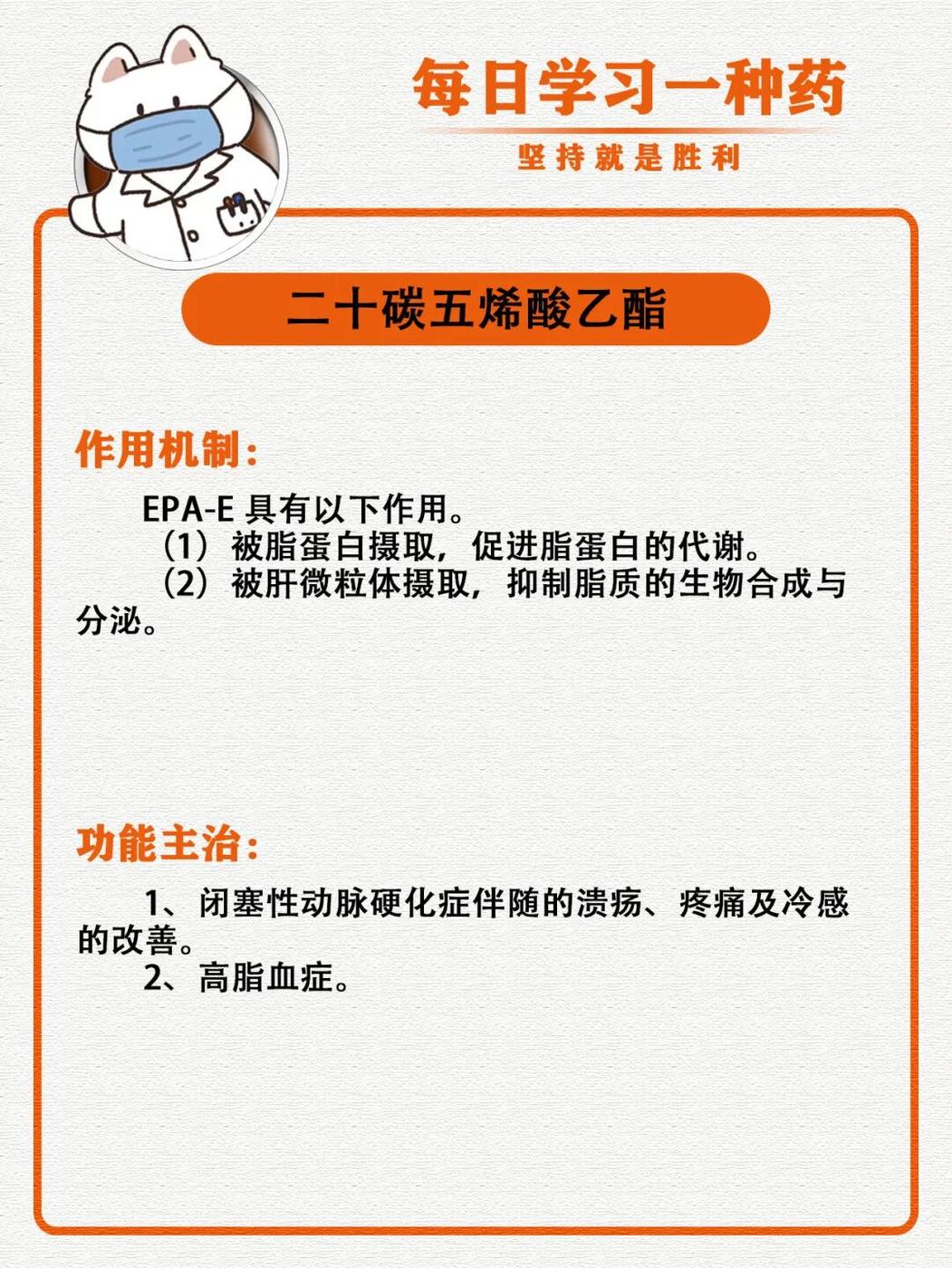
Feature Description EPA-E exhibits the following effects: (1) It is absorbed by lipoproteins and promotes their metabolism. (2) It is uptaken by liver microsomes and inhibits lipid biosynthesis and secretion.
Section 2 · 02
English translation
Specifications Subcontracts: 84 packages.
Section 3 · 03
English translation
Characteristics Spherical, about 4mm in diameter, pale yellow transparent, soft capsule.
Section 4 · 04
English translation
Ingredient Information 1. Active ingredient: 1 packet of China-Japan Bureau Ethyl Icosapentate 900mg. 2. Additives: (1) Tocopherol (2) Capsule body: gelatin, succinated gelatin, concentrated glycerin, ethyl palaoxybenzoate, propyl paloxybenzoate.
Section 5 · 05
English translation
Indications 1. Improvement of ulcers, pain, and coldness associated with arteriosclerosis obliterans. 2. Hyperlipidemia.
Section 6 · 06
English translation
Dosage and Administration 1. 〈Improvement of ulcers, pain, and coldness associated with occlusive arteriosclerosis〉 As ethyl icosapentate, it is typically administered orally three times a day immediately after each meal, at 600 mg per dose for adults. Adjustments may be adjusted appropriately depending on age and symptoms. 2. "Hyperlipidemia" As ethyl icosapentate, it is usually administered orally for adults at 900 mg twice daily or 600 mg three times daily immediately after meals. However, if triglyceride abnormalities occur, the dose can be increased to 900 mg per dose, up to three times a day, depending on the severity.
Section 7 · 07
English translation
Notes 1. 〈Improvement of ulcers, pain, and coldness associated with occlusive arteriosclerosis〉 During treatment, carefully monitor the progression, and if this drug is ineffective, discontinue administration and switch to another therapy. It is also advisable to perform regular blood tests during administration of this drug. 〈Hyperlipidemia〉 1. Implement dietary therapy, which is fundamental for treating hyperlipidemia, in advance, and further consider exercise therapy and the reduction of risk factors for ischemic heart disease such as hypertension and smoking. 2. During administration, regularly monitor blood lipid levels, and discontinue administration if no response to treatment is observed.
Section 8 · 08
English translation
Side Effects 1. Liver dysfunction (frequency unknown), jaundice (frequency unknown) Liver dysfunction accompanied by elevated levels of AST, ALT, AL-P, γ-GTP, LDH, bilirubin, etc., and jaundice may occur. 2. Atrial fibrillation (frequency unknown), atrial tasting (frequency unknown) Reports indicate an increased risk of atrial fibrillation or atrial flutter requiring hospitalization in overseas clinical trials of ethyl icosapentate (4g/day)1). Additionally, domestic and international clinical trials of omega-3 fatty acids containing ethyl icosapentate have reported an increased risk of atrial fibrillation. Note: The approved maximum daily dose for hyperlipidemia is 2,700 mg. 3. Other side effects (1) Hypersensitivity: rash, itching, etc. (2) Bleeding tendency: subcutaneous hemorrhage, hematuria, gum bleeding, fundus bleeding, nosebleeds, gastrointestinal bleeding, etc. (3) Blood: anemia, etc. (4) Digestive system: nausea, heartburn, abdominal discomfort, diarrhea, constipation, abdominal bloating, abdominal pain, vomiting, loss of appetite, stomatitis, dry mouth, bloating, etc. (5) Liver: Liver dysfunction such as elevated AST, ALT, Al-P, γ-GTP, LDH, and bilirubin. (6) Kidneys: Increased BUN and creatinine levels. (7) Respirator: cough, difficulty breathing. (8) Neuropsychiatric system: headache, heaviness in the head, dizziness, numbness, dizziness, drowsiness, insomnia. (9) Musculoskeletal system: joint pain, muscle pain, limb pain, muscle cramps (such as cramps). (10) Others: edema, increased uric acid, increased CK, palpitations, facial flushing, flushing, fever, frequent urination, general fatigue, increased blood pressure, gynecomastia, tinnitus, sweating, acne.
Section 9 · 09
English translation
taboo 1. Patients with bleeding (hemophilia, capillary fragility, gastrointestinal ulcers, urinary tract bleeding, hemoptysis, vitreous hemorrhage, etc.) [There is a risk of difficulty in hemostasis. ] 2. Patients receiving mifepristone or misoprostol

Source images

2 images

Need help sourcing Japanese medicines or OEM production?

💬