Valsartan
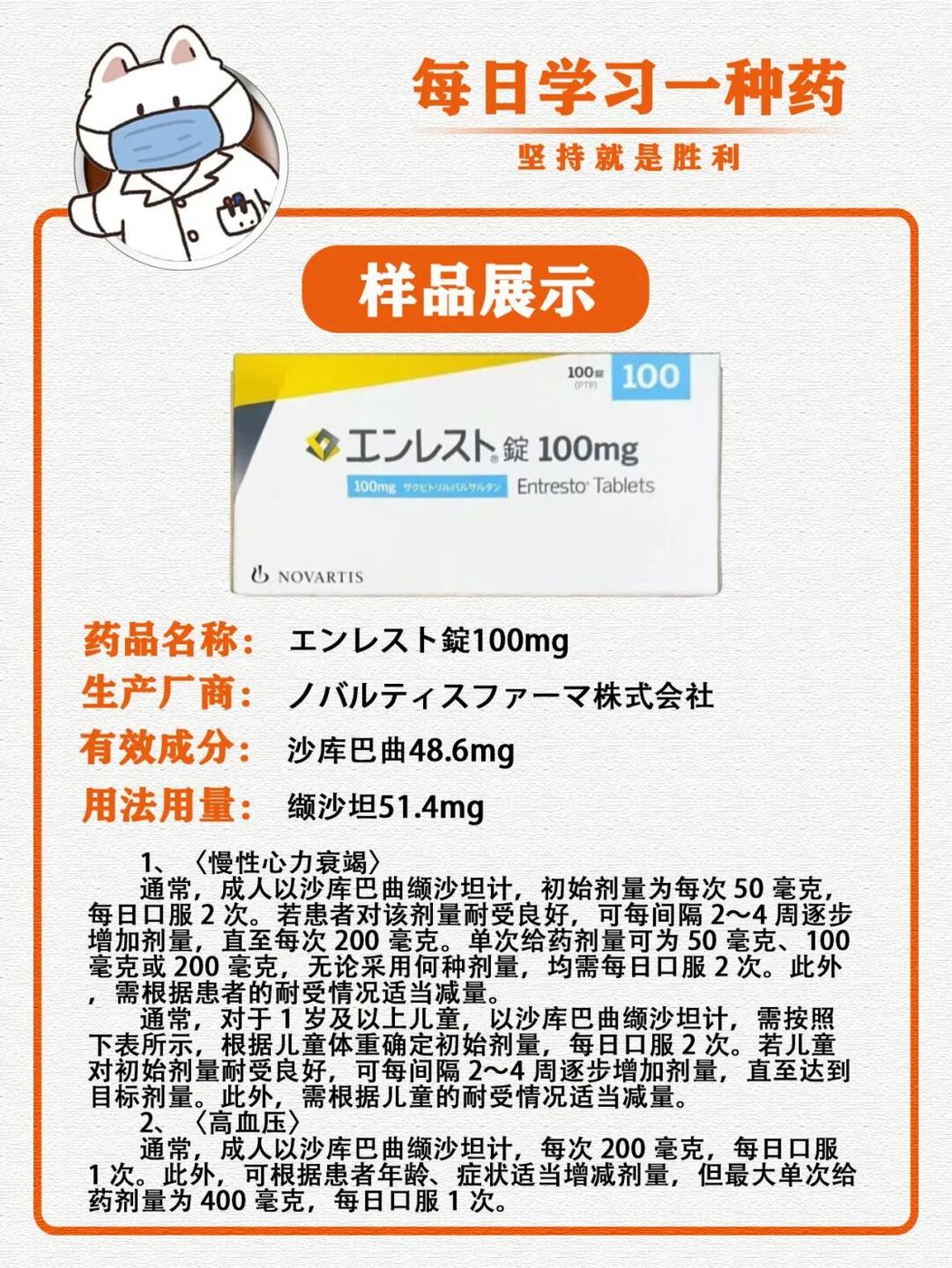
日本語原題:エンレスト錠100mg
1 tablet contains 113.103mg of sacvirtril valsartan sodium hydrate (100mg as sacvirtril sartan : 48.6mg of sacvirtril and valsartan
Source images
3 imagesThe artwork keeps its original Japanese/Chinese lettering. Open “Text in this image” under a picture to read what it says in your language (machine-read, may contain errors).
Text in this image machine-read · may contain errors
0 Kon Rest Lock 100Eg Entresto Tablets UNOVARTIS Drug Name: Konnrest tablets 100mg Manufacturer: Novartis Pharma Co., Ltd Active ingredients: Sacubaqu 48.6mg Dosage and administration: Valsartan 51.4 mg 1. "Chronic Heart Failure" Typically, adults are calculated as sacubatric valsartan, with an initial dose of 50 mg each time Take orally twice daily. If the patient tolerates this dose well, it can be gradually increased every 24 weeks Increase the dose up to 200 mg each time. Single doses can be 50 mg or 100 mg Milligrams or 200 milligrams, regardless of the dosage, should be taken orally twice daily. In addition, Dosage should be appropriately reduced according to patient tolerance. Generally, for children aged 1 year and above, the calculation of sacubatrivalsartan should be calculated as follows As shown in the table below, the initial dose is determined according to the child's weight, taken orally twice daily. Like a child Good tolerance to initial dose, with gradual dose increases every 2~4 weeks until the target is reached Target dose. Additionally, dosage should be appropriately reduced according to the child's tolerance. 2. "Hypertension" Typically, adults take 200 mg orally daily as sacubtrasartan 1 time. Additionally, dosage can be adjusted appropriately according to the patient's age and symptoms, but the maximum is a single dose The dosage is 400 mg, taken orally once daily.
0 工ンレスト錠 100Eg Entresto Tablets UNOVARTIS 药品名称: 工ンレスト錠 100mg 生产厂商: ノバルティスファーマ株式会社 有效成分: 沙库巴曲48.6mg 用法用量: 缬沙坦51.4mg 1、《慢性心力衰竭) 通常,成人以沙库巴曲缬沙坦计,初始剂量为每次50毫克 每日口服2次。若患者对该剂量耐受良好,可每间隔24周逐步 增加剂量,直至每次200毫克。单次给药剂量可为50毫克、100 毫克或200毫克,无论采用何种剂量,均需每日口服2次。此外 需根据患者的耐受情况适当减量。 通常,对于1岁及以上儿童,以沙库巴曲缬沙坦计,需按照 下表所示,根据儿童体重确定初始剂量,每日口服2次。若儿童 对初始剂量耐受良好,可每间隔2~4周逐步增加剂量,直至达到 目标剂量。此外,需根据儿童的耐受情况适当减量。 2、《高血压》 通常,成人以沙库巴曲沙坦计,每次200毫克,每日口服 1次。此外,可根据患者年龄、症状适当增减剂量,但最大单次给 药剂量为400毫克,每日口服1次。
0 Kon Rest Lock 100Eg Entresto Tablets UNOVARTIS Drug Name: Konnrest tablets 100mg Manufacturer: Novartis Pharma Co., Ltd Active ingredients: Sacubaqu 48.6mg Dosage and administration: Valsa…
Text in this image machine-read · may contain errors
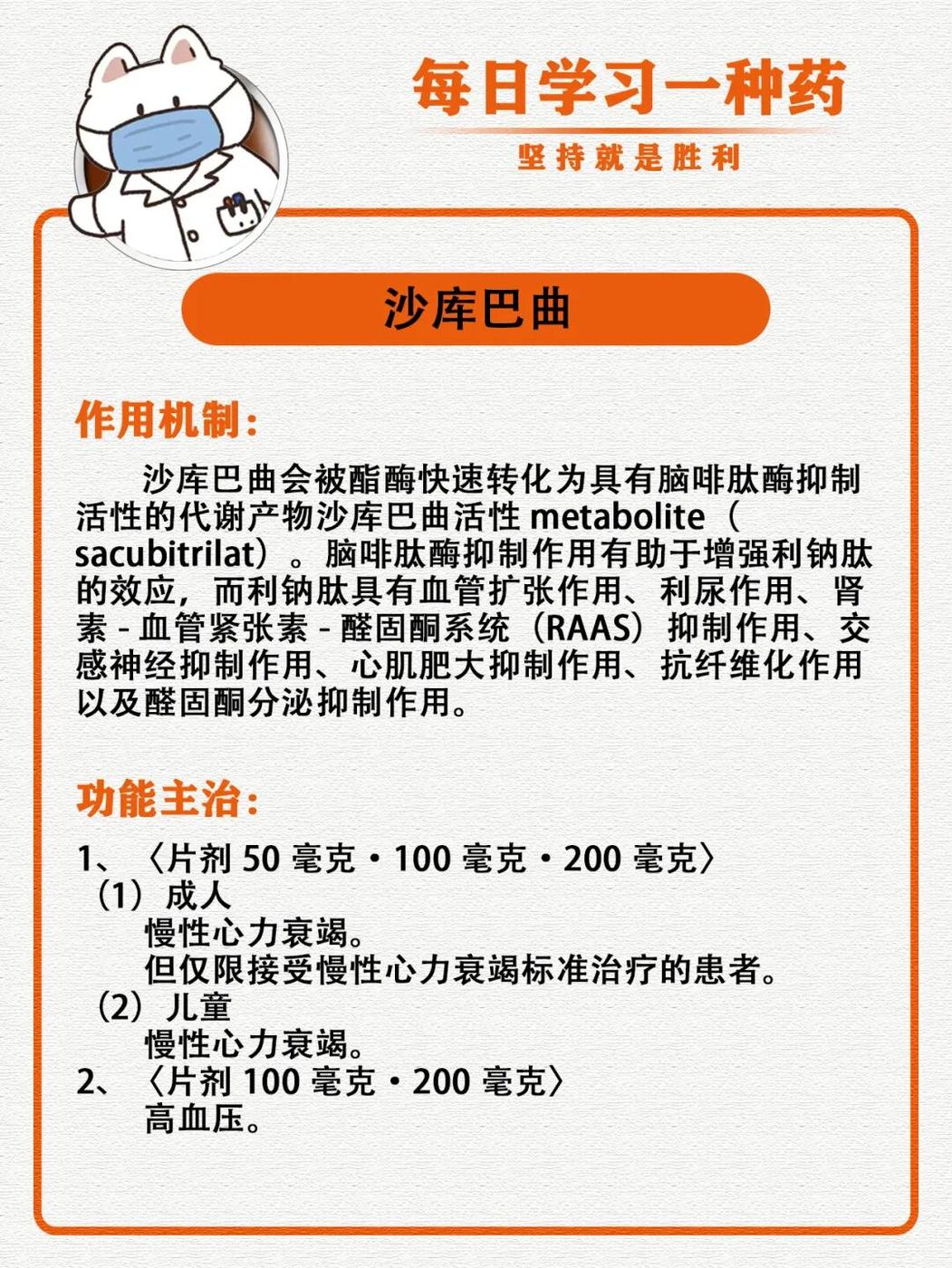
Mechanism of action: Sacubatrix is rapidly converted by esterase into enkephalinase inhibitors The active metabolite, sacubitri, is active ( sacubitrilat)。 Enkephalinase inhibition helps enhance natriuretic peptides natriuretic peptide has vasodilator, diuretic, and renal effects Inhibition and cross-exposure of the RAAS system Sensory nerve inhibition, myocardial hypertrophy inhibition, anti-fibrotic effect and aldosterone secretion inhibition. Functions and indications: 1. (Tablets 50 mg · 100 mg · 200 mg) (1) Adult Chronic heart failure. However, this is limited to patients receiving standard treatment for chronic heart failure. (2) Children (Tablets 100 mg: 200 mg) Hypertension.
作用机制: 沙库巴曲会被酯酶快速转化为具有脑啡肽酶抑制 活性的代谢产物沙库巴曲活性metabolite( sacubitrilat)。脑啡肽酶抑制作用有助于增强利钠肽 的效应,而利钠肽具有血管扩张作用、利尿作用、肾 素-血管紧张素-醛固酮系统(RAAS)抑制作用、交 感神经抑制作用、心肌肥大抑制作用、抗纤维化作用 以及醛固酮分泌抑制作用。 功能主治: 1、(片剂50毫克·100毫克·200毫克) (1)成人 慢性心力衰竭。 但仅限接受慢性心力衰竭标准治疗的患者。 (2)儿童 (片剂100毫克:200毫克) 高血压。
Mechanism of action: Sacubatrix is rapidly converted by esterase into enkephalinase inhibitors The active metabolite, sacubitri, is active ( sacubitrilat)。 Enkephalinase inhibition helps enh…
Text in this image machine-read · may contain errors
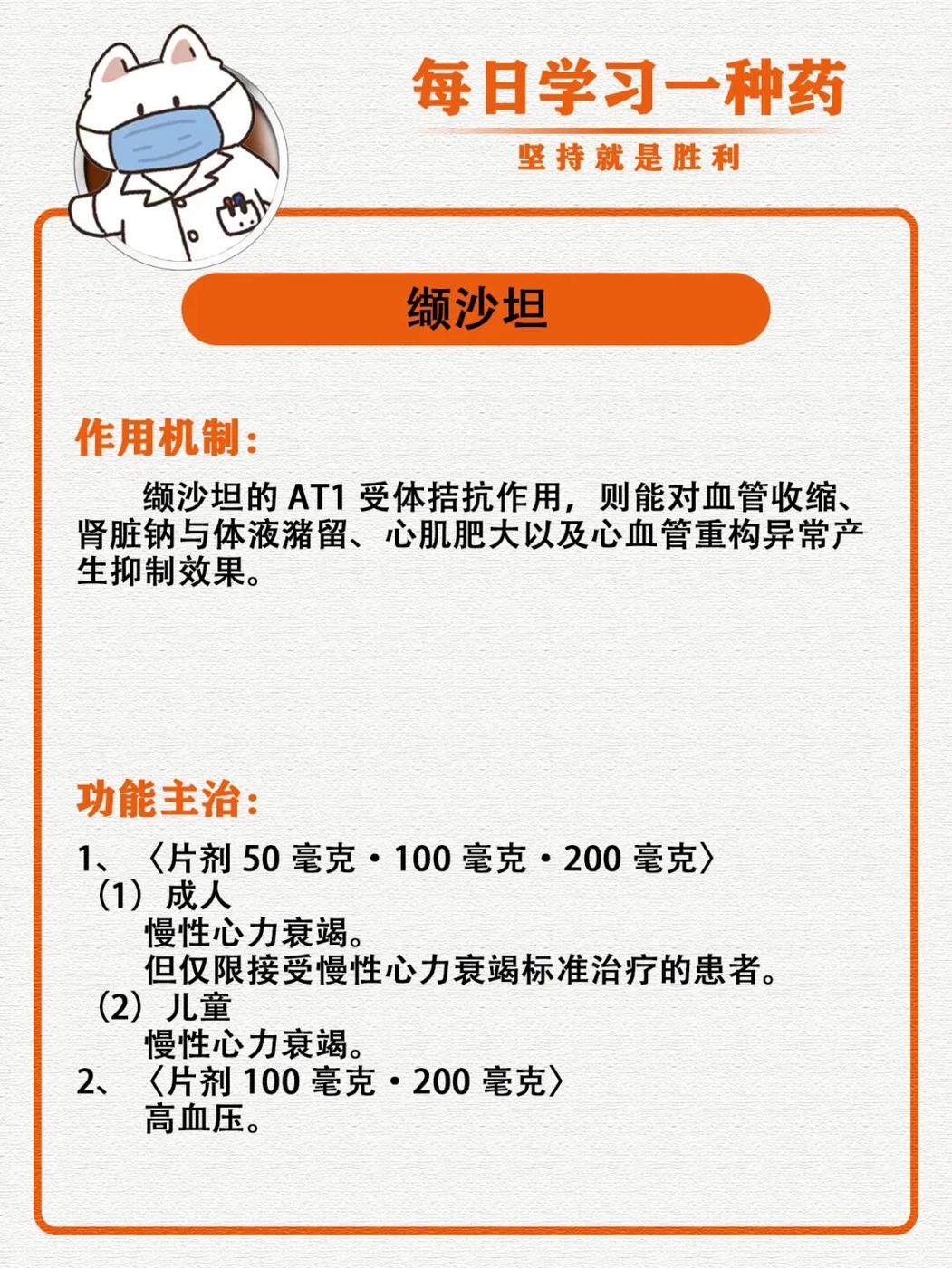
Mechanism of action: Valsartan antagonizes the AT1 receptor, thereby influencing vasoconstriction Renal sodium and fluid retention, myocardial hypertrophy, and abnormal cardiovascular remodeling Produces inhibitory effects. Functions and indications: 1. (Tablets 50 mg · 100 mg · 200 mg) (1) Adult Chronic heart failure. However, this is limited to patients receiving standard treatment for chronic heart failure. (2) Children (Tablets 100mg · 200mg) Hypertension.
作用机制: 缬沙坦的AT1受体拮抗作用,则能对血管收缩 肾脏钠与体液潴留、心肌肥大以及心血管重构异常产 生抑制效果。 功能主治: 1、(片剂50毫克·100毫克·200毫克) (1)成人 慢性心力衰竭。 但仅限接受慢性心力衰竭标准治疗的患者。 (2) 儿童 (片剂100毫克·200毫克) 高血压。
Mechanism of action: Valsartan antagonizes the AT1 receptor, thereby influencing vasoconstriction Renal sodium and fluid retention, myocardial hypertrophy, and abnormal cardiovascular remode…