Cardiovascular · CARDIOVASCULAR

L-Asparaginase

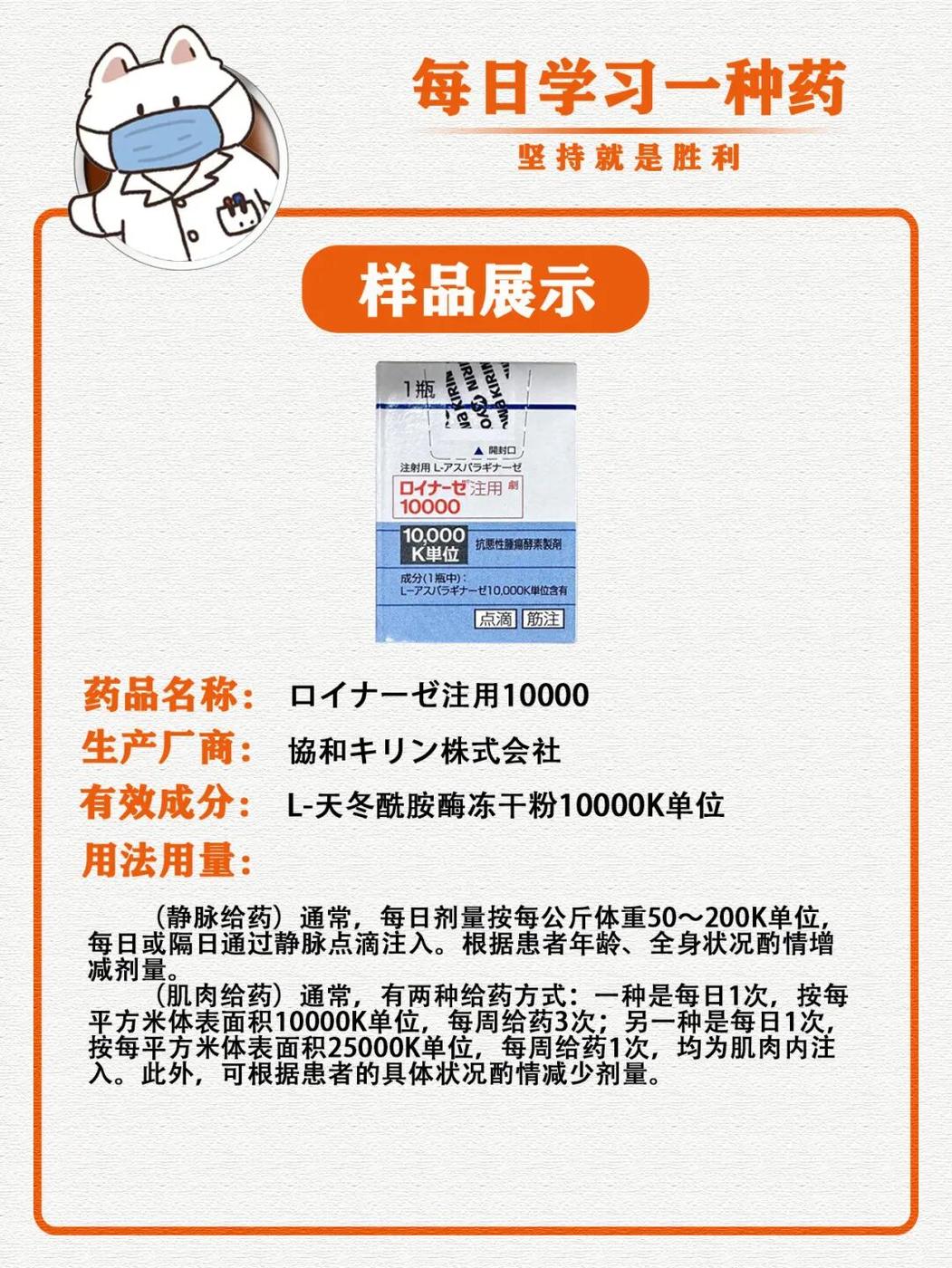
日本語原題:ロイナーゼ注用10000

Published2025-09-20 13:45 Form凝胶 Content10 sections / 2 images
Ingredients / strength:
L-asparaginase freeze-dried product 10,000K units.
English translation of the Japanese package insert is the main text; the Japanese original is shown alongside for verification. Use the language menu (top right) to read the page in another language. This site is for reference only — consult a doctor or pharmacist before use.
Section 1 · 01
English translation
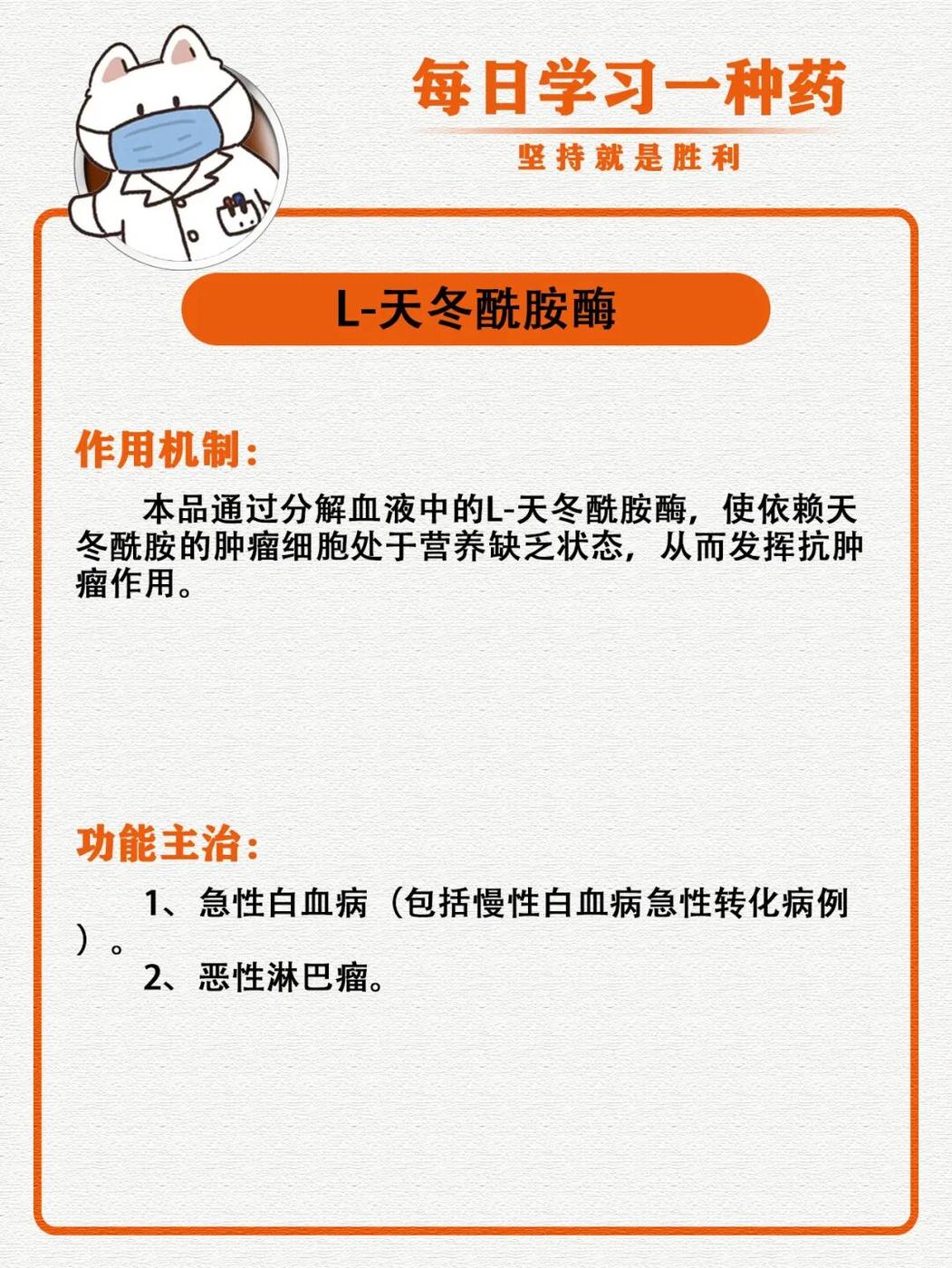
Feature Description It exerts antitumor effects by breaking down L-asparagine in the blood and inducing nutrient-deficient asparagine-demanding tumor cells.
Section 2 · 02
English translation
Specifications 1 bottle.
Section 3 · 03
English translation
Characteristics A white powder or a porous light mass (freeze-dried preparation).
Section 4 · 04
English translation
Ingredient Information Active ingredient: L-asparaginase lyophilized product 10,000 K units. Additives: 0.33 mg of L-aspartate sodium hydrate, appropriate amount of sodium hydroxide, appropriate amount of phosphoric acid.
Section 5 · 05
English translation
Indications 1. Acute leukemia (including cases of acute transformation of chronic leukemia). 2. Malignant lymphoma.
Section 6 · 06
English translation
Dosage and Administration (Intravenous administration) Typically, 50~200K units per 1kg of body weight per day are injected intravenously daily or every other day. Adjust appropriately according to age and overall condition. (Intramuscular administration) Typically, 10,000 K units per 1 m² of body surface area are injected once daily three times a week, or once daily at 25,000 K units per 1 m² of body surface area once a week. Reduce the dose as needed depending on the patient's condition.
Section 7 · 07
English translation
Notes 1. Severe coagulation abnormalities may occur, so frequent tests for fibrinogen, plasminogen, AT-III, protein C, etc. should be performed during administration. 2. Serious side effects such as bone marrow suppression may occur, so it is important to closely monitor the patient's condition by performing frequent clinical tests (blood tests, liver and kidney function tests, etc.). Also, prolonged use can cause severe side effects and prolonged effects, so administration should be conducted with caution. 3. Be very cautious about the onset or worsening of infections or bleeding tendencies. 4. Since shock may occur, it is advisable to conduct an intradermal reaction test prior to administration of this drug. 5. When administering this drug intramuscularly to acute leukemia and malignant lymphoma, carefully read relevant literature (such as the "Report on Applicability to the Medically Necessity Unapproved and Off-label Drug Review Council: L-asparaginase (Additional Dosage and Administration for Intramuscular Injection of Acute Leukemia and Malignant Lymphoma)").
Section 8 · 08
English translation
Side Effects 1. Shock, anaphylaxis (both with unknown frequency) If symptoms such as urticaria, angioedema, chills, vomiting, difficulty breathing, confusion, convulsions, or low blood pressure appear, immediately discontinue administration and take appropriate measures. 2. Severe coagulation abnormalities (frequency unknown) Severe coagulation abnormalities such as cerebral hemorrhage, cerebral stroke, or pulmonary hemorrhage (such as decreased fibrinogen, prothrombin, plasminogen, AT-III, protein C, etc.) may occur. 3. Severe acute pancreatitis (frequency unknown) If symptoms such as abdominal pain, vomiting, or elevated pancreatic enzymes such as amylase appear, discontinue administration and take appropriate measures. Additionally, diabetes may appear due to pancreatic endocrine dysfunction (pancreatic islet of Langerhans islets). If symptoms such as dry mouth or excessive drinking and urination appear, discontinue the medication or discontinue administration and take appropriate measures. 4. Hyperammonemia with impaired consciousness (frequency unknown) 5. Central nervous system disorders (frequency unknown) Encephalopathy (including reversible postleukoencephalopathy syndrome), coma, impaired consciousness, and disorientation may occur. There have been cases of widespread organic brain damage resulting in death. 6. Severe liver damage (frequency unknown) Severe liver damage such as liver failure may occur. 7. Bone marrow suppression (frequency unknown) 8. Severe infection (frequency unknown) Severe infections such as pneumonia and sepsis may occur. 9. Other side effects (1) Hypersensitivity: rash. (2) Liver: fatty liver, liver dysfunction. (3) Kidneys: edema, hyperazotemia, proteinuria, diuretic insufficiency. (4) Digestive system: loss of appetite, nausea, vomiting, diarrhea. (5) Nervous system: fatigue, drowsiness, anxiety, headache. (6) Site of administration: Site of administration reaction (induration, pain, bleeding, hematoma, abscess, etc.). (7) Others: fever, vascular pain, impaired glucose tolerance, hyperlipidemia, sialadenitis, parotitis.
Section 9 · 09
English translation
taboo Patients with a history of severe hypersensitivity to any component of this drug.
Section 10 · 10
English translation
Warning This drug should only be administered in cases where it is deemed appropriate to be administered under the guidance of a physician with sufficient knowledge and experience in treating hematopoietic malignancies, at medical facilities capable of adequate emergency response. Also, before starting treatment with this drug, fully explain the efficacy and risks to the patient or their family and obtain consent before starting administration.

Source images

2 images

Need help sourcing Japanese medicines or OEM production?

💬