Respiratory · RESPIRATORY

Isoniazid

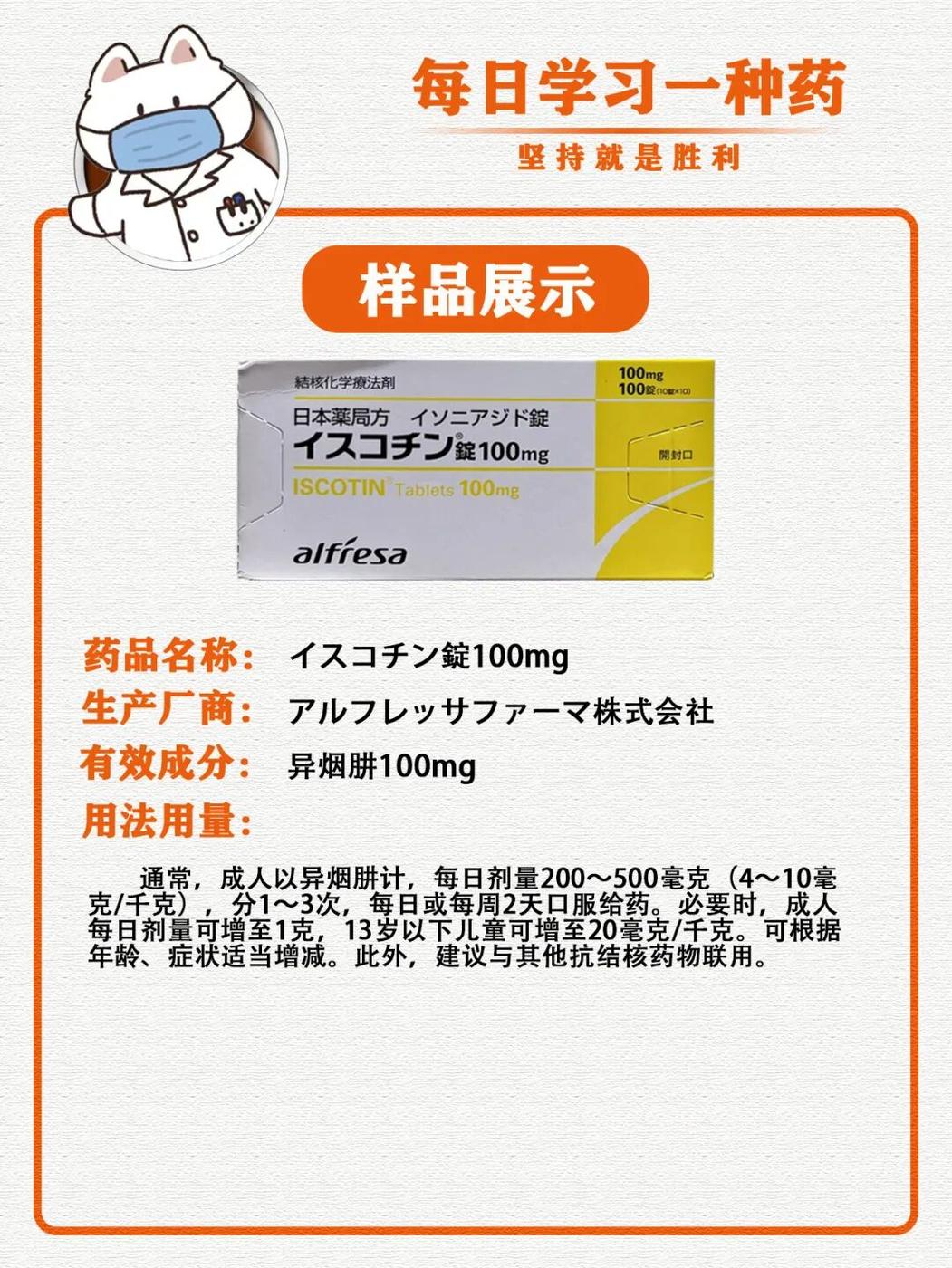
日本語原題:イスコチン錠100mg

Published2025-11-04 08:08 FormTablet Content9 sections / 2 images
Ingredients / strength:
Each tablet contains 100mg of Isoniazid (Japanese source).
English translation of the Japanese package insert is the main text; the Japanese original is shown alongside for verification. Use the language menu (top right) to read the page in another language. This site is for reference only — consult a doctor or pharmacist before use.
Section 1 · 01
English translation
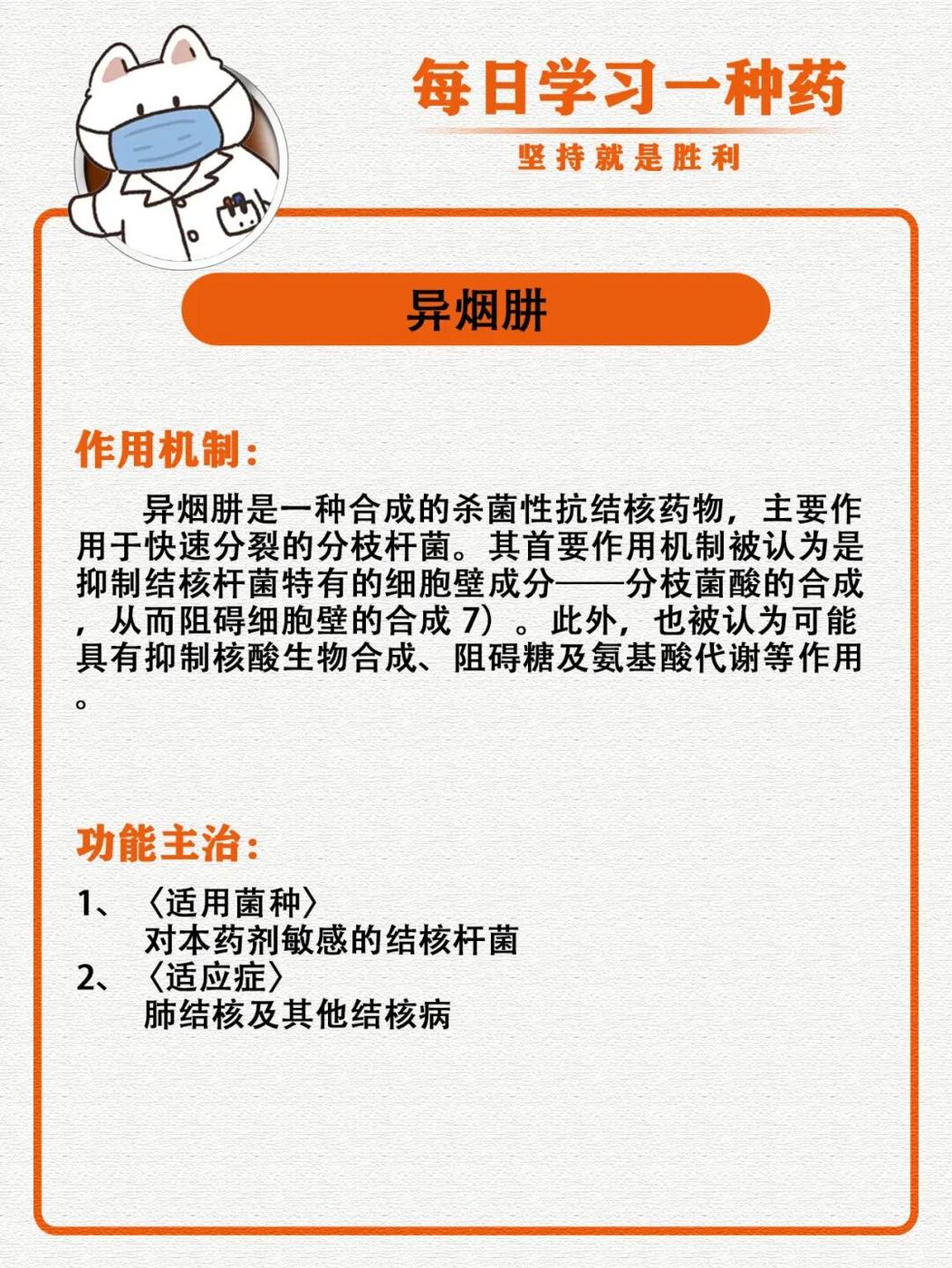
Feature Description Isoniazid is a synthetic bactericidal anti-tuberculosis drug that primarily acts against actively dividing mycobacteria. The primary point of action is to inhibit the synthesis of mycolic acid, a cell wall component specific to tuberculosis bacteria, thereby inhibiting cell wall synthesis7). Other factors considered include inhibiting nucleic acid biosynthesis and inhibiting sugar and amino acid metabolism.
Section 2 · 02
English translation
100 tablets [10 tablets (aluminum-plastic blister packaging) ×10 blisters].
Section 3 · 03
English translation
Characteristics White, plain tablet (with seced line).
Section 4 · 04
English translation
Ingredient Information Active ingredient: 100mg of isoniazid (Japanese source) per tablet. Additives: corn starch, polyvinyl alcohol (partial sanitizer), magnesium stearate.
Section 5 · 05
English translation
Indications 1. Suitable Strain Species This drug is susceptible to tuberculosis bacteria. 2. Indications Pulmonary tuberculosis and other tuberculosis diseases.
Section 6 · 06
English translation
Dosage and Administration Typically, adults take isoniazid orally at 200~500 mg (4~10 mg/kg) divided into 1~3 doses, either daily or twice a week. If necessary, the daily dose may be increased to 1g for adults and up to 20mg/kg for those under 13 years old. Adjust appropriately according to age and symptoms. It is preferable to use it in combination with other anti-tuberculosis drugs.
Section 7 · 07
English translation
Notes Severe liver damage such as fulminant hepatitis may occur, so regular liver function tests should be performed. Treatment with anti-tuberculosis drugs including this drug may cause a drug-paradoxical reaction. If, after starting treatment, exacerbation of existing tuberculosis or new onset of tuberculosis symptoms is observed, the decision should be made based on drug sensitivity testing or similar methods to decide whether to continue administration.
Section 8 · 08
English translation
Side Effects 1. Severe liver damage such as fulminant hepatitis (frequency unknown) 2. Toxic epidermal necrolysis (TEN), Stevens-Johnson syndrome, erythroderma (exfoliative dermatitis) (all frequency unknown) 3. Drug-induced hypersensitivity syndrome (frequency unknown) Early symptoms: rash, fever Secondary findings: liver dysfunction, lymph node swelling, leukocytosis, eosinophils, and the appearance of atypical lymphocytes. It often involves reactivation of viruses such as human herpes virus 6 (HHV-6), and symptoms such as rash, fever, and liver dysfunction may recur or persist even after discontinuation, so caution is advised. 4. SLE-like symptoms (frequency unknown) Symptoms: fever, erythema, muscle pain, joint pain, swollen lymph nodes, chest pain, etc. Treatment methods: Adrenal corticosteroid administration, etc. 5. Interstitial pneumonia (frequency unknown) Symptoms: fever, cough, difficulty breathing, abnormal chest X-ray, eosinophils, etc. Treatment methods: Adrenal corticosteroid administration, etc. 6. Renal failure, interstitial nephritis, nephrotic syndrome (all unknown frequency) Symptoms: fever, rash, oliguria, edema, proteinuria, abnormal kidney function test values, etc. 7. Agranulocytosis, thrombocytopenia (both frequency unknown) 8. Convulsions (frequency unknown) 9. Optic neuritis, optic nerve atrophy (both frequency unknown) Symptoms: Decreased vision, central scotoma, etc. Treatment methods: Vitamin B6 administration, etc. 10. Peripheral neuritis (frequency unknown) Symptoms: abnormal sensations in the limbs, numbness, sensory disturbances, decreased tendon reflexes, muscle weakness, muscle atrophy, etc. Treatment methods: Vitamin B6 administration, etc. 11. Other side effects (1) Liver: increased AST, increased ALT, jaundice. (2) Hypersensitivity: fever, rash. (3) Blood: bleeding tendencies (hemoptysis, bloody sputum, nosebleeds, fundus bleeding, etc.), anemia, erythroblastic tuberculosis, leukopenia, eosinophils. (4) Neuropsychiatric system: headache, dizziness, fatigue, mental disorders (delirium, depression, memory decline, hallucinations, emotional disturbances, agitation, etc.). (5) Central nervous system: cerebellar disorders (balance disorders, ataxia, intentional tremor, speech disorders, eye movement disorders, swallowing disorders, etc.). (6) Digestive system: loss of appetite, nausea, vomiting, stomach bloating, abdominal pain, constipation. (7) Endocrine: gynecomastia, milk secretion, menstrual disorders, impotence. (8) Others: joint pain.
Section 9 · 09
English translation
taboo Patients with severe liver impairment.

Source images

2 images

Need help sourcing Japanese medicines or OEM production?

💬