Oxybutynin Hydrochloride
日本語原題:オキシブチニン塩酸塩錠1mg「サワイ」
Source images
2 imagesThe artwork keeps its original Japanese/Chinese lettering. Open “Text in this image” under a picture to read what it says in your language (machine-read, may contain errors).
Text in this image machine-read · may contain errors
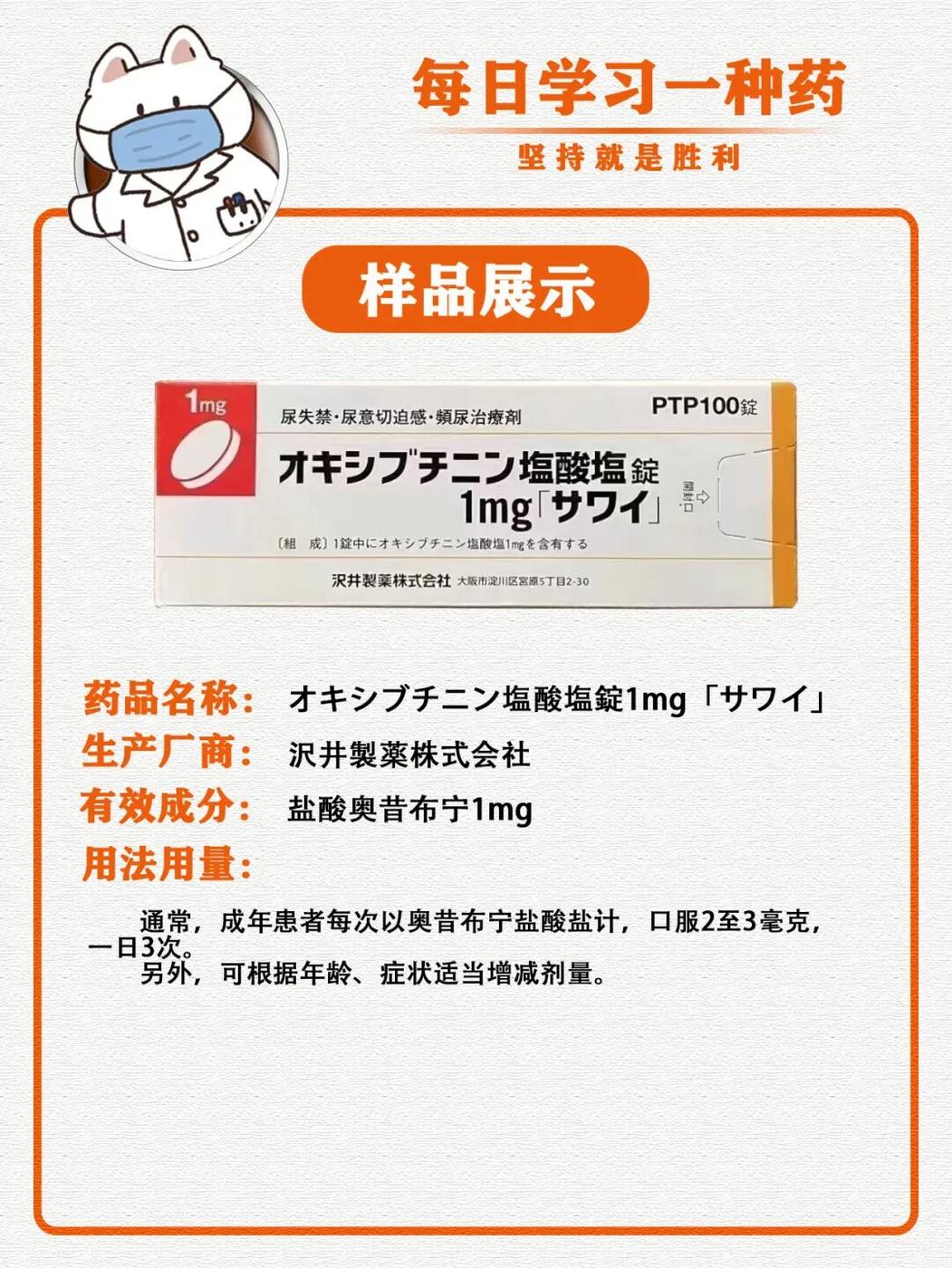
1mg 100 PTP tablets Treatments for urinary incontinence, urgency to urinate, and frequent urination Oxyfuti: Hydrochloride tablets Han'i Ryosai Co., Ltd. 5-2-30 Miyahara, Yodogawa-ku, Oban City Drug name: Cai Yu Di Acid Tablets 1mg [+7]. Manufacturer: Active ingredient: # Oxybutin hydrochloride 1mg Dosage and administration: Typically, adult patients take 2 to 3 mg orally each time as oxybucrine hydrochloride, Three times a day. Additionally, dosage can be adjusted appropriately according to age and symptoms.
1mg PTP100锭 尿失禁·尿意切迫感·频尿治療剂 オキシフチ : ン塩酸塩錠 汉井裂菜株式会社大版市淀川区宫原5丁目2-30 药品名称:才于二酸锭1mg「+7 生产厂商: 有效成分:# 盐酸奥昔布宁1mg 用法用量: 通常,成年患者每次以奥昔布宁盐酸盐计,口服2至3毫克, 一日3次。 另外,可根据年龄、症状适当增减剂量。
1mg 100 PTP tablets Treatments for urinary incontinence, urgency to urinate, and frequent urination Oxyfuti: Hydrochloride tablets Han'i Ryosai Co., Ltd. 5-2-30 Miyahara, Yodogawa-ku, Oban C…
Text in this image machine-read · may contain errors
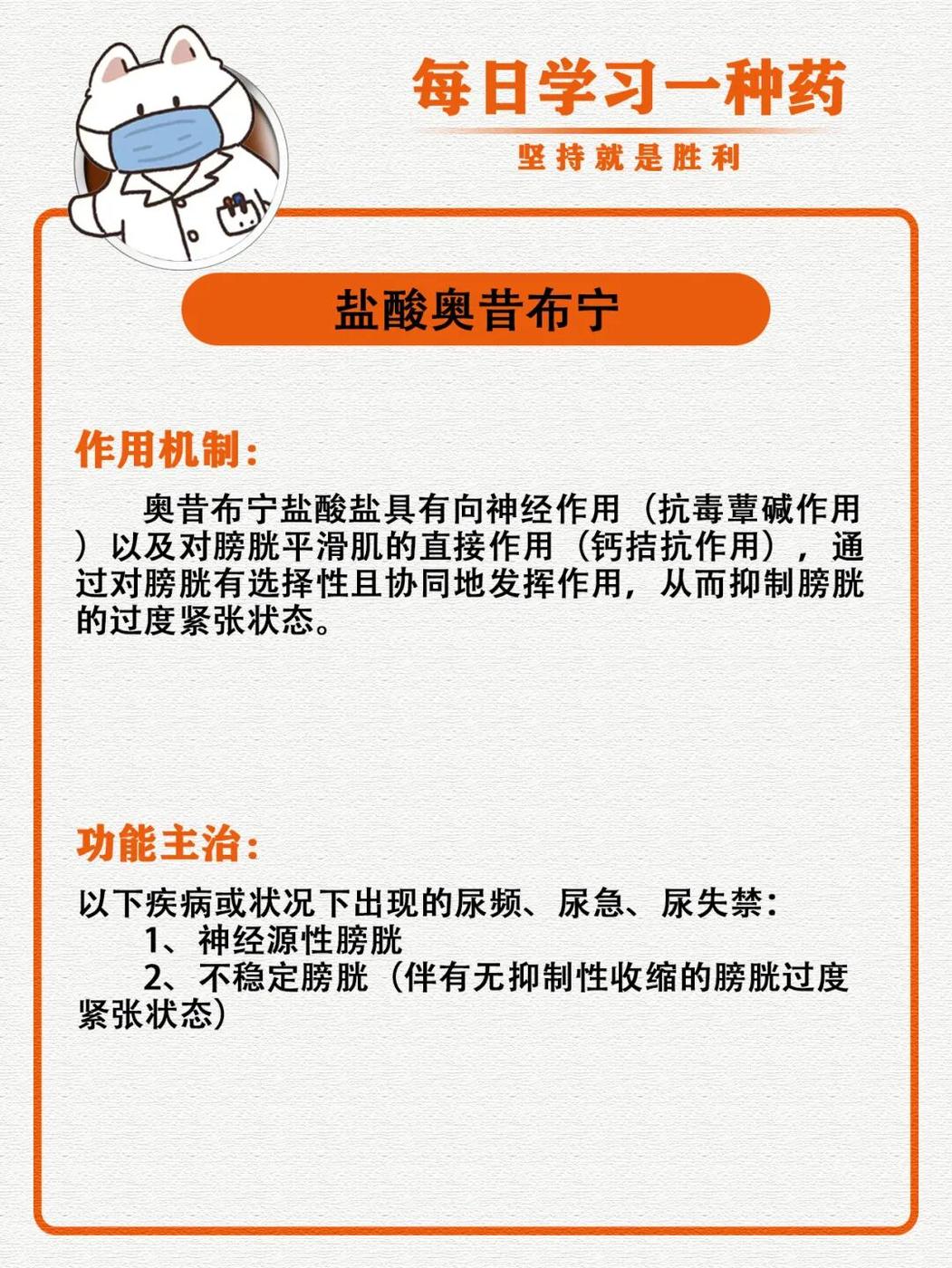
Oxybunin hydrochloride Mechanism of action: Oxybunin hydrochloride has neurotropic effects (antimuscarinic effects). ) and direct effects on bladder smooth muscle (calcium anti-function), promoting smooth flow It selectively and synergistically acts on the bladder, thereby inhibiting the bladder an overly tense state. Functions and indications: Frequent urination, urgency, and urinary incontinence can occur under the following diseases or conditions: 1. Neurogenic bladder 2. Unstable bladder (with excessive bladder without inhibitory contractions). Nervous state)
盐酸奥昔布宁 作用机制: 奥昔布宁盐酸盐具有向神经作用(抗毒蕈碱作用 )以及对膀胱平滑肌的直接作用(钙抗作用),通 过对膀胱有选择性且协同地发挥作用,从而抑制膀胱 的过度紧张状态。 功能主治: 以下疾病或状况下出现的尿频、尿急、尿失禁: 1、神经源性膀胱 2、不稳定膀胱(伴有无抑制性收缩的膀胱过度 紧张状态)
Oxybunin hydrochloride Mechanism of action: Oxybunin hydrochloride has neurotropic effects (antimuscarinic effects). ) and direct effects on bladder smooth muscle (calcium anti-function), pr…