Estradiol Valerate
日本語原題:プロギノン・デポー筋注10mg
1mL: 10mg estradiol paravalic acid ester
Source images
2 imagesThe artwork keeps its original Japanese/Chinese lettering. Open “Text in this image” under a picture to read what it says in your language (machine-read, may contain errors).
Text in this image machine-read · may contain errors
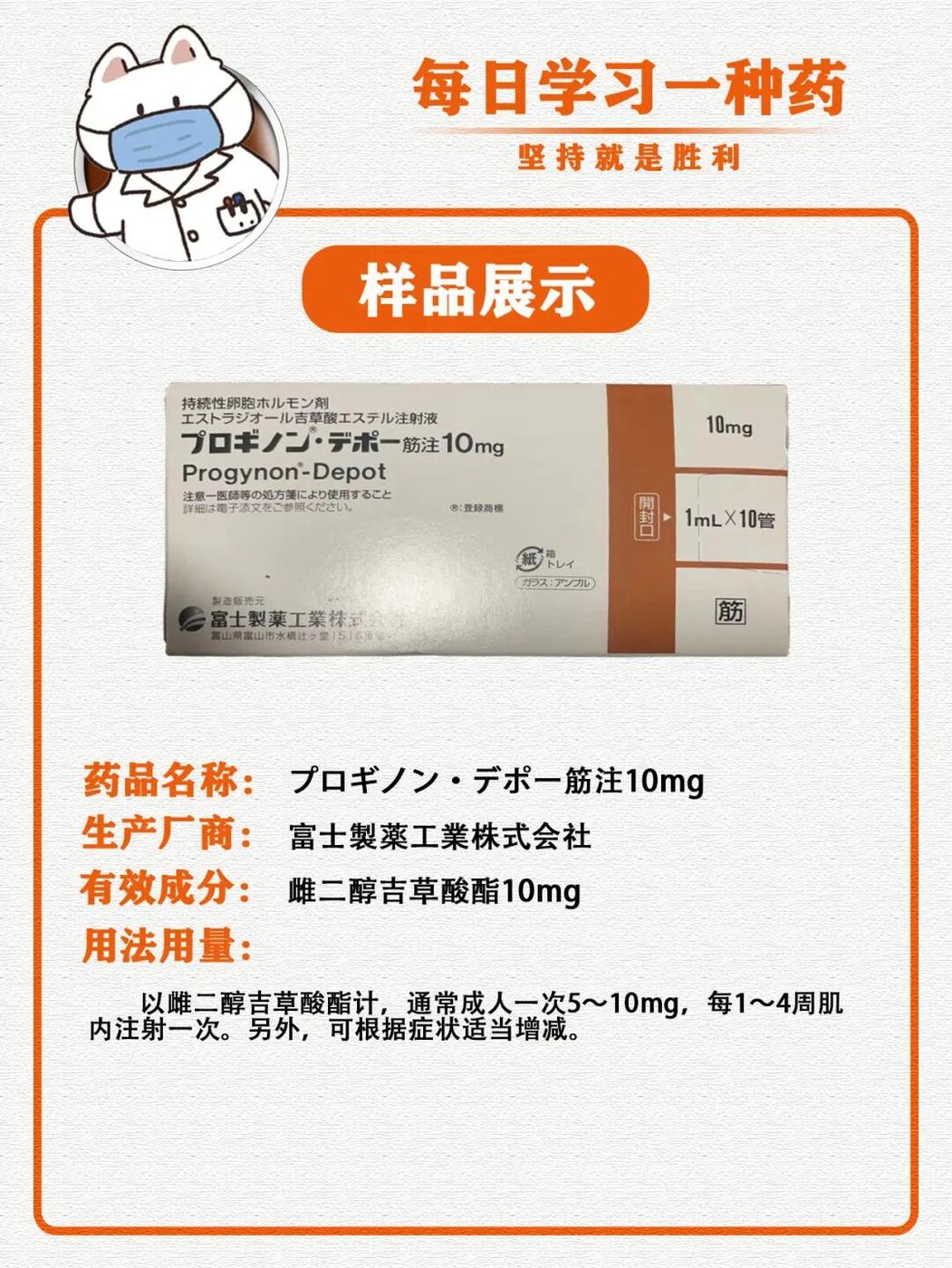
Sustained follicle hormone agents Stradiol Valoxalic Acid Stere Injection Progynon-Depot Use according to prescriptions such as 'Chushuku-ga' 1mLX10 tube Drug Name: Cunkou ≠/· Qiu Yijin Injection 10mg Manufacturer: Fuji Pharmaceutical Industry Co., Ltd. Active ingredients: Estradiol Valerate 10mg Dosage and administration: Using estradiol valelate, adults usually take 5~10mg per dose, every 1~4 weeks of muscle One internal injection. Additionally, adjust the amount appropriately according to symptoms.
持続性卵胞ホルモン剤 工ストラジオール吉草酸工ステル注射液 Progynon-Depot 注宿ー画等の処方箋により使用すること 1mLX10管 药品名称: 寸口≠/·亍求一筋注10mg 生产厂商: 富士製藥工業株式会社 有效成分: 雌二醇吉草酸酯10mg 用法用量: 以雌二醇吉草酸酯计,通常成人一次5~10mg,每1~4周肌 内注射一次。另外,可根据症状适当增减。
Sustained follicle hormone agents Stradiol Valoxalic Acid Stere Injection Progynon-Depot Use according to prescriptions such as 'Chushuku-ga' 1mLX10 tube Drug Name: Cunkou ≠/· Qiu Yijin Inje…
Text in this image machine-read · may contain errors
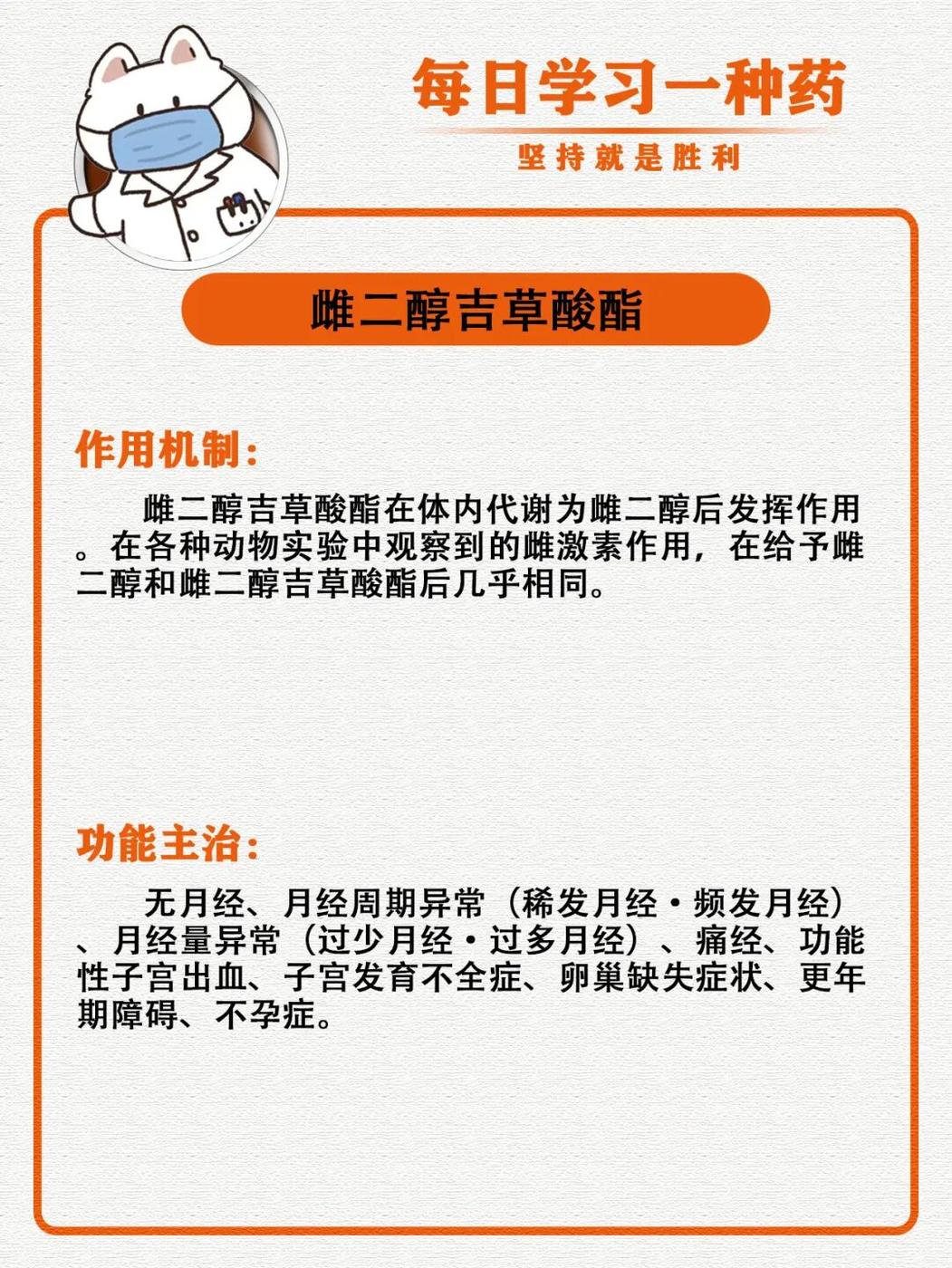
Estradiol valoxalate Mechanism of action: Estradiol valoxate exerts its effect after being metabolized into estradiol in the body Estrogen effects observed in various animal experiments are in the female body Glycol and estradiol valoxalate are almost identical after ester. Functions and indications: No menstruation, abnormal menstrual cycles (infrequent or frequent menstruation) Abnormal menstrual flow (scanty or excessive menstruation), dysmenorrhea, and functional issues Sexual uterine bleeding, uterine hypoplasia, ovarian loss symptoms, menopause Disorders and infertility.
雌二醇吉草酸酯 作用机制: 雌二醇吉草酸酯在体内代谢为雌二醇后发挥作用 在各种动物实验中观察到的雌激素作用,在给雌 二醇和雌二醇吉草酸酯后几乎相同。 功能主治: 无月经、月经周期异常(稀发月经·频发月经) 月经量异常(过少月经·过多月经)、痛经、功能 性子宫出血、子宫发育不全症、卵巢缺失症状、更年 期障碍、不孕症。
Estradiol valoxalate Mechanism of action: Estradiol valoxate exerts its effect after being metabolized into estradiol in the body Estrogen effects observed in various animal experiments are …