Neuro & Psychiatric · NERVOUS

Atomoxetine

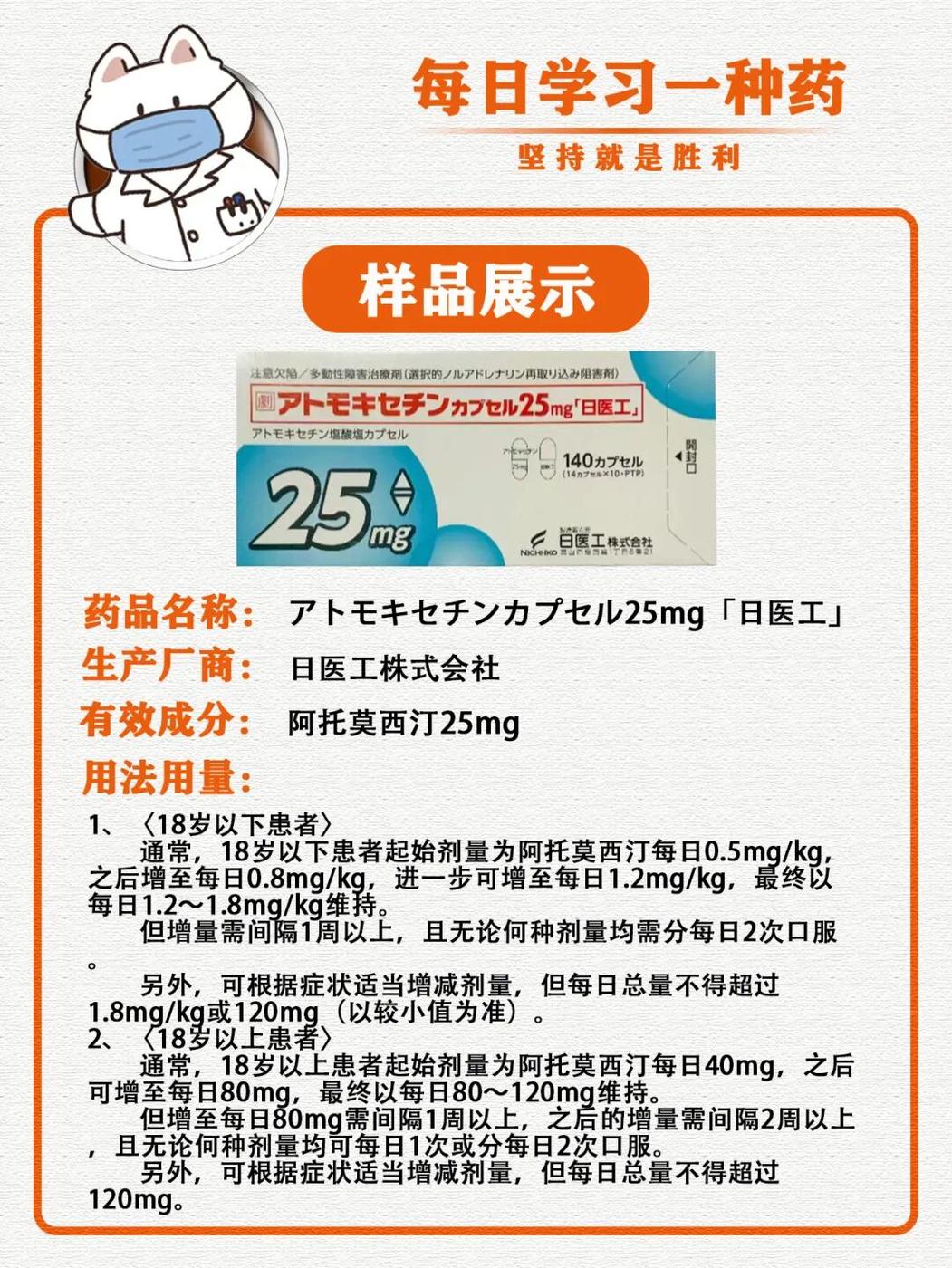
日本語原題:アトモキセチンカプセル25mg「日医工」

Published2025-12-04 09:02 Maker日医工 FormCapsule Content9 sections / 2 images
Ingredients / strength:
Atomoxetine hydrochloride 28.57 mg per capsule (25 mg as atomoxetine).
English translation of the Japanese package insert is the main text; the Japanese original is shown alongside for verification. Use the language menu (top right) to read the page in another language. This site is for reference only — consult a doctor or pharmacist before use.
Section 1 · 01
English translation
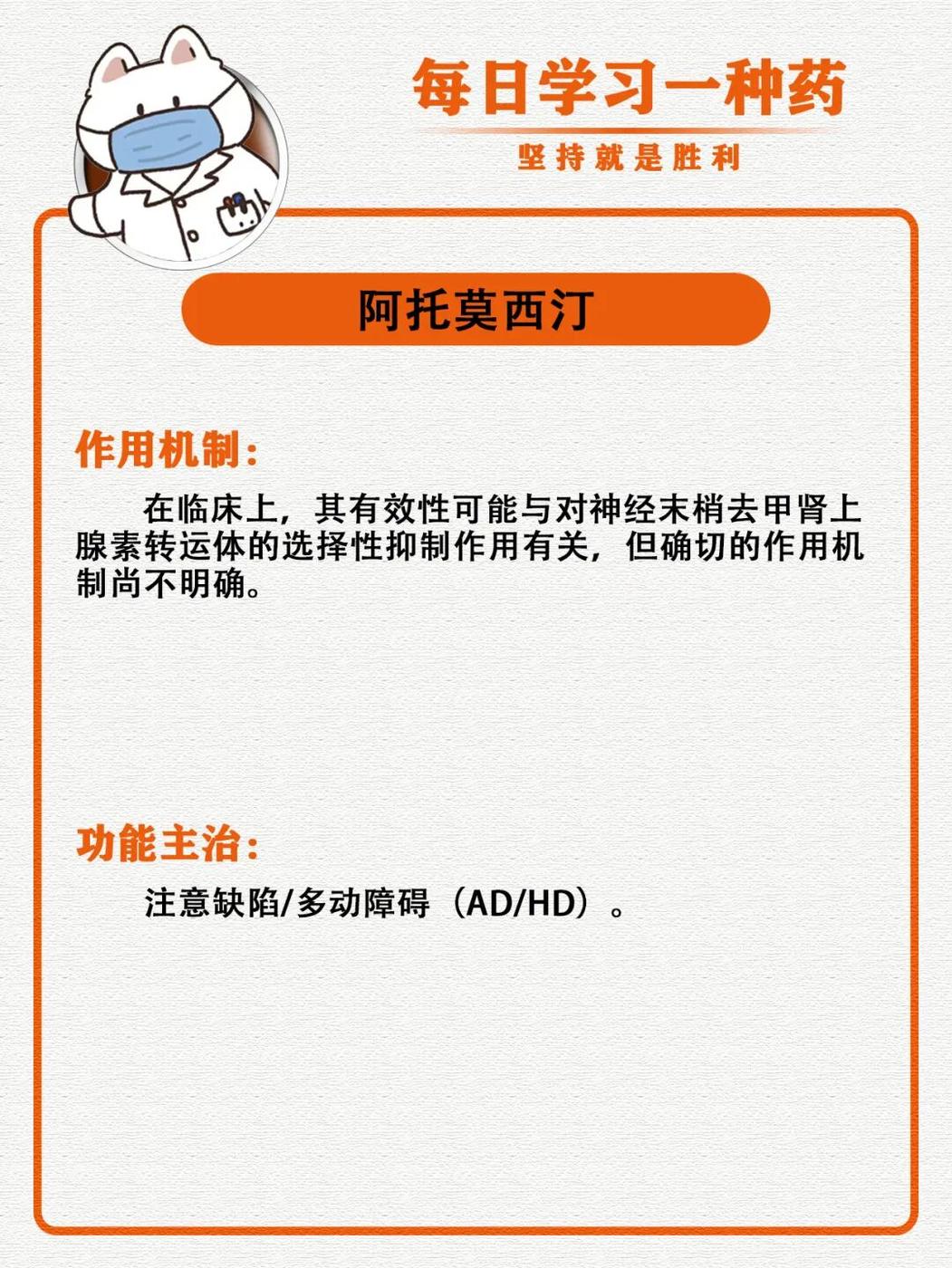
Feature Description While it is possible that its clinical usefulness involves selective inhibition of noradrenaline transporters at nerve endings, the exact mechanism remains unknown.
Section 2 · 02
English translation
Specifications 140 capsules [14 capsules×10; PTP].
Section 3 · 03
English translation
Characteristics Dosage form; Hard capsules Cap: Blue opaque Body: White opaque
Section 4 · 04
English translation
Ingredient Information Active ingredient: 28.57 mg atomoxetine hydrochloride per capsule (25 mg as atomoxetine). Additives: Partially alpha-starch, dimethylpolysiloxane (oral administration). Capsule body: Blue No. 2, titanium oxide, sodium lauryl sulfate, gelatin.
Section 5 · 05
English translation
Attention Deficit/Hyperactivity Disorder (AD/HD).
Section 6 · 06
English translation
Dosage and Administration 1. 〈Patients under 18 years old〉 Typically, for patients under 18 years old, atmoscetine is started at 0.5 mg/kg per day, then increased to 0.8 mg/kg per day, further increased to 1.2 mg/kg per day, and maintained at 1.2~1.8 mg/kg per day. However, dose increases should be made at intervals of at least one week, and for all doses, oral administration should be divided into two doses per day. Adjust the dose as needed depending on symptoms, but do not exceed the lesser of 1.8 mg/kg or 120 mg per day. 2. 〈Patients aged 18 and over〉 Typically, patients aged 18 and older start with atomoxetine at 40 mg per day, then increase to 80 mg per day, and maintain it at 80~120 mg per day. However, increases up to 80 mg per day should be done for at least one week, and subsequent increases should be made at intervals of at least two weeks. For all doses, oral administration should be administered once daily or twice daily. The daily dose may be adjusted appropriately depending on symptoms, but the daily dose should not exceed 120 mg.
Section 7 · 07
English translation
Notes 1. Before administration, the physician or healthcare professional administering this drug must provide sufficient information to the patient (in the case of children, the patient and their guardian or an appropriate substitute) regarding the therapeutic positioning of this drug and the risks of side effects from administration, as well as instruct them on appropriate usage. 2. When administering this drug for a long period, regularly re-evaluate its usefulness by setting a withdrawal period as needed. 3. In clinical trials, pediatric patients receiving this drug have observed suicidal ideation and related behaviors, so carefully observe the onset of these symptoms in patients receiving this drug. 4. Aggression and hostility are often observed in AD/HD, and the onset or worsening of aggression and hostility have also been reported during administration of this drug. During administration, observe for the appearance or worsening of aggressive behavior or hostility. 5. In patients without a history of psychotic disorders or mania who were taking standard doses of this drug, psychotic or manic symptoms such as hallucinations have been reported. If such symptoms appear, consider the possibility of a relationship with this drug. Discontinuation of administration may be appropriate in some cases. 6. Drowsiness, dizziness, and other symptoms may occur; be careful not to allow patients receiving this drug to operate dangerous machinery such as driving a car. 7. To monitor the effects on the cardiovascular system, regularly measure blood pressure and heart rate (pulse) before and during the start and duration of this drug. 8. This drug may affect blood pressure or heart rate; therefore, when administering this drug to patients with cardiovascular disorders, consult a cardiologist specialist and carefully consider whether to administer it. Furthermore, when considering administration of this drug to patients whose cardiac history or family history of sudden death or serious heart disease indicates that cardiac abnormalities are not severe but may be present, cardiovascular status should be assessed by electrocardiogram or other examinations before starting administration. 9. In children, suppression of weight gain and growth retardation have been reported during the early stages of administration of this drug. During administration of this drug, pay attention to the growth of pediatric patients, and if height or weight gain is unsatisfactory, consider reducing the dose or discontinuing administration.
Section 8 · 08
English translation
Side Effects 1. Liver dysfunction, jaundice, liver failure (frequency unknown) Liver dysfunction accompanied by elevated liver function test values, jaundice, and liver failure may occur. 2. Anaphylaxis (frequency unknown) Angioneurotic edema, urticaria, and other anaphylaxis may occur. 3. Other side effects (1) Digestive system: nausea (31.5%), loss of appetite (19.9%), abdominal pain, vomiting, constipation, dry mouth, diarrhea, indigestion, dry mouth, bloating. (2) Neuropsychiatric system: headache (15.4%), drowsiness (15.8%), floating dizziness, insomnia, positional vertigo, sleep disorders, irritability, unpleasant mood, early morning awakening-type insomnia, mood changes, tremors, depressive mood, sensory illusions, anxiety, sensory dullness including hallucinations, depression, aggression, decreased libido, tics, agitation, restlessness, and a feeling of nervousness. (3) Hypersensitivity: pruritus, rash, urticaria. (4) Cardiovascular system: palpitations, tachycardia, elevated blood pressure, increased heart rate, QT prolongation on ECG, syncope, Raynaud's phenomenon, flushing. (5) Skin: hyperhidrosis, dermatitis. (6) Urinary and reproductive organs: difficulty urinating, erectile dysfunction, irregular menstrual genital pain, urinary retention, dysmenorrhea, ejaculation disorders, prostatitis, frequent urination, priapism, pain during erection, inability to ejaculate, testicular pain, abnormal orgasm, urgency to urinate. (7) Others: weight loss, chest pain, asthenia, fatigue, hot flashes, chills, taste disturbances, conjunctivitis, chest discomfort, peripheral coldness, muscle spasms, pupil dilation.
Section 9 · 09
English translation
taboo 1. Patients with a history of hypersensitivity to any component of this drug 2. Patients currently receiving MAO inhibitors (selegiline hydrochloride, rasagiline mesylate, safinamide mesylate) or within 2 weeks after discontinuing 3. Patients with severe cardiovascular impairment [May raise blood pressure or heart rate and worsen symptoms. ] 4. Pheochromocytoma or paraganglioma, or a history thereof One patient reported a sudden rise in blood pressure and increased heart rate. ] 5. Patients with angle-closure glaucoma [dilated pupils may appear. ]

Source images

2 images

Need help sourcing Japanese medicines or OEM production?

💬