Analgesic & Antipyretic · ANALGESIC

Diclofenac Sodium

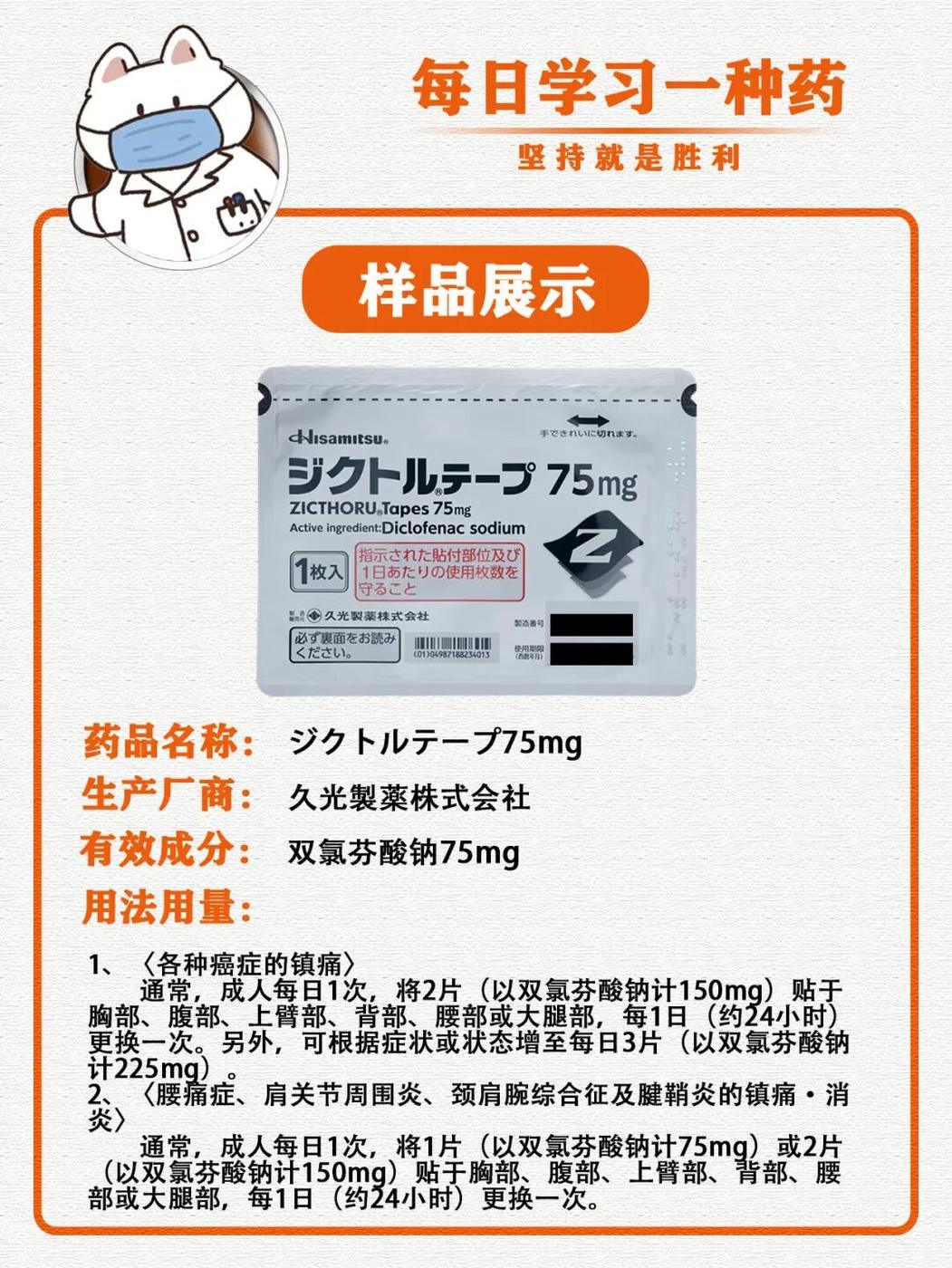
日本語原題:ジクトルテープ75mg

Published2026-01-12 10:32 FormPatch Content9 sections / 2 images
Ingredients / strength:
One sheet contains 75mg of Chinese-Japanese Prescription Diclofenac Sodium.
English translation of the Japanese package insert is the main text; the Japanese original is shown alongside for verification. Use the language menu (top right) to read the page in another language. This site is for reference only — consult a doctor or pharmacist before use.
Section 1 · 01
English translation
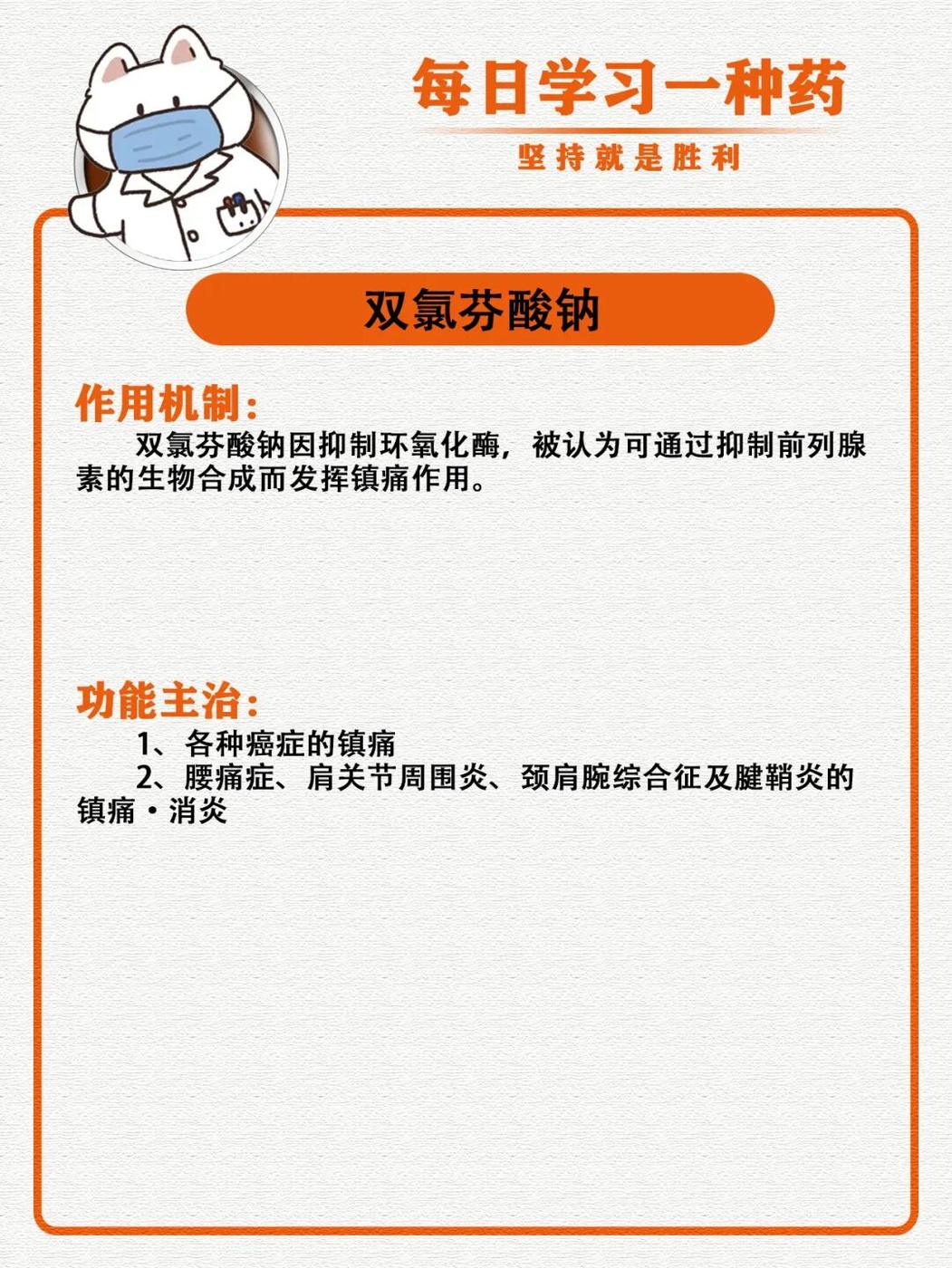
Feature Description Since diclofenac sodium inhibits cyclooxygenase, it is believed to exert analgesic effects by inhibiting prostaglandin biosynthesis.
Section 2 · 02
English translation
70 tablets (1 tablet per bag× 70 bags).
Section 3 · 03
English translation
Characteristics It is a rectangular tape with a white to pale yellow support and an extending paste body.
Section 4 · 04
English translation
Ingredient Information Active ingredient: 1 sheet of China-Japan Bureau Diclofenac Sodium 75mg. Additives: fragrance (phenylethyl alcohol), alicyclic saturated hydrocarbon resin, dimethyl sulfoxide, hydrogenated rosin glycerin ester, styrene-isoprene-styrene block copolymer, zinc stearate, refined oleic acid, polyisobutylene, liquid paraffin (3 other ingredients).
Section 5 · 05
English translation
Indications 1. Analgesia for Various Cancers 2. Analgesia and anti-inflammatory treatment for lower back pain, periarthritis of the shoulder, cervical-shoulder-arm syndrome, and tenosynovitis
Section 6 · 06
English translation
Dosage and Administration 1. 〈Pain Relief in Various Cancers〉 Typically, for adults, two tablets (150mg of diclofenac sodium) are applied once daily to the chest, abdomen, upper arms, back, waist, or thighs, and replaced every day (about 24 hours). Depending on symptoms and conditions, the dose can be increased to three tablets per day (225 mg as diclofenac sodium). 2. Pain relief and anti-inflammatory treatment for low back pain, periarthritis of the shoulder, cervical-shoulder-arm syndrome, and tenosynovitis. Normally, for adults, one tablet (75mg of diclofenac sodium) or two tablets (150mg of diclofenac sodium) is applied once daily to the chest, abdomen, upper arms, back, waist, or thighs, and replaced every day (about 24 hours).
Section 7 · 07
English translation
Notes 1. "Common Efficacy" (1) Note that treatment with anti-inflammatory and analgesic drugs is symptomatic therapy, not causal therapy. (2) Excessive drop in body temperature, collapse, or cold limbs may occur, so especially in elderly patients with high fever or those with wasting diseases, pay close attention to the patient's condition after use. (3) Severe liver dysfunction may occur, so closely monitor the patient's condition. Especially when using it continuously, regular liver function tests are recommended. (4) Patients who report drowsiness, dizziness, or blurred vision during use of this drug must be strictly avoided from engaging in operation of dangerous machinery such as driving a car. 2. Pain relief and anti-inflammatory treatment for low back pain, periarthritis of the shoulder, cervical-shoulder-arm syndrome, and tenosynovitis. Avoid casual use and consider the following points. (1) For long-term use, regularly perform urine tests, blood tests, and liver function tests. (2) Consider therapies other than drug therapy.
Section 8 · 08
English translation
Side Effects 1. Shock, anaphylaxis (both with unknown frequency) Shock (chest distress, cold sweats, difficulty breathing, limb colds, low blood pressure, consciousness disturbances, etc.) and anaphylaxis (urticaria, angioedema, difficulty breathing, etc.) may occur. 2. Gastrointestinal ulcers with hemorrhagic shock or perforation (both of unknown frequency) 3. Narrowing or obstruction of the digestive tract (frequency unknown) Narrowing or obstruction may appear along with ulcers in the digestive tract. 4. Aplastic anemia, hemolytic anemia, agranulocytosis, thrombocytopenia (all frequency unknown) 5. Toxic epidermal necrolysis (TEN), Stevens-Johnson syndrome, erythroderma (exfoliative dermatitis) (all frequency unknown) 6. Acute kidney injury (interstitial nephritis, necrosis of the renal papilla, etc.), nephrotic syndrome (both frequency unknown) Oliguria, hematuria, urinary protein, increased BUN and blood creatinine, hyperkalemia, and hypoalbuminemia may occur. 7. Severe asthma attack (aspirin asthma) (frequency unknown) 8. Interstitial pneumonia (frequency unknown) 9. Congestive heart failure (frequency unknown) 10. Aseptic meningitis (frequency unknown) Symptoms such as neck stiffness, fever, headache, nausea, vomiting, or clouded consciousness may occur. Exercise particular caution in patients with SLE or mixed connective tissue diseases. 11. Severe liver dysfunction (frequency unknown) Sudden impaired consciousness may appear either before or simultaneously with fulminant hepatitis or extensive liver necrosis. 12. Acute encephalopathy (frequency unknown) If abnormalities such as severe vomiting, impaired consciousness, or convulsions are observed following cold-like symptoms, consider the possibility of Reye's syndrome. 13. Rhabdomyolysis (frequency unknown) It may be accompanied by rapid deterioration of kidney function. Muscle pain, weakness, increased CK (Cough Control), and increased myoglobin in blood and urine may occur. 14. Myocardial infarction and cerebrovascular disorders (both frequency unknown) Cardiovascular thromboembolic events such as myocardial infarction and cerebrovascular disorders may occur. 15. Other side effects (1) Skin: itching at the application site, erythema at the application site, rash at the application site, papules at the application site, dermatitis at the application site, skin peeling at the application site, pruritus, purpura, photosensitivity, erythema multiforme. (2) Gastrointestinal: upper abdominal pain, stomatitis, abdominal discomfort, nausea, constipation, diarrhea, vomiting, abdominal bloating, gastroesophageal reflux disease, loss of appetite, stomach pain, abdominal pain, peptic ulcers, angular cheilitis, soft stools, dry mouth, gastrointestinal bleeding, gastritis, ulcers of the small and large intestines, hemorrhagic colitis, worsening of Crohn's disease or ulcerative colitis, pancreatitis, esophageal disorders, vomiting blood, and bleeding. (3) Liver: elevated ALT, elevated AST, abnormal liver function, increased γ-G Tp, elevated ALP, liver damage, jaundice. (4) Kidneys: increased creatinine, positive urine protein, positive urine blood, increased BUN. (5) Blood: anemia, eosinophilia, thrombocytopenia, lymphopenia, leukopenia, bleeding tendencies, thrombocytosis deficiency (prolonged bleeding time). (6) Neuropsychiatric system: Hyposomnia, headache, insomnia, dizziness, nervousness, numbness, tremors, confusion, hallucinations, convulsions, depression, anxiety, memory impairment. (7) Sensory organs: visual abnormalities (such as fog), tinnitus, taste disorders, hearing impairments. (8) Cardiovascular system: elevated blood pressure, low blood pressure, palpitations, tachycardia. (9) Hypersensitivity: facial edema, drug rash, flushing, urticaria rash, asthma attacks, allergic purpura, angioedema. (10) Others: fatigue, peripheral edema, edema, fever, increased CK (Cough Fever), elevated LDH, increased blood potassium, decreased CK, frequent urination at night, sweating, hair loss, chest pain, vasculitis.
Section 9 · 09
English translation
taboo 1. Patients with peptic ulcers [May worsen peptic ulcers. ] 2. Patients with severe blood abnormalities [There is a risk of worsening blood abnormalities. ] 3. Patients with severe renal impairment 4. Patients with severe liver dysfunction 5. Patients with severe hypertension 6. Patients with severe heart failure 7. Patients with a history of hypersensitivity to any component of this drug 8. Patients with aspirin-induced asthma (asthma attacks induced by nonsteroidal anti-inflammatory drugs, etc.) or a history of this [can induce severe asthma attacks]. ] 9. Pregnant women or women who may be pregnant 10. Patients receiving Triamterene

Source images

2 images

Need help sourcing Japanese medicines or OEM production?

💬