Calcitriol
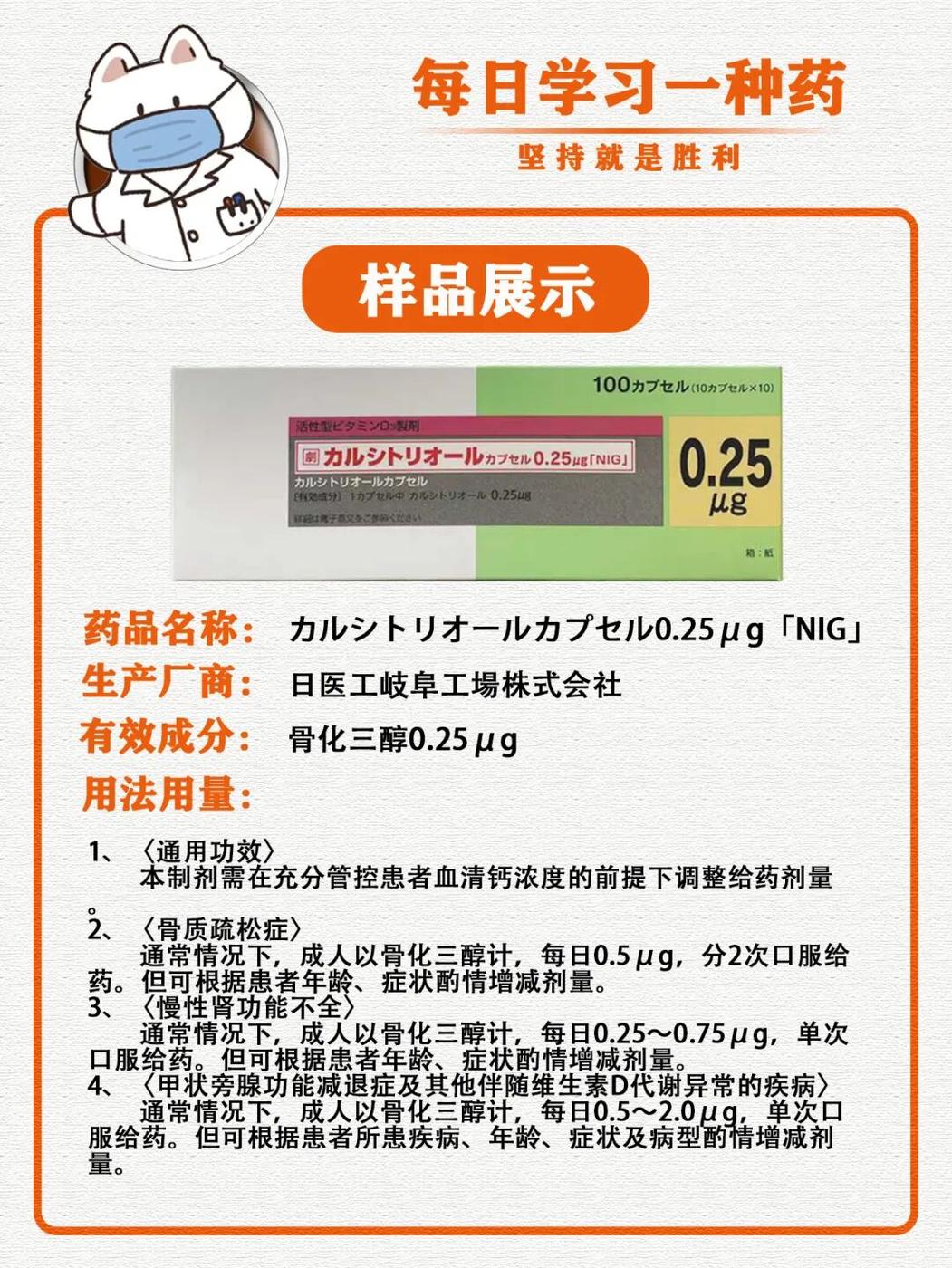
日本語原題:カルシトリオールカプセル0.25μg「NIG」
Per capsule, calcitriol is 0.25μg.
Source images
2 imagesThe artwork keeps its original Japanese/Chinese lettering. Open “Text in this image” under a picture to read what it says in your language (machine-read, may contain errors).
Text in this image machine-read · may contain errors
100 capsules 0 capsules x bright ルントリオール 0.25 Drug Name: カルシトリオールカプセル 0.25ug 「 NIG 」 Manufacturer: Nichi-Iko Gifu Factory Co., Ltd Active ingredients: Calcitriol 0.25μg Dosage and administration: "General Efficacy" This preparation requires dosage adjustment while fully controlling the patient's serum calcium concentration Typically, adults take calcitriol as 0.5μg orally in two doses per day Medicine. However, dosage can be adjusted according to the patient's age and symptoms. 3. Chronic renal insufficiency Typically, adults use calcitriol as 0.25~0.75μg per day, single dose Oral administration. However, the dosage can be adjusted according to the patient's age and symptoms. 4. "Hypoparathyroidism and Other Diseases Accompanied by Vitamin D Metabolism Disorders" Typically, adults use calcitriol at 0.5~2.0 μg per day, single dose Administer the medication. However, dosages may be adjusted as appropriate based on the patient's disease, age, symptoms, and disease type
100 カプセルぃ 0 カプセル x 明 ルントリオール 0.25 药品名称: カルシトリオールカプセル 0.25ug 「 NIG 」 生产厂商: 日医工岐阜工场株式会社 有效成分: 骨化三醇0.25μg 用法用量: 《通用功效》 本制剂需在充分管控患者血清钙浓度的前提下调整给药剂量 通常情况下,成人以骨化三醇计,每日0.5μg,分2次口服给 药。但可根据患者年龄、症状酌情增减剂量。 3、慢性肾功能不全》 通常情况下,成人以骨化三醇计,每日0.25~0.75μg,单次 口服给药。但可根据患者年龄、症状的情增减剂量。 4、《甲状旁腺功能减退症及其他伴随维生素D代谢异常的疾病》 通常情况下,成人以骨化三醇计,每日0.5~2.0ug,单次口 服给药。但可根据患者所患疾病、年龄、症状及病型酌情增减剂
100 capsules 0 capsules x bright ルントリオール 0.25 Drug Name: カルシトリオールカプセル 0.25ug 「 NIG 」 Manufacturer: Nichi-Iko Gifu Factory Co., Ltd Active ingredients: Calcitriol 0.25μg Dosage and administra…
Text in this image machine-read · may contain errors
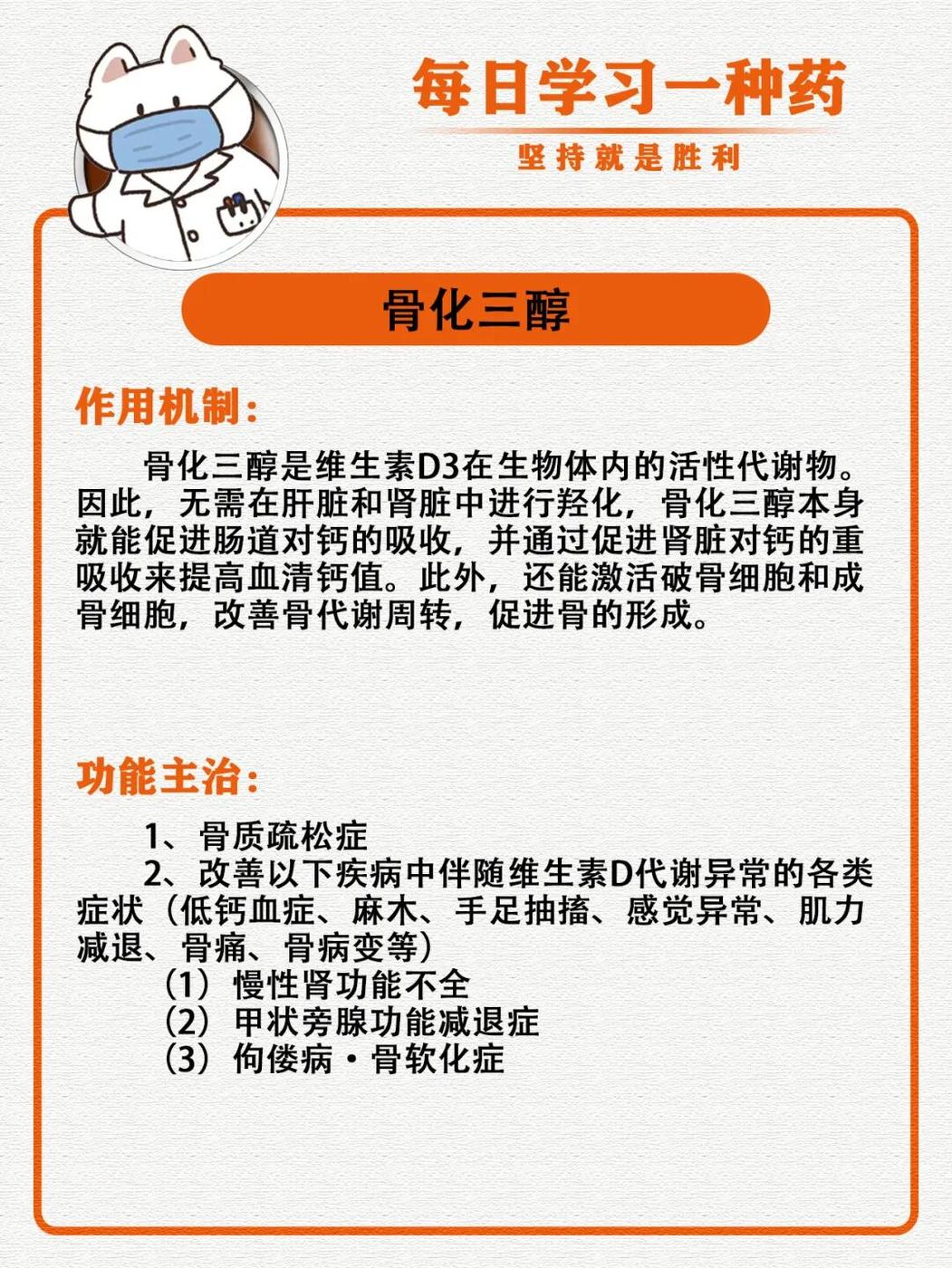
Mechanism of action: Calcitriol is the active metabolite of vitamin D3 in living organisms. Therefore, hydroxylation of calcitriol in the liver and kidneys is not necessary This can promote calcium absorption in the intestines and increase calcium heaviness in the kidneys Absorption to increase serum calcium levels. In addition, it can activate osteoclasts and the formation of Bone cells, improve bone metabolism and turnover, and promote bone formation. Functions and indications: 1. Osteoporosis 2. Improves various diseases associated with abnormal vitamin D metabolism Symptoms (hypocalcemia, numbness, hand and foot twitches, paresthesia, muscle strength). Decline, bone pain, bone lesions, etc.) (1) Chronic renal insufficiency (2) Hypoparathyroidism (3) Disease: Osteomalacia Calcitriol
作用机制: 骨化三醇是维生素D3在生物体内的活性代谢物。 因此,无需在肝脏和肾脏中进行羟化,骨化三醇本身 就能促进肠道对钙的吸收,并通过促进肾脏对钙的重 吸收来提高血清钙值。此外,还能激活破骨细胞和成 骨细胞,改善骨代谢周转,促进骨的形成。 功能主治: 1、骨质疏松症 2、改善以下疾病中伴随维生素D代谢异常的各类 症状(低钙血症、麻木、手足抽搐、感觉异常、肌力 减退、骨痛、骨病变等) (1)慢性肾功能不全 (2)甲状旁腺功能减退症 (3)病·骨软化症 骨化三醇
Mechanism of action: Calcitriol is the active metabolite of vitamin D3 in living organisms. Therefore, hydroxylation of calcitriol in the liver and kidneys is not necessary This can promote …