Medroxyprogesterone Acetate
日本語原題:メドロキシプロゲステロン 酢酸エステル錠2.5mg「トーワ」
Japanese Bureau Medroxyprogesterone Acetate 2.5mg.
Source images
2 imagesThe artwork keeps its original Japanese/Chinese lettering. Open “Text in this image” under a picture to read what it says in your language (machine-read, may contain errors).
Text in this image machine-read · may contain errors
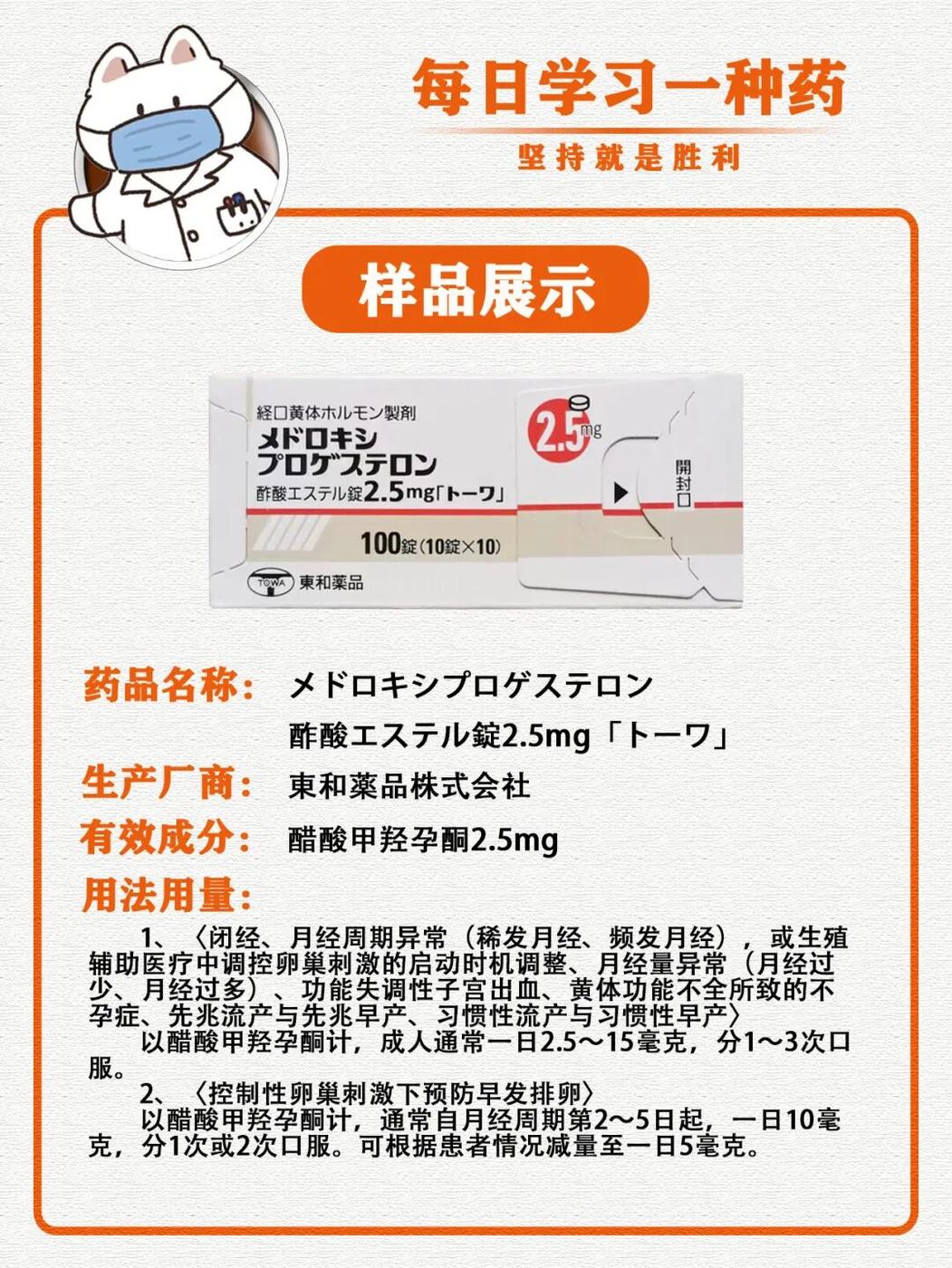
Transprogesterone preparations ーメドロキシ Suangong Youer Tablets 2.5mg "Bu-" 100 ingots (10 ingots ×10) Drug Name: Acid Tablets 2.5mg (Bu Yi 7) Manufacturer: Towa Pharmaceutical Co., Ltd Active ingredients: Medroxyprogesterone acetate 2.5 mg Dosage and administration: , or reproduction 1. "Amenorrhea, Irregular Menstrual Cycle (Infrequent Menstruation, Frequent Menstruation)" In auxiliary medical care, the timing of ovarian stimulation is adjusted, and abnormal menstrual flow (menstrual flow). Scanty or excessive menstrual bleeding), dysfunctional uterine bleeding, luteal insufficiency, and other types of disorders caused by impaired uterine bleeding Pregnancy, threatened miscarriage and threatened preterm birth, habitual miscarriage and habitual preterm birth For adults, usually 2.5~15 mg per day, divided into 1~3 doses "Preventing Early Ovulation with Controlled Ovarian Stimulation" Using medroxyprogesterone acetate, usually starting from the 2nd~5th day of the menstrual cycle, 10 milligrams per day Grams, divided into 1 or 2 oral doses. The dose can be reduced to 5 mg per day depending on the patient's condition.
経ロ黄体ホルモン製剤 ーメドロキシ 酸工又儿锭2.5mg「卜-] 100锭(10锭×10) 药品名称: 酸工锭2.5mg「卜一7] 生产厂商: 东和藥品株式会社 有效成分: 醋酸甲羟孕酮2.5mg 用法用量: ,或生殖 1、《闭经、月经周期异常(稀发月经、频发月经) 辅助医疗中调控卵巢刺激的启动时机调整、月经量异常(月经过 少、月经过多)、功能失调性子宫出血、黄体功能不全所致的不 孕症、先兆流产与先兆早产、习惯性流产与习惯性早产》 以醋酸甲羟孕酮计,成人通常一日2.5~15毫克,分1~3次口 《控制性卵巢刺激下预防早发排卵) 以醋酸甲羟孕酮计,通常自月经周期第2~5日起,一日10毫 克,分1次或2次口服。可根据患者情况减量至一日5毫克。
Transprogesterone preparations ーメドロキシ Suangong Youer Tablets 2.5mg "Bu-" 100 ingots (10 ingots ×10) Drug Name: Acid Tablets 2.5mg (Bu Yi 7) Manufacturer: Towa Pharmaceutical Co., Ltd Active …
Text in this image machine-read · may contain errors
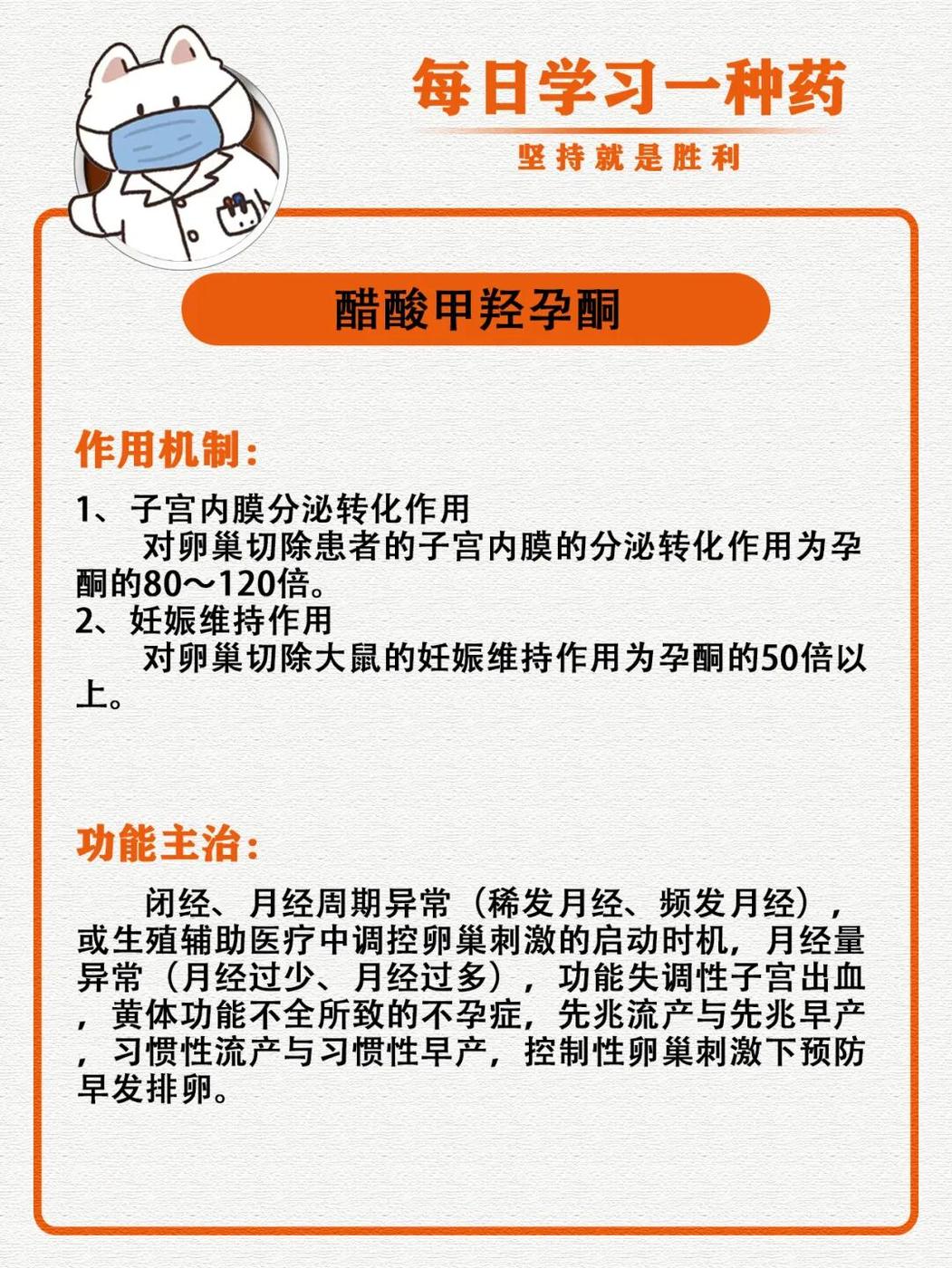
Medroxyprogesterone acetate Mechanism of action: 1. Endometrial secretion transformation The secretory transformation effect of the endometrium in ovarian removal patients is pregnancy 80~120 times that of ketones. 2. Pregnancy maintenance effect The pregnancy-maintenance effect on ovariectomized rats is more than 50 times that of progesterone Functions and indications: Amenorrhea and irregular menstrual cycles (infrequent or frequent menstruation) or regulating the timing of ovarian stimulation initiation and menstrual flow in assisted reproductive medicine Abnormalities (scanty or excessive menstruation), dysfunctional uterine bleeding Infertility caused by luteal phase insufficiency, threatened miscarriage, and threatened preterm birth Prevention of habitual miscarriage and habitual preterm birth under controlled ovarian stimulation Early ovulation.
醋酸甲羟孕酮 作用机制: 1、子宫内膜分泌转化作用 对卵巢切除患者的子宫内膜的分泌转化作用为孕 酮的80~120倍。 2、妊娠维持作用 对卵巢切除大鼠的妊娠维持作用为孕酮的50倍以 功能主治: 闭经、月经周期异常(稀发月经、频发月经) 或生殖辅助医疗中调控卵巢刺激的启动时机,月经量 异常(月经过少、月经过多),功能失调性子宫出血 黄体功能不全所致的不孕症,先兆流产与先兆早产 习惯性流产与习惯性早产,控制性卵巢刺激下预防 早发排卵。
Medroxyprogesterone acetate Mechanism of action: 1. Endometrial secretion transformation The secretory transformation effect of the endometrium in ovarian removal patients is pregnancy 80~12…