Urology & Kidney · URINARY

Tadalafil

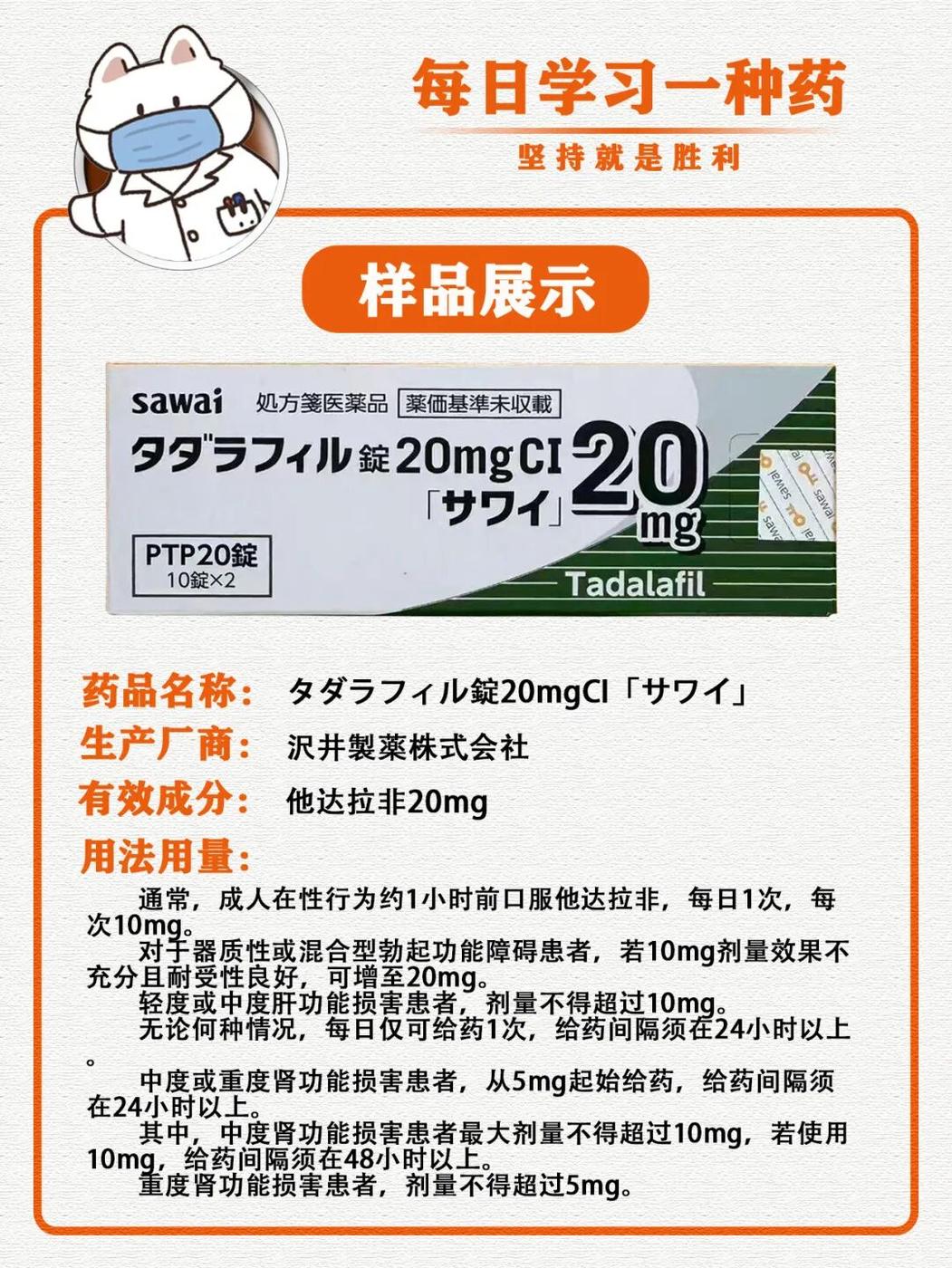
日本語原題:タダラフィル錠20mgCI「サワイ」

Published2026-03-23 08:27 Maker沢井 FormTablet Content10 sections / 2 images
English translation of the Japanese package insert is the main text; the Japanese original is shown alongside for verification. Use the language menu (top right) to read the page in another language. This site is for reference only — consult a doctor or pharmacist before use.
Section 1 · 01
English translation
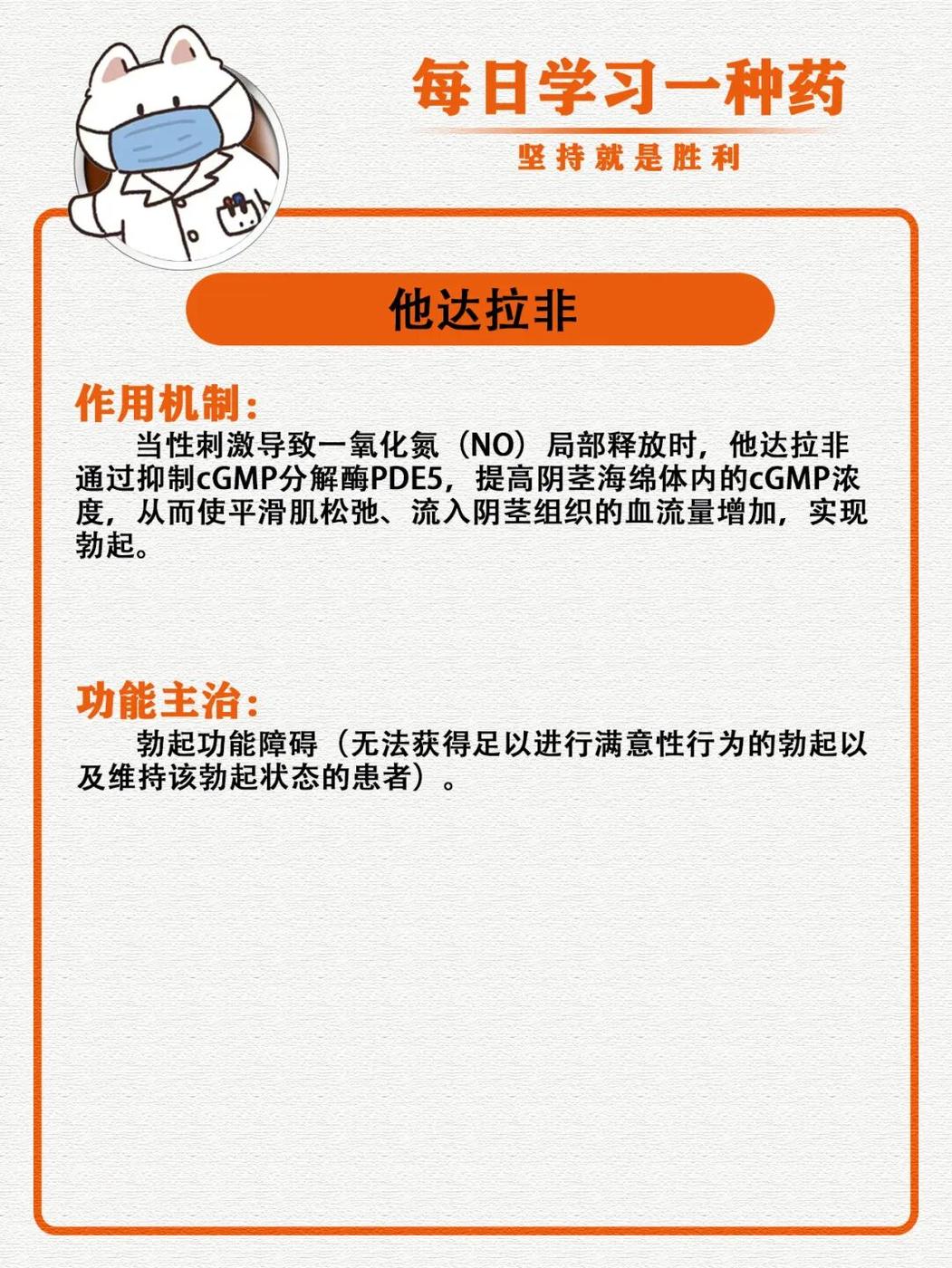
Feature Description When sexual stimulation causes localized release of nitric oxide (NO), tadalafil increases cGMP concentration in the corpora cavernosa by inhibiting PDE5, the cGMP-degrading enzyme. As a result, smooth muscles relax, increasing blood flow to the penile tissues and achieving an erection.
Section 2 · 02
English translation
Packaging specification: 20 tablets (10 tablets × 2 blisters).
Section 3 · 03
English translation
Characteristics Light yellow, film-coated tablets.
Section 4 · 04
English translation
Ingredient Information Active ingredient [per tablet]: Tadalafil 20mg. Additives: Carnauba Low, Sodium Clostamellose, Crystalline Cellulose, Titanium Oxide, Ferric Oxide, Mg Stearate, Talc, Lactose, Hydroxypropyl Cellulose, Hypromellose, Macrogol 6000, Sodium Lauryl Sulfate.
Section 5 · 05
English translation
Indications Erectile dysfunction (patients who cannot maintain and maintain an erection sufficient for satisfactory sexual activity).
Section 6 · 06
English translation
Dosage and Administration Typically, adults are given 10 mg of tadalafil orally once daily about one hour before sexual activity. For patients with organic or mixed erectile dysfunction who do not achieve sufficient efficacy after 10 mg administration and whose tolerability is well tolerated, the dose can be increased to 20 mg. For patients with mild or moderate liver impairment, do not exceed 10 mg. In all cases, administration should be administered once a day, with an interval of at least 24 hours. For patients with moderate or severe renal impairment, start at 5 mg with a dosing interval of at least 24 hours. For patients with moderate renal impairment, the maximum dose should not exceed 10 mg, and when administering 10 mg, the interval between doses should be at least 48 hours. For patients with severe kidney impairment, do not exceed 5 mg.
Section 7 · 07
English translation
Notes 1. Since sexual activity carries risks to the heart, pay attention to your cardiovascular condition before starting treatment for erectile dysfunction. Prolonged erections of 2 to 4 hours or more, or continuous erections (painful erections lasting more than 6 hours), have been very rarely reported abroad. If immediate treatment for priapism is not performed promptly, it can damage the penile tissue or permanently impair erectile function. Therefore, if an erection persists for more than 4 hours, immediately consult a doctor. 3. If a sudden decrease in vision or sudden loss of vision occurs after administration with this drug, instruct the patient to discontinue this drug and promptly consult an ophthalmology specialist. 4. Clinical trials have shown dizziness and visual impairment, so caution is advised when operating dangerous machinery such as working at heights or driving automobiles.
Section 8 · 08
English translation
Side Effects 1. Allergies (frequency unknown) Rashes, urticaria, facial edema, exfoliative dermatitis, Stevens-Johnson syndrome, and others may appear. 2. Other side effects (1) Circulatory system: flushing, palpitations, hot flashes, vasodilation, increased heart rate, chest pain, angina, tachycardia, hypertension, hypotension, myocardial infarction, sudden cardiac death, syncope, orthostatic hypotension. (2) Sensory organs: foggy vision, eye redness, abnormal ocular sensations, tinnitus, visual disturbances, eye pain, increased tearing, eye irritation, conjunctival congestion, visual field defects, conjunctivitis, dry keratoconjunctivitis, eyelid swelling, color vision changes, rotational vertigo, retinal venous occlusion, non-arteritis anterior ischemic optic neuropathy, retinal artery occlusion, central serous chorioretinopathy. (3) Gastrointestinal: indigestion, upper abdominal pain, nausea, gastroesophageal reflux disease, diarrhea, dry mouth, gastritis, vomiting, abdominal pain, stomach (chest) discomfort, constipation, abdominal bloating, soft stools, stomach irritation symptoms, swallowing difficulties, esophagitis. (4) Liver: abnormal liver function (including increased AST, elevated ALT, and γ-GTP), elevated ALP. (5) Kidneys: Renal dysfunction, elevated uric acid levels. (6) Musculoskeletal pain, back pain, muscle pain, limb pain, joint pain, muscle spasms (muscle contractions), musculoskeletal pain, musculoskeletal rigidity, neck pain, and gastropubic pain. (7) Mental and nervous system: headache, dizziness, sleep disorders, sensory illusions, drowsiness, anxiety, migraines, stroke, sensory numbness. (8) Urinary and reproductive organs: difficulty urinating, increased erection, unintended erections, priapism, prolonged erection. (9) Respiratory system: nasal congestion, rhinitis, sinus congestion, difficulty breathing, hemoptysis, nosebleeds, pharyngitis. (10) Skin: erythema, excessive sweating, perinailitis, pruritus. (11) Others: fatigue, weakness, pain, weight gain, fatigue, heat, peripheral edema, mucosal edema, dry mouth.
Section 9 · 09
English translation
taboo 1. Patients with a history of hypersensitivity to any component of this drug 2. Patients receiving nitric acid agents or nitric oxide (NO) donors (nitroglycerin, amyl nitrite, isosorbide nitrate, nicorandyl, etc.) 3. Patients receiving soluble guanylate cyclase (sGC) agonists (riociguat) 4. Patients with cardiovascular disorders or other conditions considered inappropriate for sexual activity 5. Patients with unstable angina or those who have developed angina during intercourse 6. Patients with poorly controlled arrhythmias, hypotension (blood pressure < 90/50 mmHg), or uncontrolled hypertension (resting blood pressure > 170/100 mmHg) 7. Patients with a history of myocardial infarction within the last 3 months 8. Patients with a history of cerebral infarction or cerebral hemorrhage within the last 6 months 9. Patients with severe liver impairment 10. Patients with retinitis pigmentosa [A small number of cases of genetic disorders of phosphodiesterase (PDE) are observed in patients with retinitis pigmentosa. ]
Section 10 · 10
English translation
Warning 1. Concurrent use of this drug with nitrate agents or nitric oxide (NO) donors (nitroglycerin, amyl nitrite, isosorbide nitrate, nicolangyl, etc.) may enhance its antihypertensive effect and excessively lower blood pressure. Therefore, before administration of this drug, make sure that no nitrate or nitric oxide (NO) donors have been administered, Be extremely careful not to administer nitric acid or nitric oxide (NO) donors during and after administration of this drug. 2. Serious cardiovascular adverse events such as myocardial infarction, including fatal cases, have been reported. Therefore, before administration of this drug, thoroughly confirm the presence or absence of cardiovascular disorders.

Source images

2 images

Need help sourcing Japanese medicines or OEM production?

💬