Digestive · DIGESTIVE

Solifenacin Succinate

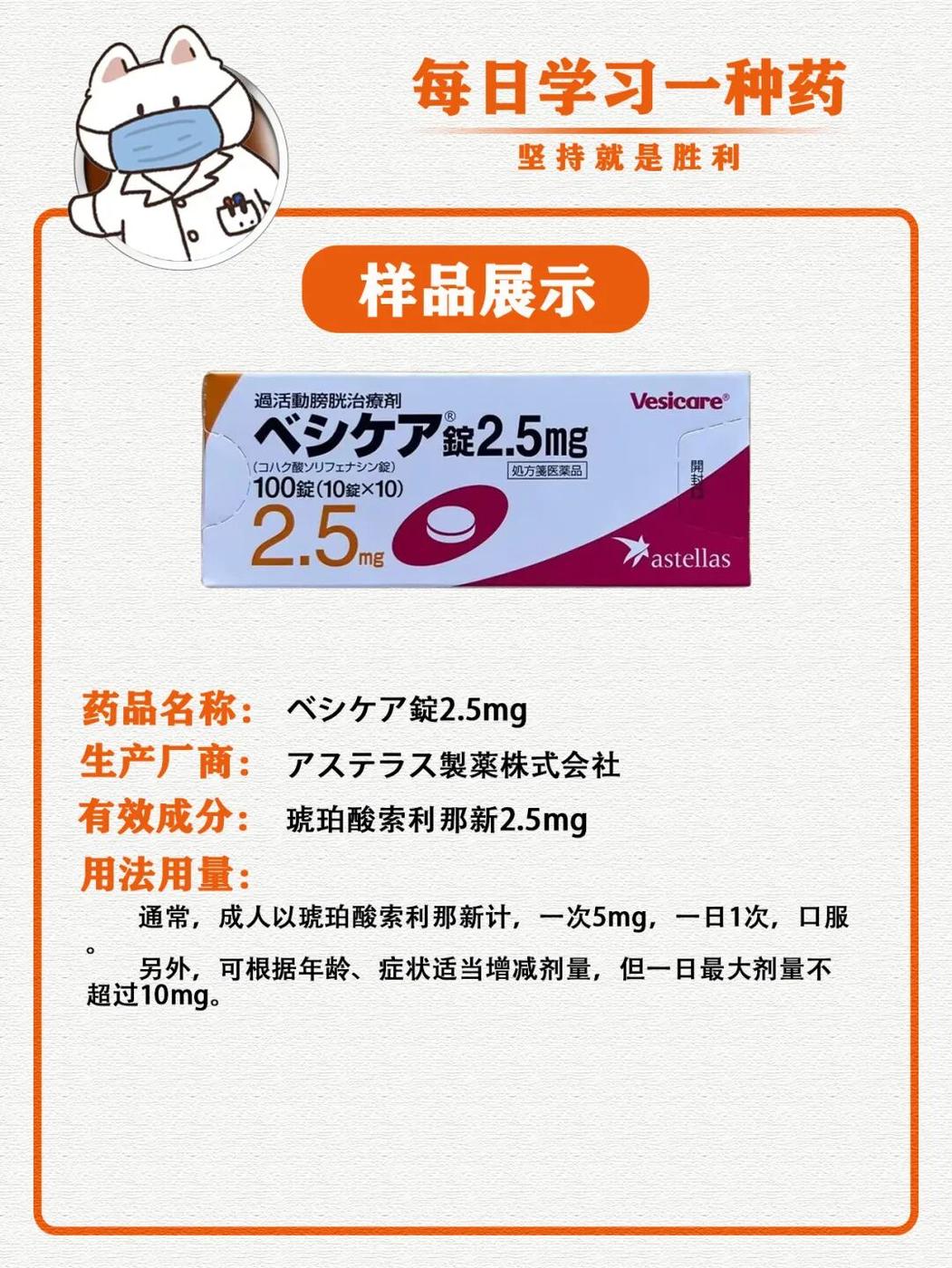
日本語原題:ベシケア錠2.5mg

Published2026-04-07 09:15 FormTablet Content9 sections / 2 images
English translation of the Japanese package insert is the main text; the Japanese original is shown alongside for verification. Use the language menu (top right) to read the page in another language. This site is for reference only — consult a doctor or pharmacist before use.
Section 1 · 01
English translation
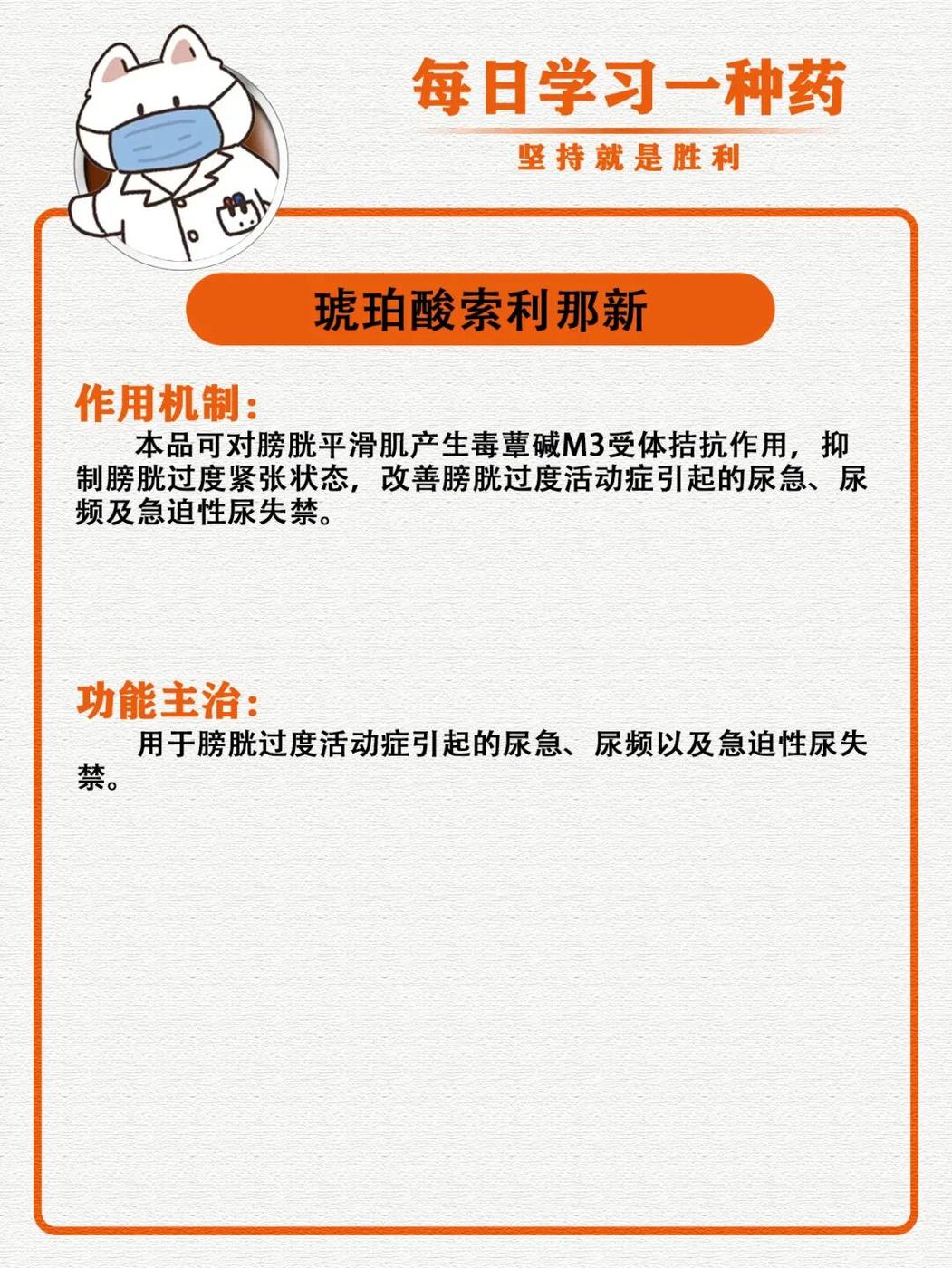
Feature Description By antagonizing muscarine M3 receptors in bladder smooth muscle, it suppresses bladder hypertonia and improves urgency, frequent urination, and urge urinary incontinence in overactive bladders.
Section 2 · 02
English translation
100 tablets (10 tablets × 10 boards).
Section 3 · 03
English translation
Characteristics White, film-coated tablets.
Section 4 · 04
English translation
Ingredient Information Active ingredient (per tablet): Solifenacin succinate 2.5mg. Additives: lactose hydrate, corn starch, hypromellose, magnesium stearate, titanium oxide, talc, macrogol.
Section 5 · 05
English translation
Indications Urgency to urinate, frequent urination, and urge urinary incontinence in overactive bladder.
Section 6 · 06
English translation
Dosage and Administration Typically, adults receive 5 mg orally once daily as sorifenacin succinate. The dose may be adjusted appropriately depending on age and symptoms, but the maximum daily dose is limited to 10 mg.
Section 7 · 07
English translation
Notes 1. Eye accommodation disorders (such as fog) and drowsiness may occur, so caution is advised when engaging in hazardous tasks such as working at heights or driving cars. 2. If no effect is observed with this drug, do not administer indiscriminately and consider appropriate treatment.
Section 8 · 08
English translation
Side Effects 1. Shock, anaphylaxis (both with unknown frequency) If abnormalities such as urticaria, difficulty breathing, or low blood pressure are observed, discontinue administration and provide appropriate treatment. 2. Liver dysfunction Liver dysfunction accompanied by increases in AST, ALT, γ-GTP, Al-P, and total bilirubin (each less than 0.1~5%) may occur. 3. Urinary retention (frequency unknown) 4. QT prolongation, ventricular tachycardia (including Torsades de Pointes), atrioventricular block, sinus failure syndrome, and high bradycardia (all of unknown frequency) 5. Paralytic ileus (frequency unknown) If severe constipation, abdominal distension, or similar symptoms occur, discontinue administration and provide appropriate treatment. 6. Hallucinations and delirium (frequency unknown) 7. Acute glaucoma attacks (frequency unknown) Symptoms such as increased intraocular pressure, nausea, eye pain with headache, and decreased vision may occur, so close observation is required. If such symptoms appear, discontinue administration and take appropriate treatment immediately. 8. Other side effects (1) Blood and lymphatic system disorders: increased white blood cell count, decreased white blood cell count, increased platelet count, decreased platelet count. (2) Cardiac disorders: angina, supraventricular premature contractions, ventricular extrasystole, bradycardia, atrial fibrillation, tachycardia, palpitations. (3) Ear and labyrinth disorders: rotational vertigo. (4) Eye disorders: fog-blurred vision, accommodation disorders, dry keratoconjunctivitis, decreased vision, gastrointestinal disorders, dry mouth (28.3%), constipation (14.4%), abdominal discomfort, abdominal bloating, abdominal pain, lower abdominal pain, upper abdominal pain, diarrhea, indigestion, hard stools, gastritis, atrophic gastritis, glossitis, nausea, stomach discomfort Pleasure, stomatitis, tongue discoloration, vomiting, gastroesophageal reflux disease, numbness in the mouth. (5) Systemic disorders and local administration mode: chest discomfort, chest pain, fatigue, fever, edema. (6) Infections: cystitis, urinary tract infection, bronchitis, nasopharyngitis, upper respiratory tract infection, positive urine sediment. (7) Metabolic and nutritional disorders: increased CK, increased uric acid, increased total cholesterol, increased K, positive urine glucose, decreased appetite. (8) Musculoskeletal and connective tissue disorders: joint pain, back pain, flank pain, muscle weakness. (9) Nervous system disorders: floating vertigo, taste disturbances, headaches, drowsiness, cognitive dysfunction. (10) Mental disorders: insomnia. (11) Renal and urinary tract disorders: difficulty urinating, pyuria, hesitation to urinate, elevated creatinine, increased BUN, positive urine protein. (12) Respiratory, thoracic, and mediastinal disorders: cough, dry nasal area, pharyngeal discomfort, voice disorders. (13) Skin and subcutaneous tissue disorders: dry skin, eczema, pruritus, rash, urticaria, angioedema, erythema multiforme, exfoliative dermatitis. (14) Vascular disorders: flushing, hypertension.
Section 9 · 09
English translation
taboo 1. Patients with a history of hypersensitivity to any component of this drug 2. Patients with urinary retention [bladder contractions during urination may be suppressed, which may worsen symptoms. ] 3. Patients with angle-closure glaucoma [anticholinergic effects may increase intraocular pressure and worsen symptoms. ] 4. Patients with obstruction of the pylorus, duodenum, or intestines, or patients with paralytic ileus [contraction and movement of gastrointestinal smooth muscles may be suppressed, potentially worsening symptoms]. ] 5. Patients with gastric or enteric atony [anticholinergic effects may reduce gastrointestinal motility, which may worsen symptoms. ] 6. Patients with myasthenia gravis [anticholinergic effects may reduce muscle tone and may worsen symptoms. ] 7. Patients with severe heart disease [ECG abnormalities such as premature contractions have been reported, and symptoms may worsen. ] 8. Patients with severe hepatic impairment (Child-Pugh classification C)

Source images

2 images

Need help sourcing Japanese medicines or OEM production?

💬