Cardiovascular · CARDIOVASCULAR

Rotigotine

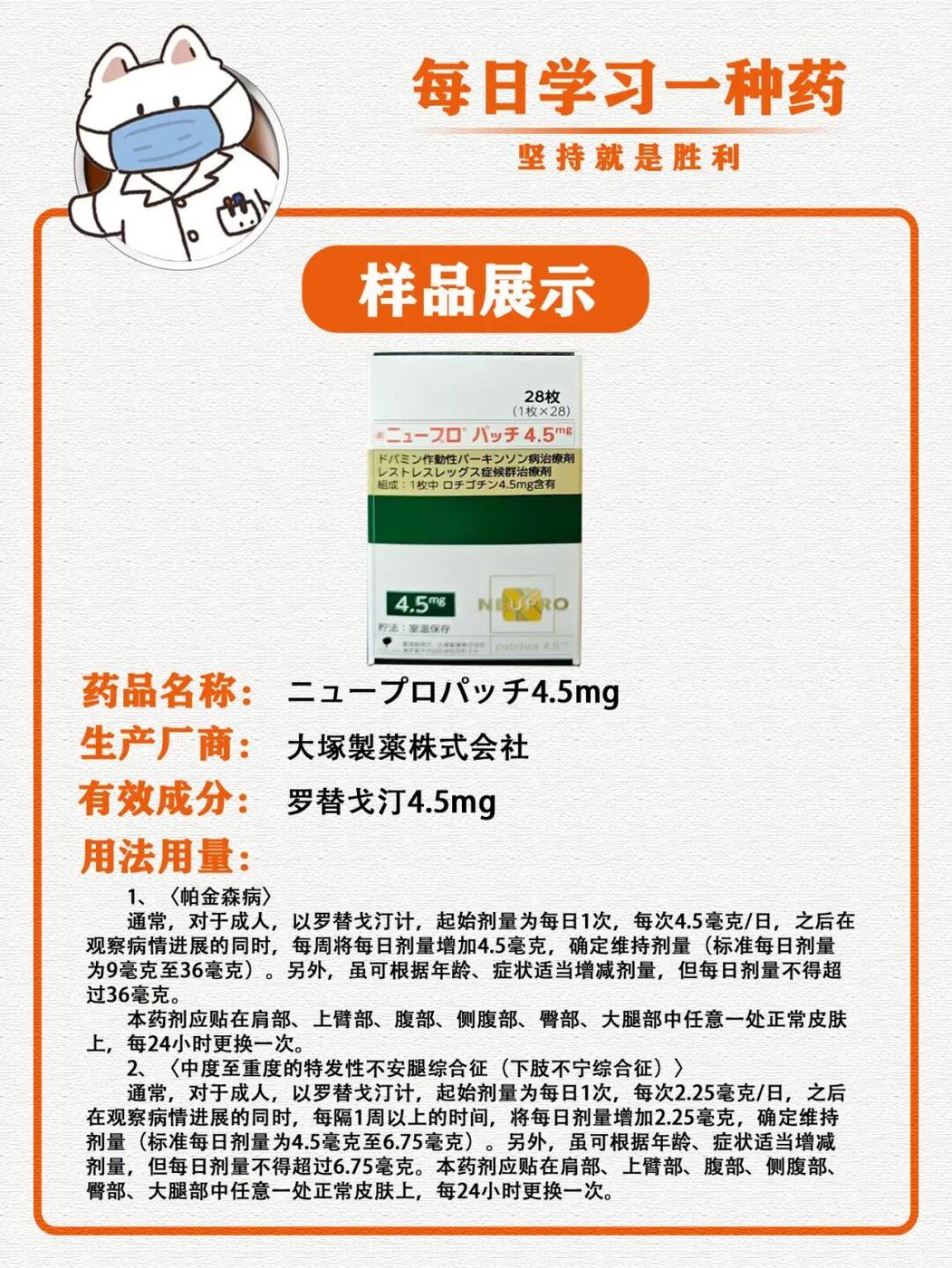
日本語原題:ニュープロパッチ4.5mg

Published2026-04-23 07:54 FormPowder Content10 sections / 2 images
Ingredients / strength:
Each tablet contains 4.5mg of rotigotine.
English translation of the Japanese package insert is the main text; the Japanese original is shown alongside for verification. Use the language menu (top right) to read the page in another language. This site is for reference only — consult a doctor or pharmacist before use.
Section 1 · 01
English translation
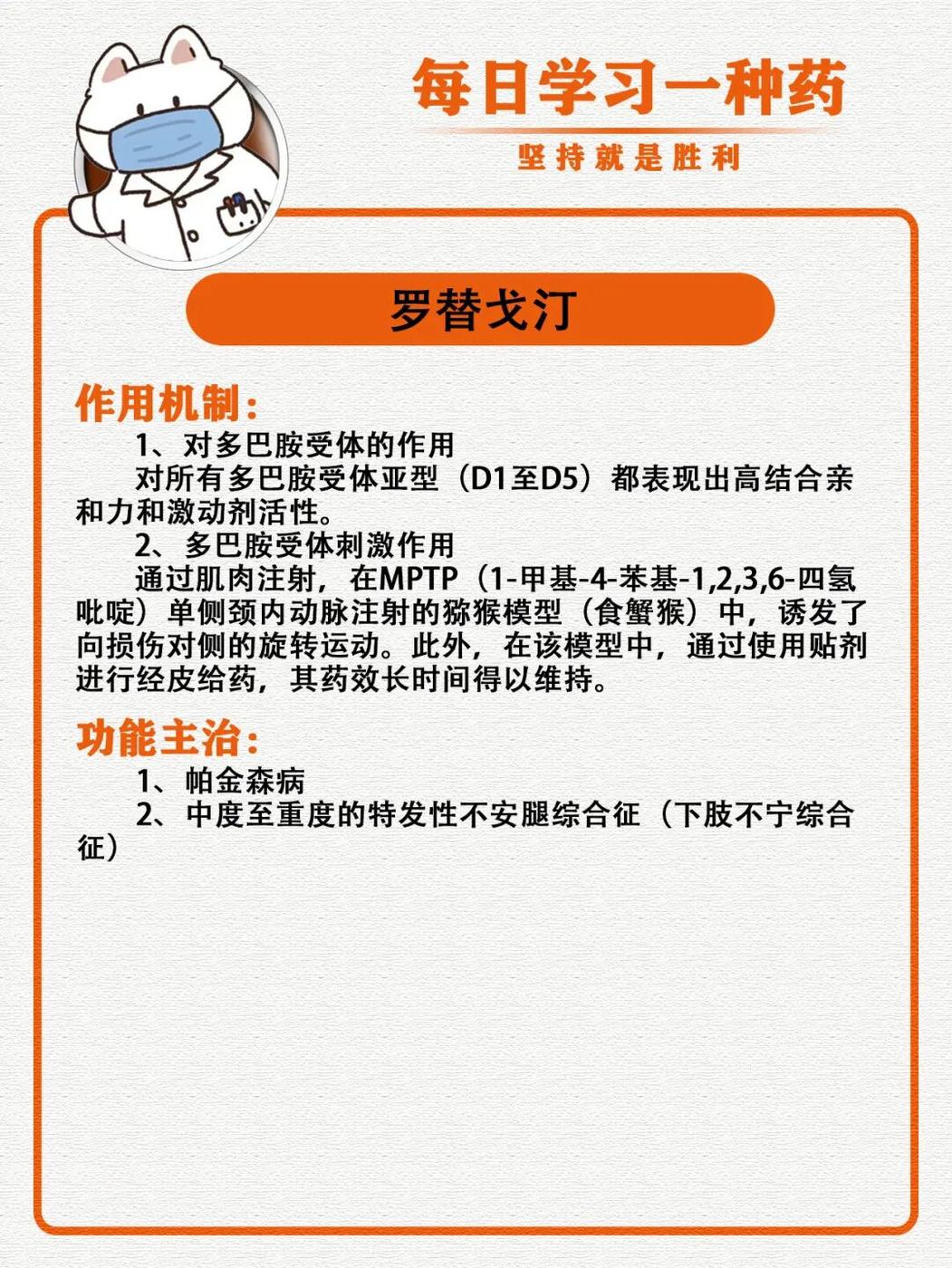
Feature Description 1. Effects on Dopamine Receptors It exhibits high binding affinity and agonist activity for all dopamine receptor subtypes (D1~D5). 2. Dopamine receptor stimulation Intramuscular administration induced rotational movement to the opposite side of injury in a monkey model (pig monkey) with MPTP (1-methyl-4-phenyl-1,2,3,6-tetrahydropyridine) injected into one side of the internal carotid artery. Furthermore, transdermal administration using patches in this model maintained its efficacy for a long time.
Section 2 · 02
English translation
28 pieces (1 ×28).
Section 3 · 03
English translation
Characteristics Colorless ~ A pale yellow semi-transparent paste spread onto a support, forming a square adhesive with rounded corners, and the surface of the paste is covered with a colorless transparent liner. Area: 10cm²
Section 4 · 04
English translation
Ingredient Information Active ingredient: 4.5mg of rotigotine per sheet. Additives: Povidone, sodium pyrrosulfite, ascorbic acid palmitate, tocopherol, and two other components (paste) Polyethylene terephthalate film (support) and polyethylene terephthalate film (liner).
Section 5 · 05
English translation
Indications 1. Parkinson's disease 2. Moderate to severe idiopathic restless legs syndrome (lower limb immobility syndrome)
Section 6 · 06
English translation
Dosage and Administration 1. Parkinson's Disease Typically, adults start with 4.5 mg of rotigotine once daily, then monitor the course and increase the daily dose by 4.5 mg each week, setting a maintenance dose (standard daily dose of 9 mg~36 mg). The amount can be adjusted appropriately depending on age and symptoms, but the daily dose should not exceed 36 mg. This product is applied to any of the normal skin areas of the shoulders, upper arms, abdomen, flanks, buttocks, or thighs, and is replaced every 24 hours. 2. Moderate to severe idiopathic restless legs syndrome (lower limb immobility syndrome) Typically, adults start with 2.25 mg once daily as rotigotine, then monitor the progression and increase the daily dose by 2.25 mg at intervals of at least one week, setting a maintenance dose (standard daily dose 4.5 mg~6.75 mg). The daily dose can be adjusted appropriately depending on age and symptoms, but the daily dose should not exceed 6.75 mg. This product is applied to any of the normal skin areas of the shoulders, upper arms, abdomen, flanks, buttocks, or thighs, and is replaced every 24 hours.
Section 7 · 07
English translation
Notes 〈Common Effects〉 1. There have been reports of automobile accidents caused by sudden sleep inducing, etc., caused by administration of dopamine receptor agonists, including this drug. Among cases of sudden sleep episodes, some did not show signs such as somnolence or excessive sleepiness, or cases where symptoms first appeared more than a year after starting administration. Patients should be thoroughly informed about sudden sleep and drowsiness with this drug, and caution should be taken to avoid engaging in hazardous tasks such as driving automobiles, operating machinery, or working at heights. 2. Orthostatic hypotension may be observed with administration of dopamine receptor agonists, including this drug. Begin administration with a small amount, and if signs or symptoms of orthostatic hypotension such as dizziness, lightheadedness, or unsteadiness appear, appropriate measures such as dose reduction, discontinuation, or discontinuation should be taken. 3. If dose reduction or discontinuation of this drug is necessary, tapering it down gradually. Rapid weight loss or discontinuation can induce malignant syndromes. Additionally, rapid dose reduction or discontinuation of dopamine receptor agonists can lead to drug withdrawal syndrome (characterized by symptoms such as apathy, anxiety, depression, fatigue, sweating, and pain). 4. Administration of dopamine receptor agonists including this drug has been reported to cause impulse control disorders such as pathological gambling (a state where gambling persistently occurs despite socially adverse outcomes such as personal life collapse), pathological hyperlibido, compulsive buying, and binge eating. If such symptoms appear, appropriate measures such as dose reduction or discontinuation of administration should be taken. Also, explain the symptoms of impulse control disorders to patients and caregivers. 5. If skin symptoms appear after applying this drug, use topical steroids or antihistamine topicals as needed, or discontinue use of this drug, and take appropriate measures according to the symptoms. Also, if a reaction occurs at the application site including small blisters, or if extensive dermatitis extends beyond the application site, discontinue use of this drug immediately. If rashes or irritation reactions are observed at the application site, there is a risk that the skin at the affected area may discolor due to sunlight, so avoid direct sunlight on the affected area until recovery occurs. 6. When replacing this drug, if a new formulation is applied without removing the already applied formulation, the blood concentration of this drug will increase. Therefore, instruct patients and caregivers to fully confirm that the previously applied formulation has been removed during replacement. 〈Moderate to severe idiopathic restless legs syndrome (lower limb immobility syndrome)〉 Administration of dopamine receptor agonists, including this drug, may cause augmentation (symptoms may be accelerated by more than 2 hours, worsening of symptoms, or spread to other sites). If such symptoms are observed, appropriate measures such as dose reduction or discontinuation of administration should be taken.
Section 8 · 08
English translation
Side Effects 1. Sudden sleep (less than 1%) Sudden sleep without warning may occur. 2. Hallucinations (7.6%), delusions (less than 1%), delirium (less than 1%), confusion (frequency unknown) Hallucinations (mainly visual hallucinations), delusions, delirium, and confusion may occur; in such cases, dose reduction or discontinuation of administration should be taken, and appropriate measures such as using antipsychotics may be taken if necessary. 3. Malignant syndrome (less than 1%) Malignant syndromes may appear due to rapid dose reduction or discontinuation of this drug, or with combination with atypical antipsychotics. Observe thoroughly, and if fever, impaired consciousness, apathy, severe muscle rigidity, involuntary movements, difficulty swallowing, tachycardia, blood pressure fluctuations, sweating, or elevated serum CK appear, symptoms of malignant syndrome may occur. After re-administration, gradually reduce the symptoms and provide appropriate measures such as body cooling and hydration. 4. Liver dysfunction (frequency unknown) Liver dysfunction such as elevated AST, ALT, Al-P, and γ-GTP may occur. 5. Rhabdomyolysis (frequency unknown) Rhabdomyolysis, characterized by muscle pain, weakness, increased CK, and elevated myoglobin in blood and urine, may appear. Also, be cautious of the onset of acute renal failure caused by rhabdomyolysis. 6. Other side effects (1) Neuropsychiatric system: somnolence, dyskinesia, headache, floating vertigo, positional vertigo, insomnia floating sensation, dystonia, rotational vertigo, auditory hallucinations, Parkinsonism symptoms (skullfoot, Parkinsonian gait, etc.), tremors, impaired consciousness (loss of consciousness, decreased consciousness level, etc.), nightmares, depression, sleep disorders, fainting, irritability, restless legs syndrome, anxiety, impulse control disorders (pathological gambling, compulsive buying, binge eating, etc.), excessive sweating. , taste disturbances, sensory dullness, hallucinations, pathological hyperlibido, psychiatric symptoms, obsessive-compulsive disorder, dopamine dysregulation syndrome, drowsiness, abnormal dreams, convulsions, disorientation, agitation, and drug withdrawal syndrome (apathy, anxiety, depression, fatigue, sweating, pain, etc.). (2) Digestive system: nausea (22.5%), vomiting, constipation, loss of appetite, abdominal discomfort, dry mouth, abdominal pain, diarrhea, indigestion, gastric ulcers, gastritis, gastroenteritis, stomatitis, oral discomfort, dry mouth, reflux esophagitis. (3) Circulatory: orthostatic hypotension, palpitations, atrial fibrillation, supraventricular tachycardia, hypertension, hypotension. (4) Respiratory system: difficulty breathing, throat disorders (pain, discomfort, etc.), cough, hiccups. (5) Blood: anemia, decreased white blood cell count, increased white blood cell count, decreased red blood cell count. (6) Urinary system: occult blood in the urine, difficulty urinating. (7) Hypersensitivity: rash, itching, urticaria, erythema, angioedema (facial edema, eyelid edema, etc.). (8) Eyes: Visual abnormalities, flickering of the eyes, foggy vision. (9) Kidneys: increased BUN, urine glucose metabolism, increased blood sugar, hypokalemia, hyponatremia. (10) Musculoskeletal system: Suitable for CK elevation, postural abnormalities, oblique-neck syndrome, musculoskeletal rigidity, musculoskeletal pain, back pain, limb pain, neck pain, muscle spasms, joint pain. (11) Sites of application: Reactions (49.4%), itching at application site, erythema at application site, discoloration at application site, blisters at application site, irritation at application site, erosion at application site, rash at application site, edema at application site. (12) Others: fatigue, peripheral edema, weight loss, fatigue, weakness, fever, heat sensation, hot flashes, cold sweats, falls, tinnitus, ear pain, irregular bleeding, irregular menstruation, erectile dysfunction, rhinitis, skin pigmentation, weight gain.
Section 9 · 09
English translation
taboo 1. Pregnant women or women who may be pregnant 2. Patients with a history of hypersensitivity to any component of this drug
Section 10 · 10
English translation
Warning Sudden sleep and somnolence without warning signs may be observed, and there have been reports of automobile accidents caused by sudden sleep induced by sudden sleep. Therefore, explain the drug to patients thoroughly about these onset and somnolence, and be careful not to engage in hazardous work such as driving, operating machinery, or working at heights while applying this drug.

Source images

2 images

Need help sourcing Japanese medicines or OEM production?

💬