Pravastatin Sodium
日本語原題:プラバスタチンNa錠5/10mg「トーワ」
Japanese Bureau Pravastatin Sodium 5mg.
Source images
3 imagesThe artwork keeps its original Japanese/Chinese lettering. Open “Text in this image” under a picture to read what it says in your language (machine-read, may contain errors).
Text in this image machine-read · may contain errors
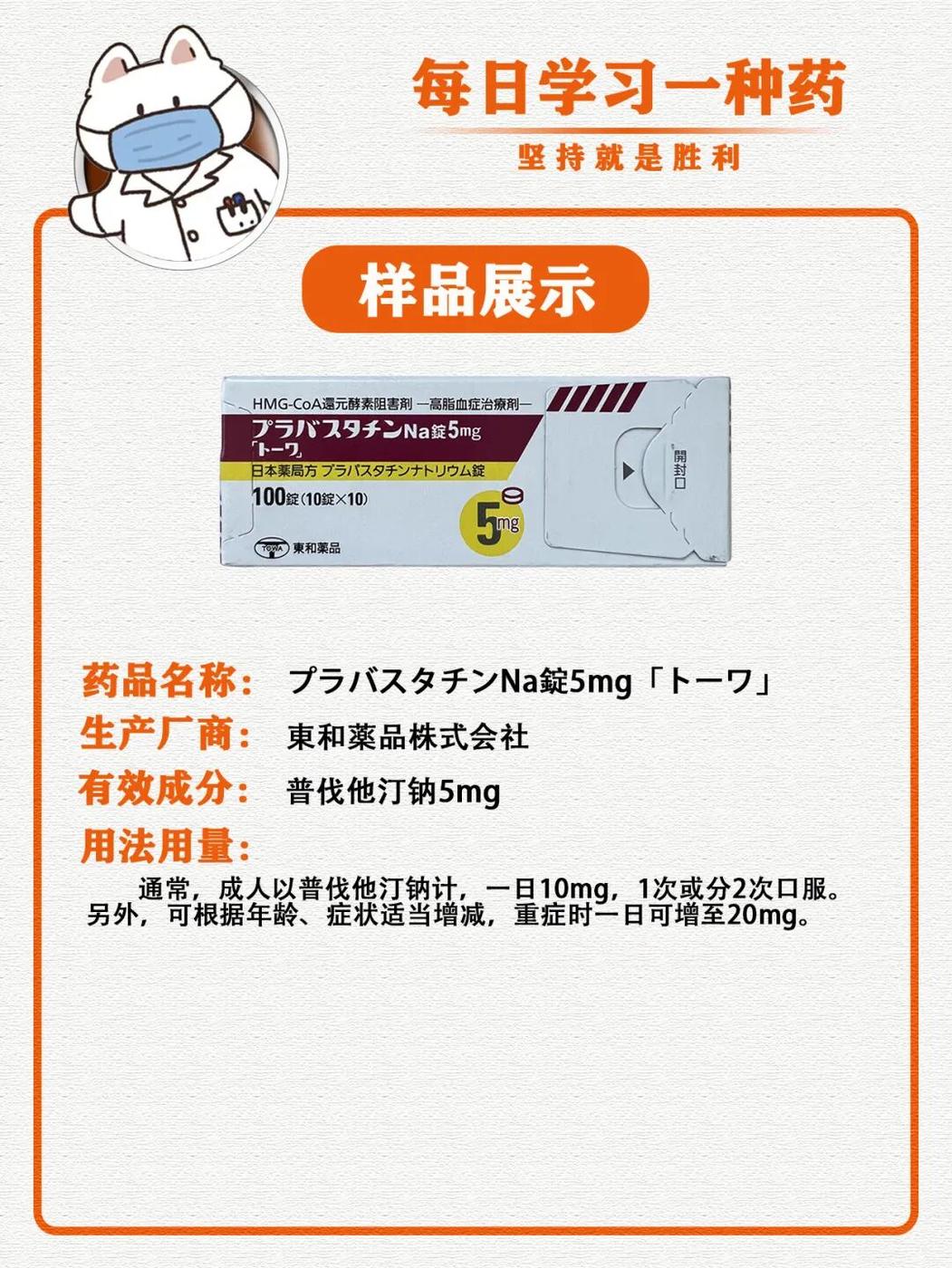
HMG-CoA Zunyuan Enzyme Inhibitor - Blood Stasis Treatment for Hyperlipidemia - J9Na Tablets 5mg Pharmacopoeia Flahasstatin Natrivum Minimal 100 ingots (10 ingots ×10) Drug Name: Pravastatin Na Tablets 5mg "Towa" Manufacturer: Towa Pharmaceutical Co., Ltd. Active ingredients: Pravastatin Sodium 5mg Dosage and administration: Typically, adults take 10mg of pulvastatin sodium orally once a day or divided into two doses. Additionally, adjustments can be adjusted according to age and symptoms, and in severe cases, the dose can be increased to 20mg per day.
HMG-CoA遵元酵素阻害剂一高脂血症治瘀剂- J9Na锭5mg 本薬局方フラハスタチンナトリワム齪 100锭(10锭×10) 药品名称: プラバスタチン Na 錠 5mg 「トーワ」 生产厂商: 东和藥品株式会社 有效成分: 普伐他汀钠5mg 用法用量: 通常,成人以普伐他汀钠计,一日10mg,1次或分2次口服。 另外,可根据年龄、症状适当增减,重症时一日可增至20mg。
HMG-CoA Zunyuan Enzyme Inhibitor - Blood Stasis Treatment for Hyperlipidemia - J9Na Tablets 5mg Pharmacopoeia Flahasstatin Natrivum Minimal 100 ingots (10 ingots ×10) Drug Name: Pravastatin …
Text in this image machine-read · may contain errors
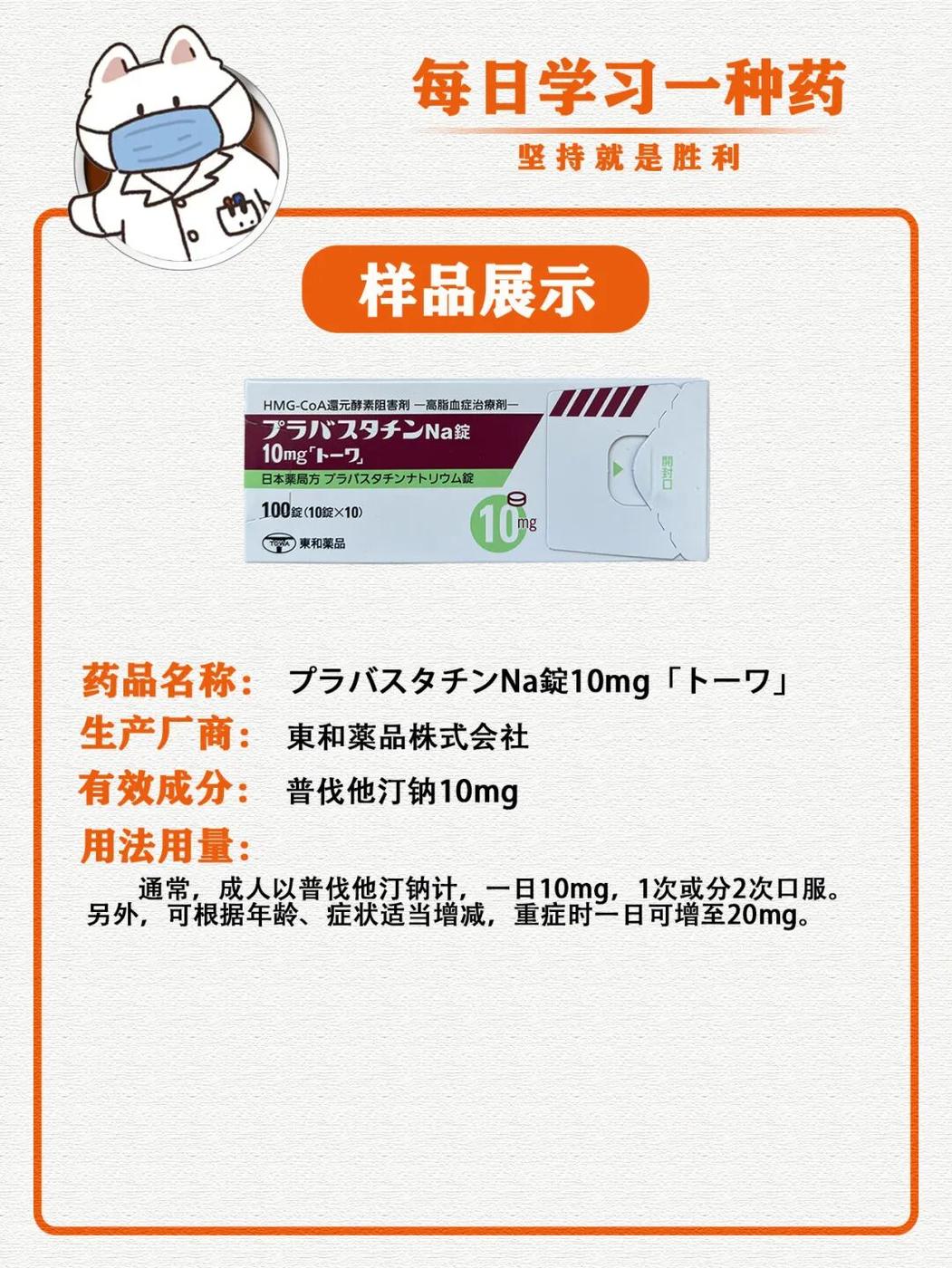
1. Hyperlipidemia Treatment Supplements 1 HMG-COA Remote Enzyme Inhibitor Japanese Prescription Flahasstatin Formula So? sleep 100 Blooms (10 Blooms×10) Drug Name: Pravastatin Na Tablets 10mg "Towa" Manufacturer: Towa Pharmaceutical Co., Ltd. Active ingredients: Sodium pravastatin 10mg Dosage and administration: Typically, adults take 10mg of pulvastatin sodium orally once a day or divided into two doses. Additionally, adjustments can be adjusted according to age and symptoms, and in severe cases, the dose can be increased to 20mg per day.
一高脂血症治摄剂一 HMG-COA遥元酵素阻害剂 日本第局方フラハスタチン方ソ ? ム眠 100绽(10绽×10) 药品名称: プラバスタチン Na 錠 10mg 「トーワ」 生产厂商: 东和藥品株式会社 有效成分: 普伐他汀钠10mg 用法用量: 通常,成人以普伐他汀钠计,一日10mg,1次或分2次口服。 另外,可根据年龄、症状适当增减,重症时一日可增至20mg。
1. Hyperlipidemia Treatment Supplements 1 HMG-COA Remote Enzyme Inhibitor Japanese Prescription Flahasstatin Formula So? sleep 100 Blooms (10 Blooms×10) Drug Name: Pravastatin Na Tablets 10m…
Text in this image machine-read · may contain errors
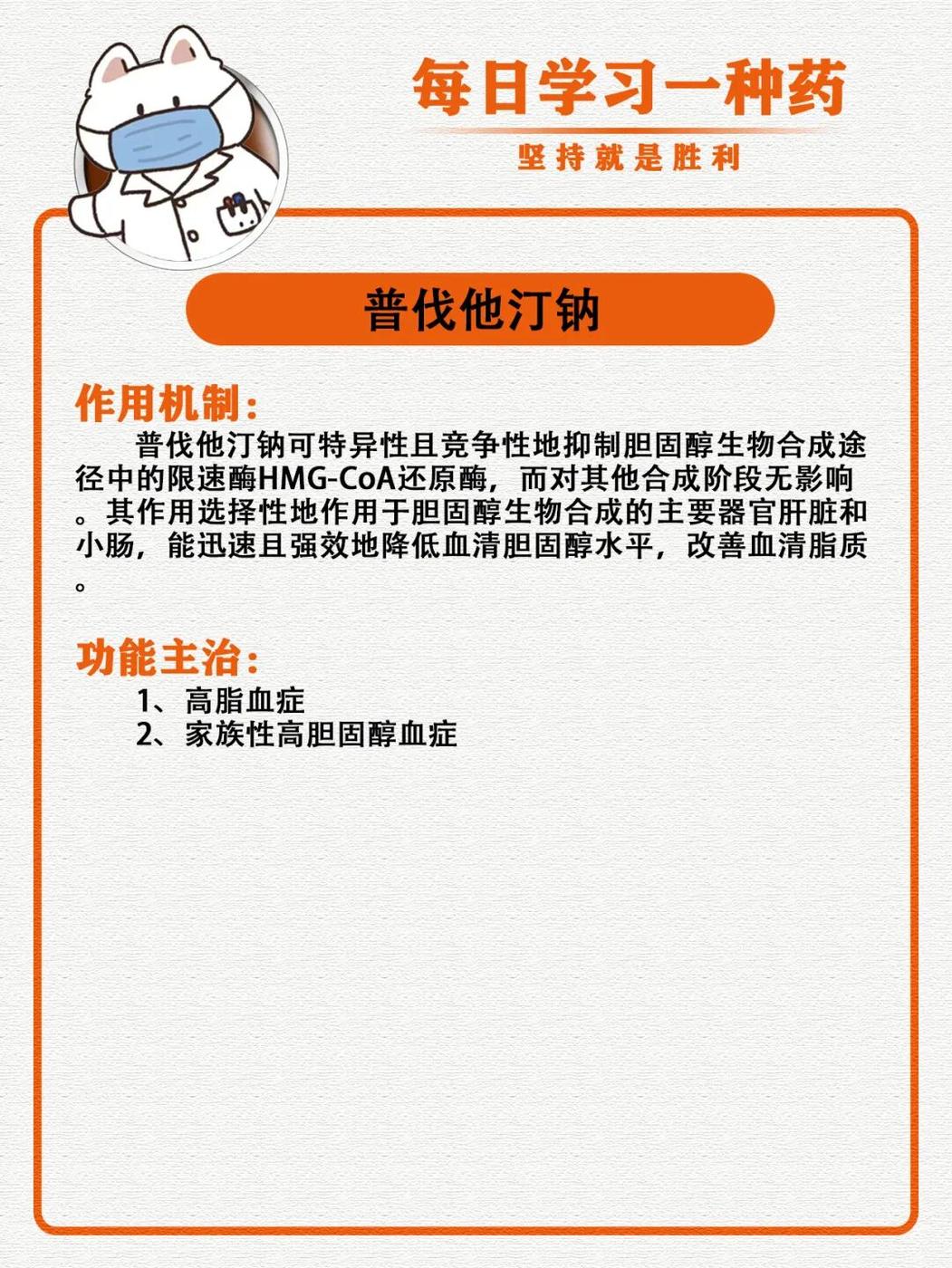
Mechanism of action: Pravastatin sodium can specifically and competitively inhibit cholesterol biosynthesis The rate-limiting enzyme HMG-CoA reductase in the pathway has no effect on other synthetic stages 。 Its action selectively targets the main organs for cholesterol biosynthesis, including the liver and others The small intestine can rapidly and effectively lower serum cholesterol levels and improve serum lipids Functions and indications: 1. Hyperlipidemia 2. Familial hypercholesterolemia Pravastatin sodium
作用机制: 普伐他汀钠可特异性且竞争性地抑制胆固醇生物合成途 径中的限速酶HMG-CoA还原酶,而对其他合成阶段无影响 。其作用选择性地作用于胆固醇生物合成的主要器官肝脏和 小肠,能迅速且强效地降低血清胆固醇水平,改善血清脂质 功能主治: 1、高脂血症 2、家族性高胆固醇血症 普伐他汀钠
Mechanism of action: Pravastatin sodium can specifically and competitively inhibit cholesterol biosynthesis The rate-limiting enzyme HMG-CoA reductase in the pathway has no effect on other s…