Digestive · DIGESTIVE

Topotecan

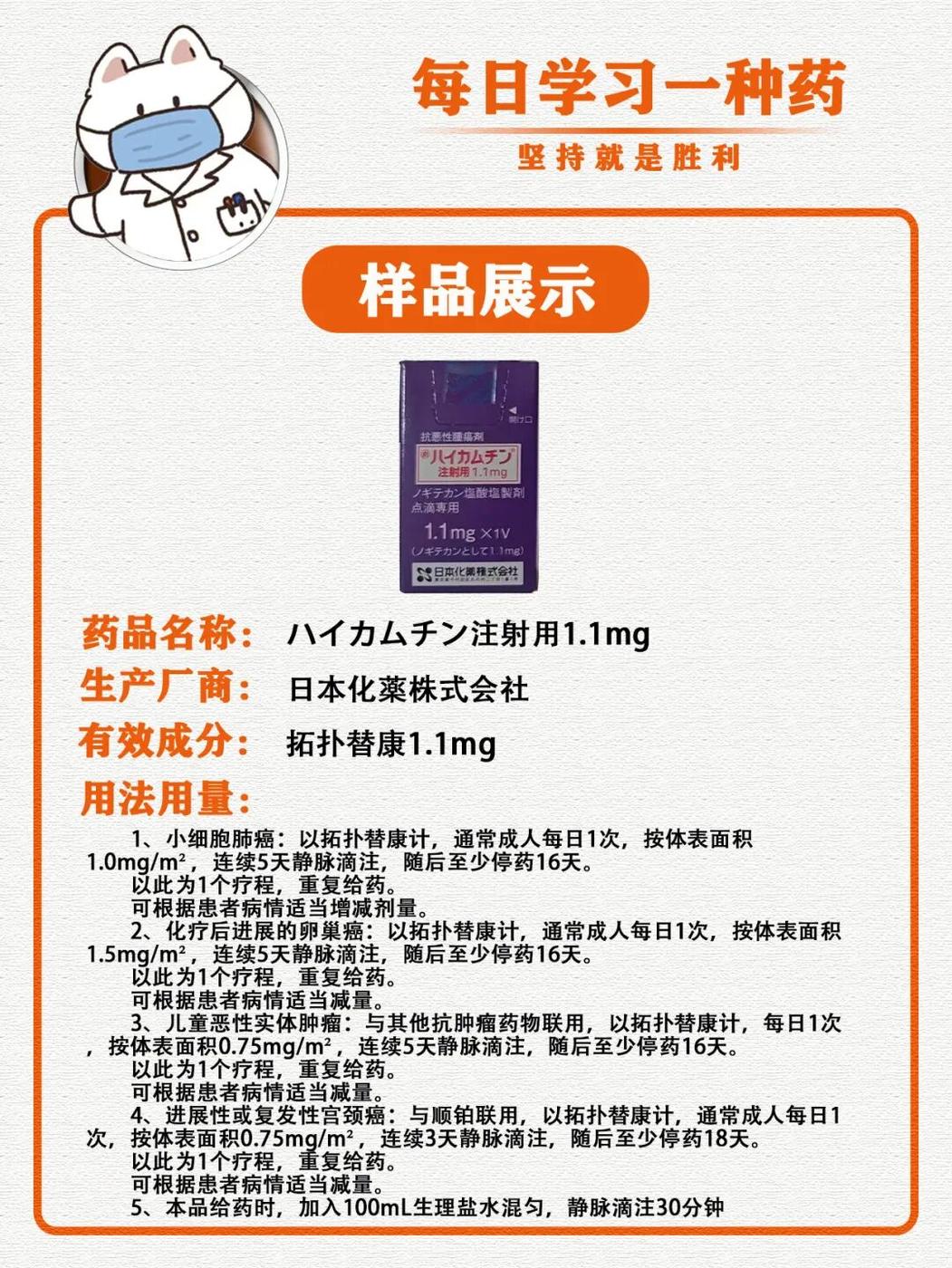
日本語原題:ハイカムチン注射用1.1mg

Published2026-05-15 11:44 Content10 sections / 2 images
Ingredients / strength:
1.2 mg of nogitecan hydrochloride per vial (1.1 mg as nogitecan).
English translation of the Japanese package insert is the main text; the Japanese original is shown alongside for verification. Use the language menu (top right) to read the page in another language. This site is for reference only — consult a doctor or pharmacist before use.
Section 1 · 01
English translation
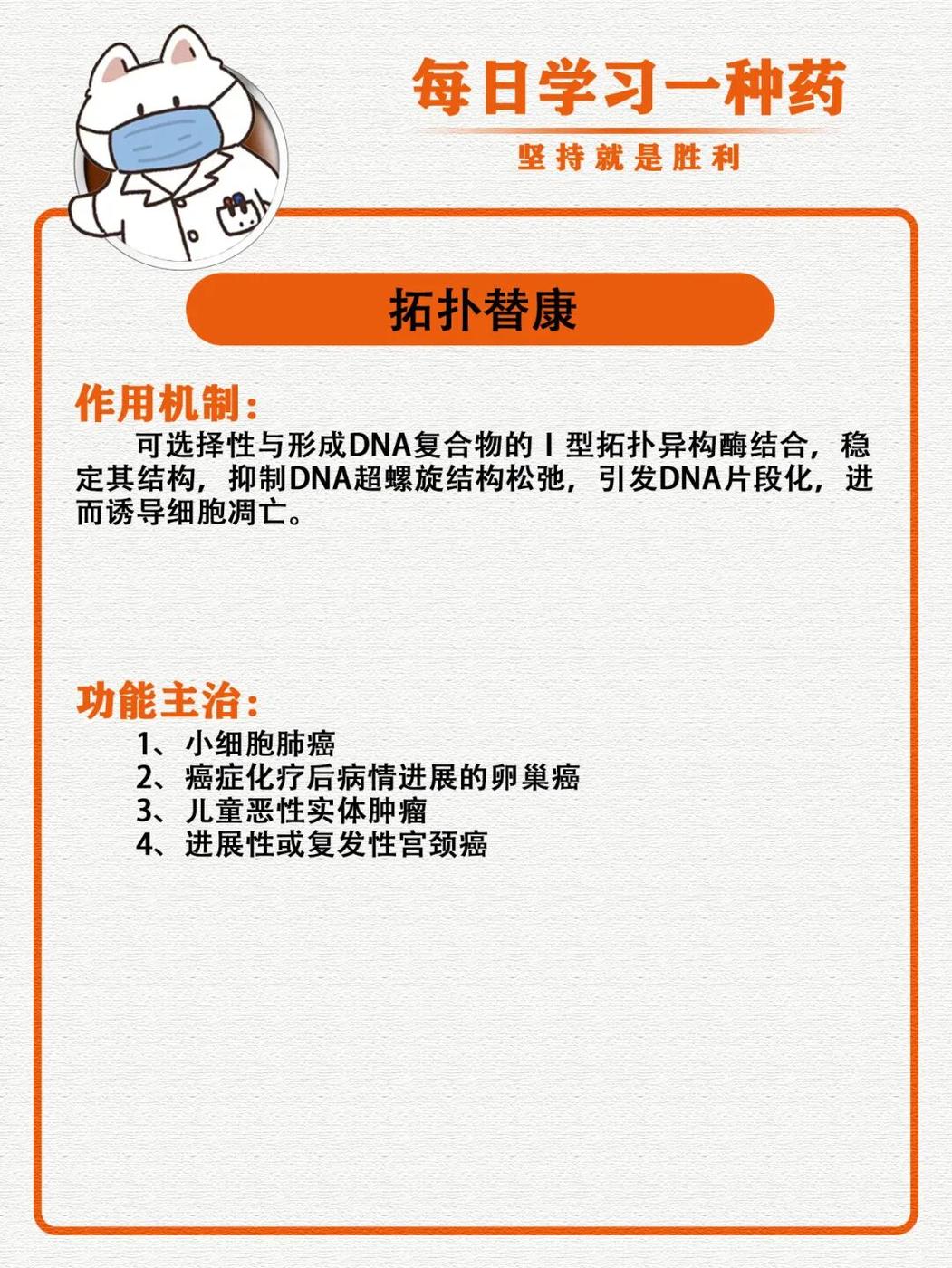
Feature Description It selectively binds to type I topoisomerases that form complexes with DNA, stabilizes its structure, inhibits the relaxation of DNA trans-Lacen structures, and induces DNA fragmentation, thereby inducing cell death.
Section 2 · 02
English translation
Specifications 1.1 mg [1 vial].
Section 3 · 03
English translation
Characteristics Very thin yellow ~ thin yellow-green freeze-dried formulation.
Section 4 · 04
English translation
Ingredient Information Active ingredient: 1.2mg of Nogitecan hydrochloride per vial (1.1mg as Nogitecan). Additives: D-mannitol 13.2mg, tartaric acid 5.5mg, appropriate amount of pH adjuster.
Section 5 · 05
English translation
Indications 1. Small cell lung cancer 2. Ovarian cancer that worsened after chemotherapy 3. Pediatric malignant solid tumors 4. Advanced or recurrent cervical cancer
Section 6 · 06
English translation
Dosage and Administration 1. For small cell lung cancer, as Nogitekan, adults are typically given 1.0 mg/m2 (body surface area) once daily by intravenous infusion for 5 days, with a drug break for at least 16 days. This is treated as a single course and administered repeatedly. Adjust the amount appropriately depending on the patient's condition. 2. For ovarian cancer that has progressed after chemotherapy, Nogitekan is typically given once daily for adults by intravenous drip at 1.5 mg/m2 (body surface area) for 5 consecutive days, with a drug cessation for at least 16 days. This is treated as a single course and administered repeatedly. Dose reduction is adjusted as needed depending on the patient's condition. 3. For pediatric malignant solid tumors, use Nogitekan in combination with other antineoplastic agents at 0.75 mg/m2 (body surface area) once daily by intravenous drip for 5 days, with at least 16 days of absence. This is treated as a single course and administered repeatedly. Dose reduction is adjusted as needed depending on the patient's condition. 4. For advanced or recurrent cervical cancer, co-administration with cisplatin as Nogitekan, usually once daily for adults, 0.75 mg/m2 (body surface area) intravenous drip for 3 consecutive days, with at least 18 days of discontinuation. This is treated as a single course and administered repeatedly. Dose reduction is adjusted as needed depending on the patient's condition. 5. When administering this drug, mix with 100 mL of normal saline and infuse by intravenous drip over 30 minutes.
Section 7 · 07
English translation
Notes 1. Since there is a risk of serious side effects (infection, bleeding tendencies) caused by bone marrow suppression, it is important to conduct frequent clinical tests (blood tests, kidney function tests, etc.) and closely monitor the patient's condition. At the start of each course, administer only after confirming that bone marrow function has been maintained or recovered. Additionally, strong bone marrow suppression may be present, and the condition may become prolonged, so administration should be carried out with caution. 2. Gastrointestinal symptoms such as nausea, vomiting, and loss of appetite may occur, so closely observe the patient's condition and take appropriate measures. 3. If fatigue symptoms appear, instruct them to be cautious when driving a car or operating machinery. 4. When using this drug for ovarian cancer, carefully read relevant literature (such as the "Report on Applicability to Notification Application for Unapproved and Off-label Drugs Review Committee with High Medical Need: Nogitecan Hydrochloride (Ovarian Cancer)"). 5. When using this drug for pediatric malignant solid tumors, carefully read relevant literature (such as the "Report on Applicability to Publicly Announced Submission for Unapproved and Off-label Drugs Review Committee with High Medical Need: Nogitecan Hydrochloride (Pediatric Malignant Solid Tumor)").
Section 8 · 08
English translation
Side Effects 1. Bone marrow suppression Severe hematologic toxic findings may occur, such as leukopenia (100.0%), neutropenia (98.7%), erythrocytopenia (96.8%), hemoglobin decrease (92.9%), thrombocytopenia (87.8%), febrile neutropenia (3.2%), pancytopenia (frequency unknown), and others. If abnormalities are detected, appropriate measures such as administration of antibiotics, G-CSF preparations, or blood products should be taken. 2. Gastrointestinal bleeding (including blood: 1.3%) Deaths from gastrointestinal bleeding with thrombocytopenia have been reported. 3. Interstitial pneumonia (frequency unknown) 4. Pulmonary embolism, deep vein thrombosis (frequency unknown) 5. Severe diarrhea, intestinal perforation, intestinal obstruction (frequency unknown) 6. Other side effects (1) Gastrointestinal: nausea/vomiting (62.8%), loss of appetite (64.1%), stomatitis, diarrhea, constipation, abdominal pain, gastritis, ileus, bad breath, dry mouth, bloating, gum bleeding, tongue discoloration, tongue disorders, rectal cramps. (2) Liver: elevated ALT, increased AST, elevated Al-P, elevated total bilirubin, liver dysfunction. (3) Kidneys: elevated BUN, urine glucose, urine protein, urine sediment, urinary urobilinogen, hematuria, abnormal urination, renal dysfunction, albuminuria, hemorrhagic cystitis, pyuria. (4) Skin: hair loss, nail disorders, hyperhidrosis. (5) Hypersensitivity: rash, pruritus, urticaria. (6) Systemic symptoms: fever, easy fatigue, weight loss, worsening condition, headache, fatigue, pain (muscle pain, joint pain, back pain, lower back pain, limb pain, etc.), injection site reactions, edema, chills, weakness, flu-like illness, dry mouth. (7) Neuropsychiatric system: taste disturbances, dizziness, peripheral neuropathy, tinnitus, sensory numbness, anxiety, somnolence, rotational vertigo, convulsions, sensory illusions, paralysis, syncope, abnormal dreams, depression, nervousness. (8) Circulatory: tachycardia, arrhythmia, hypotension, atrial fibrillation, heart failure, cyanosis, circulation collapse, superficial phlebitis, ECG abnormalities. (9) Others: decreased sodium, decreased total protein, decreased albumin, increased LDH, increased potassium, decreased chlor, decreased calcium, decreased potassium, increased creatinine, increased sodium, phlebitis, infection, chest pain, oral and sore throat, cough, Difficulty sucking, dehydration, decreased LDH, increased crawling, nosebleeds, pharyngitis, asthma, conjunctivitis, visual impairment, abnormal albumin-globulin ratio, abnormal urine tests, acidosis, bone pain, muscle spasms, vulvar disorders, genital secretions, increased globulin, decreased blood magnesium, decreased blood phosphorus.
Section 9 · 09
English translation
taboo 1. Patients with severe bone marrow suppression [Severe hematologic toxicity findings may occur, and there is a risk of developing a severe infectious disease. ] 2. Patients with severe infectious diseases [infections may worsen]. ] 3. Pregnant women or patients who may be pregnant 4. Patients with a history of hypersensitivity to any component of this drug
Section 10 · 10
English translation
Warning 1. Because this drug has strong bone marrow suppression, administration should be conducted only in cases deemed appropriate by medical facilities equipped with adequate emergency measures and by physicians with sufficient experience in cancer chemotherapy, and should not be administered to the following patients, with careful selection of suitable patients. Also, before starting treatment, fully explain the efficacy and risks to the patient or their family, and only administer after obtaining consent. (1) Patients with severe bone marrow suppression (2) Patients with severe infectious diseases (3) Pregnant women or patients who may be pregnant (4) Patients with a history of hypersensitivity to any component of this drug 2. Cancer chemotherapy for pediatric malignant solid tumors, including this drug, must be performed under the guidance of physicians with sufficient knowledge and experience in pediatric cancer chemotherapy.

Source images

2 images

Need help sourcing Japanese medicines or OEM production?

💬