Respiratory · RESPIRATORY

Ketotifen Fumarate

日本語原題:ケトチフェンカプセル1mg「サワイ」

Published2026-07-13 18:20 Makerサワイ FormCapsule Content9 sections / 1 images
English translation of the Japanese package insert is the main text; the Japanese original is shown alongside for verification. Use the language menu (top right) to read the page in another language. This site is for reference only — consult a doctor or pharmacist before use.
Section 1 · 01
English translation
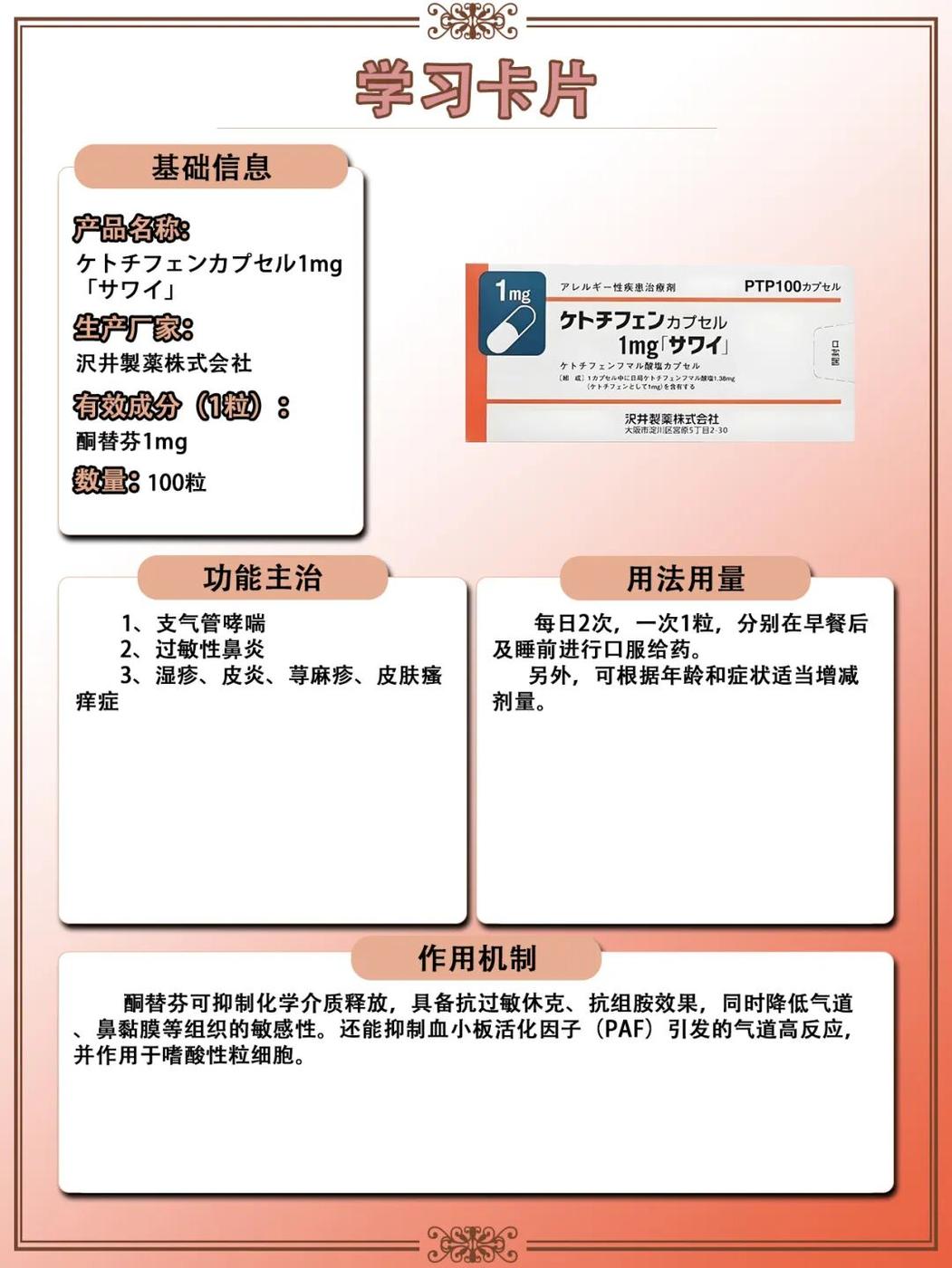
Feature Description Ketotifen exhibits anti-anaphylactic and antihistamine effects based on the release inhibition of chemical mediators, and also reduces sensitivity in tissues such as the airways and nasal mucosa. Furthermore, it suppresses the increased reactivity of the airways caused by PAF (platelet-activating factor) and has effects on eosinophils.
Section 2 · 02
English translation
Specifications PTP: 100 capsules (10 Cap× 10).
Section 3 · 03
English translation
Shape 1. Head: White and opaque 2. Body: White and opaque 3. Contents: White ~ pale yellowish-white powder, odorless, bitter taste
Section 4 · 04
English translation
Notes 1. Active Ingredients [Per capsule] Japanese Prescription Ketotifen Fumarate 1.38mg (equivalent to Ketotifen 1mg) 2. Additives: (1) Capsule contents: Light anhydrous silica, crystalline cellulose, magnesium stearate, corn starch, lactose. (2) Capsule body: Titanium oxide, gelatin, sodium lauryl sulfate.
Section 5 · 05
English translation
Indications 1. Bronchial Asthma 2. Allergic rhinitis 3. Eczema, dermatitis, urticaria, pruritus
Section 6 · 06
English translation
Dosage and Administration Typically, adults are given 1 mg (1 capsule) orally twice daily as ketotifen, after breakfast and before bedtime. Adjust the amount appropriately depending on age and symptoms.
Section 7 · 07
English translation
Feature Description 1. "Common Efficacy" Since drowsiness may occur, patients receiving this drug should be strictly advised not to engage in operating dangerous machinery such as driving a vehicle To do so. 2. 〈Bronchial Asthma〉 Since this drug does not quickly reduce seizures that have already occurred, it is necessary to fully explain this to patients.
Section 8 · 08
English translation
Side Effects 1. Convulsions, excitement (frequency unknown) Infants and toddlers should be especially cautious. 2. Liver dysfunction, jaundice (frequency unknown) Liver dysfunction accompanied by elevated AST, ALT, ALP, LDH, and γ-GTP, as well as jaundice, may occur. 3. Other side effects (1) Urinary system: Cystitis-like symptoms such as frequent urination, painful urination, hematuria, and a feeling of residual urine. (2) Hypersensitivity: rash, urticaria, edema, erythema multiforme. (3) Psychoneurological system: drowsiness, fatigue, dry mouth, dizziness, dizziness, headache, taste disturbances, numbness, transient loss of consciousness, irritability, insomnia, nervousness, sedation. (4) Digestive system: nausea, abdominal pain, diarrhea, vomiting, stomach discomfort, loss of appetite, constipation, stomatitis. (5) Liver: Elevated AST, ALT, and ALP, as well as elevated LDH and γ-GTP. (6) Others: weight gain, nosebleeds, hot flashes, palpitations, menstrual irregularities.
Section 9 · 09
English translation
taboo 1. Patients with a history of hypersensitivity to any component of this drug. 2. Patients with epilepsy or a history thereof.

Source images

1 images

Need help sourcing Japanese medicines or OEM production?

💬