Cardiovascular · CARDIOVASCULAR

Nifedipine

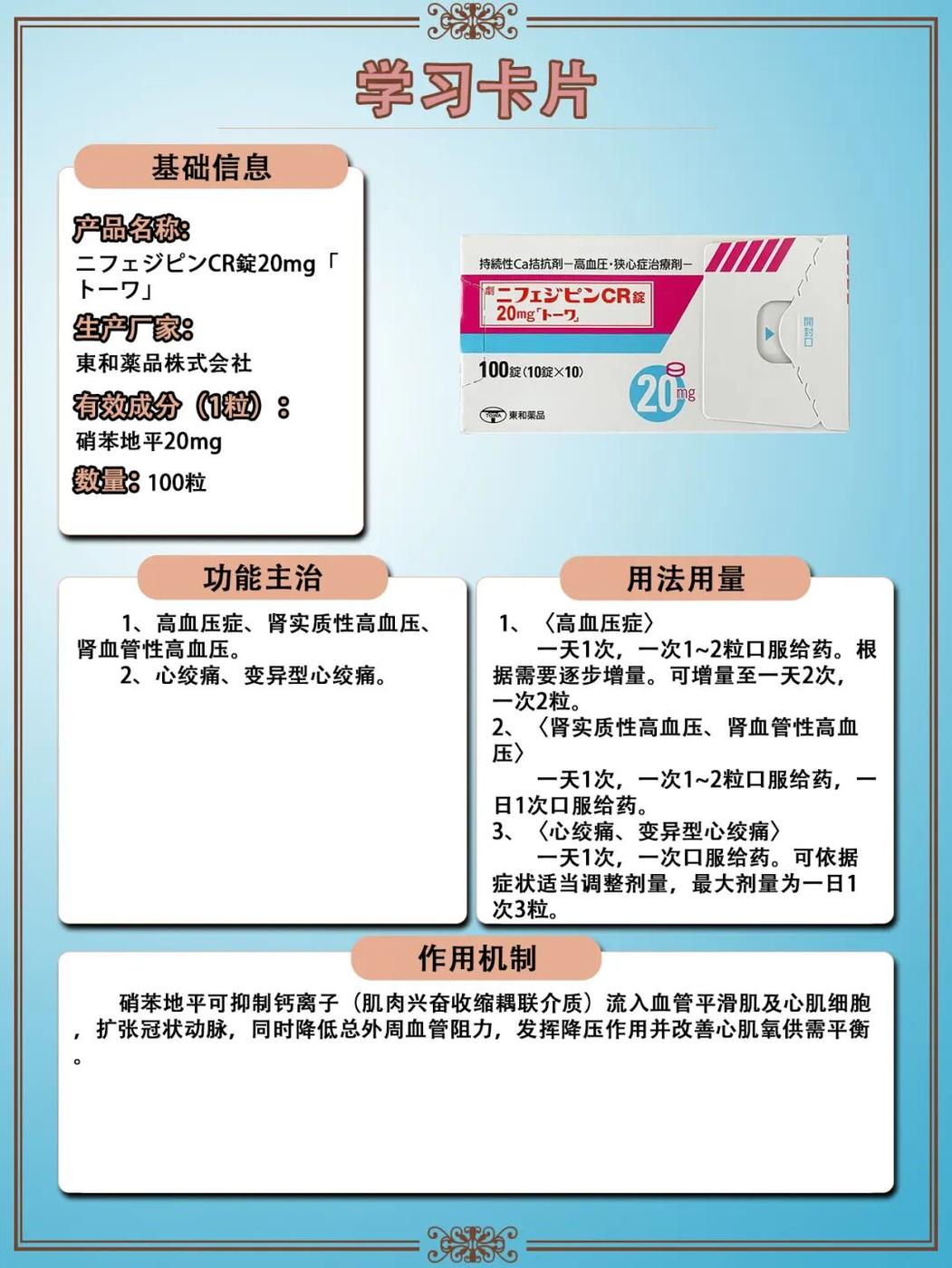
日本語原題:ニフェジピンCR錠20mg「トーワ」

Published2026-07-23 09:20 Makerトーワ FormTablet Content9 sections / 1 images
Ingredients / strength:
Nifedipine 20mg from Japan.
English translation of the Japanese package insert is the main text; the Japanese original is shown alongside for verification. Use the language menu (top right) to read the page in another language. This site is for reference only — consult a doctor or pharmacist before use.
Section 1 · 01
English translation
Feature Description Nifedipine inhibits the inflow of Ca, a muscle excitation-contraction linkage, into vascular smooth muscle and cardiac muscle cells, dilating coronary vessels and reducing total peripheral vascular resistance, exhibiting antihypertensive effects and improved myocardial oxygen supply balance.
Section 2 · 02
English translation
100 pieces [10 pieces×10: PTP aluminum-plastic packaging].
Section 3 · 03
English translation
Characteristics A pale red film-coated lock.
Section 4 · 04
English translation
Ingredient Information Active ingredient per tablet: Nifedipine 20mg from Japan. Additives: lactose hydrate, hydroxypropyl cellulose, crystalline cellulose, povidone, magnesium stearate, ethyl cellulose, hypromellose, macrogol 6000, talc, titanium dioxide, ferric trioxide, yellow ferric trioxide.
Section 5 · 05
English translation
1. Hypertension, renal pareschymal hypertension, renovascular hypertension. 2. Angina pectoris, variant angina.
Section 6 · 06
English translation
Dosage and Administration 1. Hypertension Typically, adults receive nifedipine at 20~40 mg orally once daily. However, dosing should start from 10~20 mg per day and gradually increase as needed. If 40mg per day is insufficient, the dose can be increased to 40mg twice daily. 2. 〈Renal Parenchymal Hypertension, Renovascular Hypertension〉 Typically, adults receive nifedipine at 20~40 mg orally once daily. However, dosing should start from 10~20 mg per day and gradually increase as needed. 3. "Angina, Atypical Angina" Typically, adults receive 40 mg of nifedipine orally once daily. Adjust the dose appropriately according to symptoms, but the maximum dose is 60 mg once daily.
Section 7 · 07
English translation
Notes 1. There have been reports of symptoms worsening when calcium channel blockers were suddenly discontinued; if discontinuation of this drug is necessary, gradually reduce the dose and monitor carefully. Also, be careful not to stop taking medication without a doctor's guidance. 2. Rarely, excessive hypotension may occur, causing shock symptoms, transient impaired consciousness, or cerebral infarction; in such cases, discontinue administration and take appropriate measures. 3. Dizziness and other symptoms caused by blood pressure-lowering effects may occur, so exercise caution when operating dangerous machinery such as working at heights or driving a car.
Section 8 · 08
English translation
Side Effects 1. Erythroderma (exfoliative dermatitis) (frequency unknown) 2. Agranulocytosis and thrombocytopenia (both unknown frequency) 3. Liver dysfunction and jaundice (both unknown frequency) Liver dysfunction or jaundice accompanied by elevated AST, ALT, and γ-GTP may occur. 4. Impaired consciousness (frequency unknown) Transient impaired consciousness associated with low blood pressure may occur. 5. Other side effects (1) Liver: increased AST, increased ALT, increased γ-GTP, increased Al-P, elevated LDH, jaundice. (2) Kidneys: increased BUN, increased creatinine. (3) Cardiovascular system: facial flushing, heat sensation, flushing, palpitations, edema (lower limbs, face, etc.), tachycardia, frequent urination, hot flashes, hypotension, orthostatic hypotension, chest pain, sweating, chills. (4) Neuropsychiatric system: headache, dizziness, fatigue, insomnia, abnormal sensations, tremor, drowsiness, weakness, muscle cramps, numbness in the limbs. (5) Digestive system: nausea, vomiting, constipation, diarrhea, abdominal discomfort, heartburn, dry mouth, upper abdominal pain, loss of appetite, bloating. (6) Hypersensitivity: rash, itching, photosensitivity, purpura, angioedema. (7) Oral cavity: thickened gums. (8) Metabolic abnormalities: hyperglycemia. (9) Blood: anemia, decreased white blood cells, and thrombocytopenia. (10) Respirator: difficulty breathing, coughing, nosebleeds, nasal congestion. (11) Others: Visual abnormalities (such as fog), joint pain, gynecomastia, eye pain, muscle pain, joint swelling, erectile dysfunction.
Section 9 · 09
English translation
taboo 1. Patients with a history of hypersensitivity to any component of this drug 2. Patients with cardiogenic shock [symptoms may worsen due to low blood pressure. ]

Source images

1 images

Need help sourcing Japanese medicines or OEM production?

💬