Respiratory · RESPIRATORY

Montelukast

日本語原題:モンテルカスト錠5mg「ケミファ」

Published2026-08-20 13:42 FormTablet Content9 sections / 1 images
English translation of the Japanese package insert is the main text; the Japanese original is shown alongside for verification. Use the language menu (top right) to read the page in another language. This site is for reference only — consult a doctor or pharmacist before use.
Section 1 · 01
English translation
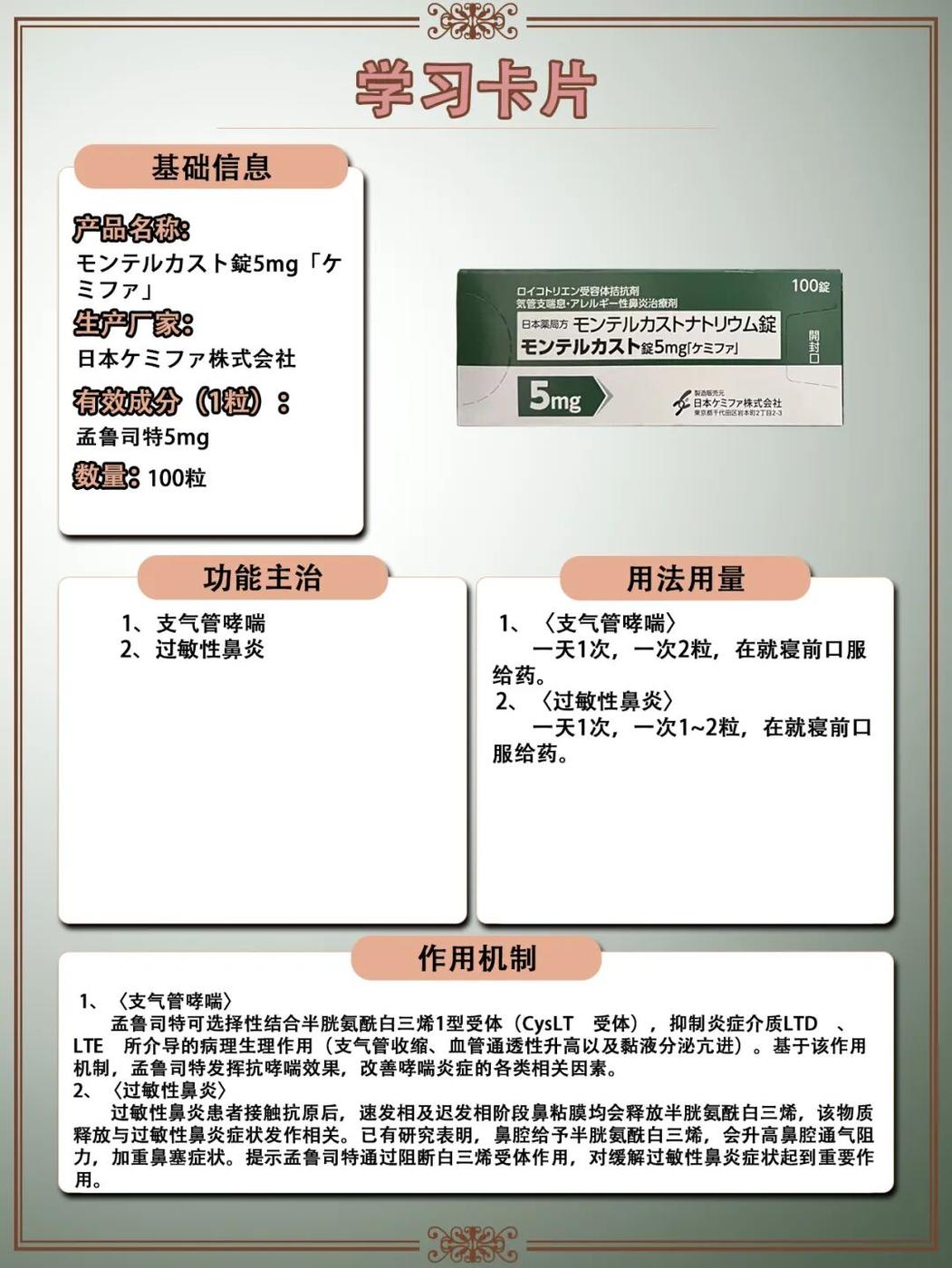
Feature Description 1. 〈Bronchial Asthma〉 Monterkast selectively binds to cysteinylleukotriene type 1 receptors (CysLT1 receptors) and suppresses the pathophysiological effects of inflammatory mediators LTD4 and LTE4 (such as bronchoconstriction, increased vascular permeability, and increased mucus secretion). Based on this mechanism of action, montelkast acts as an antiasthmatic agent, improving various factors of asthmatic inflammation. 2. 〈Allergic Rhinitis〉 In allergic rhinitis, after antigen exposure, cysteynyl leukotriene is released from the nasal mucosa in both immediate and delayed phases. Its release is associated with the onset of symptoms of allergic rhinitis. Additionally, intranasal administration of cystinyl leukotriene has been shown to increase nasal ventilation resistance and worsen nasal congestion symptoms. It is suggested that montelkast plays an important role in alleviating allergic rhinitis symptoms by blocking the action of leukotriene receptors.
Section 2 · 02
English translation
100 tablets [10 tablets (aluminum-plastic blister packaging) ×10 boards].
Section 3 · 03
English translation
Characteristics Bright gray-yellow film-coated lock.
Section 4 · 04
English translation
Ingredient Information Active ingredient (per tablet) :(Japanese Bureau) Montelcaste Sodium 5.2mg (5.0mg as Montelcast). Additives: lactose hydrate, crystalline cellulose, hydroxypropyl cellulose, croscarmellose sodium, magnesium stearate, hypromellose, titanium oxide, ferric trioxide, yellow ferric trioxide, carnauba wax.
Section 5 · 05
English translation
Indications 1. Bronchial Asthma 2. Allergic rhinitis
Section 6 · 06
English translation
Dosage and Administration 1. 〈Bronchial Asthma〉 Typically, adults receive 10 mg of montelcaste orally once daily before bedtime. 2. 〈Allergic Rhinitis〉 Typically, adults receive 5~10 mg of montelcaste orally once daily before bedtime.
Section 7 · 07
English translation
Notes 1. "Common Efficacy" (1) Patients who have been able to reduce the maintenance steroid dose through this drug and discontinue this drug should be cautious as there is a risk of recurrence of the underlying disease. (2) Although the causal relationship with this drug is unclear, psychiatric symptoms including depression, suicidal ideation, suicide, and aggressive behavior have been reported, so closely monitor the patient's condition. (3) There have been reports of eosinophilic polyangiitis granulomatosis-like vasculitis during the use of leukotriene antagonists, including this drug. These symptoms generally occur when oral steroid medications are reduced or discontinued. When using this drug, pay particular attention to changes in eosinophil count, numbness, limb weakness, fever, joint pain, and vasculitis symptoms such as lung infiltration. (4) If no effect is observed after administration of this drug, be careful not to administer it indiscriminately for a long period. 2. 〈Bronchial Asthma〉 (1) Patients should be thoroughly informed to continue taking this drug not only during asthma exacerbations but also when asthma is well controlled. (2) Unlike bronchodilators, steroids, etc., this drug is not intended to relieve an already occurring asthma attack, so this must be thoroughly explained to the patient. (3) If a major seizure occurs during administration of this drug, bronchodilators or steroids must be administered.
Section 8 · 08
English translation
Side Effects 1. Anaphylaxis (frequency unknown) 2. Angioedema (frequency unknown) 3. Fulminant hepatitis, hepatitis, liver dysfunction, jaundice (all frequency unknown) 4. Toxic epidermal necrolysis (TEN), Stevens-Johnson syndrome, erythema multiforme (all unknown frequency) 5. Thrombocytopenia (frequency unknown) Early symptoms include purpura, nosebleeds, gum bleeding, and other bleeding Sometimes the direction appears. 6. Other side effects (1) Hypersensitivity: rash, itching, urticaria, eosinophil infiltration of the liver. (2) Neuropsychiatric system: headache, drowsiness, strange dreams, irritability, emotional anxiety, convulsions, insomnia, hallucinations, dizziness, sensory disturbances (such as numbness), agitation, tremors, sleepwalking, disorientation, decreased concentration, memory impairment, delirium, obsessive-compulsive symptoms. (3) Respiratory: pulmonary eosinophilia. (4) Digestive system: diarrhea, abdominal pain, stomach discomfort, nausea, heartburn, vomiting, constipation, indigestion, stomatitis. (5) Liver: abnormal liver function, increased AST, increased ALT, increased Al-P, increased γ-GTP, elevated total bilirubin. (6) Musculoskeletal system: muscle pain including muscle spasms, joint pain. (7) Others: dry mouth, occult blood in the urine, hematuria, urine sugar, edema, fatigue, increased white blood cell count, elevated protein and triglycerides in urine, bleeding tendency (nosebleeds, purpura, etc.), bruises, palpitations, frequent urination, fever, weakness, fatigue, hair loss, enuresis.
Section 9 · 09
English translation
taboo Patients with a history of hypersensitivity to any component of this drug.

Source images

1 images

Need help sourcing Japanese medicines or OEM production?

💬