Cardiovascular · CARDIOVASCULAR

Metoprolol Tartrate

日本語原題:メトプロロール酒石酸塩錠40mg「NIG」

Published2026-08-29 14:30 FormTablet Content9 sections / 1 images
Ingredients / strength:
Each tablet contains 40mg of metoprolol tartrate.
English translation of the Japanese package insert is the main text; the Japanese original is shown alongside for verification. Use the language menu (top right) to read the page in another language. This site is for reference only — consult a doctor or pharmacist before use.
Section 1 · 01
English translation
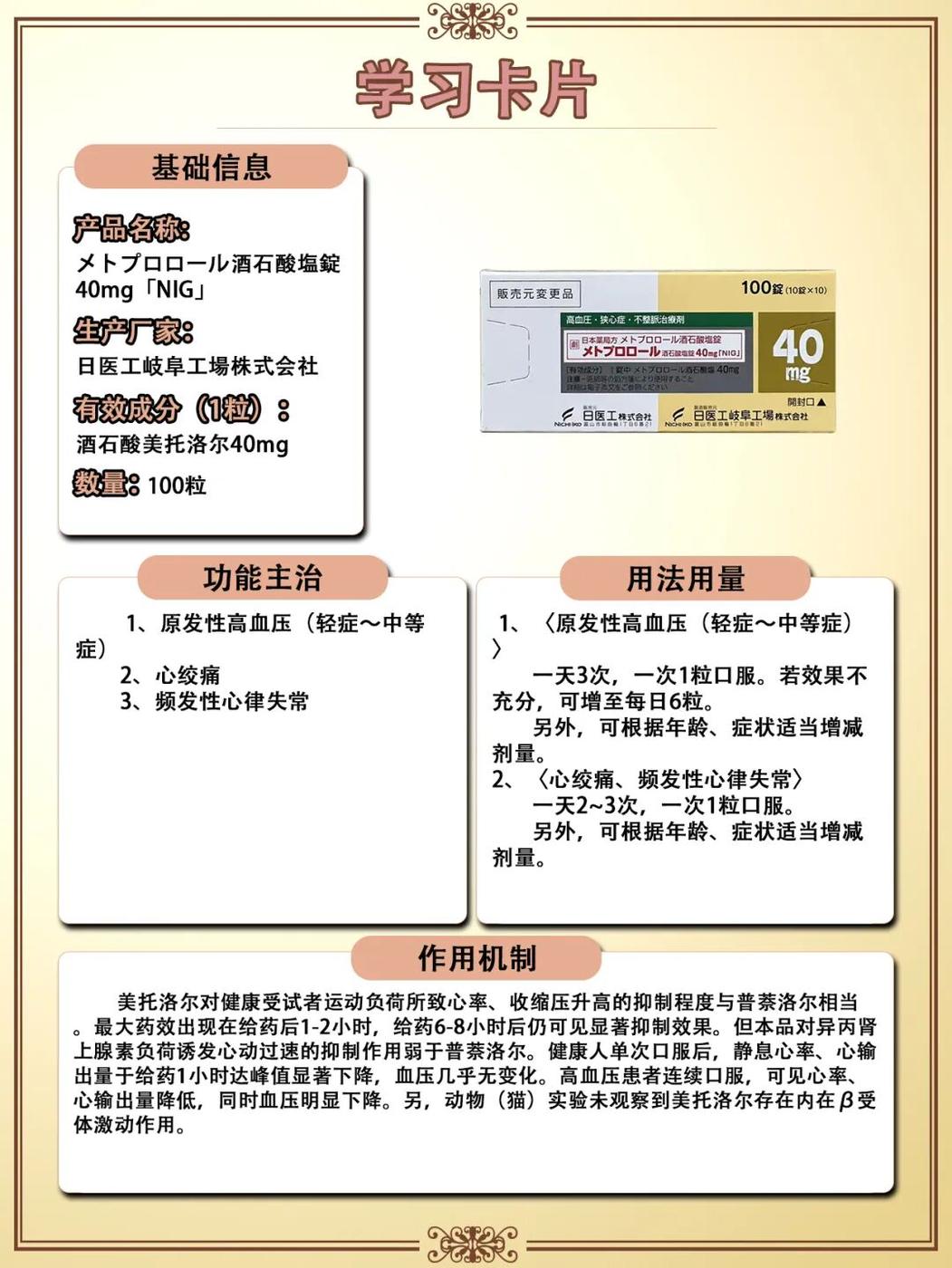
Feature Description Metoprolol suppresses increases in heart rate and systolic blood pressure caused by exercise load in healthy individuals to the same extent as propranolol. Its maximum effect is observed 1~2 hours after administration, and significant suppression is observed even after 6~8 hours. On the other hand, the inhibitory effect of tachycardia caused by isoprenarin load is weaker than that of propranolol. When administered orally once to healthy individuals, resting heart rate and cardiac output peak one hour after administration and decrease significantly, but blood pressure shows little change. When administered continuously orally to hypertensive patients, significant blood pressure decreases along with reductions in heart rate and cardiac output. Metoprolol has not been shown to have intrinsic receptor stimulation effects β cats.
Section 2 · 02
English translation
100 tablets [10 tablets (PTP aluminum-plastic blister packaging)×10].
Section 3 · 03
English translation
Characteristics White film-coated locks.
Section 4 · 04
English translation
Ingredient Information Active ingredient: 40mg of metoprolol tartrate per tablet. Additives: Carmelose, crystalline cellulose, titanium oxide, magnesium stearate, lactose hydrate, hydroxypropyl cellulose, hypromellose, macrogol 6000.
Section 5 · 05
English translation
1. Primary hypertension (mild~moderate) 2. Angina 3. Frequent arrhythmias
Section 6 · 06
English translation
Dosage and Administration 1. "Essential Hypertension (Mild~Moderate)" Typically, adults are given 60~120 mg of metoprolol tartrate orally divided into three divided doses per day. If the effect is insufficient, the dose can be increased up to 240 mg. Adjust appropriately according to age and symptoms. 2. 〈Angina pectoris, Tachyarrhythmia〉 Typically, adults are given 60~120 mg of metoprolol tartrate orally divided into 2~3 divided doses per day. Adjust appropriately according to age and symptoms.
Section 7 · 07
English translation
Notes 1. Begin administration with a small amount, and for long-term use, regularly perform cardiac function tests (pulse, blood pressure, ECG, X-rays, etc.). Reduce or discontinue the course of intake, especially if bradycardia occurs or hypotension occurs. Additionally, symptomatic treatment should be provided, such as administering atropine as needed. Also, pay attention to liver function, kidney function, blood profile, and other factors. 2. In angina patients using similar compounds (propranolol hydrochloride), sudden discontinuation of administration has been reported, resulting in worsening symptoms or myocardial infarction. If discontinuation is necessary, dose reduction should be gradually followed by close monitoring. Also, patients should be careful not to stop taking medication without a doctor's guidance. Even when administered for purposes other than angina, the same caution should be exercised especially in elderly patients. 3. It is desirable not to administer the drug for 24 hours before surgery. 4. Dizziness and unsteadiness may occur, so patients receiving this drug (especially in the early stages) should be careful not to engage in operating dangerous machinery such as driving a car.
Section 8 · 08
English translation
Side Effects 1. Cardiogenic shock (frequency unknown) 2. Congestive heart failure (0.2%), atrioventricular block (frequency unknown), bradycardia (2.4%), sinus dysfunction (frequency unknown) 3. Induction and worsening of asthma symptoms (0.3%) 4. Liver dysfunction and jaundice (both frequency unknown) 5. Other side effects (1) Eyes: Visual impairment (such as fog), decreased tear secretion, conjunctivitis. (2) Hypersensitivity: rash (psoriasis type, etc.), itching, photosensitivity. (3) Blood: Thrombocytopenia. (4) Cardiovascular system: palpitations, peripheral circulatory disorders (cold or numbness in the limbs, etc.), ventricular premature contractions, orthostatic hypotension, hypotension. (5) Respiratory: shortness of breath, nasal congestion, rhinitis, bronchospasm. (6) Psychiatric and nervous system: dizziness and dizziness, headache, insomnia, drowsiness, depression, nightmares, anxiety, hallucinations, sensory disturbances, attention disorders, nervous hypersensitivity, amnesia, confusion. (7) Digestive system: abdominal pain, loss of appetite, constipation, diarrhea, heartburn, dry mouth, nausea and vomiting, abdominal bloating. (8) Liver: increased AST and ALT. (9) Others: chest tightness, swelling, fatigue, tinnitus, decreased libido, fatigue, elevated triglycerides, sweating, increased CK (CPK), muscle spasms, erectile dysfunction, taste abnormalities, hair loss, hearing loss, joint pain, weight gain, and worsening psoriasis.
Section 9 · 09
English translation
taboo 1. Patients with a history of hypersensitivity to any component of this drug or other β blockers 2. Patients with diabetic ketoacidosis or metabolic acidosis [may enhance myocardial contractility suppression seen in this condition]. ] 3. Patients with severe bradycardia (severe sinus bradycardia), atrioventricular block (grade II, III), sinoatrial block, or sinus insufficiency syndrome [may suppress the cardiac conduction system and worsen symptoms. ] 4. Patients with cardiogenic shock, right heart failure due to pulmonary hypertension, or congestive heart failure [may suppress myocardial contractility and worsen symptoms. ] 5. Patients with hypotension [may worsen symptoms due to its antihypertensive effects. ] 6. Patients with severe peripheral circulatory disorders (such as gangrene) [may worsen symptoms]. ] 7. Patients with untreated pheochromocytoma or paraganglioma 8. Pregnant women or women who may be pregnant

Source images

1 images

Need help sourcing Japanese medicines or OEM production?

💬