Eperisone Hydrochloride
日本語原題:エペリゾン塩酸塩錠50mg「NIG」
Per tablet: 50mg of epellisone hydrochloride.
Source images
1 imagesThe artwork keeps its original Japanese/Chinese lettering. Open “Text in this image” under a picture to read what it says in your language (machine-read, may contain errors).
Text in this image machine-read · may contain errors
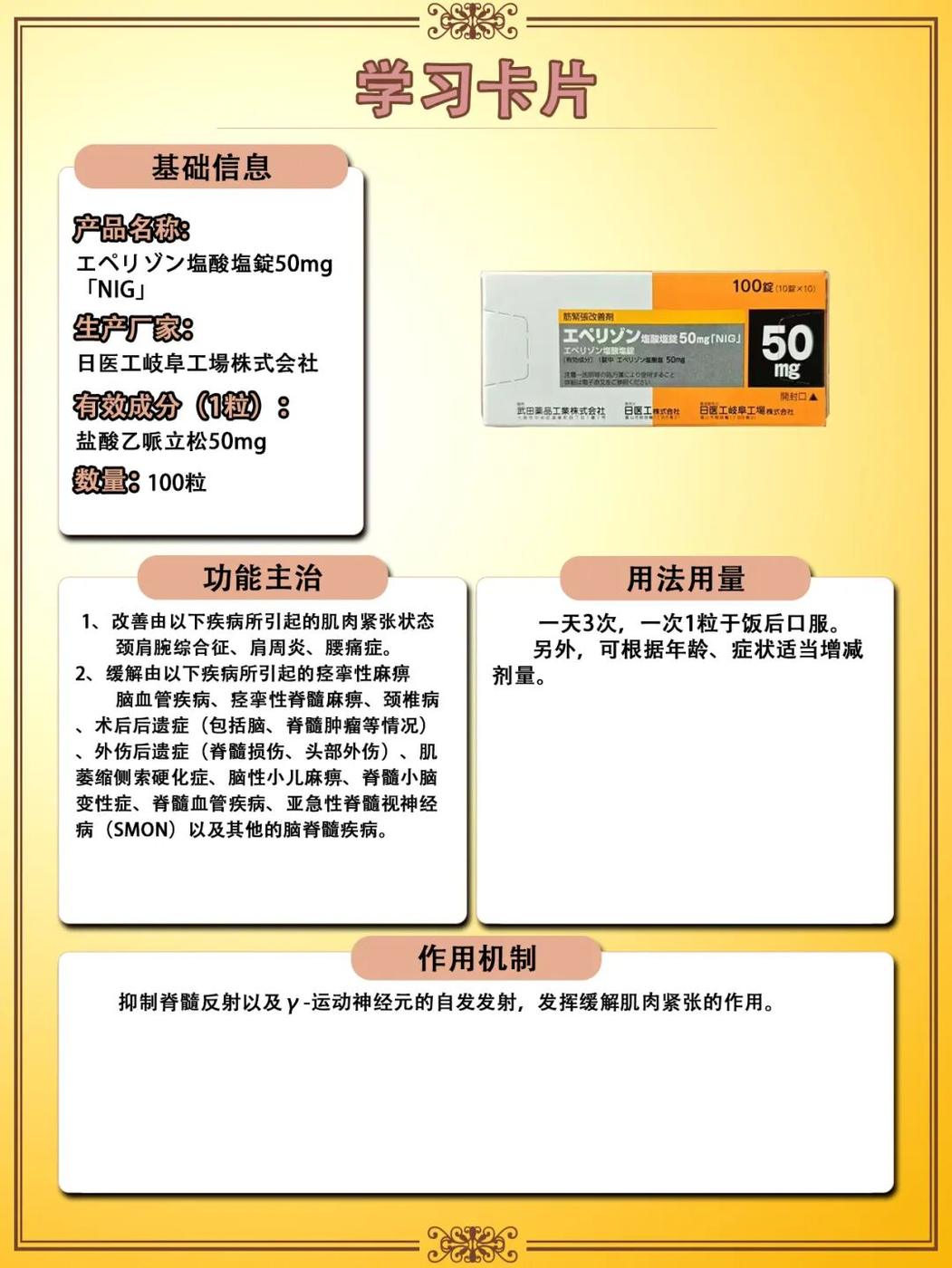
Basic information Product Name: Koperison Hydrochloride Tablets 50mg [NIG] 100 yuan (10 signatures×10) Nichi-Iko Gifu Factory Co., Ltd Active ingredient (1 capsule): Eperperisone hydrochloride 50mg Quantity: 100 capsules Functions and indications Usage and dosage 1. Improves muscle tension caused by the following diseases Take 1 capsule orally after meals, three times a day. Cervical-shoulder-wrist syndrome, frozen shoulder, and lower back pain. Additionally, adjustments can be adjusted appropriately according to age and symptoms 2. Relieves spastic paralysis caused by the following diseases Cerebrovascular diseases, spasmodic spinal palsy, cervical spondylosis Postoperative sequelae (including brain and spinal cord tumors, etc.) , post-traumatic sequelae (spinal cord injury, head trauma), muscular Atrophic lateral sclerosis, cerebral poliomyelitis syndrome, spinocerebellum Degeneration, spinal vascular diseases, subacute spinal optic nerves SMON and other cerebrospinal cord diseases. Mechanism of action It inhibits spinal cord reflexes and spontaneous firing of Y-motor neurons, helping to relieve muscle tension.
基础信息 产品名称: 工ペリゾン塩酸塩錠 50mg [NIG] 100元(10签×10) 日医工岐阜工場株式会社 有效成分(1粒): 盐酸乙哌立松50mg 数量:100粒 功能主治 用法用量 1、改善由以下疾病所引起的肌肉紧张状态 一天3次,一次1粒于饭后口服。 颈肩腕综合征、肩周炎、腰痛症。 另外,可根据年龄、症状适当增减 2、缓解由以下疾病所引起的痉挛性麻痹 脑血管疾病、控挛性脊髓麻痹、颈椎病 、术后后遗症(包括脑、脊髓肿瘤等情况) 、外伤后遗症(脊髓损伤、头部外伤)、肌 萎缩侧索硬化症、脑性小儿麻痹、脊髓小脑 变性症、脊髓血管疾病、亚急性脊髓视神经 病(SMON)以及其他的脑脊髓疾病。 作用机制 抑制脊髓反射以及y-运动神经元的自发发射,发挥缓解肌肉紧张的作用。
Basic information Product Name: Koperison Hydrochloride Tablets 50mg [NIG] 100 yuan (10 signatures×10) Nichi-Iko Gifu Factory Co., Ltd Active ingredient (1 capsule): Eperperisone hydrochlori…