Cardiovascular · CARDIOVASCULAR

Amlodipine

日本語原題:アムロジピン錠10mg「トーワ」

Published2026-09-28 14:23 Makerトーワ FormTablet Content9 sections / 1 images
Ingredients / strength:
Japan Bureau Amlodipine Besylate 13.87mg (10mg as amlodipine)
English translation of the Japanese package insert is the main text; the Japanese original is shown alongside for verification. Use the language menu (top right) to read the page in another language. This site is for reference only — consult a doctor or pharmacist before use.
Section 1 · 01
English translation
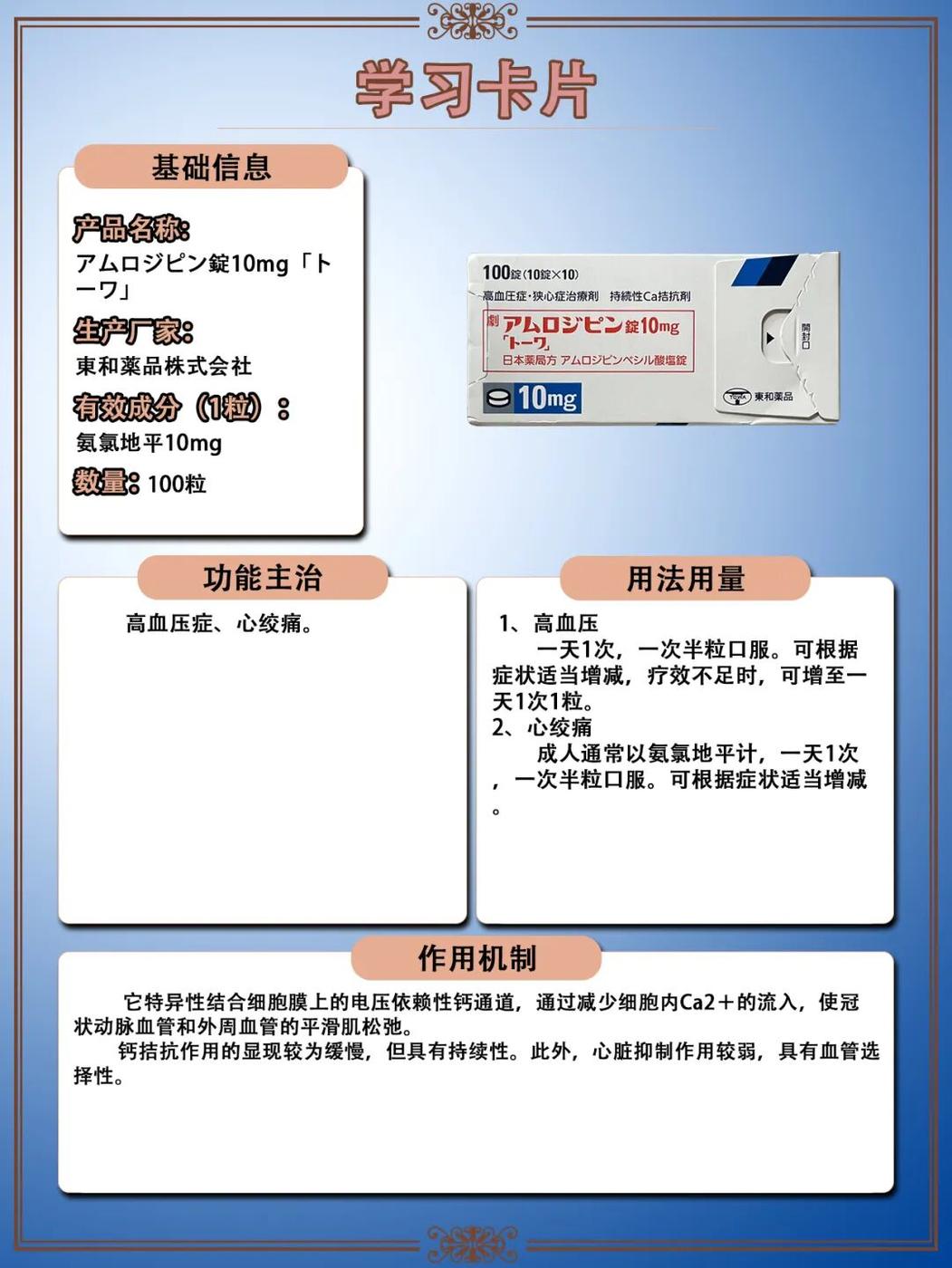
Feature Description It specifically binds to membrane voltage-dependent calcium channels in the cell membrane, reducing the influx of Ca2+ into the cell, thereby relaxing the smooth muscle of coronary and peripheral blood vessels. The onset of calcium channel action is gradual and persistent. Additionally, it has weak cardiac depressive effects and has been recognized as vasoselective.
Section 2 · 02
English translation
100 pieces [10 pieces×10: PTP aluminum-plastic packaging].
Section 3 · 03
English translation
Characteristics A film-coated lock with white split lines.
Section 4 · 04
English translation
Ingredient Information Active ingredient per tablet: Nippon Bureau Amlodipine Besirate 13.87mg (10mg as amlodipine) Additives: anhydrous calcium hydrogen phosphate, crystalline cellulose, sodium starch glycolate, hydroxypropyl cellulose, magnesium stearate, hypromellose, talc, titanium oxide, carnauba wax.
Section 5 · 05
English translation
Hypertension, angina.
Section 6 · 06
English translation
Dosage and Administration 1. Hypertension Typically, adults receive 2.5~5 mg of amlodipine orally once daily. The dose may be adjusted appropriately according to symptoms, but if the effect is insufficient, the dose can be increased up to 10 mg once daily. 2. Angina pectoris Typically, adults receive 5 mg of amlodipine orally once daily. Adjust the amount appropriately according to symptoms.
Section 7 · 07
English translation
Notes 1. Dizziness and other symptoms caused by blood pressure-lowering may occur, so caution is advised when operating dangerous machinery such as working at heights or driving a car. 2. This drug has a long blood concentration half-life and a gradual antihypertensive effect even after discontinuation. Therefore, when using other antihypertensives after discontinuation, administer with caution, paying attention to the dosage and interval.
Section 8 · 08
English translation
Side Effects 1. Fulminant hepatitis (frequency unknown), liver dysfunction, jaundice (less than 0.1%) Liver dysfunction accompanied by elevated AST, ALT, and γ-GTP may occur. 2. Agranulocytosis (frequency unknown), leukopenia (less than 0.1%), thrombocytopenia (frequency unknown) 3. Atrioventricular block (less than 0.1%) Early symptoms such as bradycardia and dizziness may appear. 4. Rhabdomyolysis (frequency unknown) If muscle pain, weakness, increased CK, or increased myoglobin in blood and urine occur, discontinue administration and take appropriate measures. Also, be cautious of the onset of acute kidney damage caused by rhabdomyolysis. 5. Other side effects (1) Liver: Elevated ALT and AST, liver dysfunction, elevated ALP and LDH, elevated γ-GTP, jaundice, ascites. (2) Circulatory system: edema, hot flashes (such as heat and facial flushing), palpitations, low blood pressure, chest pain, premature contractions, sinoatrial or atrioventricular block, sinus arrest, atrial fibrillation, syncope, tachycardia, bradycardia. (3) Mental and nervous system: dizziness, dizziness, dizziness, headache, heaviness in the head, drowsiness, tremors, peripheral neuropathy, mood swings, insomnia, extrapyramidal symptoms. (4) Gastrointestinal: epigastric pain, constipation, nausea/vomiting, dry mouth, indigestion, diarrhea/loose stools, increased frequency of bowel movements, stomatitis, abdominal bloating, gastroenteritis, pancreatitis. (5) Muscle and skeletal system: hypertonia, muscle spasms, back pain, joint pain, muscle pain. (6) Urinary and reproductive organs: increased BUN, increased creatinine, frequent urination and nocturia, ureteral stones, positive urinary occult blood, positive urinary protein, erectile dysfunction, urinary dysfunction (7) Metabolic abnormalities: elevated serum cholesterol, increased CK, hyperglycemia, diabetes, positive urinary glucose (8) Blood: decreased red blood cells, hemoglobin, and white blood cells, increased white blood cells, purpura, thrombocytopenia (9) Hypersensitivities: rash, itching, urticaria, photosensitivity, erythema multiforme, vasculitis, angioedema (10) Oral cavity: (with continuous use) gum thickening (11) Others: general fatigue, numbness, weakness, tinnitus, nosebleeds, taste disturbances, fatigue, cough, fever, vision abnormalities, difficulty breathing, abnormal sensations, excessive sweating, decreased potassium in the blood, gynecomastia, hair loss, rhinitis, weight gain, weight loss, pain, skin discoloration.
Section 9 · 09
English translation
taboo Patients with a history of hypersensitivity to dihydropyridine compounds.

Source images

1 images

Need help sourcing Japanese medicines or OEM production?

💬