Digestive · DIGESTIVE

Danazol

日本語原題:ボンゾール錠100mg

Published2026-10-18 07:23 FormTablet Content10 sections / 1 images
English translation of the Japanese package insert is the main text; the Japanese original is shown alongside for verification. Use the language menu (top right) to read the page in another language. This site is for reference only — consult a doctor or pharmacist before use.
Section 1 · 01
English translation
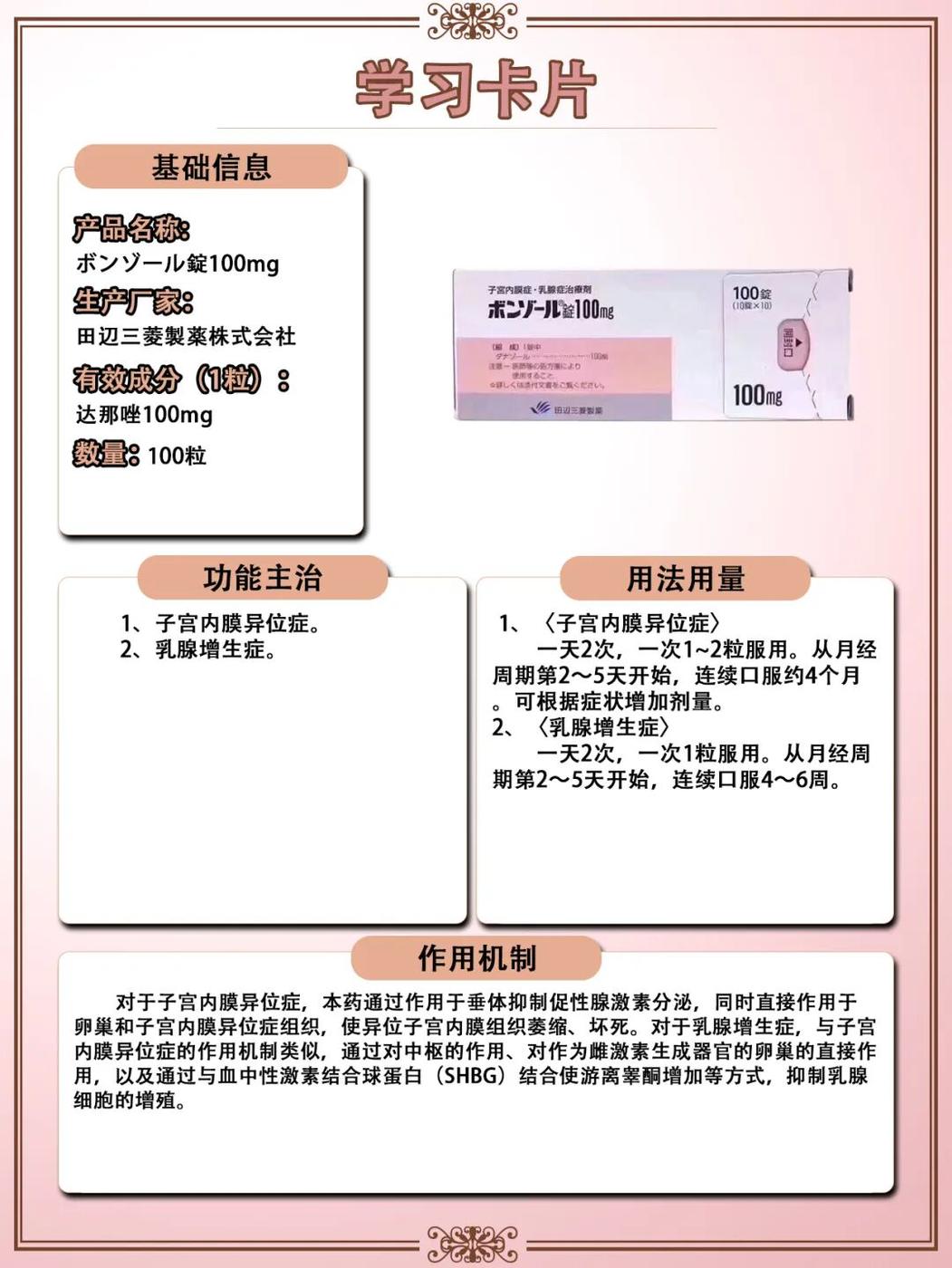
Feature Description For endometriosis, it acts on the pituitary gland to suppress gonadotropin secretion, while directly acting on the ovaries and endometriosis tissues to atrophy and necrosis ectopic endometrial tissue. For mastopathy, similar to endometriosis, it inhibits the proliferation of breast cells by acting on the central nervous system, direct action on the ovaries, which is the organ responsible for estrogen-producing cells, and increased free testosterone through binding to blood SHBG (sex hormone-binding globulin).
Section 2 · 02
English translation
100 pieces [10 pieces (PTP aluminum-plastic panels)×10 boards].
Section 3 · 03
English translation
Characteristics White, odorless, film-coated lock.
Section 4 · 04
English translation
Ingredient Information Active ingredient (per tablet): Nichiko Danazole 100mg. Additives: corn starch, carmerose, crocarmellose sodium, hydroxypropyl cellulose, magnesium stearate, hypromellose, titanium oxide, macrogol 6000.
Section 5 · 05
English translation
1. Endometriosis. 2. Mammary gland hyperplasia.
Section 6 · 06
English translation
Dosage and Administration 1. Endometriosis Typically, adults receive 200~400 mg of danazole divided into two doses and administered orally continuously for about four months starting from days 2~5 of the menstrual cycle. Increase in volume depending on symptoms. 2. 'Mastopathy' Typically, adults receive 200 mg of danazole divided into two doses, administered orally continuously for 4~6 weeks starting from days 2~5 of the menstrual cycle.
Section 7 · 07
English translation
Notes 1. When administering, carefully listen to medical and family history and take full consideration for the occurrence of thrombosis. When administering to patients with factors or complications that make thrombosis susceptible, it is desirable to perform a peripheral general blood test (platelet count, hematocrit value, etc.). 2. The risk of thrombosis is higher in the elderly, especially those over 40. In foreign countries, smoking increases the risk of serious side effects (such as thrombosis) from similar medications (oral contraceptives), and this risk is reported to increase with age and smoking amount. 3. Since administration may cause thrombosis, discontinue administration if symptoms such as lower limb pain or swelling, severe headache, vomiting, nausea, or dizziness occur. Also, inform patients in advance that if any abnormalities are detected, they should consult a doctor immediately. 4. When administering, pay attention to differentiation from similar diseases (malignant tumors, uterine fibroids, etc.), and discontinue administration if the mass enlarges during administration or clinical symptoms do not improve. 5. When administering this drug in mastopathy, avoid diagnosis before or during menstruation and confirm that symptoms (spontaneous pain, tenderness, masses/induration) are persistent. If symptoms disappear, discontinue administration. 6. It is advisable to conduct regular liver function tests. 7. There have been reports of liver tumors and liver purpura (hepatic periosis) occurring after long-term administration, so regular imaging diagnostics such as liver ultrasound examinations are recommended.
Section 8 · 08
English translation
Side Effects 1. Thrombosis (frequency unknown) Conditions such as cerebral infarction, pulmonary embolism, deep vein thrombosis, and retinal thrombosis may occur. 2. Myocardial infarction (frequency unknown) 3. Fulminant hepatitis (frequency unknown) 4. Liver tumors, liver purpura (liver periosis) (both frequency unknown) 5. Interstitial pneumonia (frequency unknown) 6. Other side effects (1) Liver: increased ALT (13.53%), increased LDH, increased AST, jaundice, increased ALP, increased γ-GTP. (2) Skin: acne (16.25%), rash, pigmentation, increased sebum secretion, hair loss, erythema (e.g., erythema multiforme), discharge, urticaria, petechiae, photosensitivity. (3) Masculinization: hoarseness, excessive hairs, clitoral hypertrophy. (4) Electrolyte metabolism: edema (10.31%), weight gain. (5) Uterus: Genital bleeding, increased vaginal discharge, amenorrhea. (6) Breasts: breast changes (breast reduction, nipple pain, etc.). (7) Blood: leukopenia, increased white blood cells, increased red blood cells, increased platelets, decreased platelets. (8) Digestive system: nausea, vomiting, stomach discomfort, stomach pain, constipation, increased appetite, diarrhea, loss of appetite, stomatitis, dry mouth. (9) Muscles: muscle pain, joint pain, numbness, stiff shoulders, muscle contractures, spasms, sensory abnormalities in the limbs, carpal tunnel syndrome, elevated CK. (10) Neuropsychiatric system: nervousness, headache, dizziness, fatigue, drowsiness, tinnitus, insomnia, mental anxiety, benign intracranial hypertension, depression. (11) Hypoestrogen symptoms: fever, itching, sweating, facial flushing, vaginitis, dryness. (12) Others: increased palpitations, eye fatigue, taste disturbances, decreased libido, increased libido, increased cholesterol, increased roll, impaired glucose tolerance, dizziness, elevated blood pressure.
Section 9 · 09
English translation
taboo 1. Patients with a history of thrombosis [There is a risk of thrombosis. ] 2. Patients with deficits or decreases in coagulation control factors such as antithrombin III, protein C, or protein S [may cause thrombosis. ] 3. Patients with severe liver injury or liver disease 4. Patients with severe heart disease [There is a risk of severe symptoms such as edema.] ] 5. Patients with severe kidney disease 6. Patients with porphyria [May worsen symptoms. ] 7. Patients with androgen-dependent tumors [may worsen symptoms]. ] 8. Patients with undiagnosed abnormal genital bleeding [such patients may be suspected of having malignant tumors. ] 9. Pregnant women or women who may be pregnant 10. Nursing Women
Section 10 · 10
English translation
Warning Since thrombosis may occur, administer with caution while closely observing the condition. If abnormalities are observed, immediately discontinue administration and take appropriate measures.

Source images

1 images

Need help sourcing Japanese medicines or OEM production?

💬