Cardiovascular · CARDIOVASCULAR

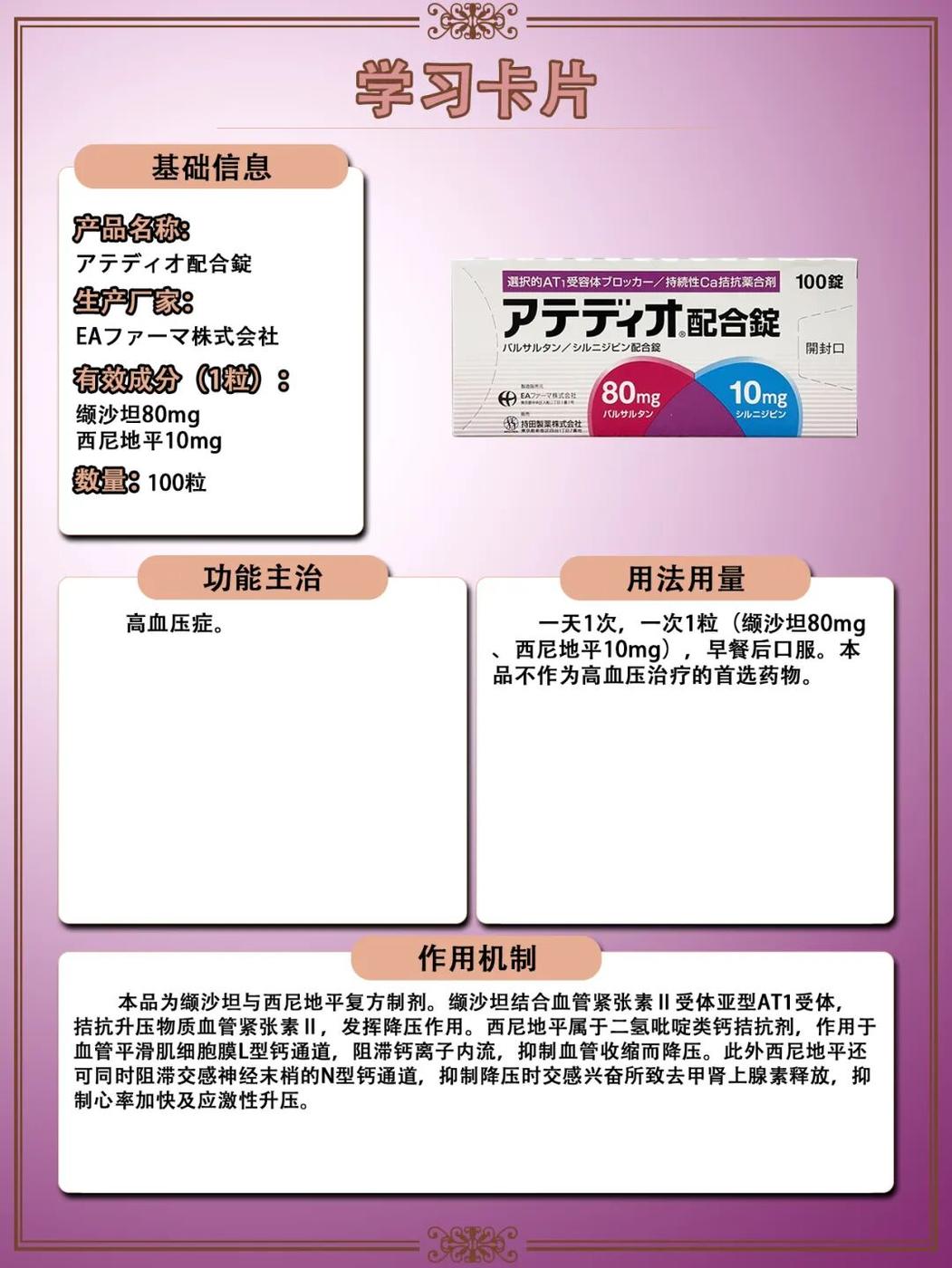
Valsartan + Cilnidipine

日本語原題:アテディオ配合錠

Published2026-10-30 09:40 FormTablet Content9 sections / 1 images
Ingredients / strength:
Each tablet contains 80mg of valsartan and 10mg of silnidipine.
English translation of the Japanese package insert is the main text; the Japanese original is shown alongside for verification. Use the language menu (top right) to read the page in another language. This site is for reference only — consult a doctor or pharmacist before use.
Section 1 · 01
English translation
Feature Description This drug is a combination of valsartan and silnidipine. Valsartan binds to the AT1 receptor, a subtype of angiotensin II receptor, and exerts antihypertensive effects by antagonizing angiotensin II, which acts as a baropressor system. Silnidipine is a dihydropyridine calcium channel blocker that acts on the L-type Ca channel of vascular smooth muscle cell membranes, blocking Ca2+ inflow and thereby suppressing vasoconstriction and exerting a blood pressure-lowering effect. Furthermore, silnidipine simultaneously blocks N-type Ca channels at the terminals of the sympathetic nervous system, thereby suppressing the release of noradrenaline triggered by sympathetic nerve excitation during blood pressure reduction, thereby suppressing elevated heart rate and stress-induced hypertensor.
Section 2 · 02
English translation
100 tablets (PTP packaging, 10 tablets× 10).
Section 3 · 03
English translation
Characteristics A pale yellow oval film-coated lock.
Section 4 · 04
English translation
Notes Active ingredients: 80mg of valsartan and 10mg of silnidipine per tablet. Additives: magnesium aluminate metasilicate, crystalline cellulose, lactose hydrate, macrogol 400, crocarmellose sodium, hydroxypropyl cellulose, hypromellose phthalate, hydrated silicon dioxide, magnesium stearate, hypromellose, macrogol 6000, titanium oxide, yellow ferric dioxide, carnauba wax.
Section 5 · 05
English translation
Hypertension.
Section 6 · 06
English translation
Dosage and Administration For adults, one tablet is administered orally once daily (80mg as valsartan and 10mg as silnidipine) after breakfast. This drug is not used as the first-line drug for hypertension treatment.
Section 7 · 07
English translation
Notes 1. This drug is a combination of valsartan 80mg and silnidipine 10mg, and since side effects may occur from both valsartan and silnidipine, appropriate use should be considered. 2. There have been reports of severe liver damage such as hepatitis occurring during administration of angiotensin II receptor antagonists containing valsartan (an active ingredient in this drug), so liver function tests and other monitoring should be conducted carefully. 3. It is desirable not to administer the drug for 24 hours before surgery. Patients receiving angiotensin II receptor antagonists may develop hypotension due to the inhibitory effects of the renin-angiotensin system during anesthesia and surgery. 4. Dizziness and unsteadiness caused by blood pressure-lowering may occur, so exercise caution when operating dangerous machinery such as working at heights or driving a car. 5. There have been reported cases where symptoms worsened when the administration of calcium channel blockers containing silnidipine, an active ingredient of this drug, was suddenly discontinued. If discontinuation of this drug is necessary, take measures such as switching to another drug. Also, patients should be careful not to stop taking medication without a doctor's guidance.
Section 8 · 08
English translation
Side Effects 1. Angioedema (frequency unknown) Symptoms may include swelling of the face, lips, pharynx, or tongue. Additionally, intestinal angioedema accompanied by abdominal pain, nausea, vomiting, and diarrhea may also occur. 2. Hepatitis, liver dysfunction, jaundice (all of unknown frequency) Liver dysfunction accompanied by elevated AST, ALT, and γ-GTP may occur. 3. Renal failure (frequency unknown) 4. Hyperkalemia (frequency unknown) 5. Shock, fainting, loss of consciousness (frequency unknown) If symptoms such as coldness, vomiting, or loss of consciousness appear, take appropriate treatment immediately. 6. Agranulocytosis, leukopenia, thrombocytopenia (frequency unknown) 7. Interstitial pneumonia (frequency unknown) Interstitial pneumonia accompanied by fever, cough, difficulty breathing, abnormal chest X-ray, and other symptoms may occur; in such cases, discontinue administration and take appropriate measures such as adrenal corticosteroids. 8. Hypoglycemia (frequency unknown) If weakness, hunger, cold sweats, hand tremors, decreased concentration, convulsions, or impaired consciousness appear, discontinue administration and provide appropriate treatment. It is more likely to appear in patients undergoing diabetes treatment. 9. Rhabdomyolysis (frequency unknown) Rhabdomyolysis, characterized by muscle pain, weakness, increased CK (high respiratory cancer score), and elevated myoglobin in blood and urine, may occur; in such cases, administration should be discontinued immediately and appropriate treatment taken. 10. Toxic epidermal necrolysis (TEN), Stevens-Johnson syndrome, erythema multiforme (all unknown frequency) 11. Pemphigus, Pemphigoid (both with unknown frequency) If blisters, erosions, or other lesions appear, consult a dermatologist. 12. Other side effects (1) Liver: abnormal liver function, increased ALT, increased AST, increased Al-P, increased γ-GTP, increased LDH, increased bilirubin. (2) Kidneys: hyperuricemia, increased urea nitrogen, positive urine protein, increased creatinine, decreased uric acid levels, positive urine sediment. (3) Nervous system: headache, dizziness, heaviness in the head, lightheadedness, drowsiness, insomnia, finger tremors, forgetfulness, numbness. (4) Cardiovascular system: facial flushing, palpitations, hypotension, sensation of heat and cold, chest pain, increased cardiothoracic ratio, tachycardia, ECG abnormalities (ST reduction, T wave inversion), atrioventricular block, premature contractions, atrial fibrillation, bradycardia. (5) Digestive system: constipation, abdominal discomfort, heartburn, nausea, vomiting, abdominal pain, diarrhea, loss of appetite, dry mouth, gum thickening. (6) Hypersensitivity: rash, redness, itching, photosensitivity. (7) Blood: increased white blood cell count, increased eosinophil count, anemia, decreased eosinophils, neutrophil count variability, lymphocyte count variability, hemoglobin variability, red blood cell count variability, hematocrit variability. (8) Respiratory: cough, pharyngitis. (9) Electrolytes: increased blood K, decreased blood K, decreased blood Ca, increased blood P, increased blood Ca, decreased blood P, hyponatremia. (10) Musculoskeletal system: stiff shoulders, muscle pain, lower back pain, joint pain, gastrocnemius muscle spasms (cramps). (11) Others: hyperlipidemia (increased blood cholesterol, triglycerides), increased CK, decreased CK, elevated blood glucose, frequent urination, edema (face, lower limbs, etc.), weakness, fatigue, fatigue, taste disturbances, eye redness and irritation, dryness around the eyes, fever, tinnitus, positive urine glucose, fluctuations in total protein, and CRP fluctuations.
Section 9 · 09
English translation
taboo 1. Patients with a history of hypersensitivity to any component of this drug 2. Pregnant women or women who may be pregnant 3. Diabetic patients receiving aliskilene fumarate (excluding patients whose blood pressure control remains severely poor despite other antihypertensive treatments)

Source images

1 images

Need help sourcing Japanese medicines or OEM production?

💬