Japanese constipation water
日本語原題:ラキソベロン内用液0.75%
Active ingredient: Nippon Bureau picosulphate sodium hydrate 7.5mg/mL. Additives: methyl palaoxybenzoate, sodium hydroxide, D-sorbitol hydrochloride.
Source images
6 imagesThe artwork keeps its original Japanese/Chinese lettering. Open “Text in this image” under a picture to read what it says in your language (machine-read, may contain errors).
Text in this image machine-read · may contain errors
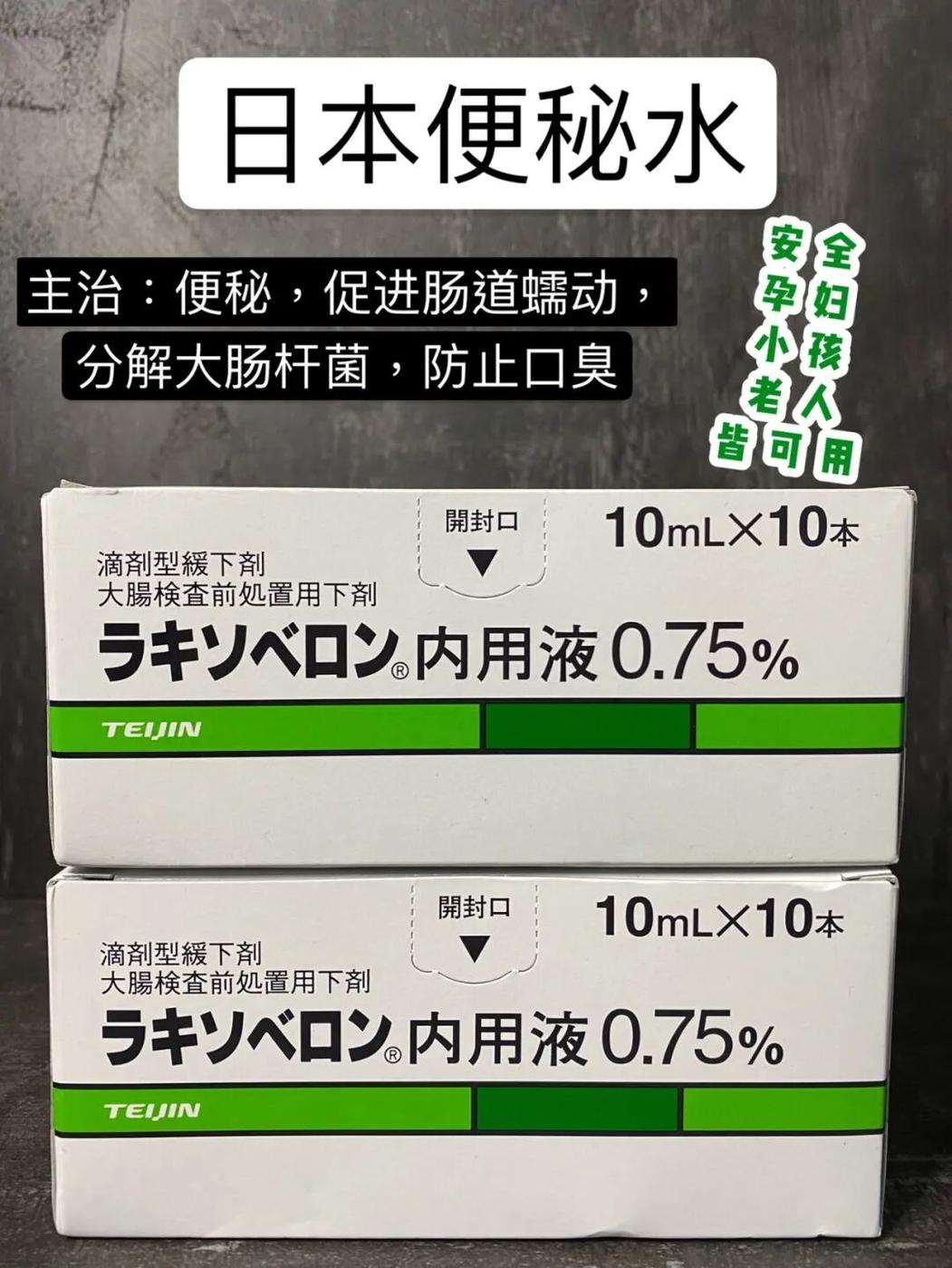
Japanese constipation water and to secure the pregnancy of a small child Indications: constipation, promotes intestinal peristalsis, Breaks down E. coli and prevents bad breath 10mL × 10 bottles Used as a pre-colon examination Laxoberon Oral Solution 075% TEJIN A laxative for pre-examination treatment
日本便秘水 安孕小者 主治:便秘,促进肠道蠕动, 分解大肠杆菌,防止口臭 10mL×10本 大腸查前処置用下 ラキソべロン内用液 075 % TEJIN 大查前処置用下劑
Japanese constipation water and to secure the pregnancy of a small child Indications: constipation, promotes intestinal peristalsis, Breaks down E. coli and prevents bad breath 10mL × 10 bot…
Text in this image machine-read · may contain errors
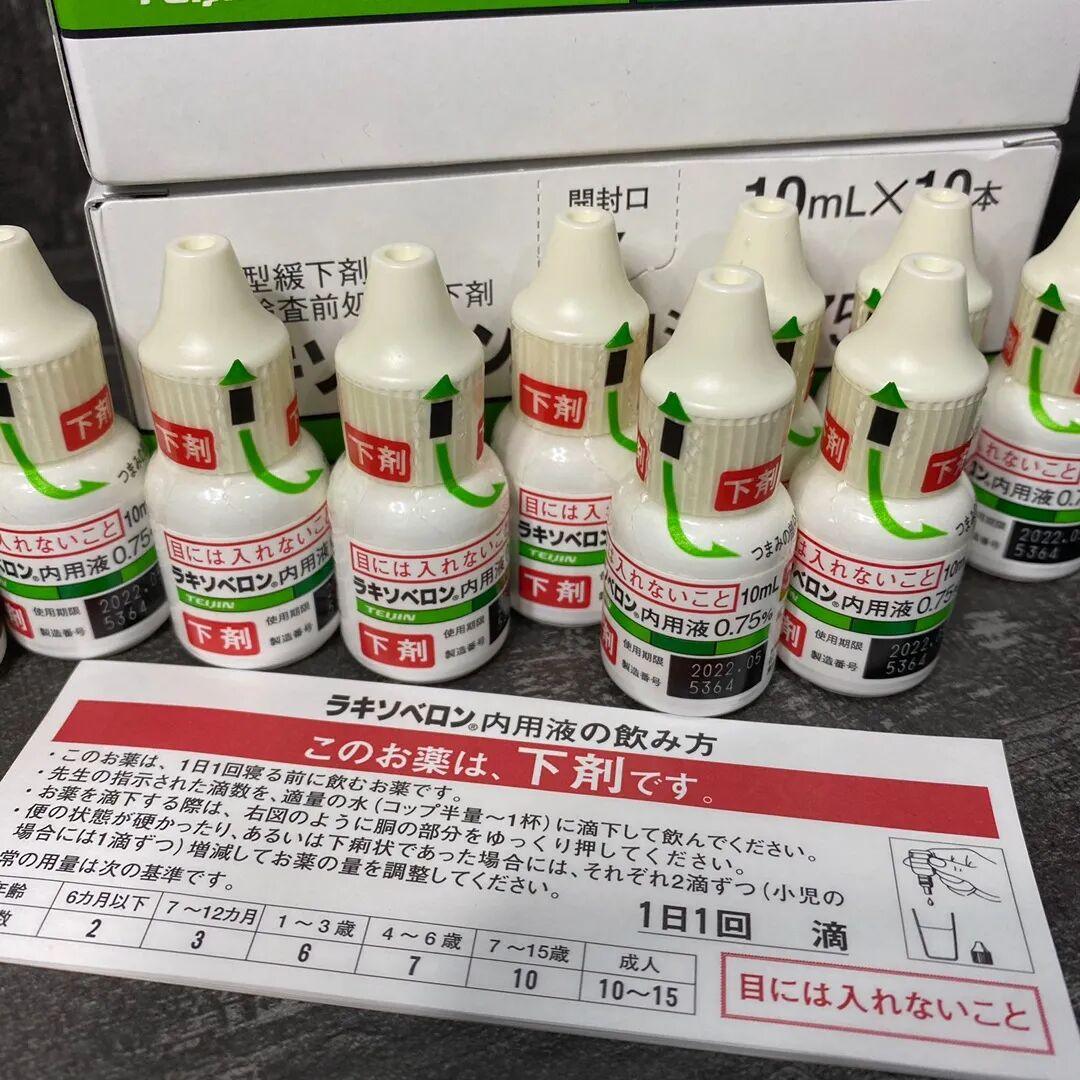
Expiration Date How to take the oral solution Teacher: Drop the number of fingers, appropriate amount of water, half a cup) to drink. Pressing the right part of the drop. The basis for the dosage description is as follows. 6 power months or less: 7~12 power months Once a day 7~15 Things must not be in the eye 10~15
使用期限 内用液の饮方 先生指滴数,適量の水半量杯)滴下飮。 滴右のの部分押。 常の用量述次の基。 6力月以下7~12力月 1日1回 7~15 目には入れないこと 10~15
Expiration Date How to take the oral solution Teacher: Drop the number of fingers, appropriate amount of water, half a cup) to drink. Pressing the right part of the drop. The basis for the d…
Text in this image machine-read · may contain errors
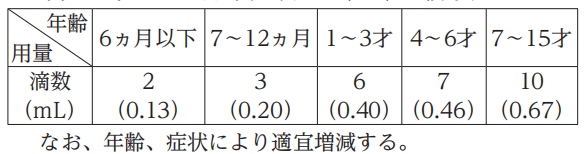
Below 6 months 1~3 inches, 4~6 inches 7~15 inches (mL) (0.20) (0.13) (0.40) (0.46) (0.67) Adjust symptoms appropriately.
6力月以下 1~3寸4~6寸 7~15寸 (mL) (0.20) (0.13) (0.40) (0.46) (0.67) 症状適宜增减。
Below 6 months 1~3 inches, 4~6 inches 7~15 inches (mL) (0.20) (0.13) (0.40) (0.46) (0.67) Adjust symptoms appropriately.…
Text in this image machine-read · may contain errors
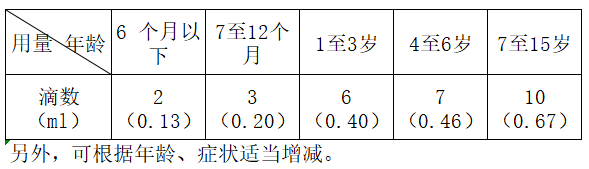
7 to 12 pieces Ages 1 to 3 Ages 4 to 6 (ml) (0. 13) (0. 20) (0. 40) (0.46) (0. 67) Additionally, depending on age, Adjust symptoms appropriately.
7至12个 1至3岁 4至6岁 (ml) (0. 13) (0. 20) (0. 40) (0.46) (0. 67) 另外,可根据年龄、 症状适当增减。
7 to 12 pieces Ages 1 to 3 Ages 4 to 6 (ml) (0. 13) (0. 20) (0. 40) (0.46) (0. 67) Additionally, depending on age, Adjust symptoms appropriately.…
Text in this image machine-read · may contain errors
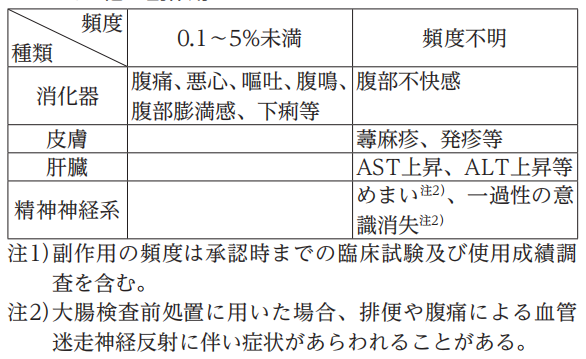
The degree is unknown. 0.1~5% Not yet Abdominal pain, heart discomfort, vomiting, abdominal discomfort digestive system Abdominal bloating, epilepsy, etc. AST Superior Isolation, ALT Upper Isolation Note: Note 2) Meaning of one-containment Spiritual and Spiritual Interpretation Consciousness disappears, note 2) Note 1: Recovery of side effects: Examination and usage conditions at the time Note 2) Pre-colon examination: Occasions for pre-colon examination, abdominal pain during defecation, and upper blood vessels Symptoms may appear in response to vagal nerve reflexes.
度不明 0.1~5%未 腹痛、惠心、吐、腹、腹部不快感 消化器 腹部膨满感、下痫等 AST上异、ALT上异等 主)注2)、一遏性の意 精神神释系 識消失注2) 注1副作用の度过承懿時下の蕴床試及使用成調 注2)大腸查前处置用場合、排便节腹痛上血管 迷走神経反射に伴い症状があらわれることがある。
The degree is unknown. 0.1~5% Not yet Abdominal pain, heart discomfort, vomiting, abdominal discomfort digestive system Abdominal bloating, epilepsy, etc. AST Superior Isolation, ALT Upper I…
Text in this image machine-read · may contain errors
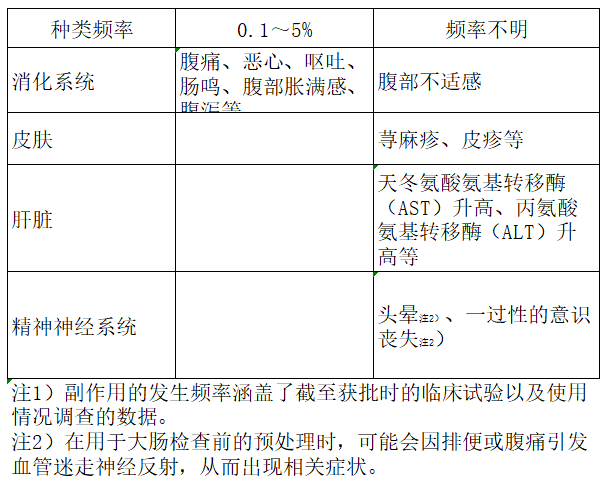
Type frequency Frequency unknown 0. 1 ~5% Abdominal pain and nausea. Vomiting Digestive system Abdominal discomfort intestinal rumbling, abdominal bloating, Measles, rashes, etc (AST) elevated. Alanine Base transfer (AIT) elevation Awareness of transgression Psychiatric nervous system Note 1) The frequency of adverse events covers clinical trials and use up to the time of approval Survey data: Note 2) When used as pretreatment before colon examination, it may cause defecation or abdominal pain Vagal nerve reflex, resulting in related symptoms:
种类频率 频率不明 0. 1 ~5% 腹痛、恶心。呕吐 消化系统 腹部不适感 肠鸣、腹部胀满感、 尊麻疹、皮疹等 (AST)升高。丙氨酸 基转移(AIT)升 过性的意识 精神神经系统 注1)副作用的发生频率涵盖了截至获批时的临床试验以及使用 情况调查的数据: 注2)在用于大肠检查前的预处理时,可能会固排便或腹痛引发 血管迷走神经反射,从而出现相关症状:
Type frequency Frequency unknown 0. 1 ~5% Abdominal pain and nausea. Vomiting Digestive system Abdominal discomfort intestinal rumbling, abdominal bloating, Measles, rashes, etc (AST) elevat…