Mecobalamin
日本語原題:渐冻症
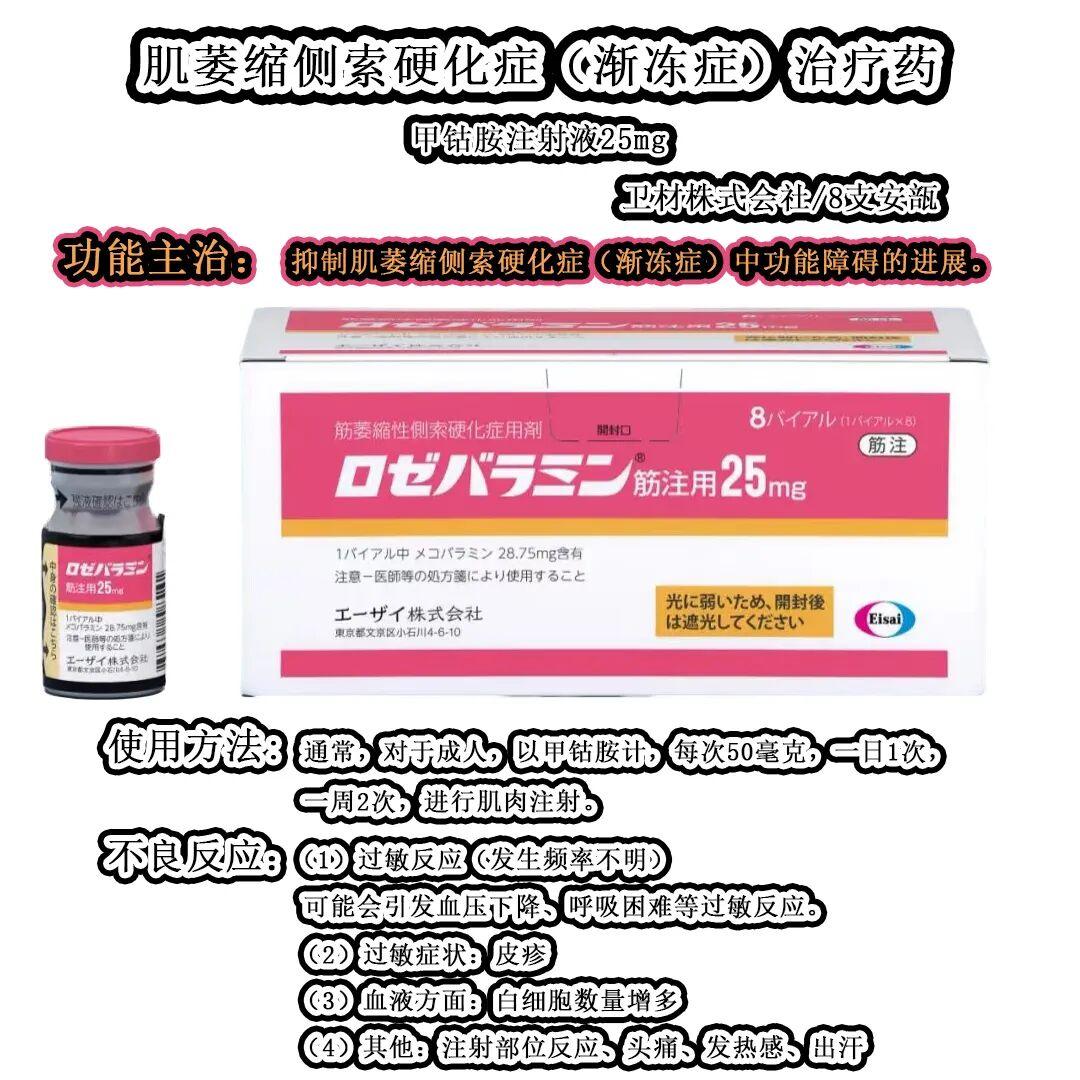
Active ingredient (per vial): Mecobalamin 28.75 mg. Additives: lactose hydrate 143.75 mg, sodium dihydrogen phosphate hydrate 4.485 mg, appropriate amount of sodium hydroxide.
Source images
2 imagesThe artwork keeps its original Japanese/Chinese lettering. Open “Text in this image” under a picture to read what it says in your language (machine-read, may contain errors).
Text in this image machine-read · may contain errors
ALS Treatment Medications Amyotrophic Lateral Sclerosis Methyldrillamine Injection 25mg Eisai Co., Ltd. / 8-Pack Ampoule Indications Progression of dysfunction Inhibition of amyotrophic lateral sclerosis (ALS) Agents for Box-type Lateral Sclerosis For intramuscular injection 1 Vial of Mecobalamin 2875N1g Kiji Caution – Use only under a doctor's prescription Koichi Corporation Please do it. 4-6-10 Koishikawa, Bunkyo-ku, Tokyo Usage Method 8 Usually for adults 50 mg each time, Intramuscular injections are performed. Adverse Reactions: (Frequency unknown) Allergic reactions such as difficulty breathing. May cause blood pressure to drop Increased white blood cell count Headache, fever, sensation, and sweating Injection Site Reactions 5 (4)
渐冻症治疗药 肌萎缩侧索硬化症 甲钻胺注射液25mg 卫材株式会社/8支安瓶 功能主治 中功能障碍的进展 抑制肌萎缩侧索硬化症 (渐冻症) 筋萎箱性侧索硬化症用剂 筋注用 1 バイアル中メコバラミン 2875n1g き自 注意ー医師等の処方箋により使用すること 工一十株式会社 してくたさい 東京都文京区小石川4-6-10 使用方法8 通常对于成人 每次50毫克, 进行肌肉注射。 不良反应: (发生频率不明) 呼吸困难等过敏反应。 可能会引发血压下降 白细胞数量增多 头痛发热感出汗 注射部位反应5 (4)
ALS Treatment Medications Amyotrophic Lateral Sclerosis Methyldrillamine Injection 25mg Eisai Co., Ltd. / 8-Pack Ampoule Indications Progression of dysfunction Inhibition of amyotrophic late…
Text in this image machine-read · may contain errors
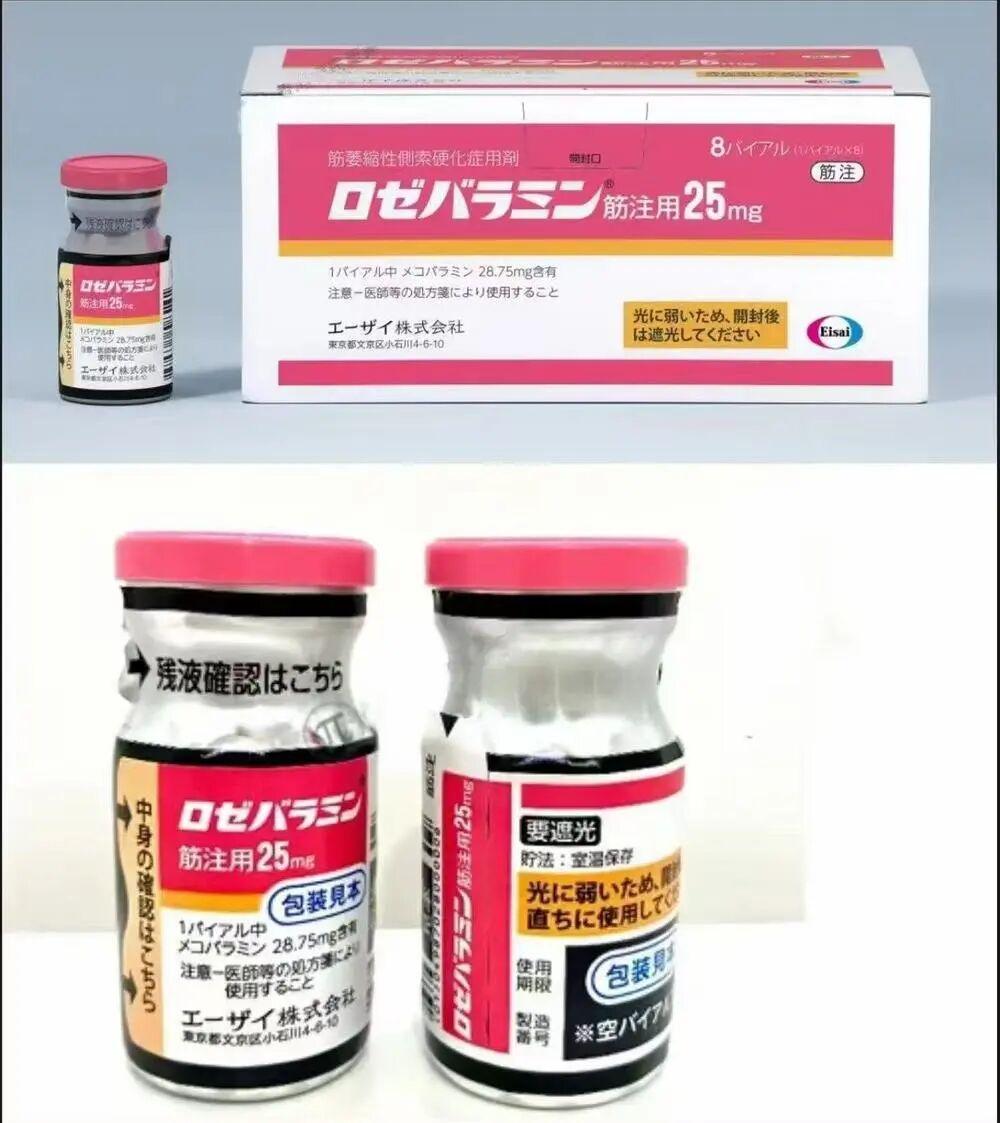
For intramuscular injection 1 vial contains 2,875 mecobabmin Caution – Use preferentially according to a doctor's prescription. Koichi Nikan Co., Ltd. Please Eisai 4-6-10 Koishikawa, Bunkyo-ku, Raikyo-bu Construction Permit Here 25mg for intramuscular injection Good method: Room temperature recommendation Packaging Samples
筋注用 1 バイアル中メコバブミン 2875 名含有 注意ー医師等の処方箋によリ優用すること 工一廿株式会社 してください Eisai 莱京部文京区小石川4-6-10 建認はこちら 筋注用25mg 好法:室温保荐 包装見本
For intramuscular injection 1 vial contains 2,875 mecobabmin Caution – Use preferentially according to a doctor's prescription. Koichi Nikan Co., Ltd. Please Eisai 4-6-10 Koishikawa, Bunkyo-…