Respiratory · RESPIRATORY

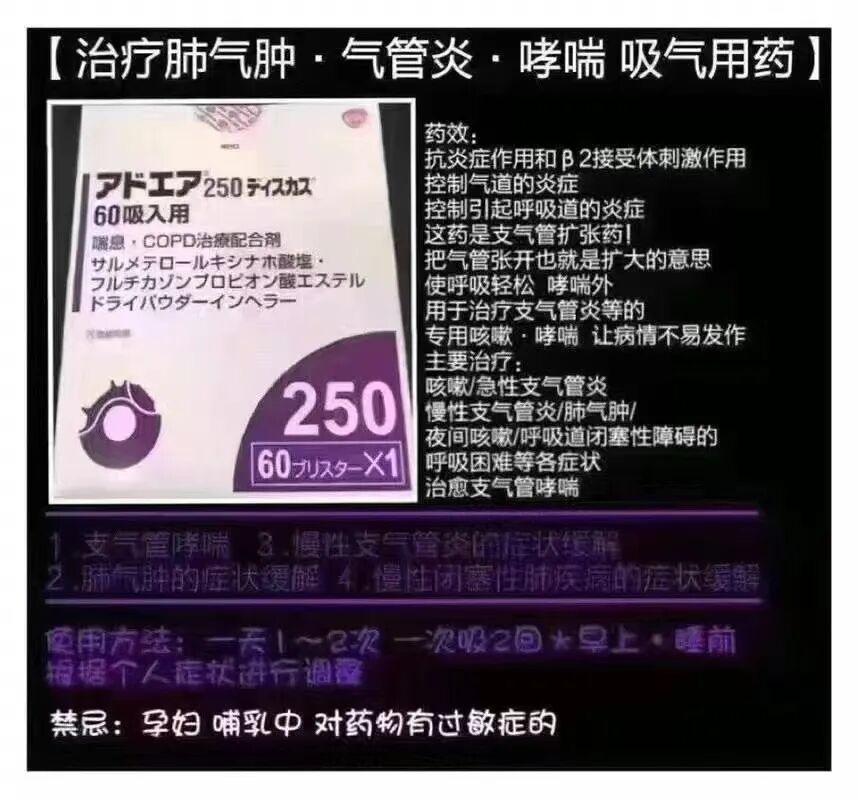
Salmeterol fumarate + fluticasone propionate

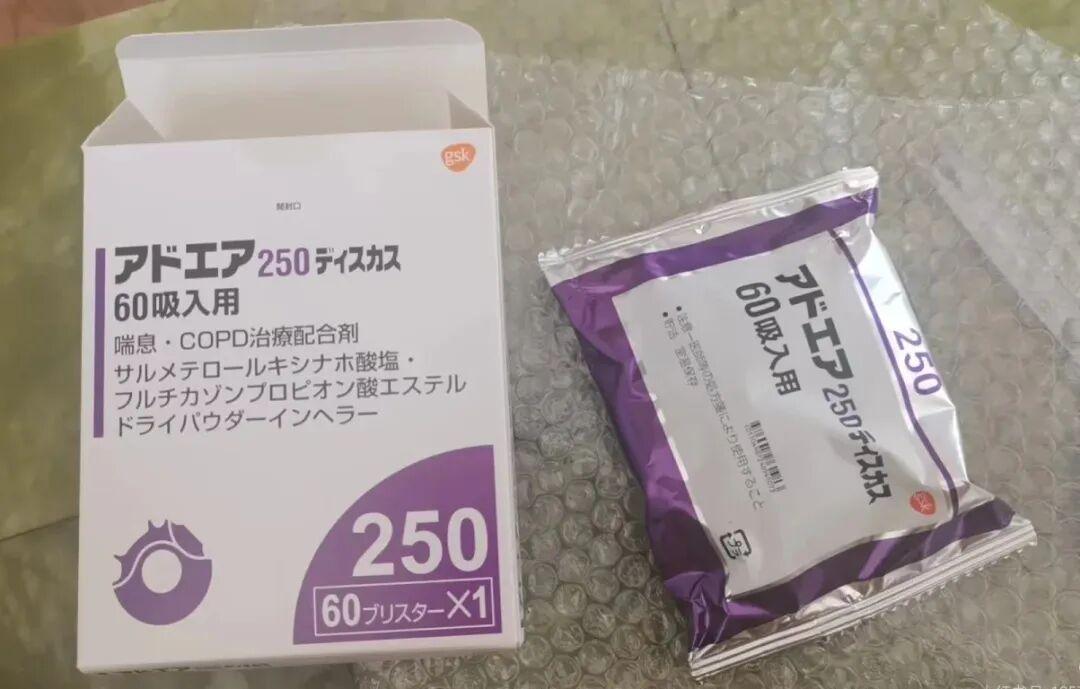
日本語原題:アドエア250ディスカス60吸入用

Published2025-05-10 09:39 Content9 sections / 2 images
Ingredients / strength:
Active ingredients: 1 blister contains sulfetherol, xinaphoate, 72.5 μg (50 μg as salmeterol), 250 μg effluticasone, propionate. Additives: lactose hydrate (contains milk protein as an admixture).
English translation of the Japanese package insert is the main text; the Japanese original is shown alongside for verification. Use the language menu (top right) to read the page in another language. This site is for reference only — consult a doctor or pharmacist before use.
Section 1 · Feature description
English translation
Sulfetherol xinaphoate is a long-acting β2 agonist that activates adenylate cyclase and increases cyclic adenosine monophosphate within cells, thereby relaxing bronchial smooth muscle. Fluticasone propionate ester is a synthetic adrenocorticosteroid that exerts anti-asthma and anti-inflammatory effects by stimulating glucocorticoid receptors.
Section 2 · Specifications
English translation
60 Blister × 1.
Section 3 · Characteristics
English translation
White inhalation powder.
Section 4 · Ingredient Description
English translation
Active ingredients: 1 blister contains sulfetherol, xinaphoate, 72.5 μg (50 μg as salmeterol), 250 μg effluticasone, propionate. Additives: lactose hydrate (contains milk protein as an admixture).
Section 5 · Functions and indications
English translation
1. Bronchial asthma (when combination of inhaled steroids and long-acting inhaled β2 stimulants is required) 2. Relief of various symptoms of chronic obstructive pulmonary disease (chronic bronchitis and emphysema) (when combined use of inhaled steroids and long-acting inhaled β2 agonists is necessary)
Section 6 · Usage and dosage
English translation
1. 〈Bronchial Asthma〉 Take 50 μg of salmeterol and 250 μg of fluticasone propionate twice daily inhaled once per dose. 2. Relief of various symptoms of chronic obstructive pulmonary disease (chronic bronchitis, emphysema)) For adults, inhale 50 μg of salmeterol once and 250 μg of fluticasone propionate twice daily, one inhalation per dose.
Section 7 · Important notes
English translation
〈Common Effects〉 1. This drug is not intended to rapidly reduce existing bronchial asthma attacks or exacerbations of chronic obstructive pulmonary disease, so use it regularly every day. 2. If used excessively, the β1 effect of sulferol may cause arrhythmia or, in some cases, cardiac arrest, so be careful not to overuse it. Inform patients, guardians, or suitable individuals about the risks of overuse and caution against administering more than twice daily (the bronchodilator effect of sulferol xinaphoate usually lasts 12 hours, so do not administer the next dose during this period). 3. For acute attacks of bronchial asthma or acute exacerbations of chronic obstructive pulmonary disease that occur during the administration period, instruct patients, guardians, or suitable substitutes to use other appropriate drugs such as short-acting inhaled β2 atimulators (e.g., inhaled salbutamol sulfate). Also, if the amount of medication used increases or its effectiveness becomes insufficient, disease management may be inadequate. Therefore, caution patients, guardians, or suitable substitutes to promptly seek medical treatment and seek medical attention. ] 4. If symptoms of asthma and chronic obstructive pulmonary disease with infection worsen, consider strengthening steroid therapy and treating the infection. 5. Sudden discontinuation of this drug may cause rapid worsening of asthma; therefore, if discontinuing, gradually reduce the dose while monitoring the patient's asthma symptoms. Furthermore, even in patients with chronic obstructive pulmonary disease, symptoms may worsen after discontinuation, so close observation is essential. 6. Although less likely compared to systemic steroids, administration of inhaled steroids may cause systemic effects (including Cushing's syndrome, Cushing-like symptoms, adrenal cortex suppression, growth retardation in children, decreased bone density, cataracts, glaucoma, and central serous reticoroidosis). Especially for long-term or high-dose administration, regular examinations should be performed, and if systemic effects are observed, appropriate treatment should be taken while observing the patient's symptoms. 7. Dose reduction of systemic steroids should be carried out gradually after starting this drug and stabilizing symptoms. Weight loss follows the general steroid weight loss method. 8. With the reduction and withdrawal of systemic steroids, symptoms such as rhinitis, eczema, urticaria, dizziness, palpitations, fatigue, facial flushing, and conjunctivitis may appear or worsen. If such symptoms appear, appropriate treatment should be taken. 9. Pneumonia has been reported in domestic and international clinical trials targeting patients with chronic obstructive pulmonary disease. Exercise caution when administering this drug to patients generally considered to have a high risk of developing pneumonia. 〈Bronchial Asthma〉 1. During the treatment period of this drug, if the use of short-acting inhaled β2 agonists (such as inhaled salbutamol sulfate) increases or their effectiveness becomes insufficient, the patient's life may be at risk. Therefore, consider strengthening steroid therapy (such as switching to a higher-dose formulation of this drug) according to the patient's symptoms. 2. After administration of inhaled steroids including this drug, eosinophilia commonly seen in the underlying disease of eosinophilic polyangiitis granulomatosis may occasionally occur. This symptom typically appears with the reduction and withdrawal of systemic steroids, and no direct causal relationship with this drug has been established. During the administration period, pay attention to eosinophil count trends and other symptoms of eosinophilic polyangiitis granulomatosis (such as numbness, fever, joint pain, vasculitis symptoms such as lung invasion). 3. Since the optimal dosage must be selected according to the patient's asthma symptoms, patients should be regularly monitored during the administration period. 4. Since systemic effects may occur with the administration of inhaled steroids, adjust the dosage of inhaled steroids to the lowest dose for each patient to control asthma. [ 〈Relief of various symptoms of chronic obstructive pulmonary disease (chronic bronchitis and emphysema)〉 Since pneumonia and chronic obstructive pulmonary disease exacerbations can present with common clinical symptoms, if exacerbation of chronic obstructive pulmonary disease is suspected, it is important to carefully consider the possibility of pneumonia and take appropriate measures.
Section 8 · Side effects
English translation
1. Shock, anaphylaxis (both with unknown frequency) Shock and anaphylaxis (difficulty breathing, bronchospasm, generalized flushing, angioedema, urticaria, etc.) may occur. 2. Severe serum potassium hypocytosis (frequency unknown) It may be enhanced by combining xanthine derivatives, steroids, and diuretics, so it requires special caution in patients with severe asthma. 3. Pneumonia (3.3%) Note) Note: Frequency in a 52-week domestic clinical trial using Adair 500 Discus in patients with chronic obstructive pulmonary disease. 4. Allergies Rash, urticaria, facial edema, oropharyngeal edema. 5. Oral and respiratory systems Oral and respiratory candidiasis, hoarseness, oral and throat irritation (discomfort, pain, discomfort, etc.), infections, taste disturbances, choking, coughing, dry mouth, bronchospasm. 6. Circulator Palpitations, increased blood pressure, arrhythmias (including atrial fibrillation, supraventricular tachycardia, and premature contractions), and increased pulse. 7. Mental and Nervous System Headaches, tremors, sleep disturbances, anxiety, irritability, aggression. 8. Digestive system Nausea, abdominal pain, esophageal candidiasis. 9. Others Muscle spasms, joint pain, edema, high blood sugar, rhinitis, chest pain, skin bruises (subcutaneous bleeding, etc.).
Section 9 · Taboo
English translation
1. Patients with infections or deep mycosis for whom effective antimicrobial agents are not available [symptoms may worsen due to steroid action]. 2. Patients with a history of hypersensitivity to any component of this drug.

Source images

2 images

Need help sourcing Japanese medicines or OEM production?

💬