Vonoprazan
日本語原題:タケキャブ錠20mg
Each tablet contains 26.72mg of Bonoprazan fumarate (20mg as Bonoprazan).
Source images
2 imagesThe artwork keeps its original Japanese/Chinese lettering. Open “Text in this image” under a picture to read what it says in your language (machine-read, may contain errors).
Text in this image machine-read · may contain errors
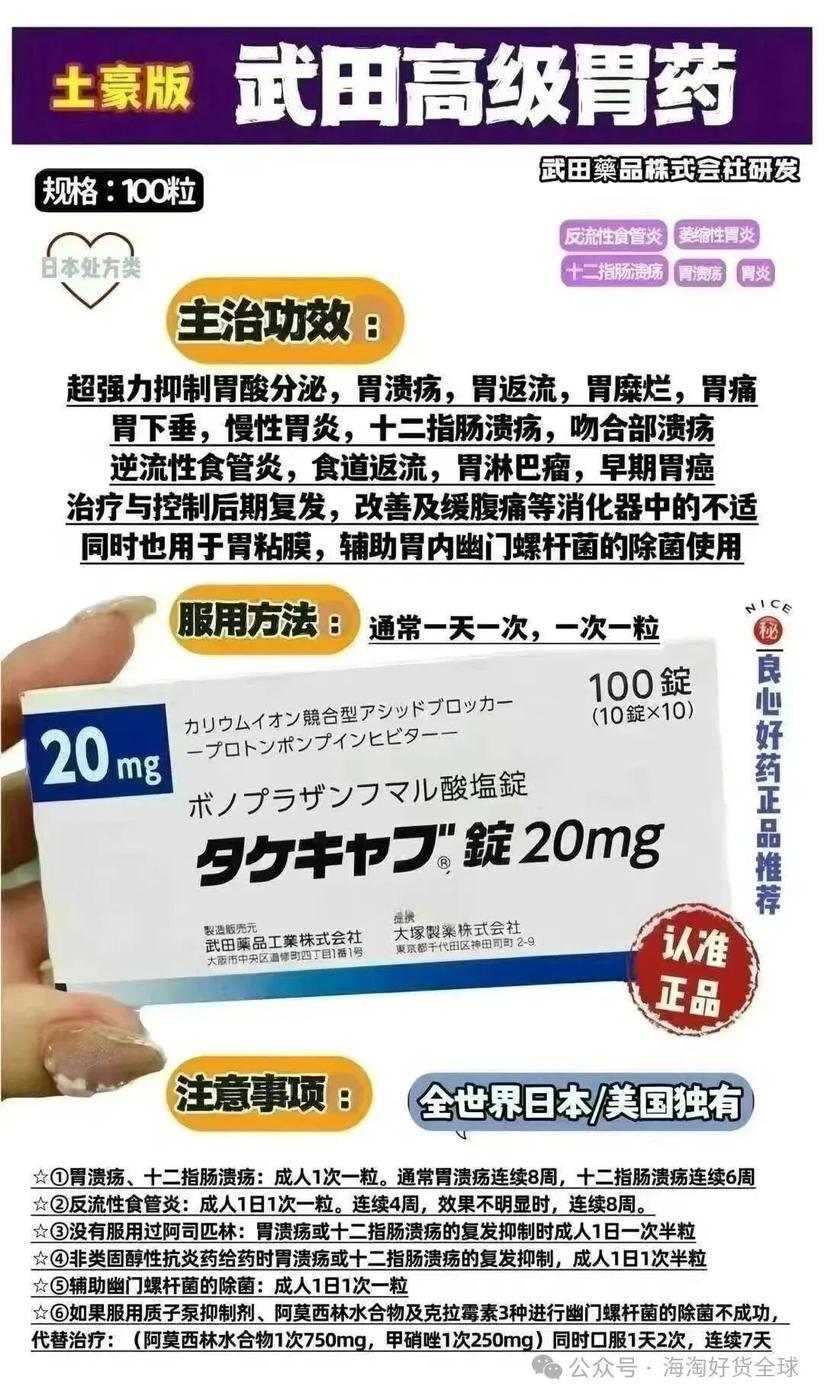
Takeda advanced stomach medicine Tycoon version Developed by Takeda Pharmaceutical Co., Ltd Specification: 100 capsules Reflux esophagitis White is classified as prescription text Duodenal ulcer Main therapeutic effects Extremely powerful inhibition of gastric acid secretion, gastric ulcers, gastric reflux, gastric erosion, and stomach pain Gastroptosis, chronic gastritis, duodenal ulcer, anastomotic ulcer Reflux esophagitis, esophageal reflux, gastric lymphoma, early gastric cancer Treatment and control of late recurrence, improvement and relief of digestive discomfort such as abdominal pain It is also used for the gastric mucosa to assist in the sterilization of Helicobacter pylori in the stomach Directions for administration: Usually once a day, one capsule at a time Genuine and reliable medicine recommended ープロトンポンプインヒビター Potassium ion competitive acid proker Bonobrazan fumarate tablets Takucap tablets 20mg Takeda Vegetable Works Co., Ltd 2-9 Kanda Tsukasama, Chiyoda-ku, Tokyo Notes: Exclusive to Japan/the United States worldwide ★ (1) Gastric ulcer, duodenal ulcer: one capsule per dose for adults. Typically, gastric ulcers last 8 consecutive weeks, and duodenal ulcers last 6 weeks ☆(2) Reflux esophagitis: adults take one tablet once daily. Continuously for 4 weeks; if the effect is not obvious, continue for 8 weeks. ★ (3) No prior aspirin use: For recurrence suppression of gastric or duodenal ulcers, adults take half a capsule once daily ★ (4) Suppress recurrence of gastric or duodenal ulcers during NSAIDs; adults take half a pill once daily ★ (3) Assist in Helicobacter pylori eradication: adults take one tablet once daily ☆(3) If taking proton pump inhibitors, amoxicillin hydrate, and clarithromycin to eradicate Helicobacter pylori fails, Alternative treatment: (Amoxicillin hydrate 750mg once, metronidazole 250mg once) taken orally twice daily for 7 consecutive days Official Account · Overseas Shopping Worldwide
武田高级胃药 土豪版 武田藥品株式会社研发 规格:100粒 反流性食管炎 白本处方类 十二指肠溃疡 主治功效 超强力抑制胃酸分泌,胃溃疡,胃返流,胃糜烂,胃痛 胃下垂,慢性胃炎,十二指肠溃疡,吻合部溃疡 逆流性食管炎,食道返流,胃淋巴瘤,早期胃癌 治疗与控制后期复发,改善及缓腹痛等消化器中的不适 同时也用于胃粘膜,辅助胃内幽门螺杆菌的除菌使用 服用方法: 通常一天一次,一次一粒 良心好药正品推荐 ープロトンポンプインヒビター カリウムイオン競合型アシッドプロッカー ボノブラザンフマル酸塩錠 タクキャプ錠 20mg 武田菜品工葉株式会社 东京都千代田区神田司间2-9 注意事项: 全世界日本/美国独有 ★①胃溃疡、十二指肠溃疡:成人1次一粒。通常胃溃疡连续8周,十二指肠溃疡连续6周 ☆②反流性食管炎:成人1日1次一粒。连续4周,效果不明显时,连续8周。 ★③没有服用过阿司匹林:胃溃疡或十二指肠溃疡的复发抑制时成人1日一次半粒 ★④非类固醇性抗炎药给药时胃溃疡或十二指肠溃疡的复发抑制,成人1日1次半粒 ★③辅助幽门螺杆菌的除菌:成人1日1次一粒 ☆③如果服用质子泵抑制剂、阿莫西林水合物及克拉霉素3种进行幽门螺杆菌的除菌不成功, 代替治疗:(阿莫西林水合物1次750mg,甲硝唑1次250mg)同时口服1天2次,连续7天 公众号·海淘好货全球
Takeda advanced stomach medicine Tycoon version Developed by Takeda Pharmaceutical Co., Ltd Specification: 100 capsules Reflux esophagitis White is classified as prescription text Duodenal u…
Text in this image machine-read · may contain errors
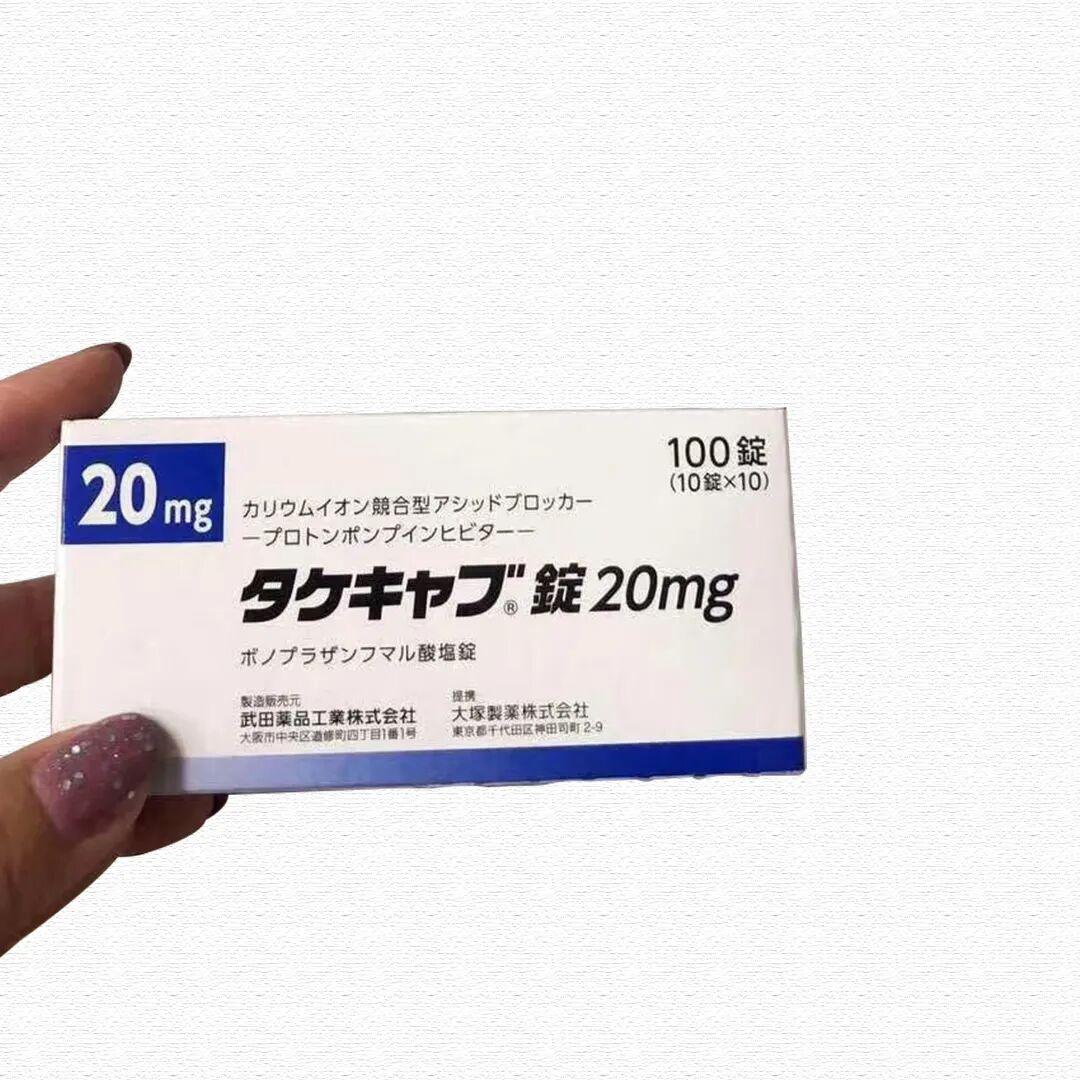
(10 ingots×10) Potassium Ion Competitive Acid Blocker - Proton pump inhibitor Takucap: Tablets 20mg Bonobrazan Fumarate Tablets Takeda Vegetable Products Co., Ltd. 2-9 Kanda Tsukasamachi, Chiyoda-ku, Kyoto
(10锭×10) カリウムイオン競合型アシッドプロッカー ープロトンポンプインヒビター タクキャフ : 錠 20mg ボノブラザンフマル酸塩錠 武田菜品工業株式会社 来京都千代田区神田司町2-9
(10 ingots×10) Potassium Ion Competitive Acid Blocker - Proton pump inhibitor Takucap: Tablets 20mg Bonobrazan Fumarate Tablets Takeda Vegetable Products Co., Ltd. 2-9 Kanda Tsukasamachi, Ch…