Cardiovascular · CARDIOVASCULAR

Pemafibrate

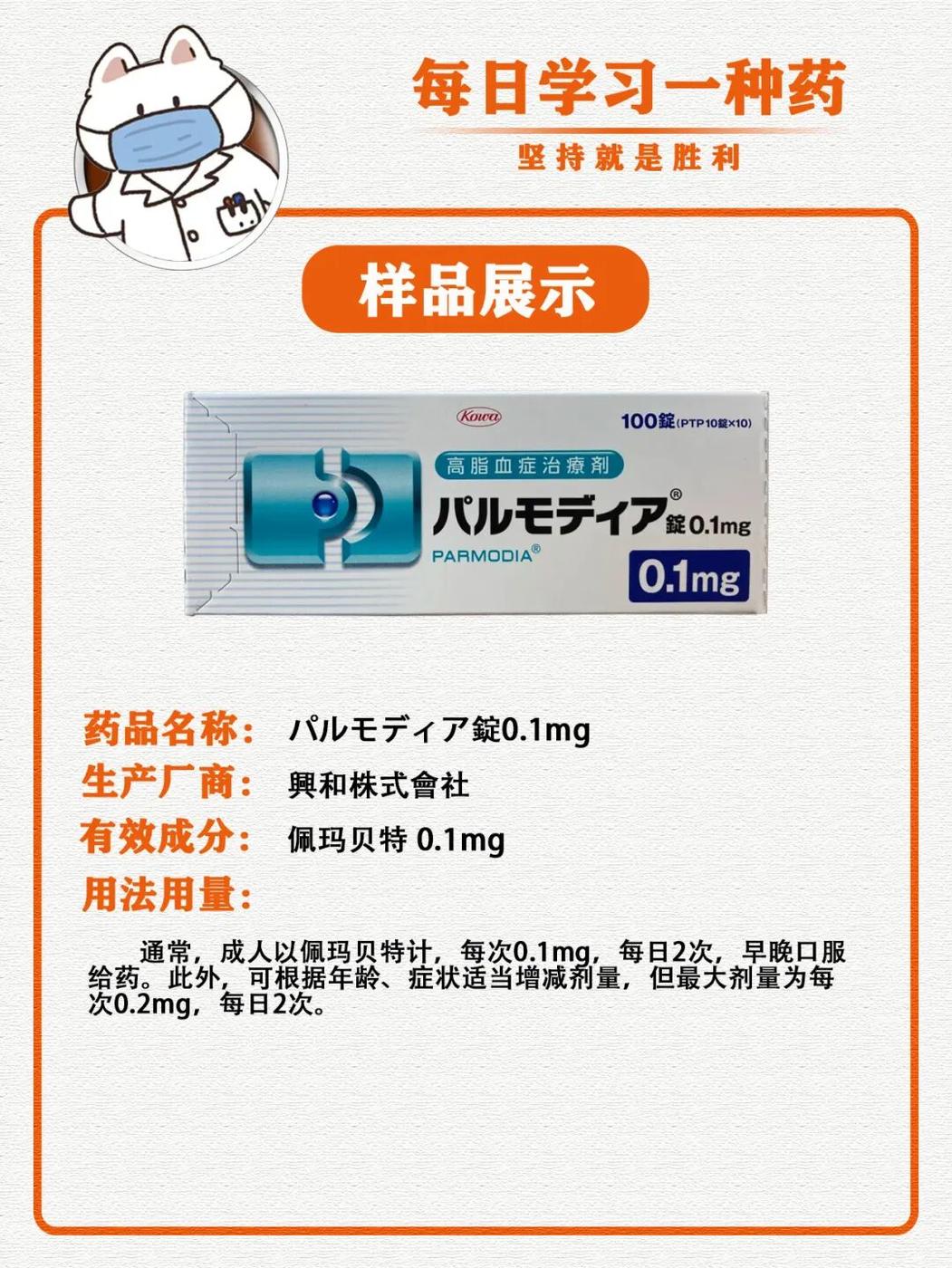
日本語原題:パルモディア錠0.1mg

Published2025-08-08 17:48 FormTablet Content9 sections / 3 images
Ingredients / strength:
Each tablet contains 0.10mg pemafibrate
English translation of the Japanese package insert is the main text; the Japanese original is shown alongside for verification. Use the language menu (top right) to read the page in another language. This site is for reference only — consult a doctor or pharmacist before use.
Section 1 · 01
English translation
Feature Description Pemafibrate binds to PPARα and regulates the expression of target genes, resulting in effects such as lowering plasma TG concentration and increasing HDL cholesterol. 1. Activity against PPARα was stronger than against PPARγ and PPARδ, showing selective activation effects on PPARα. 2. Inhibited TG synthesis in the liver (rats). 3. Significantly reduced the rate of TG secretion from the liver into the bloodstream (rats). 4. Increased LPL activity (rats). 5. Significantly reduced plasma concentrations of ApoC-III and Angiopoietin-like Protein3, which negatively regulate LPL activity, and suppressed the expression of genes (Apoc3, Angptl3) in the liver. Additionally, the expression of genes involved in the β oxidation of free fatty acids that inhibit LPL activity (Aco, Cpt1a) was enhanced (rats). 6. Plasma TG clearance was enhanced (rat). 7. Increased plasma concentration of FGF21, a protein that lowers TG and increases HDL cholesterol (rats).
Section 2 · 02
English translation
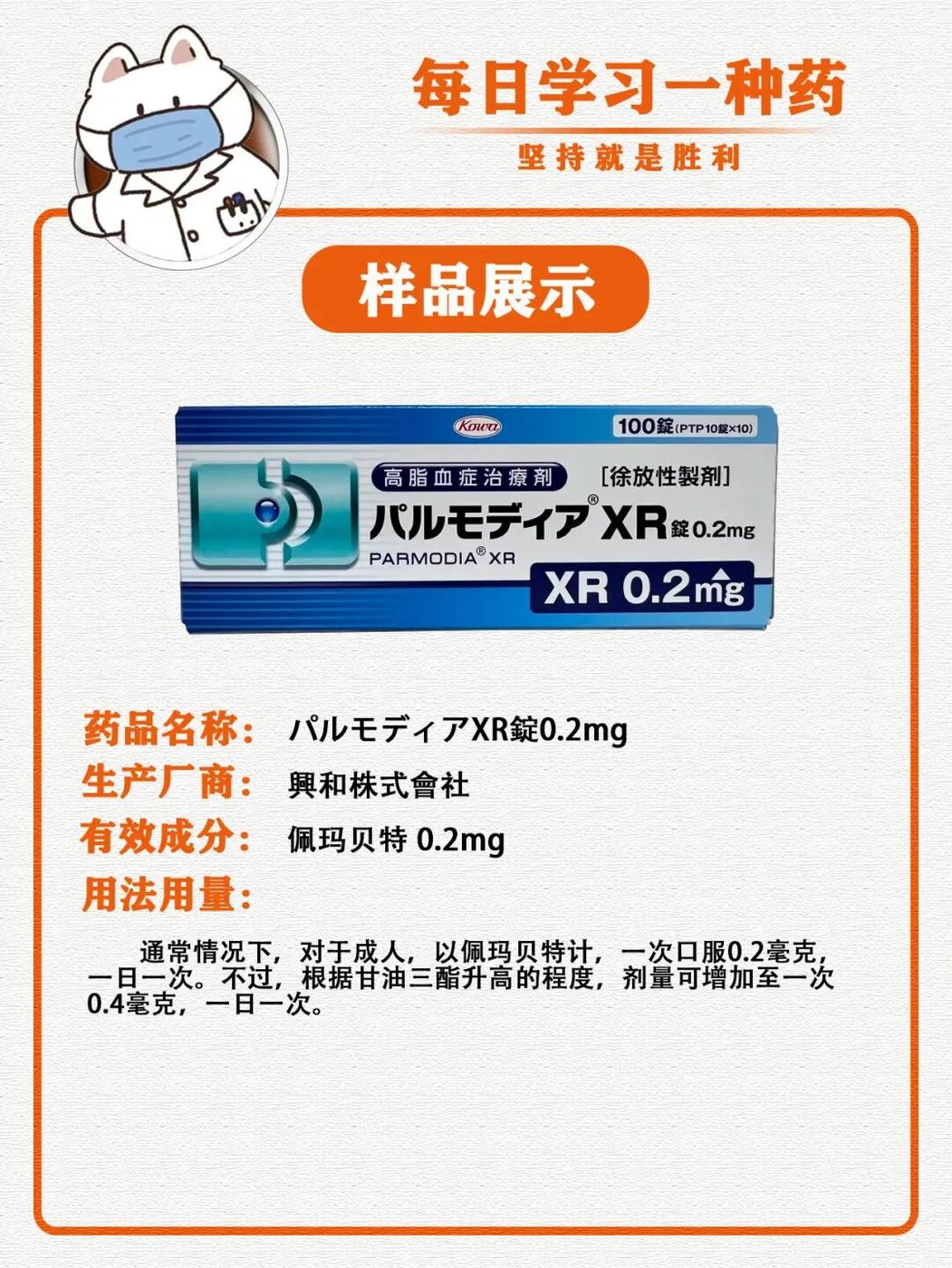
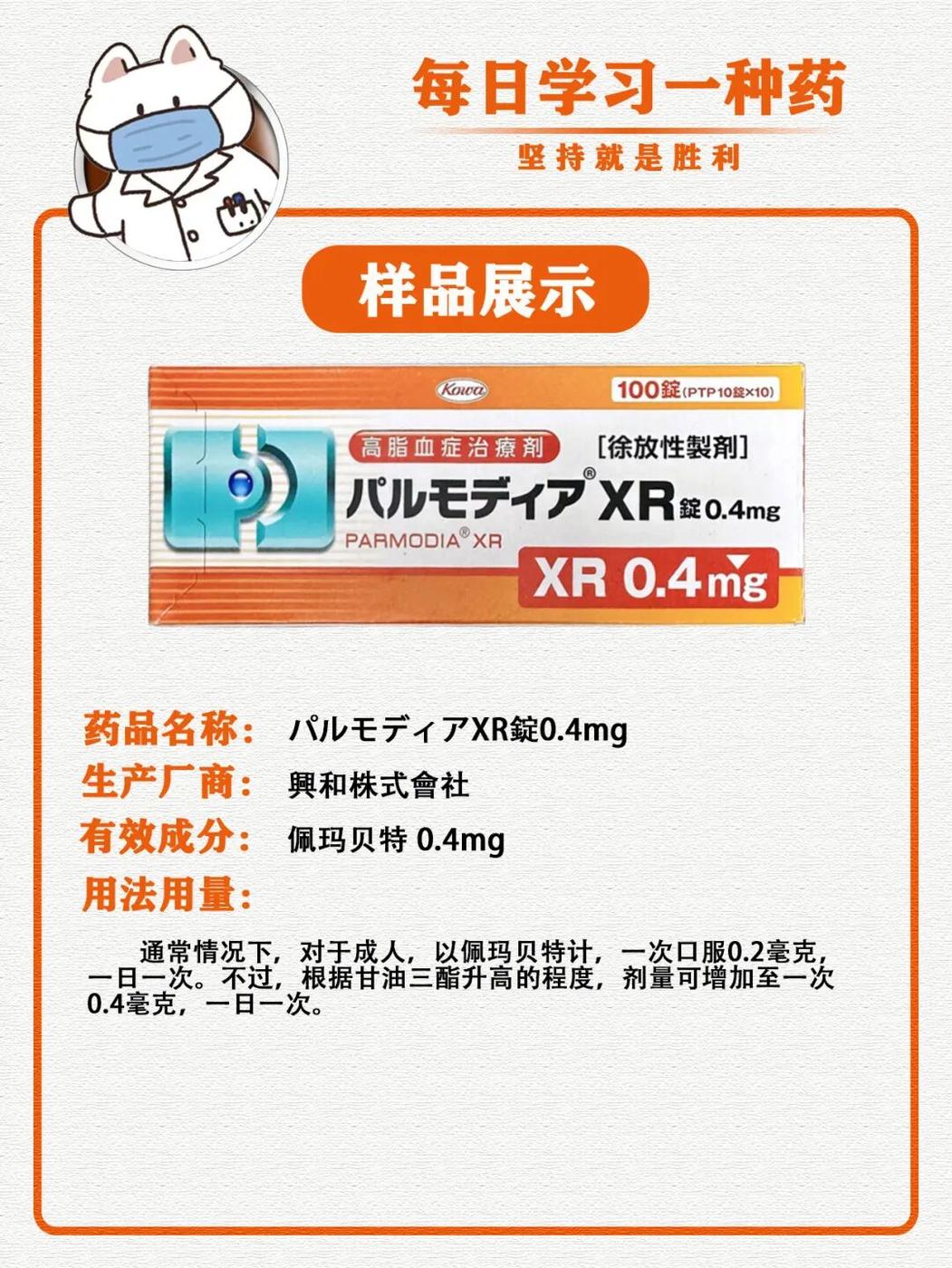
Specifications PTP: 100 tablets (10 tablets × 10).
Section 3 · 03
English translation
Characteristics 1. Palmodia Tablets 0.1mg It is a white, circular film coated lock with split lines. 2. Palmodia XR Tablets 0.2mg It is a pale yellow, round film-coated tablet (slow-release tablet). 3. Palmodia XR Tablets 0.4mg It is a pale yellow, round film-coated tablet (slow-release tablet).
Section 4 · 04
English translation
Ingredient Information 1. Palmodia Tablets 0.1mg Active ingredient: 0.10mg pemafibrato per tablet Additives: lactose hydrate, sodium croscarmellos, crystalline cellulose, hydroxypropyl cellulose, magnesium stearate, hypromellose, triethyl citrate, light anhydrous silica, titanium dioxide, carnauba wax. 2. Palmodia XR Tablets 0.2mg Active ingredient: 0.20mg of pemafibrato per tablet. Additives: crystalline cellulose (granules), hydrated silicon dioxide, hypromellose, methacrylate copolymer L, ethyl cellulose, magnesium stearate, D-mannitol, crystalline cellulose, crospovidone, hydroxypropyl cellulose, titanium oxide, triethyl citrate, light anhydrous silica, yellow trioxide, carnauba barrow. 3. Palmodia XR Tablets 0.4mg Active ingredient: 0.40mg pemafibrato per tablet. Additives: crystalline cellulose (granules), hydrated silicon dioxide, hypromellose, methacrylate copolymer L, ethyl cellulose, magnesium stearate, D-mannitol, crystalline cellulose, crospovidone, hydroxypropyl cellulose, titanium oxide, triethyl citrate, light anhydrous silica, yellow trioxide, carnauba barrow.
Section 5 · 05
English translation
Indications Hyperlipidemia (including familial cases).
Section 6 · 06
English translation
Dosage and Administration 1. Palmodia Tablets 0.1mg Typically, adults are given 0.1 mg orally twice daily as pemafibrato in the morning and evening. Adjustments may be made according to age and symptoms, but the maximum dose is 0.2 mg per dose, up to twice daily. 2. Palmodia XR Tablets 0.2mg Typically, adults receive 0.2 mg orally once daily as pemafibrate. However, depending on the degree of triglyceride elevation, the dose can be increased to 0.4 mg per dose up to once daily. 3. Palmodia XR Tablets 0.4mg Typically, adults receive 0.2 mg orally once daily as pemafibrate. However, depending on the degree of triglyceride elevation, the dose can be increased to 0.4 mg per dose up to once daily.
Section 7 · 07
English translation
Notes 1. Dietary therapy, which is fundamental for treating hyperlipidemia, should be implemented in advance, and further considering exercise therapy and the reduction of risk factors for ischemic heart disease such as hypertension and smoking. 2. During administration, regularly monitor serum lipid levels, and if no effect is observed, do not administer indiscriminately and discontinue administration. 3. This drug may affect liver function and liver function test results; therefore, perform regular liver function tests during administration. 4. Since LDL cholesterol levels may rise during administration of this drug, regularly monitor LDL cholesterol levels during administration.
Section 8 · 08
English translation
Side Effects 1. Rhabdomyolysis (frequency unknown) Rhabdomyolysis, characterized by muscle pain, weakness, elevated CK, and elevated myoglobin in blood and urine, may be accompanied by severe kidney damage such as acute kidney injury. In such cases, discontinue administration immediately and provide appropriate treatment. 2. Liver dysfunction and jaundice (both of unknown frequency) ALT elevation, gallstone disease, liver dysfunction, AST elevation. 3. Muscles Increased CK, muscle pain, and increased blood myoglobin levels 4. Skin Rash, itching. 5. Others Diabetes (including exacerbations), increased glycohemoglobin, increased low-density lipoprotein, and increased blood uric acid.
Section 9 · 09
English translation
taboo 1. Patients with a history of hypersensitivity to any component of this drug 2. Patients with severe liver impairment, cirrhosis classified as Child-Pugh B or C, or patients with biliary obstruction 3. Patients with gallstones [gallstone formation has been reported. ] 4. Pregnant women or women who may be pregnant 5. Patients receiving cyclosporine or rifampicin

Source images

3 images

Need help sourcing Japanese medicines or OEM production?

💬