Amlodipine
日本語原題:アムロジピン錠5mg「トーワ」
The active ingredient in one tablet is Nippon Amlodipine Besylate 6.93mg (equivalent to 10mg amlodipine).
Source images
2 imagesThe artwork keeps its original Japanese/Chinese lettering. Open “Text in this image” under a picture to read what it says in your language (machine-read, may contain errors).
Text in this image machine-read · may contain errors
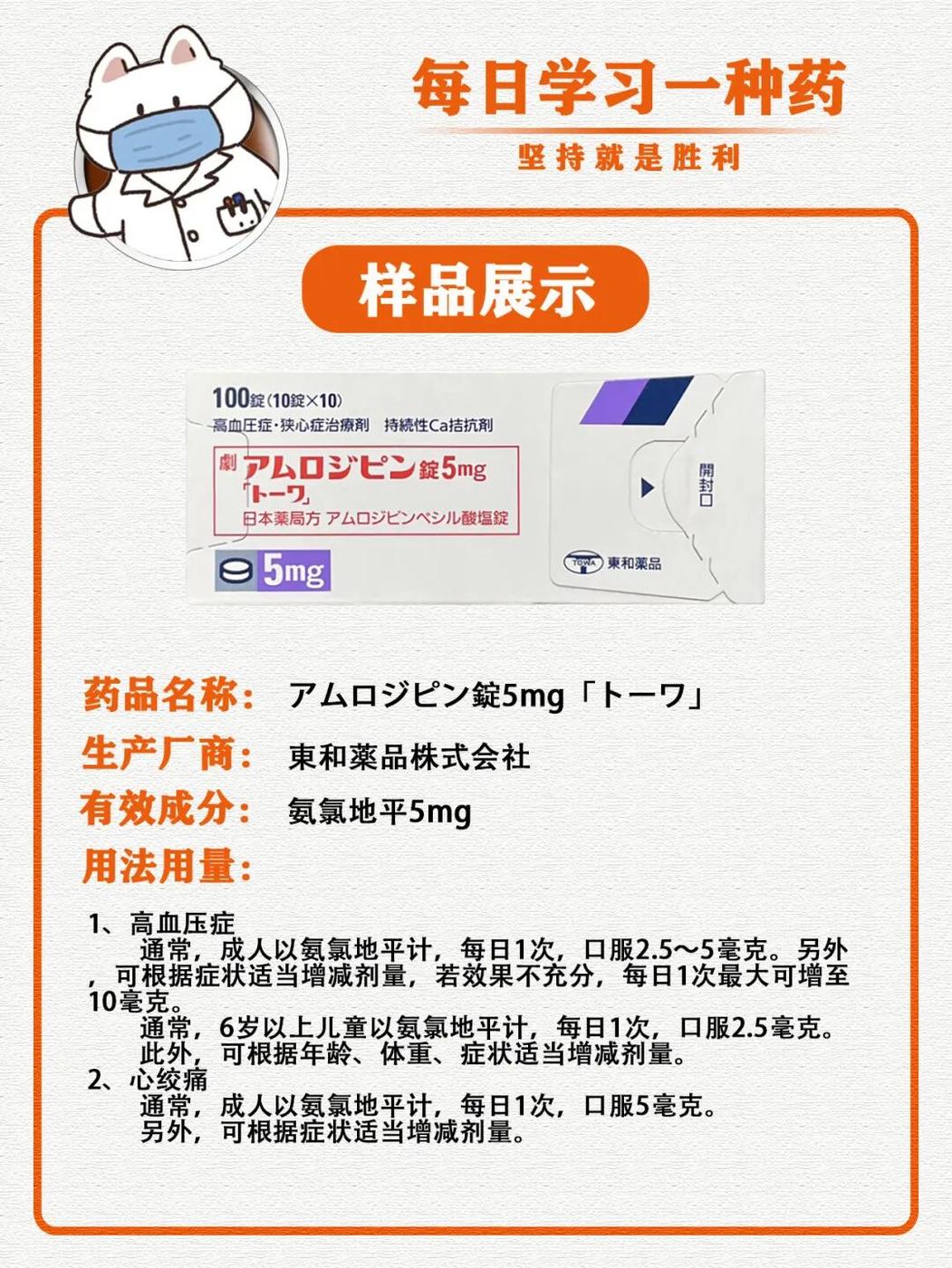
100 ingots (10 ingots ×10) Hypertension and angina treatment agents, chronic Ca antagonists Gekimulodipine Tablets 5mg This pharmacopoeia formula is Amlozibine Pesylate Tablets 5mg Drug Name: Amlodipine Tablets 5mg "Towa" Manufacturer: Towa Pharmaceutical Co., Ltd Active ingredients: Amlodipine 5mg Dosage and administration: 1. Hypertension Typically, adults take lodipine once daily, oral dose of 2.5~5 mg. Additionally Dosage can be adjusted appropriately according to symptoms; if the effect is insufficient, once daily can be increased to a maximum of once 10 mg. Typically, children over 6 years old take amlodipine orally once daily. Additionally, dosage can be adjusted appropriately according to age, weight, and symptoms. 2. Angina Adults take 5 mg orally once daily as amlodipine. Additionally, Dosage can be adjusted appropriately according to symptoms.
100锭(10锭×10) 高血压症·狭心症治療剂持性Ca拮抗剂 劇ムロジピン錠 5mg 本薬局方アムロジビンペシル酸壥錠 5mg 药品名称: アムロジピン錠 5mg 「トーワ」 生产厂商: 东和藥品株式会社 有效成分: 氨氯地平5mg 用法用量: 1、高血压症 通常,成人以氯地平计,每日1次,口服2.5~5毫克。另外 可根据症状适当增减剂量,若效果不充分,每日1次最大可增至 10毫克。 通常,6岁以上儿童以氨氯地平计,每日1次,口服2.5毫克。 此外,可根据年龄、体重、症状适当增减剂量。 2、心绞痛 成人以氨氯地平计,每日1次,口服5毫克。 另外, 可根据症状适当增减剂量。
100 ingots (10 ingots ×10) Hypertension and angina treatment agents, chronic Ca antagonists Gekimulodipine Tablets 5mg This pharmacopoeia formula is Amlozibine Pesylate Tablets 5mg Drug Name…
Text in this image machine-read · may contain errors
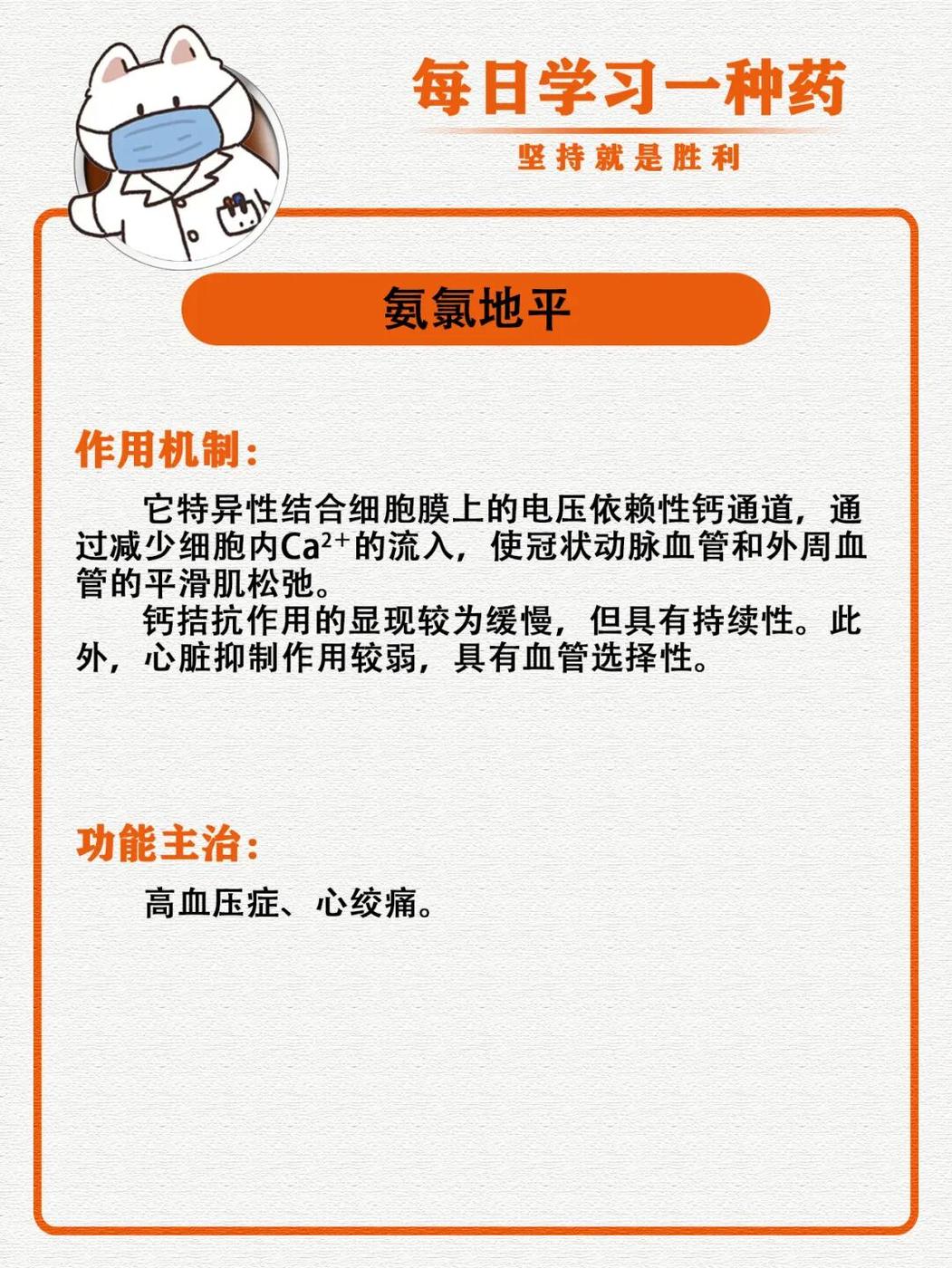
Mechanism of action: It specifically binds to voltage-dependent calcium channels on the cell membrane, allowing for a smooth passage Reduces the influx of Ca?+ into cells, allowing coronary arteries and peripheral blood to flow freely The smooth muscle of the tube is relaxed. The onset of calcium antagonism is relatively slow but persistent. This Cardiolys, the inhibitory effect on the heart is relatively weak, and it exhibits vascular selectivity. Functions and indications: Hypertension, angina.
作用机制: 它特异性结合细胞膜上的电压依赖性钙通道,通 过减少细胞内Ca?+的流入,使冠状动脉血管和外周血 管的平滑肌松弛。 钙拮抗作用的显现较为缓慢,但具有持续性。此 外,心脏抑制作用较弱,具有血管选择性。 功能主治: 高血压症、心绞痛。
Mechanism of action: It specifically binds to voltage-dependent calcium channels on the cell membrane, allowing for a smooth passage Reduces the influx of Ca?+ into cells, allowing coronary …