Metoclopramide Hydrochloride
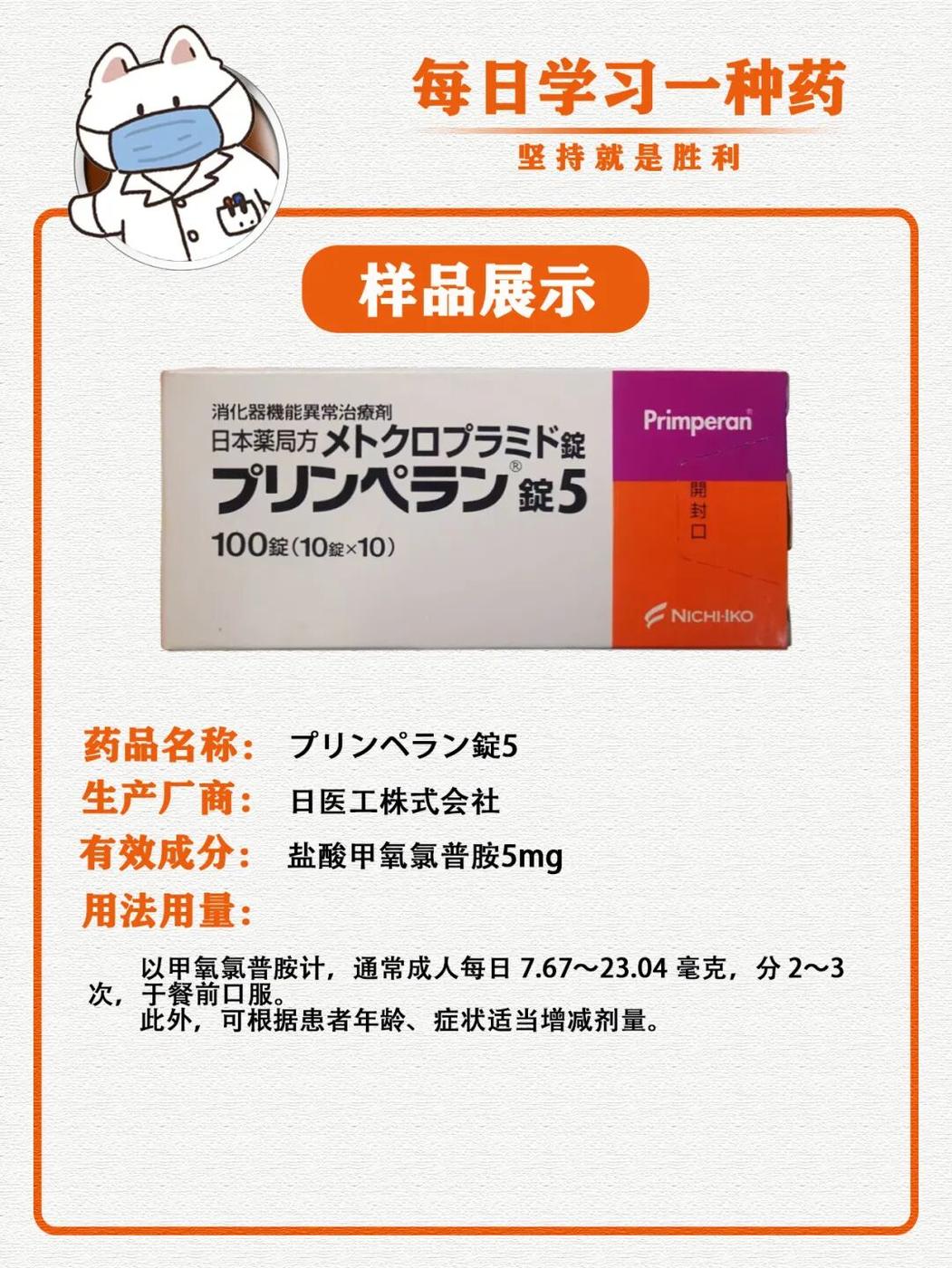
日本語原題:プリンペラン錠5
Each tablet contains 3.84 mg of metoclopramide (5 mg as metoclopramide hydrochloride).
Source images
2 imagesThe artwork keeps its original Japanese/Chinese lettering. Open “Text in this image” under a picture to read what it says in your language (machine-read, may contain errors).
Text in this image machine-read · may contain errors
Gastrointestinal Function Routine Therapy Primperan Japanese Pharmacopoeia Metoclopramide Tablets Primperan Tablets 5 100 ingots (10 ingots ×10) NICHI-IKO Drug Name: Manufacturer: Nichiiko Co., Ltd. Active ingredients: Metoclopramide Hydrochloride 5mg Dosage and administration: Using metoclopramide, adults usually 7.67~23.04 mg per day, divided into 2~3 mg Next, take orally before meals. Additionally, dosage can be adjusted appropriately according to the patient's age and symptoms.
消化器機能冕常治療剂 Primperan 日本薬局方メトクロプラミド錠 プリンペラン錠 5 100锭(10锭×10) NICHI-IKO 药品名称: 生产厂商: 日医工株式会社 有效成分: 盐酸甲氧氯普胺5mg 用法用量: 以甲氧氯普胺计,通常成人每日7.67~23.04毫克,分2~3 次,于餐前口服。 此外,可根据患者年龄、症状适当增减剂量。
Gastrointestinal Function Routine Therapy Primperan Japanese Pharmacopoeia Metoclopramide Tablets Primperan Tablets 5 100 ingots (10 ingots ×10) NICHI-IKO Drug Name: Manufacturer: Nichiiko C…
Text in this image machine-read · may contain errors
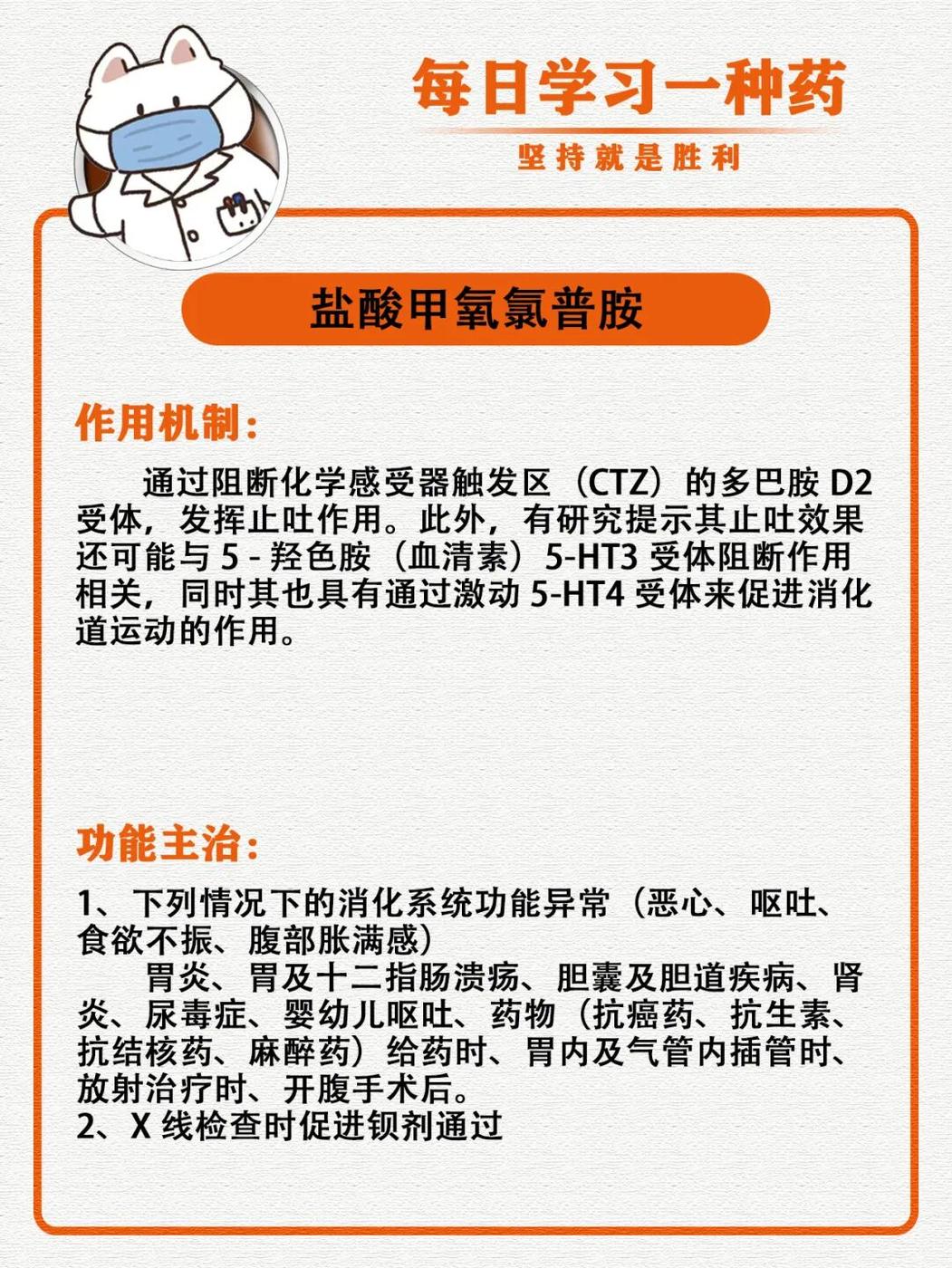
Metoclopramide hydrochloride Mechanism of action: Dopamine D2 by blocking the chemoreceptor trigger zone (CTZ). receptors that exert antiemetic effects. Additionally, studies suggest its antiemetic effects It may also interact with serotonin (serotonin) and 5-HT3 receptor blockade It also promotes digestion by activating the 5-HT4 receptor The role of the Dao's movement. Functions and indications: 1. Digestive system dysfunction in the following situations (nausea, vomiting, loss of appetite, abdominal bloating) Gastritis, gastric and duodenal ulcers, gallbladder and biliary tract diseases, kidneys inflammation, uremia, vomiting in infants and young children, medications (anticancer drugs, antibiotics, During administration of anti-tuberculosis drugs and anesthetics, during gastric and endotracheal intubation, During radiation therapy and after open surgery. 2. Facilitate the passage of the locking agent during X-ray examination
盐酸甲氧氯普胺 作用机制: 通过阻断化学感受器触发区(CTZ)的多巴胺D2 受体,发挥止吐作用。此外,有研究提示其止吐效果 还可能与5-羟色胺(血清素)5-HT3受体阻断作用 相关,同时其也具有通过激动5-HT4受体来促进消化 道运动的作用。 功能主治: 1、下列情况下的消化系统功能异常(恶心、呕吐、 食欲不振、腹部胀满感) 胃炎、胃及十二指肠溃疡、胆囊及胆道疾病、肾 炎、尿毒症、婴幼儿呕吐、药物(抗癌药、抗生素、 抗结核药、麻醉药)给药时、胃内及气管内插管时、 放射治疗时、开腹手术后。 2、X线检查时促进锁剂通过
Metoclopramide hydrochloride Mechanism of action: Dopamine D2 by blocking the chemoreceptor trigger zone (CTZ). receptors that exert antiemetic effects. Additionally, studies suggest its ant…