Levodopa + benzyl hydrazide
日本語原題:マドパー配合錠
Each tablet contains 100mg of Japanese-formulated levodopa, 28.5mg of Japanese-formulated benserazide hydrochloride (25mg as benserazide).
Source images
3 imagesThe artwork keeps its original Japanese/Chinese lettering. Open “Text in this image” under a picture to read what it says in your language (machine-read, may contain errors).
Text in this image machine-read · may contain errors
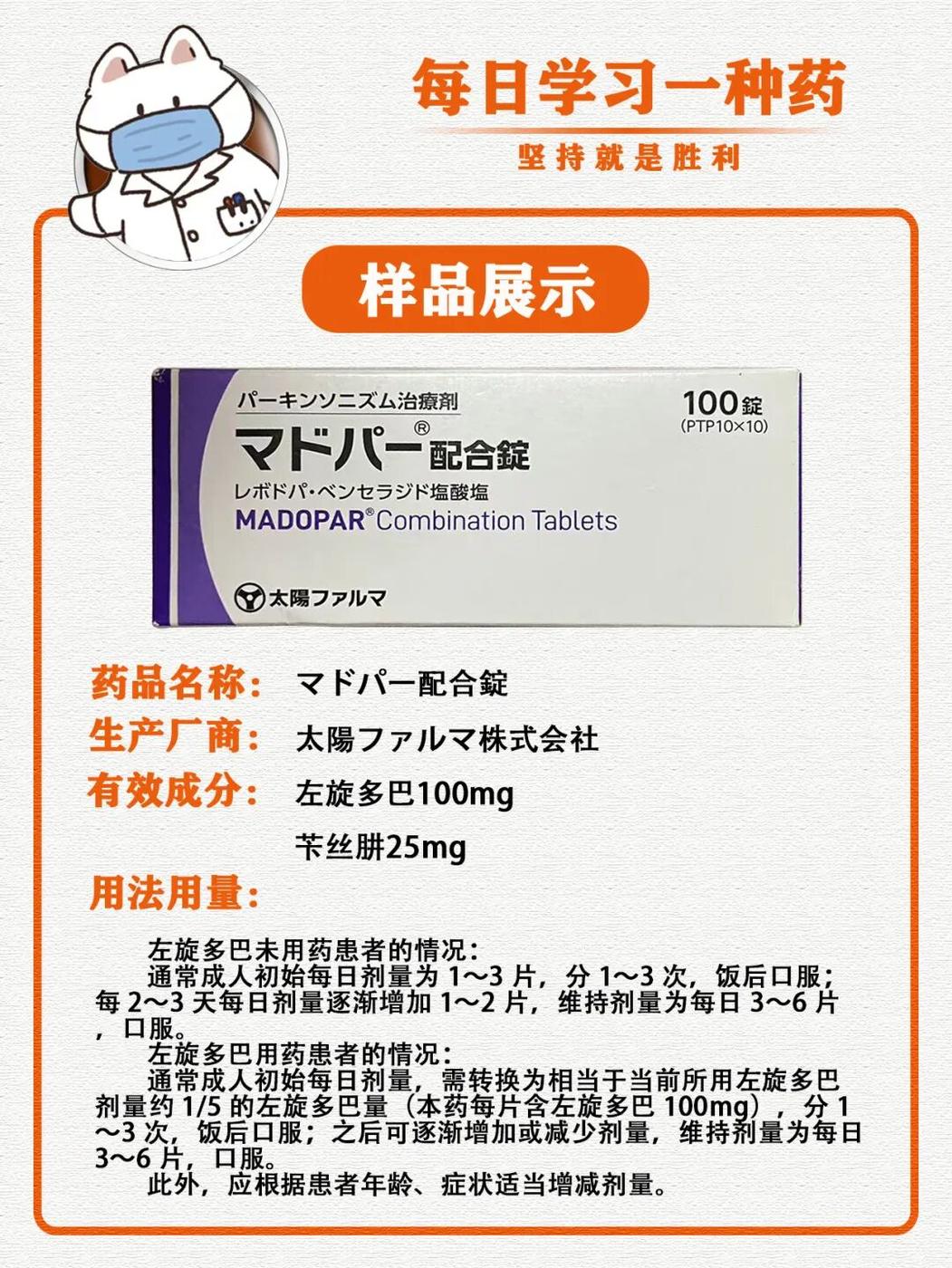
100 ingots Parkinsonism treatment (PTP10×10) Madvar-containing tablets MADOPARCombinationTablets Drug name: Yixia Combination Tablets Manufacturer: Taiyo Pharma Co., Ltd Active ingredients: Levodopa 100mg Benzylhydrazide 25mg Dosage and administration: Situation in patients not treated with levodopa: Typically, adults start with a daily dose of 1~3 tablets, divided into 1~3 doses, taken orally after meals; Gradually increase the daily dose by 1~2 tablets every 2~3 days, with a maintenance dose of 3~6 tablets per day , oral administration. Situation of patients taking levodopa: Typically, the initial daily dose for adults should be switched to the equivalent of the currently used levodopa Dose about one-fifth of the levodopa dose (each tablet contains 100mg of levodopa), divided into 1 ~3 times, oral administration after meals: the dose can be gradually increased or decreased thereafter, with a daily maintenance dose 3~6 tablets, oral administration. Additionally, dosage should be adjusted appropriately according to the patient's age and symptoms.
100锭 パーキンソニズム治療剤 (PTP10×10) マドバー配合錠 MADOPARCombinationTablets 药品名称:下一配合锭 生产厂商: 太陽ファルマ株式会社 有效成分: 左旋多巴100mg 苄丝肼25mg 用法用量: 左旋多巴未用药患者的情况: 通常成人初始每日剂量为1~3片,分1~3次,饭后口服; 每2~3天每日剂量逐渐增加1~2片,维持剂量为每日3~6片 ,口服。 左旋多巴用药患者的情况: 通常成人初始每日剂量,需转换为相当于当前所用左旋多巴 剂量约1/5的左旋多巴量(本药每片含左旋多巴100mg),分1 ~3次,饭后口服:之后可逐渐增加或减少剂量,维持剂量为每日 3~6片,口服。 此外,应根据患者年龄、症状适当增减剂量。
100 ingots Parkinsonism treatment (PTP10×10) Madvar-containing tablets MADOPARCombinationTablets Drug name: Yixia Combination Tablets Manufacturer: Taiyo Pharma Co., Ltd Active ingredients: …
Text in this image machine-read · may contain errors
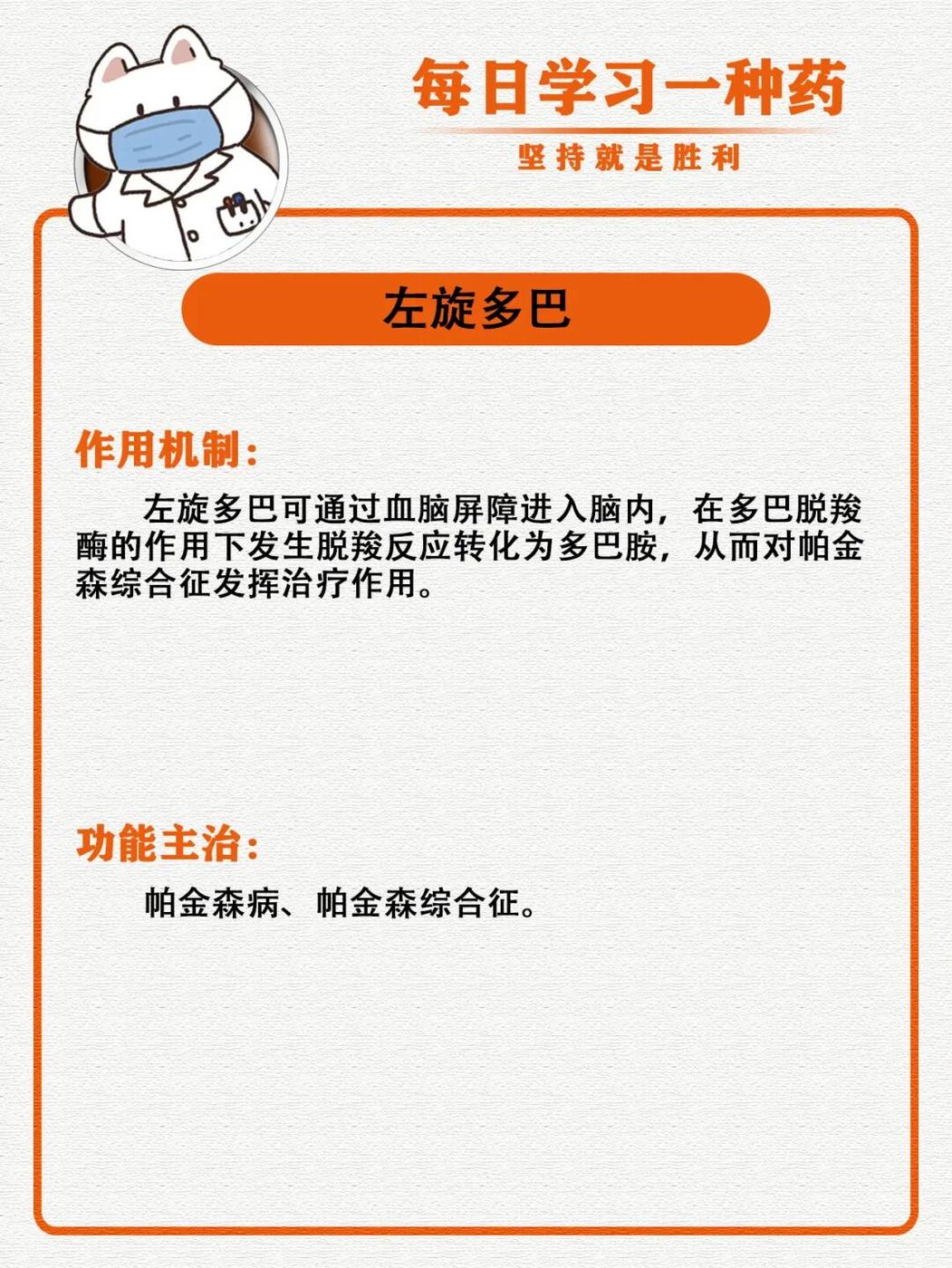
Mechanism of action: Levodopa can cross the blood-brain barrier into the brain and decarboxylate at dopa Under the action of enzymes, a decarboxylation reaction occurs and it is converted into dopamine, which in turn affects Parkin Sen syndrome plays a therapeutic role. Functions and indications: Parkinson's disease, Parkinson's syndrome. Levodopa
作用机制: 左旋多巴可通过血脑屏障进入脑内,在多巴脱羧 酶的作用下发生脱羧反应转化为多巴胺,从而对帕金 森综合征发挥治疗作用。 功能主治: 帕金森病、帕金森综合征。 左旋多巴
Mechanism of action: Levodopa can cross the blood-brain barrier into the brain and decarboxylate at dopa Under the action of enzymes, a decarboxylation reaction occurs and it is converted in…
Text in this image machine-read · may contain errors
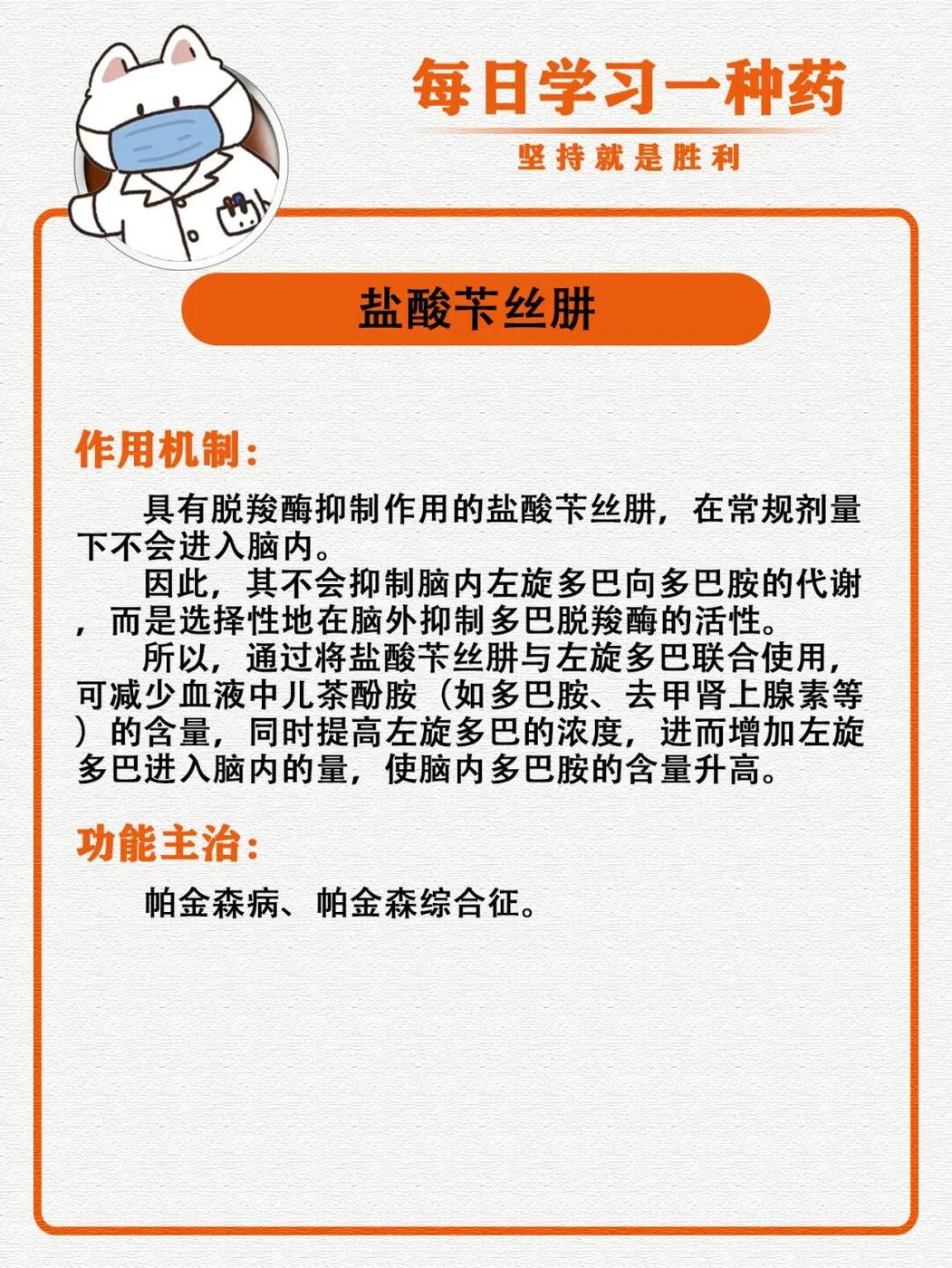
Mechanism of action: Benzyl hydrazide hydrochloride, which has decarboxylase inhibitory effects, at standard doses It will not enter the brain. Therefore, it does not inhibit the metabolism of levodopa to dopamine in the brain Instead, it selectively inhibits dopa decarboxylase activity outside the brain. Therefore, by combining benzyl hydrochloride hydrazide with levodopa, Can reduce catecholamines in the blood (such as dopamine, norepinephrine, etc.). while simultaneously increasing the concentration of levodopa, thereby increasing levo-rotator The amount of dopa entering the brain raises dopamine levels in the brain. Functions and indications: Parkinson's disease, Parkinson's syndrome.
作用机制: 具有脱羧酶抑制作用的盐酸苄丝肼,在常规剂量 下不会进入脑内。 因此,其不会抑制脑内左旋多巴向多巴胺的代谢 而是选择性地在脑外抑制多巴脱羧酶的活性。 所以,通过将盐酸苄丝肼与左旋多巴联合使用, 可减少血液中儿茶酚胺(如多巴胺、去甲肾上腺素等 的含量,同时提高左旋多巴的浓度,进而增加左旋 多巴进入脑内的量,使脑内多巴胺的含量升高。 功能主治: 帕金森病、帕金森综合征。
Mechanism of action: Benzyl hydrazide hydrochloride, which has decarboxylase inhibitory effects, at standard doses It will not enter the brain. Therefore, it does not inhibit the metabolism …